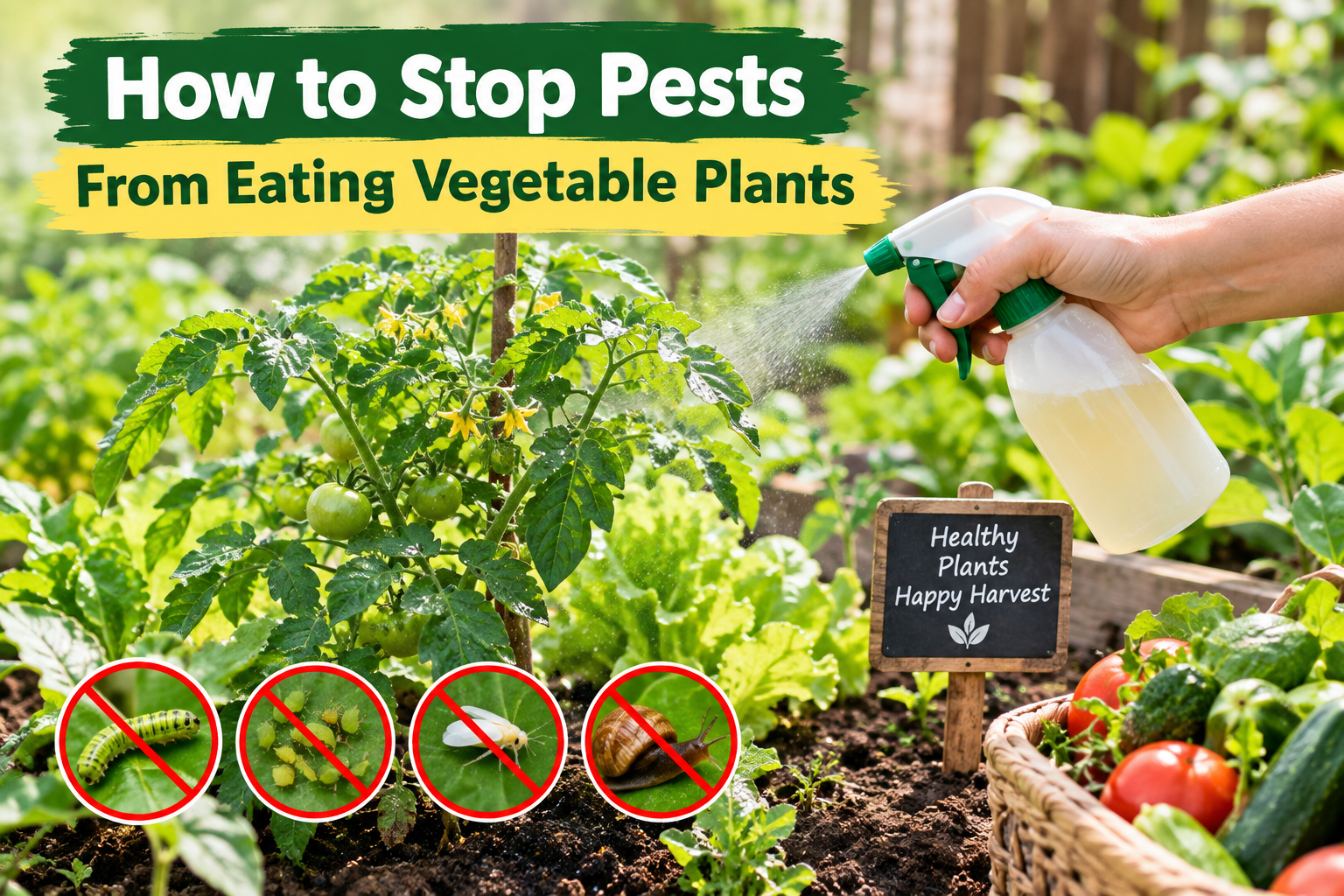
Growing vegetables at home can be very rewarding, but pests can quickly turn healthy plants into damaged and weak ones. I have found that even a small vegetable garden can attract insects such as aphids, caterpillars, beetles, whiteflies, and other common garden pests. When these pests are not controlled early, they can damage leaves, stems, flowers, and even vegetables.
The good news is that you do not always need strong chemicals to protect your garden. With regular observation, proper watering, healthy soil, physical barriers, and natural pest control methods, it is possible to keep many pests away from vegetable plants.
In this article, I will share some simple methods I use and recommend for protecting vegetable plants from common garden pests.
Inspect Your Vegetable Plants Regularly
One of the easiest ways to stop pests from eating vegetable plants is to check your plants regularly. I believe prevention is much easier than trying to save a badly damaged plant.
Take a few minutes every day or every couple of days to look closely at the leaves. Check both the upper and lower surfaces because many insects hide underneath leaves. Look for small holes, curled leaves, sticky spots, webbing, eggs, or insects.
If you notice a few pests early, you can often remove them before they become a bigger problem. Regular inspection is especially important when plants are young because a large number of insects can damage small plants very quickly.
Keep Your Garden Clean
A clean vegetable garden is generally easier to protect from pests. Dead leaves, fallen vegetables, weeds, and other plant debris can provide hiding places for insects and other unwanted garden visitors.
I prefer to remove damaged leaves and fallen vegetables from the garden instead of allowing them to remain around healthy plants. Weeds should also be removed regularly because they can provide food and shelter for pests.
Keeping the area around your vegetable plants clean also makes it easier to notice new pest activity.
Water Vegetable Plants Properly
Healthy plants are often better able to tolerate minor pest damage. Proper watering plays an important role in keeping vegetable plants strong.
Avoid watering your plants too much because constantly wet soil can create other problems. At the same time, plants should not be allowed to become severely dry.
I usually focus on watering the soil around the roots rather than constantly wetting the leaves. Morning watering is often a good choice because plants have time to dry during the day.
Healthy plants with suitable moisture levels can grow stronger roots and leaves, which helps them handle common garden problems.
Use Garden Netting
Garden netting can be a very useful physical barrier against insects. It can help prevent many flying pests from reaching vegetable plants in the first place.
You can place lightweight netting over plants such as cabbage, lettuce, spinach, and other leafy vegetables. Make sure the edges are properly secured so insects cannot easily enter underneath.
One advantage of physical barriers is that they do not require spraying anything directly onto the vegetables. This can make them a practical option for people who prefer simple and natural gardening methods.
Remove Large Pests by Hand
Some pests are easy to remove manually. Caterpillars, beetles, and other larger insects can often be picked from plants by hand.
When I find larger pests on vegetable plants, I prefer to remove them as soon as possible. You can wear gardening gloves if you do not want to touch the insects directly.
This method may sound simple, but it can be surprisingly effective when the pest population is still small. The important thing is to inspect plants regularly so that you do not have to remove dozens of insects later.
Spray Plants With Water
A gentle stream of water can help remove some small insects from vegetable plants. Aphids and other soft bodied pests may be knocked off leaves and stems with water.
Use enough pressure to remove the pests without damaging the plant. Avoid using an extremely strong spray because delicate leaves and young stems can be injured.
This method may need to be repeated because some insects can return to the plant. Still, it is a simple option when you notice a small number of pests.
Encourage Beneficial Insects
Not every insect in your garden is harmful. Some insects can actually help control pests naturally.
Ladybugs, lacewings, praying mantises, and some other beneficial insects feed on common garden pests. Instead of trying to remove every insect from your garden, I recommend learning to identify helpful insects as well.
Planting flowers near your vegetable garden can also attract pollinators and other beneficial insects. A garden with different types of plants can support a healthier natural environment.
Use Companion Planting
Companion planting is another method many gardeners use to discourage certain pests. The idea is to grow particular plants near vegetables that may benefit from their presence.
For example, herbs and flowers can add diversity to a vegetable garden and may help attract beneficial insects. Some gardeners also grow strongly scented plants around vegetables to make the garden less attractive to certain pests.
I do not consider companion planting a complete solution by itself. However, it can be a useful part of an overall pest management strategy.
Keep Plants Properly Spaced
Crowded vegetable plants can create a warm and humid environment where pests and plant diseases may become more difficult to manage.
When plants are properly spaced, air can move more freely around the leaves. It also becomes easier to inspect plants and identify pest problems.
Always check the recommended spacing for the vegetable you are growing. Giving plants enough room can improve air circulation and make general garden maintenance easier.
Remove Heavily Damaged Leaves
If a leaf is heavily damaged or covered with pests, removing it may help prevent the problem from spreading to other parts of the plant.
Use clean garden scissors or pruning tools when necessary. Do not remove too many healthy leaves because plants need their leaves to produce energy.
After removing badly damaged plant material, place it away from the vegetable garden rather than leaving it on the soil beside healthy plants.
Try Natural Pest Control Methods
There are several natural approaches gardeners use to control pests. Insecticidal soap, horticultural oils, and other garden products can sometimes help with specific pests when used correctly.
Before using any product, always read the label carefully and make sure it is suitable for the vegetable plant you are treating. Follow the recommended application instructions and avoid applying products unnecessarily.
I believe the best approach is to use the least aggressive method that can solve the problem. If removing pests by hand or using a physical barrier works, there may be no reason to use a stronger treatment.
Avoid Overfertilizing Vegetable Plants
Too much fertilizer can sometimes encourage excessive soft plant growth. Certain pests may be attracted to this new growth.
Vegetable plants need nutrients, but more fertilizer does not always mean better growth. I recommend following the fertilizer instructions and avoiding unnecessary applications.
Healthy soil with balanced nutrients is more useful than constantly adding fertilizer. Compost and well prepared organic matter can also support soil quality when used appropriately.
Protect Young Vegetable Plants
Young plants are particularly vulnerable to pest damage. A few insects can cause significant problems when a plant has only a small number of leaves.
I like to give young plants extra attention during their first few weeks. Check them regularly and consider using simple barriers such as netting or protective covers when appropriate.
Once plants become larger and stronger, minor pest damage may be easier for them to tolerate.
Identify the Pest Before Treating It
One mistake I see many gardeners make is treating a plant without knowing what is actually causing the damage.
Different pests require different approaches. Holes in leaves could be caused by caterpillars, beetles, or other insects. Sticky leaves may indicate aphids or another sap sucking insect.
Take time to identify the problem before choosing a treatment. Look at the insect, the type of damage, and where the insect is located on the plant.
Correct identification can save time and prevent unnecessary treatments.
Keep Checking After Treatment
Stopping pests from eating vegetable plants is usually not a one time task. Even after you remove pests or apply a suitable treatment, continue checking the plants.
New insects can arrive from nearby gardens, weeds, or other plants. Weather conditions can also influence pest activity.
I recommend making pest inspection part of your normal gardening routine. A few minutes of observation can prevent a small problem from becoming a major infestation.
Final Thoughts
Learning how to stop pests from eating vegetable plants does not have to be complicated. In my experience, the most useful approach is to combine several simple habits instead of depending on one solution.
Regularly inspect your plants, keep the garden clean, water properly, remove pests by hand when possible, use physical barriers, encourage beneficial insects, and maintain healthy soil. If a pest problem becomes serious, identify the pest first and choose an appropriate treatment.
The goal is not necessarily to create a garden with absolutely no insects. A healthy garden can contain many different insects and still produce excellent vegetables. The real goal is to prevent harmful pests from reaching levels where they seriously damage your plants.
With regular attention and a little patience, you can protect your vegetable garden and enjoy healthier plants throughout the growing season.
Leave a Reply