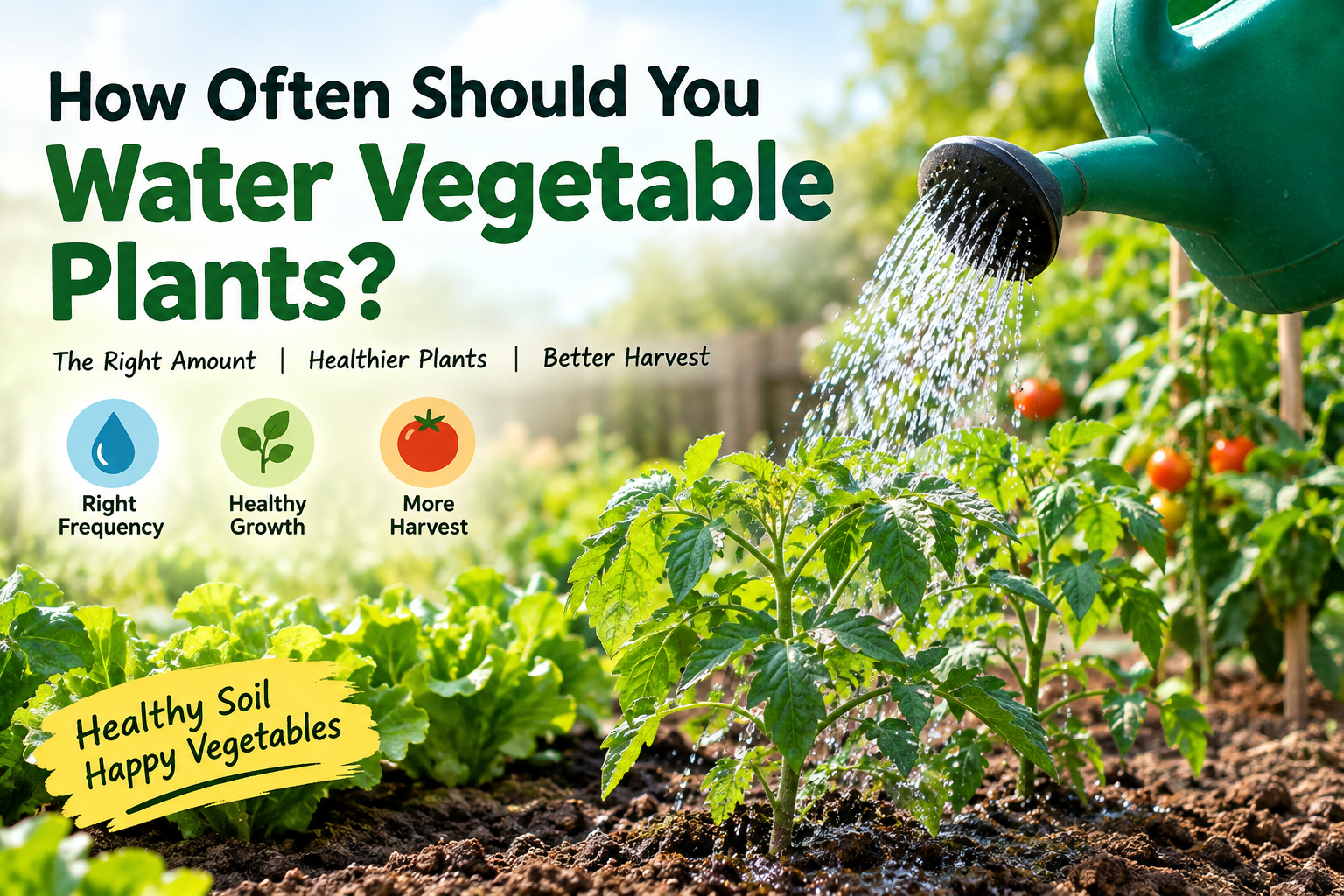
Watering vegetable plants sounds like one of the easiest gardening tasks, but in my experience, it is also one of the areas where beginners make the most mistakes. Some people water their plants every day because they think more water means better growth. Others wait too long and only water when the leaves start looking weak. The truth is that vegetable plants need the right amount of water at the right time.
So, how often should you water vegetable plants? In general, most vegetable plants need watering about two to three times a week, but this is not a strict rule. The exact watering schedule depends on the weather, soil type, plant size, vegetable variety, container size, and amount of sunlight your garden receives.
In this guide, I will explain how often to water vegetable plants, how to know when your plants need water, and some simple watering tips that can help beginners grow healthier vegetables.
How Often Should You Water Vegetable Plants?
Most vegetable plants need consistent moisture to grow well. During normal weather, watering two or three times per week may be enough for many established plants. However, during hot and dry weather, plants may need water more frequently.
Newly planted vegetables usually need more attention because their roots are still developing. I prefer checking the soil instead of following a fixed watering schedule. If the top inch of soil feels dry, it is usually a good sign that the plant needs water.
The goal is not to keep the soil completely soaked. Vegetable plants need moisture, but their roots also need oxygen. Waterlogged soil can create problems just as easily as dry soil.
Why Proper Watering Is Important for Vegetable Plants
Water plays an important role in almost every part of vegetable plant growth. Plants use water to move nutrients through their tissues, maintain healthy leaves, and support photosynthesis.
When vegetable plants do not receive enough water, they may begin to wilt. Growth can slow down, leaves may become dry, and some plants may produce smaller vegetables.
Too much water can also cause problems. Constantly wet soil can reduce oxygen around the roots and increase the risk of root problems.
For this reason, I believe good watering is about balance. The soil should have enough moisture to support the roots without staying soaked for long periods.
Check the Soil Before Watering
One of the easiest watering tips for beginners is to check the soil with your finger.
Simply push your finger about one inch into the soil near the plant. If the soil feels dry, the plant probably needs water. If it still feels moist, you can usually wait another day and check again.
This simple method is more useful than blindly watering every morning. Different gardens dry out at different speeds.
For example, sandy soil can lose moisture quickly, while clay soil may hold water for a longer time. Container plants can also dry out faster than plants growing directly in the ground.
Watering Vegetable Plants in Hot Weather
Hot weather can change your watering schedule significantly. When temperatures rise, water evaporates faster from the soil, and plants also lose more water through their leaves.
During very hot periods, I recommend checking the soil more often. Some vegetables may need water every day, especially if they are growing in small containers or receiving strong afternoon sunlight.
However, watering more often does not always mean giving the plant a huge amount of water each time. It is better to provide enough water to reach the root zone while avoiding unnecessary standing water.
Morning is usually one of the best times to water vegetable plants. The temperature is cooler, and plants have plenty of time to use the moisture during the day.
Watering Vegetable Plants in Cool Weather
Vegetable plants generally need less water when the weather is cool. Evaporation is slower, and the soil may stay moist for longer.
During cooler weather, always check the soil before watering. Following the same schedule you use during summer could result in overwatering.
Rain can also provide enough moisture for your garden. If your area has recently received good rainfall, you may not need to water your vegetable plants immediately.
How Much Water Do Vegetable Plants Need?
There is no single amount of water that works for every vegetable plant. A small lettuce plant and a large tomato plant have different root systems and water requirements.
Instead of focusing only on a specific number of cups or liters, I recommend watering deeply enough to moisten the soil around the main root zone.
Deep watering encourages roots to grow downward where they can access moisture for longer periods.
Light watering every day may only wet the surface of the soil. The surface can quickly dry out, leaving the deeper roots without enough moisture.
A slow and thorough watering is often more useful than frequent shallow watering.
Watering Newly Planted Vegetables
Newly planted vegetables require special attention. When seeds are first planted, the soil should remain consistently moist so the seeds can germinate.
However, you should avoid flooding the soil. Strong streams of water can move seeds around or expose them.
Once seedlings appear, continue checking the soil regularly. Young plants have small root systems and can dry out more quickly than established plants.
As the plants grow and their roots become stronger, they can usually handle a more consistent watering routine.
How Often Should You Water Vegetable Plants in Containers?
Container vegetables often need more frequent watering than plants growing in garden soil. Containers have limited space, and excess water can drain away quickly.
During warm weather, container plants may need watering every day. However, this depends on the size of the container, type of soil, plant variety, and weather.
I always recommend checking the moisture level before watering container vegetables. Make sure the container also has drainage holes so excess water can escape.
Tomatoes, peppers, cucumbers, herbs, and other vegetables can grow successfully in containers when they receive consistent moisture.
Best Time of Day to Water Vegetable Plants
Morning is generally my preferred time to water vegetable plants. The weather is usually cooler, and plants have enough time to absorb moisture during the day.
Early morning watering can also help reduce unnecessary evaporation compared with watering during the hottest part of the afternoon.
If morning watering is not possible, evening can also work. However, try to water the soil rather than keeping the leaves wet for long periods.
Avoid watering during the hottest part of the day when possible because some of the water can evaporate quickly.
Should You Water Vegetable Plants Every Day?
Not necessarily.
Daily watering can be useful in certain situations, especially during extremely hot weather, for newly planted vegetables, or for plants growing in small containers.
But watering every day is not automatically better.
If the soil is already moist, adding more water can create overly wet conditions. Instead of following a strict daily schedule, check the soil and observe your plants.
This is one of the simplest gardening habits I recommend to beginners.
Signs Your Vegetable Plants Need Water
Your plants can give you several clues when they are becoming thirsty.
Common signs include:
Wilted leaves
Dry soil
Leaves becoming less firm
Slow growth
Drooping stems
Dry or cracked soil around the plant
However, wilting does not always mean a plant needs water. Plants can also wilt because of extreme heat, root problems, disease, or other stress.
That is why checking the soil is important before adding more water.
Signs You Are Overwatering Vegetable Plants
Overwatering can be just as harmful as underwatering.
Some common signs include yellowing leaves, constantly wet soil, slow growth, and weak looking plants.
If the soil remains wet for a long time after watering, you may need to reduce how often you water.
Good drainage is also important. If water cannot move away from the roots, the plant may struggle even when you are following a reasonable watering schedule.
Water the Soil Instead of the Leaves
When watering vegetable plants, I prefer directing water toward the soil around the base of the plant.
This allows moisture to reach the roots directly.
A gentle watering method is especially useful for young plants and seedlings. A strong stream can disturb the soil and damage delicate roots.
Drip irrigation and soaker hoses can also be useful for larger vegetable gardens because they deliver water closer to the root zone.
Use Mulch to Keep Soil Moist
Mulching is one of my favorite ways to reduce watering problems.
A layer of suitable organic mulch around vegetable plants can help slow evaporation and keep the soil moist for longer.
Mulch can also help regulate soil temperature and reduce weed growth.
Do not pile mulch directly against plant stems. Leave a little space around the base of the plant to improve airflow and reduce potential problems.
Different Vegetables Have Different Water Needs
Not every vegetable needs exactly the same amount of water.
Leafy vegetables such as lettuce and spinach generally appreciate consistently moist soil. Tomatoes need regular moisture, especially while producing fruit. Cucumbers can also require plenty of water because they grow quickly and produce large amounts of fruit.
Root vegetables such as carrots and radishes need consistent moisture while their roots develop.
This is why learning about the specific vegetables in your garden can make watering much easier.
Simple Watering Routine for Beginners
If you are new to gardening, you do not need a complicated system.
I recommend starting with a simple routine.
Check your garden soil every morning or every other day. If the top layer feels dry, check deeper into the soil. Water when the root zone needs moisture.
Water slowly and thoroughly rather than giving plants a tiny amount of water.
Pay extra attention during hot and windy weather because the soil may dry faster.
After rain, check the soil before watering again.
This simple approach can help you avoid both underwatering and overwatering.
Final Thoughts
Knowing how often to water vegetable plants is an important part of successful gardening, but there is no single watering schedule that works for every garden.
In my opinion, the best approach is to understand your plants, check the soil regularly, and adjust your watering routine according to the weather.
Most vegetable plants need consistent moisture, but they do not want to sit in waterlogged soil. Water deeply enough to reach the root zone, pay attention to signs from your plants, and give extra care to young vegetables and container plants.
Morning watering, good drainage, healthy soil, and mulch can also make your watering routine easier.
Once you spend some time observing your garden, you will begin to understand when your plants actually need water. This is much more reliable than simply following a fixed schedule.
With a little attention and consistency, proper watering can help your vegetable plants grow stronger, produce healthier leaves, and give you a better harvest throughout the growing season.
Leave a Reply