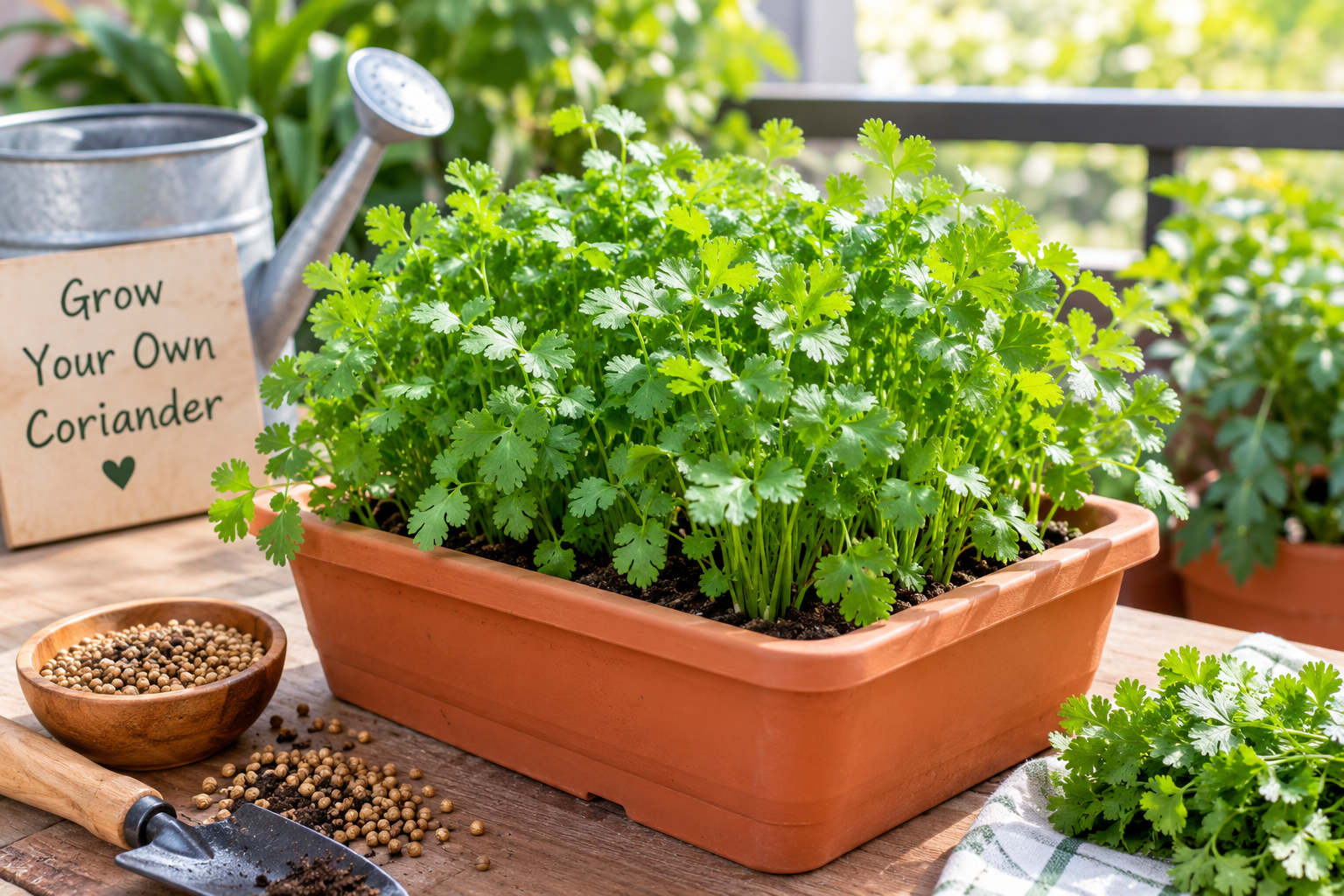
Growing coriander at home is one of the easiest ways to enjoy fresh herbs whenever you need them. I personally find coriander very useful because it can be added to salads, curries, soups, chutneys, rice dishes, and many other homemade meals. You do not need a large garden or expensive gardening equipment to grow it. A small pot, good soil, coriander seeds, sunlight, and regular care are usually enough to get started.
If you are wondering how to grow coriander at home, the good news is that beginners can easily do it with a little patience. Coriander grows relatively quickly when it receives suitable growing conditions. In this guide, I will explain the simple method I use to grow healthy coriander at home, from choosing the right container to harvesting fresh leaves.
Why Grow Coriander at Home?
There are several reasons why I like growing coriander at home. The first reason is convenience. Instead of buying a bunch from the market every time I need it, I can simply cut a few fresh leaves from my own plant.
Fresh coriander also adds a pleasant aroma and flavor to food. Growing it at home gives me more control over how the plant is cared for. I can choose the soil, watering routine, and growing location myself.
Another advantage is that coriander does not require a large amount of space. It can grow successfully in a pot, container, balcony garden, kitchen garden, or even a sunny windowsill.
Choose the Right Coriander Seeds
The first important step in growing coriander at home is choosing good quality seeds. You can purchase coriander seeds from a gardening store or use suitable whole coriander seeds.
Fresh seeds generally have a better chance of germinating. I recommend avoiding old seeds that have been stored for a very long time because their germination rate may be lower.
One useful tip is to gently crush or split the coriander seeds before planting. Coriander seeds are actually made up of two small seed parts. Lightly separating them can help improve germination. However, avoid crushing them into powder because damaged seeds may not grow properly.
Choose a Suitable Pot
Coriander does not need a very large container, but the pot should have proper drainage holes. Good drainage is important because water that remains around the roots for too long can cause problems.
For growing coriander at home, I prefer a container that is reasonably wide and deep enough for healthy root development. A wider container also allows you to grow several plants together.
Make sure the pot has holes at the bottom. If the container does not drain properly, excess water can remain in the soil and affect plant health.
Prepare Good Soil
Coriander grows best in loose and well drained soil. I usually prefer a light potting mixture that allows both air and water to move through the soil.
You can use good quality garden soil mixed with compost. Compost provides organic matter and helps create a suitable environment for the roots.
The soil should not be extremely heavy or compact. If the soil becomes hard, young roots may struggle to grow. Before planting the seeds, break up large pieces of soil and make the surface reasonably smooth.
How to Plant Coriander Seeds
Once your pot and soil are ready, you can start planting.
Spread the coriander seeds across the surface of the soil. Try not to place every seed in exactly the same spot because crowded seedlings may compete for sunlight, water, and nutrients.
Cover the seeds with a thin layer of soil. They do not need to be planted extremely deep. After covering them, gently water the soil.
The goal is to make the soil moist without turning it into mud. Heavy watering can move the seeds around or create overly wet conditions.
Place the container in a bright location where it can receive several hours of sunlight.
Give Coriander Enough Sunlight
Sunlight is important for healthy coriander growth. I prefer placing my coriander container in a location that receives good natural light.
Morning sunlight can be particularly useful because it provides bright conditions without the intense heat that can occur later in the day. If you live in a very hot climate, protect the plant from excessive afternoon heat.
Coriander can struggle when temperatures become extremely high. Too much heat may cause the plant to flower quickly instead of producing lots of fresh leaves.
If you are growing coriander indoors, place the pot near a bright window. Rotate the container occasionally so the plant can receive light more evenly.
Watering Coriander Plants
Watering is one of the most important parts of coriander care. The soil should remain slightly moist, especially while the seeds are germinating.
I recommend checking the soil with your finger before watering. If the top layer feels dry, it is usually time to add some water.
Avoid following a strict watering schedule without checking the soil because different environments dry out at different speeds. A plant growing in a hot balcony may need water more often than one growing indoors.
Always water gently. Strong streams of water can disturb young seedlings and expose their roots.
When Will Coriander Seeds Germinate?
Coriander seeds can take several days to germinate, although the exact time depends on seed quality, temperature, moisture, and growing conditions.
During this stage, patience is important. I recommend keeping the soil lightly moist and providing suitable light rather than constantly disturbing the soil to check for growth.
Once small green seedlings appear, continue providing gentle care. As the seedlings become stronger, they will begin producing more leaves.
Thin the Seedlings
If too many coriander seedlings grow close together, the plants may become overcrowded. Crowded plants can compete for water, nutrients, sunlight, and space.
Once the seedlings become large enough to handle, you can remove some of the weaker plants. This gives the remaining coriander plants more room to grow.
Do not throw away healthy young plants if you can use them. Some small coriander seedlings can be used in cooking depending on their size and condition.
Fertilizing Coriander
Coriander usually does not require complicated fertilizing. If you have prepared the soil with good compost, the plants can receive useful nutrients from the growing medium.
If growth appears weak, a mild organic fertilizer can be considered. I prefer using fertilizer carefully rather than adding too much.
Excess fertilizer does not always mean faster growth. Too many nutrients can sometimes create problems for plants. A balanced approach is usually better for home gardening.
How to Keep Coriander Healthy
Good air circulation can help keep coriander plants healthier. Avoid placing containers in areas where plants are packed tightly together with no airflow.
Remove damaged or unhealthy leaves when necessary. Keep the growing area clean and avoid allowing dead plant material to build up around the base.
Regularly inspect the leaves for signs of insects or other problems. Finding an issue early usually makes it easier to manage.
The most important thing is consistency. Coriander does not need complicated daily attention, but it does benefit from regular watering, suitable sunlight, and healthy soil.
Common Problems When Growing Coriander
One common problem is overwatering. If the soil stays wet for long periods, the roots may become unhealthy. Always check the soil before adding more water.
Another problem is insufficient sunlight. Plants grown in very dark locations may become weak and thin.
Extreme heat can also cause coriander to flower quickly. Once coriander starts flowering, its growth pattern changes and the plant may produce fewer tender leaves.
Overcrowding is another issue. If too many plants grow together, they may not have enough room for healthy development.
How to Harvest Fresh Coriander
One of the best parts of growing coriander at home is harvesting fresh leaves.
When the plants have developed enough healthy foliage, you can begin cutting some leaves and stems. I prefer harvesting only what I need instead of removing a large amount at once.
Use clean scissors or a sharp kitchen knife to cut the stems. Leaving enough healthy growth behind allows the plant to continue developing.
Regular harvesting can also help you enjoy fresh coriander while the plant is still producing tender leaves.
How to Grow Coriander Continuously
If you use coriander frequently, you can plant new seeds every few weeks instead of planting everything at the same time.
This method can provide a more continuous supply of fresh coriander. While one batch is being harvested, another batch can be growing.
I find this approach especially useful for people who cook regularly with coriander. It also makes the most of a small balcony or kitchen garden.
Can You Grow Coriander Indoors?
Yes, coriander can be grown indoors if you provide enough light and suitable growing conditions.
Place the pot near a bright window where the plant can receive natural sunlight. Make sure the container has drainage holes and avoid keeping it directly beside a source of extreme heat.
Indoor coriander may need more attention to light because rooms can sometimes be darker than outdoor spaces. If the plant becomes thin or weak, consider moving it to a brighter location.
Final Thoughts
Learning how to grow coriander at home is a simple and rewarding gardening project. You do not need a large garden, expensive tools, or advanced gardening experience. With a suitable container, healthy soil, good coriander seeds, sunlight, and careful watering, you can grow fresh coriander in a surprisingly small space.
From my experience, the biggest lesson is not to overcomplicate the process. Give the plant the basic conditions it needs and allow it enough time to grow. Check the soil regularly, provide suitable light, avoid excessive watering, and harvest the leaves carefully.
Growing coriander at home can also encourage you to try other herbs and vegetables. Once you see how easy it can be to grow one useful herb in a pot, starting a small home garden becomes much more enjoyable.
Whether you have a balcony, patio, windowsill, or small outdoor space, coriander is a practical herb to grow. With a little care and consistency, you can enjoy fresh homemade coriander for your everyday cooking while developing your own simple home gardening routine.
Leave a Reply