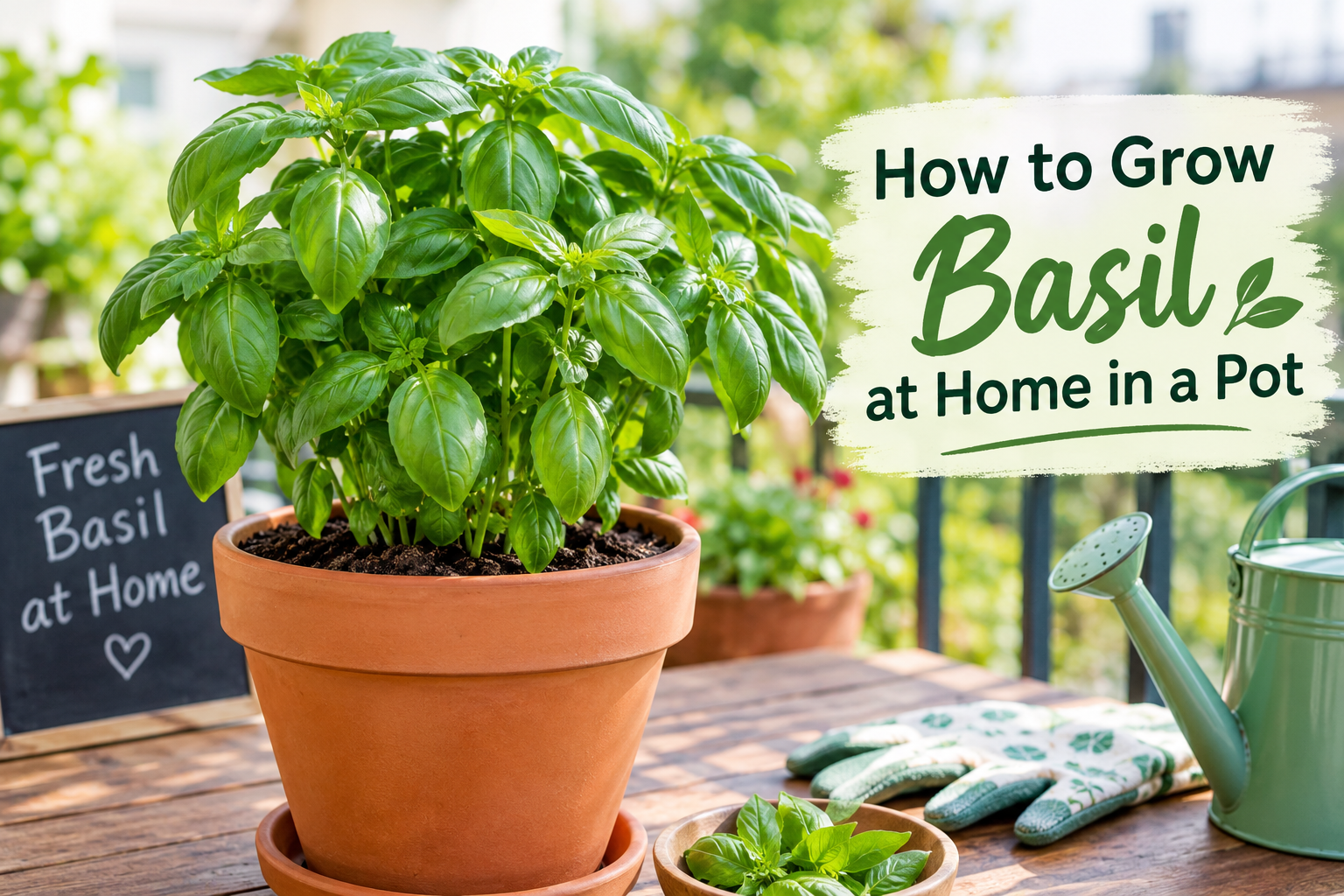
Growing basil at home in a pot is one of the easiest ways to enjoy fresh herbs without needing a large garden. I personally like growing basil because it does not require much space, and with a little regular care, one small plant can provide fresh leaves for many meals. Whether you have a balcony, kitchen window, terrace, or small outdoor space, you can grow healthy basil in a container.
Basil is a warm weather herb that grows quickly when it receives enough sunlight, suitable soil, water, and regular trimming. It is also a useful plant for beginners because you can easily see its growth from small seedlings into a full, leafy plant.
In this guide, I will explain how to grow basil at home in a pot, including choosing the right container, preparing the soil, planting seeds, watering, sunlight requirements, feeding, pruning, and harvesting.
Why Grow Basil at Home?
There are many reasons to grow basil at home. The biggest advantage for me is having fresh basil whenever I need it. Store bought basil can lose its freshness quickly, while a plant growing in your home can provide fresh leaves whenever you want.
Basil also adds a pleasant green appearance to a balcony or windowsill. Its fresh leaves can be used in pasta, salads, sandwiches, sauces, soups, pizza, and many other dishes.
Another benefit is that basil does not need a large garden. A suitable pot and a sunny location are often enough to get started. This makes growing basil in containers a practical option for people who live in apartments or homes with limited outdoor space.
Choose the Right Pot for Basil
The first important step is choosing a suitable pot. Basil has a fairly manageable root system, but it still needs enough space to grow properly.
I recommend starting with a pot that is at least 8 to 12 inches wide and reasonably deep. A larger container can support more growth and hold moisture for a little longer.
The pot must have drainage holes at the bottom. This is extremely important because excess water can remain around the roots if there is nowhere for it to escape. Too much moisture can cause root problems and may weaken the plant.
Terracotta, ceramic, plastic, and other garden containers can all work. The material is less important than proper drainage and enough room for the roots.
If you want to grow several basil plants, use a larger container and leave enough space between plants so that air can move around the leaves.
Use Good Quality Soil
Basil grows best in loose and well draining soil. I avoid using heavy garden soil alone in containers because it can become compacted and may not provide the drainage that potted basil needs.
A good quality potting mix is a simple choice for beginners. You can use a general purpose container mix that drains well while still holding enough moisture for the plant.
The soil should feel light and loose. When you water it, excess water should be able to move through the drainage holes instead of sitting at the bottom of the pot.
Before planting, fill the pot with soil while leaving a little space near the top. This makes watering easier and prevents soil from spilling over the sides.
How to Plant Basil Seeds
Growing basil from seeds is an affordable and rewarding option. Start by placing the seeds on the surface of moist soil. Basil seeds are small, so they do not need to be planted very deeply.
Cover them with a very thin layer of soil and gently water the surface. Keep the soil consistently moist while the seeds are germinating.
Place the pot somewhere warm and bright. Under suitable conditions, basil seeds can begin to sprout within several days to a couple of weeks.
Once the seedlings appear, make sure they receive enough light. If several seedlings are growing too close together, you can carefully thin them so the strongest plants have enough room.
Give Basil Plenty of Sunlight
One of the most important parts of growing basil at home is providing enough sunlight. Basil generally grows best in a warm, bright location.
I prefer placing basil in an area where it can receive several hours of direct sunlight each day. A sunny balcony, patio, terrace, or bright window can work well.
If your basil receives too little light, the stems may become long and weak while the leaves remain smaller. Healthy basil usually develops strong stems and plenty of green leaves when it receives good light.
During very hot weather, especially in areas with intense afternoon heat, watch the plant carefully. Excessive heat can cause the leaves to wilt. Providing some protection during the hottest part of the day may help in extremely hot conditions.
Water Basil Correctly
Watering is another important part of basil care. Basil likes evenly moist soil, but it does not like sitting in water.
Before watering, check the surface of the soil with your finger. If the top layer feels dry, it may be time to water. If the soil is still very wet, wait a little longer.
When watering, apply enough water to moisten the soil thoroughly. Allow excess water to drain from the bottom of the pot.
I find that checking the soil is better than following a strict watering schedule because the plant’s needs can change depending on temperature, sunlight, pot size, and weather.
During hot weather, container basil may need water more frequently. During cooler or cloudy conditions, it may need less.
Feed Your Basil Plant
Basil can grow well in good quality potting soil, but occasional feeding can support healthy growth.
A mild balanced fertilizer can be used according to the instructions on its label. Avoid applying excessive fertilizer because more is not always better. Too much fertilizer can encourage excessive growth or create other problems.
If you are growing basil mainly for its leaves, regular harvesting and pruning are often just as important as feeding.
Prune Basil Regularly
Pruning is one of my favorite parts of growing basil because it helps the plant become fuller.
When the basil plant has several sets of leaves, pinch or cut the growing tip just above a pair of leaves. This encourages the plant to produce new branches.
Instead of allowing the plant to grow as one tall stem, regular trimming can encourage a bushier shape.
You should also remove damaged or yellowing leaves when you notice them. Keeping the plant clean and well maintained can improve its overall appearance.
Remove Basil Flowers
Basil eventually produces flowers if it is allowed to mature. The flowers can look attractive, but if your main goal is to harvest leaves, it is usually helpful to remove flower buds as they appear.
Once basil begins flowering heavily, the plant can put more energy into producing flowers and seeds. Regularly pinching off flower buds encourages continued leaf production.
I usually check the growing tips when harvesting because flower buds can develop there quickly during warm weather.
How to Harvest Basil
Harvesting basil correctly can actually encourage more growth. Instead of removing only individual large leaves from the bottom, I prefer cutting or pinching stems just above a pair of healthy leaves.
This encourages new branches to develop from that point.
Try not to remove too much of the plant at one time, especially when it is young. Regular light harvesting is usually better than taking most of the leaves at once.
Fresh basil can be used immediately in cooking. You can add it to pasta, homemade sauces, salads, sandwiches, soups, pizza, or other meals.
For the best flavor, many people prefer harvesting basil shortly before using it.
Common Basil Growing Problems
Even though basil is relatively easy to grow, beginners can experience a few common problems.
If the leaves turn yellow and the soil stays wet for a long time, overwatering may be the issue. Check the drainage and allow the soil to dry slightly between waterings.
If the plant becomes tall and weak, insufficient sunlight may be responsible. Move the pot to a brighter location if possible.
If the leaves become damaged or show unusual spots, inspect the plant closely for pests or signs of disease. Remove badly damaged leaves and improve air circulation around the plant.
Very hot conditions can also cause wilting. If the plant is exposed to intense heat, providing some afternoon protection and maintaining appropriate moisture can help.
Tips for Growing Healthy Basil in a Pot
There are a few simple habits that can make basil container gardening easier.
Choose a pot with drainage holes.
Use loose and well draining potting soil.
Give basil plenty of sunlight.
Check soil moisture before watering.
Avoid keeping the roots constantly wet.
Prune the plant regularly.
Remove flower buds if you want more leaves.
Harvest small amounts regularly.
Give the plant enough space for air circulation.
Protect young plants from extreme temperatures.
These simple steps can make a noticeable difference in the health and productivity of your basil plant.
Can Basil Grow Indoors?
Yes, basil can grow indoors if it receives enough light. A bright sunny window can be a good location, especially during cooler months.
Indoor basil still needs proper drainage, suitable soil, and regular watering. Avoid placing the pot in a dark corner simply because basil is a small herb.
If natural light is limited, a suitable indoor grow light may help provide the additional light the plant needs.
Keep the plant in a location with reasonable air circulation and avoid placing it directly against very cold glass or near strong heating sources.
Final Thoughts
Learning how to grow basil at home in a pot is a simple gardening project that almost anyone can try. You do not need a large garden or expensive equipment. With a suitable container, good soil, sunlight, water, and regular pruning, basil can grow into a healthy and productive herb plant.
From my point of view, the biggest secret is consistency. Basil does not need complicated care, but it does benefit from regular attention. I like checking the soil, looking at the leaves, trimming new growth, and harvesting a little whenever I need fresh basil.
If you are new to container gardening, basil is a great plant to start with. It grows relatively quickly, looks attractive, and gives you something useful to harvest. Once you successfully grow one basil plant, you may find yourself wanting to try other herbs in pots as well.
With the right care and a little patience, growing basil at home in a pot can become an enjoyable part of your everyday gardening routine.
Leave a Reply