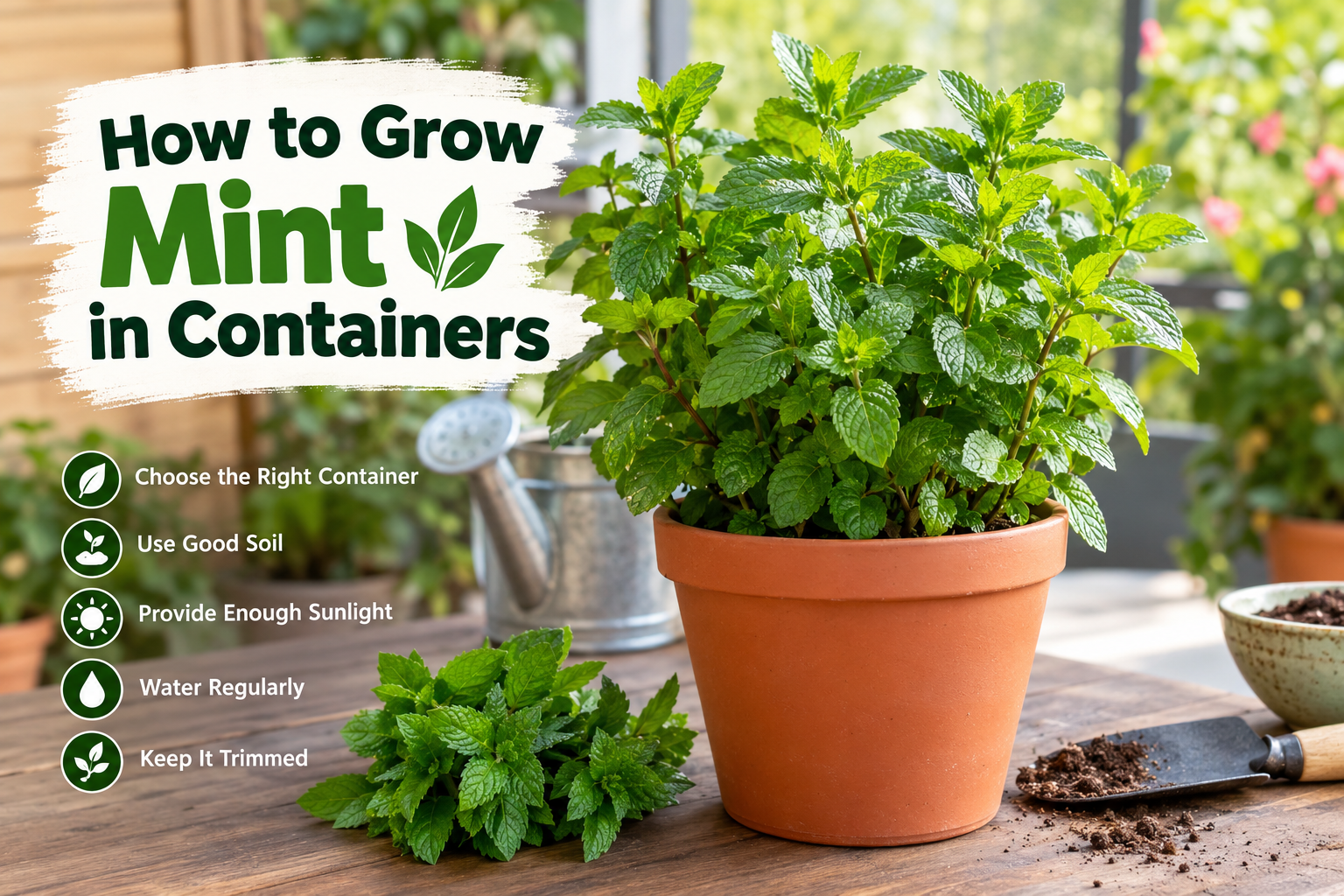
Growing mint in containers is one of the easiest ways to enjoy fresh herbs at home. I personally like growing mint because it does not require a large garden, expensive equipment, or advanced gardening experience. A simple pot, good soil, enough water, and a suitable location can be enough to grow a healthy mint plant.
Mint is a fast growing herb that can provide fresh leaves for tea, drinks, salads, desserts, and many homemade recipes. However, mint can spread quickly when planted directly in garden soil. This is one reason I prefer growing mint in containers. A container keeps the plant in one place and also makes it easier to control its water, soil, sunlight, and overall growth.
If you are a beginner and want to learn how to grow mint in containers, this guide will help you understand the process from choosing a pot to harvesting fresh leaves.
Choose the Right Mint Plant
The first step in growing mint is choosing a healthy plant. You can grow mint from seeds, cuttings, or a small nursery plant. In my experience, starting with a healthy young plant is usually the easiest option for beginners because it saves time and gives you a stronger starting point.
When buying a mint plant, look for fresh green leaves and healthy stems. Avoid plants that have yellow leaves, damaged stems, or signs of insects. A small healthy plant can quickly develop into a full and attractive container plant when given proper care.
There are several types of mint available, including spearmint and peppermint. You can choose the type according to your preference and how you plan to use the leaves.
Select a Suitable Container
Choosing the right container is very important when learning how to grow mint in containers. Mint grows quickly and can develop a strong root system, so it needs enough space.
I recommend using a container that is at least 8 to 12 inches wide and reasonably deep. A larger container can be useful if you want a bigger plant. The most important thing is drainage.
Make sure the container has drainage holes at the bottom. These holes allow excess water to escape after watering. Without proper drainage, water can remain around the roots and create problems such as root damage.
You can use a terracotta pot, plastic container, ceramic pot, or another suitable gardening container. The material is less important than the size and drainage.
Use Good Quality Potting Soil
Mint grows best when its roots have access to moisture and air. For container gardening, I prefer using a good quality potting mix rather than heavy garden soil.
A basic potting mix can contain regular potting soil, compost, and a material that improves drainage. The soil should hold enough moisture for the plant but should not stay completely wet.
Before planting mint, fill the container with soil and leave some space near the top. This makes watering easier and prevents soil from washing out of the container.
Good soil can make a noticeable difference in plant growth. If the soil becomes compacted over time, gently loosen the surface without disturbing the roots too much.
Plant Mint Correctly
Once you have your container and soil ready, you can plant your mint. Make a small hole in the center of the soil that is large enough for the roots of the young plant.
Place the mint plant into the hole and gently cover the roots with soil. Avoid pressing the soil too hard because compacted soil can make it difficult for air and water to reach the roots.
After planting, water the mint thoroughly. Make sure excess water flows through the drainage holes.
If you are planting more than one mint plant, remember that mint can become bushy. Giving each plant enough room will help improve air circulation and make maintenance easier.
Give Mint Enough Sunlight
Mint needs sunlight for healthy growth, but it can also tolerate some shade. A location that receives several hours of sunlight each day is usually suitable.
I prefer placing container grown mint in a bright area where it can receive morning sunlight. In very hot weather, strong afternoon sunlight can sometimes be stressful for the plant. If the leaves begin to look weak or dry, moving the container to a location with some afternoon shade may help.
Indoor mint can also grow near a bright window. Make sure the plant receives enough natural light and rotate the container occasionally so all sides receive balanced light.
Water Mint Properly
Watering is one of the most important parts of mint plant care. Mint generally likes consistently moist soil, but it does not like sitting in water.
I usually check the soil before watering. If the top layer feels slightly dry, it is time to water the plant. Pour water slowly around the soil until some water begins to come out of the drainage holes.
Avoid watering the plant simply because it is part of your daily routine. Weather, container size, sunlight, and indoor conditions can all affect how quickly the soil dries.
During hot weather, container plants may need water more frequently. During cooler or rainy periods, they may need less water.
Keep Mint Healthy With Regular Trimming
One of the easiest ways to encourage bushy mint growth is regular trimming. If you allow the stems to grow without cutting them, the plant can become tall and less attractive.
I like to pinch or cut the growing tips regularly. This encourages the plant to produce more side branches and leaves.
Always use clean scissors or garden shears when harvesting or trimming. You can use the fresh leaves immediately or store them for later use.
Regular harvesting can actually become part of your normal mint plant care routine. Instead of waiting until the plant becomes too large, take small amounts of mint whenever you need it.
Feed the Plant When Needed
Mint does not usually require heavy feeding, especially when planted in good quality soil. However, container plants may eventually use many of the available nutrients.
If your mint growth becomes slow or the leaves appear less healthy, a mild balanced fertilizer can be considered. Follow the instructions on the fertilizer package and avoid applying more than recommended.
Too much fertilizer is not always better. Excess fertilizer can damage roots and may encourage weak growth.
Adding a small amount of compost to the soil can also provide nutrients while improving soil quality.
Protect Mint From Common Problems
Mint is generally an easy herb to grow, but it can still experience problems. Yellow leaves may be caused by excessive watering, poor drainage, or other growing conditions.
Dry and crispy leaves can indicate that the plant is not receiving enough water or is exposed to excessive heat.
You should also check the leaves and stems regularly for insects. Small pests can sometimes appear on young growth. If you notice insects, remove heavily affected leaves and gently wash the plant with water.
Good air circulation, proper watering, and regular trimming can help keep the plant healthier.
Repot Mint When Necessary
Mint can grow quickly in a container, and its roots may eventually fill the available space. If you notice roots coming out of the drainage holes or the plant drying out unusually quickly, it may be time to repot it.
Choose a container that is slightly larger than the current one. Carefully remove the plant, place it into fresh potting soil, and water it thoroughly.
Repotting gives the roots more room and provides fresh growing conditions.
You can also divide a large mint plant into smaller sections. This is a simple way to create additional mint plants for other containers.
Harvest Mint the Right Way
Harvesting fresh mint is one of the most enjoyable parts of growing this herb. I recommend harvesting the leaves regularly instead of removing a large portion of the plant at one time.
Cut the stems just above a pair of healthy leaves. This encourages new branches to develop from that point.
Fresh mint can be used in homemade tea, cold drinks, salads, desserts, sauces, and many other recipes. You can also dry the leaves for later use.
When harvesting, always leave enough healthy growth on the plant so it can continue producing new leaves.
Common Mistakes to Avoid
Beginners sometimes make a few simple mistakes when growing mint in containers. One common mistake is using a container without drainage holes. This can lead to excess water around the roots.
Another mistake is allowing the soil to become completely dry for long periods. Mint prefers consistent moisture.
Planting mint in a very small container can also limit its growth. Giving the roots enough room makes maintenance easier.
Overfertilizing is another problem I recommend avoiding. Mint usually does not need large amounts of fertilizer to grow well.
Finally, do not forget to trim the plant. Regular harvesting and trimming can help maintain a compact and productive mint plant.
Final Thoughts
Learning how to grow mint in containers is a simple and rewarding gardening project. You do not need a large garden or expensive equipment to get started. With a suitable container, good potting soil, proper drainage, enough sunlight, and regular watering, mint can grow successfully in many home environments.
I find container gardening especially useful because the plant is easy to monitor and move when weather conditions change. It also prevents mint from spreading throughout the garden.
The most important thing is to pay attention to your plant. Check the soil, observe the leaves, trim the stems, and adjust watering when necessary. With a little regular care, your mint plant can provide fresh green leaves for a long time.
If you are new to gardening, mint is one of the herbs I would recommend trying first. It grows quickly, looks attractive, and gives you something useful to harvest from your own home garden.
Leave a Reply