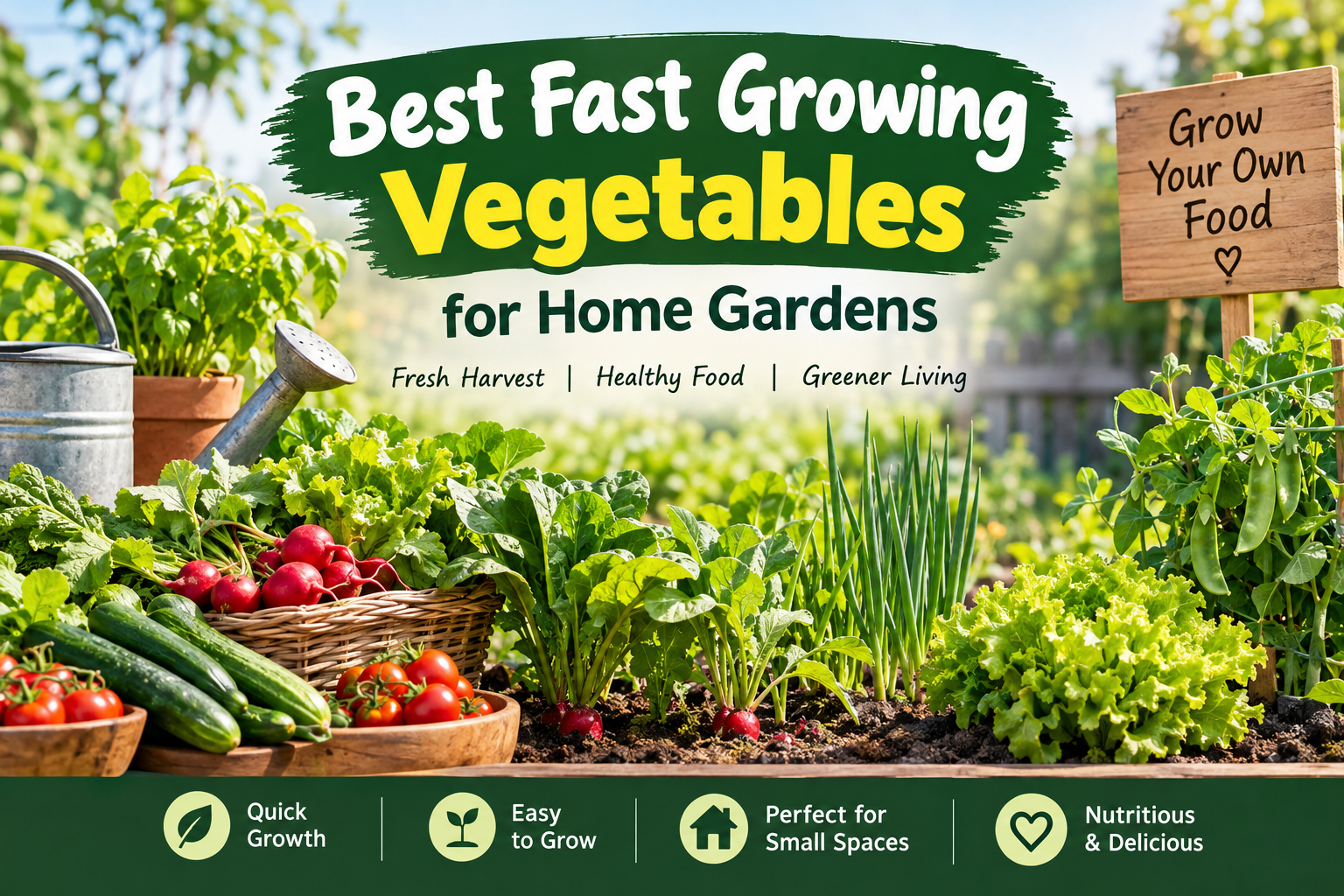
Growing vegetables at home is one of the most enjoyable ways to make better use of a garden, balcony, backyard, or even a few containers. I personally think that fast growing vegetables are especially useful for beginners because they allow you to see results sooner. When you plant something and start seeing fresh leaves within a few days or weeks, it gives you the motivation to continue gardening.
Not every vegetable needs a long growing season. Many vegetables can be harvested in a short period when they receive enough sunlight, water, healthy soil, and regular care. If you are looking for the best fast growing vegetables for home gardens, there are several easy options that can give you a fresh harvest without requiring too much experience.
In this guide, I will share some of the fastest growing vegetables that I recommend for home gardeners. These vegetables are suitable for beginners and can work well in small gardens, raised beds, and containers.
Why Grow Fast Growing Vegetables?
One of the biggest advantages of growing fast growing vegetables is that you do not have to wait for months before enjoying your harvest. Some vegetables can provide edible leaves within a few weeks, while others can produce mature vegetables relatively quickly.
Fast growing vegetables are also useful when you have limited gardening space. Instead of waiting for one crop for a long time, you can grow several crops during the same season.
I also like fast growing vegetables because they make gardening feel more rewarding. Beginners can learn important skills such as watering, thinning, harvesting, and caring for soil while enjoying fresh vegetables at the same time.
1. Radishes
Radishes are among the best fast growing vegetables for home gardens. They are simple to grow and usually do not require much space. Many varieties can be ready for harvesting in around three to five weeks.
Radishes grow well in loose and well drained soil. They prefer a sunny location, although they can tolerate some light shade. I recommend planting the seeds directly into the soil because radishes do not always respond well to being transplanted.
Keep the soil slightly moist while the seeds are growing. Once the roots become large enough, you can gently pull them from the soil.
Radishes are especially good for beginners because they provide quick results and can also be grown in containers.
2. Lettuce
Lettuce is another excellent choice if you want a quick vegetable harvest. Leaf lettuce varieties can often be harvested much earlier than varieties that form large heads.
One thing I like about growing lettuce is that you do not always need to wait for the entire plant to mature. You can pick the outer leaves while allowing the center of the plant to continue growing.
Lettuce prefers cool weather and partial shade can be helpful when temperatures become warm. Keep the soil consistently moist but avoid making it excessively wet.
For a small home garden, lettuce is one of the easiest vegetables to grow because it does not need a lot of space.
3. Spinach
Spinach is a nutritious leafy vegetable that can grow relatively quickly under suitable conditions. It is particularly useful for gardeners who want fresh greens for salads, soups, and cooked meals.
Spinach generally prefers cooler temperatures. Planting it during a suitable season can help you get better results.
You can harvest young spinach leaves when they are small and tender. Regular harvesting can encourage you to keep using the plant rather than waiting for one large harvest.
If your garden has limited space, spinach can also be grown in containers. Choose a container with good drainage and use quality soil.
4. Green Onions
Green onions are another vegetable I recommend for home gardeners who want something easy and relatively quick. They do not require a large growing area and can grow well in containers.
You can grow green onions from seeds, sets, or suitable kitchen scraps. When using scraps, place the root section in soil or water initially and then move it into soil when appropriate.
Green onions need regular moisture and sunlight for healthy growth. You can harvest the green leaves as needed while allowing the plant to continue developing.
They are particularly useful because you can add them to salads, soups, rice dishes, eggs, and many other meals.
5. Arugula
Arugula is a fast growing leafy green with a slightly peppery flavor. It is a great option if you want something different from traditional lettuce and spinach.
The seeds can be planted directly into prepared soil. Under good conditions, young leaves may become ready for harvesting within a few weeks.
I recommend harvesting smaller leaves if you prefer a mild flavor. Larger leaves usually have a stronger taste.
Arugula can be grown in garden beds or containers, making it a practical choice for people with limited outdoor space.
6. Peas
Peas can also be a rewarding vegetable for a home garden. They prefer cooler weather and can grow quickly when planted during the right season.
Peas need support as they grow because many varieties produce climbing vines. A simple trellis, stick structure, or garden net can help keep the plants upright.
Regular harvesting is important because picking mature pods can encourage the plant to continue producing.
Before planting peas, make sure your garden receives enough sunlight and that the soil drains well.
7. Baby Carrots
Carrots are often associated with a long growing period, but smaller carrot varieties and baby carrots can provide an earlier harvest.
Carrots need loose soil because the roots grow underground. Hard or rocky soil can cause the roots to become twisted or poorly shaped.
When growing carrots, I recommend removing small weeds around the plants because young carrot seedlings can have difficulty competing with weeds.
You can harvest carrots when they reach a useful size. If you enjoy small and tender carrots, you do not necessarily need to wait until they become very large.
8. Bush Beans
Bush beans can be a good choice for gardeners looking for vegetables that produce a useful harvest without needing complicated support structures.
Unlike climbing beans, bush beans generally grow in a compact form. This makes them suitable for many backyard gardens and larger containers.
Beans prefer warm weather, sunlight, and reasonably fertile soil. Regular watering is important, particularly when the plants are flowering and producing pods.
Harvest the beans while the pods are still young and tender. Picking them regularly can help maintain production.
9. Turnips
Turnips are another vegetable worth considering when you want a relatively quick crop. Both the roots and young greens can be useful in the kitchen.
Turnips generally prefer cooler growing conditions. Plant the seeds in loose soil and keep the area free from excessive weeds.
The roots can be harvested while they are young and tender. If left too long, some varieties can become less tender.
Turnips are useful for gardeners who want to make the most of their garden space because you can enjoy both the leafy greens and the roots.
10. Mustard Greens
Mustard greens are fast growing leafy vegetables that can add a strong flavor to salads and cooked dishes. They are especially suitable for gardeners who enjoy fresh greens.
They generally grow well during cooler weather and can provide young leaves relatively quickly.
You can harvest individual leaves instead of removing the whole plant. This allows the plant to continue producing new growth.
Mustard greens can also grow in containers, making them suitable for balconies, patios, and small gardens.
How to Make Vegetables Grow Faster
Choosing fast growing vegetables is only part of getting a quick harvest. Proper care can make a major difference.
First, prepare healthy soil before planting. Good soil should drain properly while still holding enough moisture for the plants. Adding suitable organic material can improve soil structure.
Second, provide enough sunlight. Most vegetables need several hours of sunlight every day. Before planting, choose a location that receives good natural light.
Water your vegetables regularly, but do not simply water according to a fixed schedule. Check the soil first. If the surface is becoming dry, the plants may need water.
Weeds should also be removed regularly. Weeds compete with vegetables for water, nutrients, sunlight, and space.
Finally, harvest vegetables at the right time. Leaving vegetables on the plant for too long can sometimes reduce quality and slow continued production.
Fast Growing Vegetables for Small Gardens
If you have a small garden, you do not need to grow every vegetable on this list. I recommend starting with radishes, lettuce, spinach, green onions, and arugula.
These vegetables require relatively little space and can work well in containers or small raised beds. You can also grow several types together as long as their sunlight, watering, and temperature requirements are compatible.
Vertical growing can also help when space is limited. Vegetables such as peas can grow upward when provided with suitable support.
Common Mistakes Beginners Should Avoid
One common mistake is planting too many vegetables at once. When you are new to gardening, starting with a few easy crops is usually better.
Another mistake is watering too much. More water does not always mean faster growth. Excessive moisture can create problems with roots and soil.
Poor soil is another issue. Vegetables need nutrients to produce healthy leaves, roots, and fruits. Preparing the soil before planting can make your gardening experience much easier.
Finally, do not become discouraged if every plant does not grow perfectly. Gardening is a learning process. Weather, soil, pests, sunlight, and watering can all affect plant growth.
Final Thoughts
Growing fast growing vegetables at home is a simple way to enjoy fresh food while learning valuable gardening skills. Vegetables such as radishes, lettuce, spinach, green onions, arugula, peas, baby carrots, bush beans, turnips, and mustard greens can be excellent choices for home gardens.
In my experience, the best approach for beginners is to start small and choose vegetables that match the space and season available to you. Give your plants healthy soil, enough sunlight, regular watering, and proper care.
The most important thing is to enjoy the process. You do not need a huge backyard or professional gardening equipment to grow vegetables. Even a few containers can give you a satisfying harvest. Once you see your first vegetables growing, you may find yourself wanting to try more varieties and create an even better home garden.
Leave a Reply