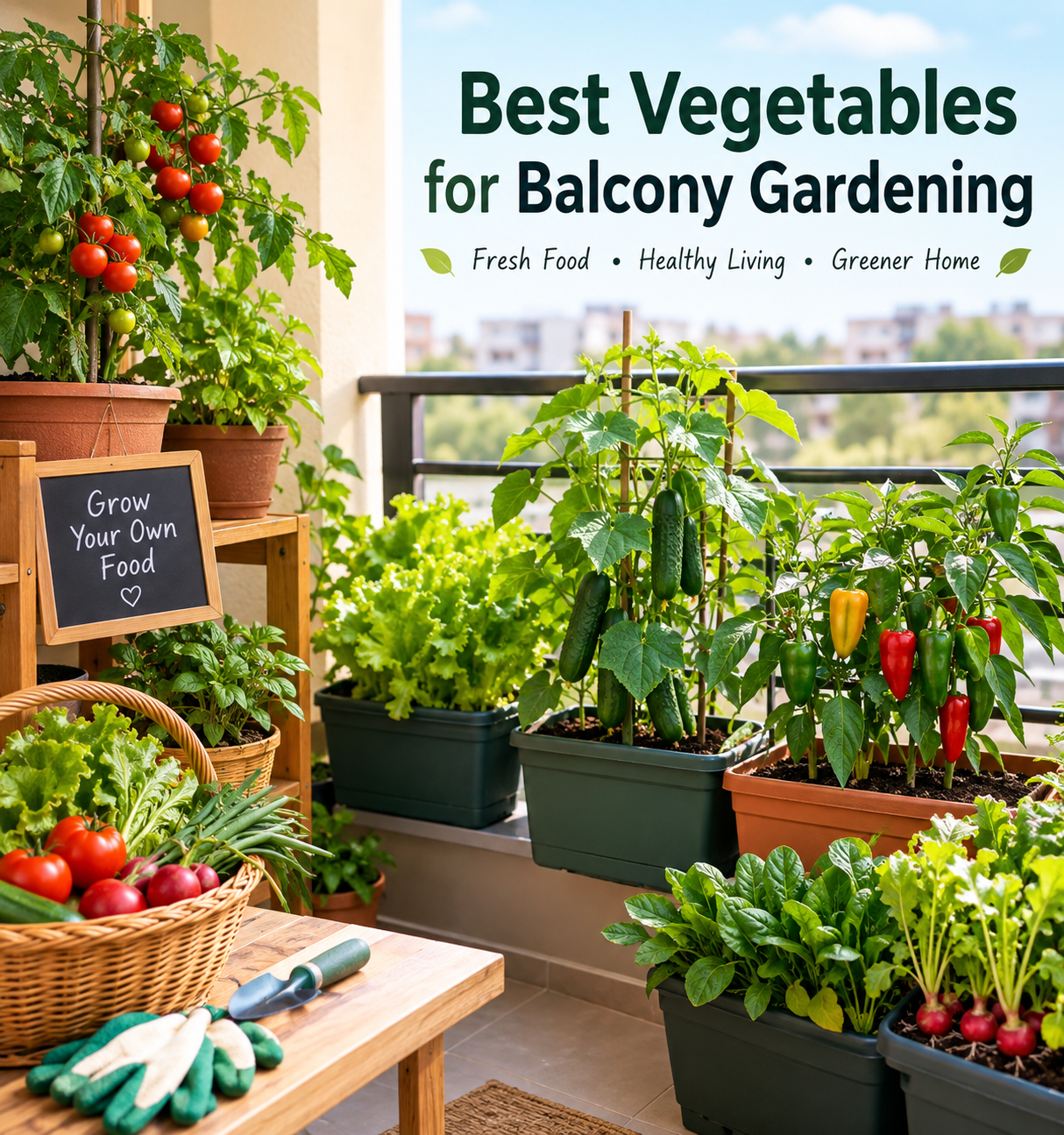
Balcony gardening is one of my favorite ways to grow fresh vegetables when there is not enough space for a traditional garden. You do not need a large backyard or expensive gardening equipment to enjoy homegrown food. With a few containers, good soil, enough sunlight, and regular care, a small balcony can become a productive vegetable garden.
In my experience, the most important thing is choosing the right vegetables. Some vegetables need a lot of space, while others grow very well in pots and containers. If you are new to balcony gardening, starting with easy vegetables can make the whole experience much more enjoyable.
In this article, I will share some of the best vegetables for balcony gardening, along with simple tips that can help you grow them successfully.
1. Tomatoes
Tomatoes are one of the best vegetables for balcony gardening. They grow well in containers and can produce a good harvest when they receive enough sunlight. I especially recommend compact or dwarf tomato varieties for small balconies because they do not require as much space as large plants.
A container should have proper drainage and enough depth for the roots. Tomatoes generally enjoy several hours of sunlight each day. I also like to provide a small support stake or cage because tomato plants can become heavy as they grow.
Water the plant regularly, but avoid keeping the soil constantly wet. With proper care, you can enjoy fresh tomatoes directly from your balcony.
2. Lettuce
Lettuce is another excellent choice for a small balcony garden. It does not need a deep container and grows relatively quickly. This makes it a good vegetable for beginners who want to see results without waiting for a long time.
Lettuce prefers cooler conditions and can be grown in shallow containers. I find that placing the container where the plant receives gentle sunlight works well, especially during warmer weather.
One useful thing about lettuce is that you can harvest the outer leaves while allowing the plant to continue growing. This gives you fresh leaves for salads over a longer period.
3. Spinach
Spinach is a practical vegetable for balcony gardening because it can grow in containers and does not require much space. It is also useful for people who want to grow nutritious leafy vegetables at home.
I recommend using a container with good drainage and keeping the soil slightly moist. Spinach generally prefers cooler weather, so it can be especially enjoyable to grow during suitable seasons.
You can harvest individual leaves as needed instead of removing the entire plant. This simple harvesting method can provide fresh spinach for cooking while the plant continues producing new leaves.
4. Radishes
If you want a vegetable that grows quickly, radishes are worth considering. They are compact and can be grown in containers with enough depth for the roots.
Radishes usually do not require a large amount of space, which makes them suitable for small balconies. I like growing them because they can provide a satisfying result for beginner gardeners.
Use loose soil so the roots can develop properly. Water the plants consistently and avoid allowing the soil to become extremely dry. Depending on the variety and growing conditions, you may be able to harvest radishes relatively quickly.
5. Green Onions
Green onions are among the easiest vegetables to grow in containers. They require limited space and can be grown in pots, boxes, or other suitable containers with drainage holes.
I find green onions particularly useful because they can be harvested gradually. You can cut the green portions when needed and allow the plant to continue growing.
Place the container in a location with suitable sunlight and keep the soil moderately moist. Green onions are a simple option for anyone starting their first balcony vegetable garden.
6. Peppers
Peppers are another excellent vegetable for growing on a balcony. Both sweet peppers and hot peppers can grow successfully in containers when they receive enough sunlight.
I prefer using a reasonably large container because pepper plants need enough room for their roots. Good drainage is also important because excess water can create problems for the roots.
Peppers generally enjoy warm conditions and plenty of sunlight. With regular watering and suitable soil, a single healthy plant can produce several peppers during the growing season.
7. Carrots
Many people assume carrots need a large garden, but they can also be grown in containers. The main requirement is choosing a container that is deep enough for the particular carrot variety.
Shorter carrot varieties are usually easier for balcony gardening because they require less depth. I recommend loose, stone free soil so the roots can grow without unnecessary obstacles.
Carrots require patience compared with some leafy vegetables, but harvesting them from your own balcony can be very rewarding.
8. Cucumbers
Cucumbers can grow well on a balcony if you give them enough vertical support. They naturally like to spread, so growing them upward can save valuable floor space.
I recommend using a large container and adding a trellis or sturdy support. This allows the vines to climb instead of taking over the entire balcony.
Cucumbers generally need regular watering because they can become stressed when the soil dries out too much. With enough sunlight, water, and support, container grown cucumber plants can produce fresh vegetables throughout the growing season.
9. Bush Beans
Bush beans are a good option when you want a productive vegetable that does not require a complicated setup. They can grow in containers and usually remain more compact than climbing varieties.
I like bush beans because they can provide a useful harvest from a relatively small space. Choose a container with drainage holes and place it somewhere that receives suitable sunlight.
Regular harvesting is also helpful because picking mature beans can encourage the plant to continue producing.
10. Peas
Peas can be a great choice for balcony gardeners, especially during cooler growing seasons. They can be grown in containers and usually benefit from some type of support.
You can use a simple trellis or other safe structure to help the vines climb. I find that vertical growing is one of the best ways to use limited balcony space efficiently.
Keep the soil reasonably moist and provide suitable sunlight. Peas can be especially satisfying because you can watch the vines develop and eventually produce fresh pods.
11. Swiss Chard
Swiss chard is another leafy vegetable that works well in containers. It can provide colorful leaves and does not require a huge amount of space.
I like Swiss chard because it can be harvested gradually. You can remove the larger outer leaves while allowing smaller leaves to continue developing.
Use a container with enough room for healthy root development and make sure excess water can escape. Regular watering and suitable sunlight can help maintain strong growth.
12. Kale
Kale is a useful choice for people who want to grow leafy greens on a balcony. It can tolerate cooler conditions and can be grown in containers with suitable soil.
Kale does not need to be harvested all at once. You can pick mature outer leaves and leave the center of the plant growing.
For beginners, this gradual harvesting method is convenient because you can collect only what you need for meals.
How to Choose Vegetables for Your Balcony
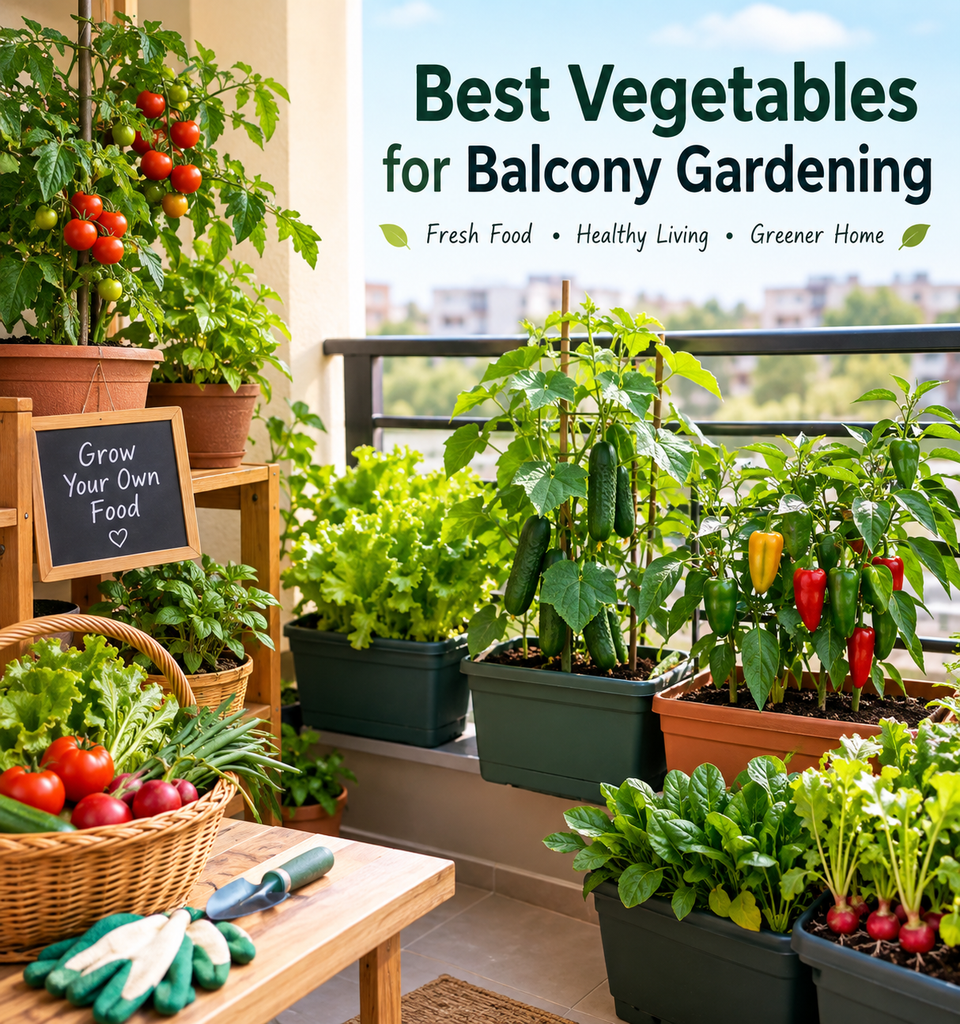
Before buying seeds or plants, I recommend looking carefully at your balcony. The amount of sunlight is one of the most important factors. Some vegetables need several hours of direct sunlight, while leafy greens may perform better with less intense light.
Container size is another important consideration. Vegetables with larger root systems need larger containers, while lettuce, radishes, and green onions can work well in smaller spaces.
You should also consider the weight of containers. Wet soil can become surprisingly heavy, especially when several large pots are placed together. If you live in an apartment, make sure your balcony can safely support your gardening setup.
Best Containers for Balcony Vegetables
You can use many different types of containers for balcony gardening. Plastic pots are lightweight and easy to move. Fabric grow bags can also be useful because they provide good airflow around the roots.
Whatever container you choose, drainage is essential. Water should be able to escape through holes at the bottom. Without proper drainage, the soil can remain too wet and damage plant roots.
I also recommend choosing containers based on the mature size of the vegetable rather than the size of the young plant. A small seedling may look comfortable in a tiny pot, but it can quickly outgrow the available space.
Soil and Watering Tips
Good soil can make a major difference when growing vegetables in containers. I prefer using a quality container gardening mix that is lightweight and drains well.
Avoid using heavy garden soil by itself because it can become compacted inside containers. A suitable growing mix gives roots better access to air and water.
Watering should be based on the plant, container, weather, and soil condition. Instead of following a strict schedule, I usually check the soil first. If the top layer feels dry, the plant may need water.
At the same time, avoid overwatering. More water does not always mean healthier plants.
Give Your Plants Enough Sunlight
Sunlight is one of the biggest factors affecting balcony vegetable gardening. Before placing your containers permanently, observe how sunlight moves across your balcony during the day.
Tomatoes, peppers, cucumbers, and beans generally appreciate plenty of sunlight. Lettuce and some leafy greens can be more flexible depending on the variety and local conditions.
If one part of your balcony receives more sunlight, place vegetables that need more light there. Use slightly less sunny areas for vegetables that can tolerate those conditions.
Final Thoughts
Growing vegetables on a balcony is a simple and rewarding way to enjoy gardening even when you have limited space. You do not need dozens of containers or a complicated setup. Starting with a few easy vegetables can teach you how plants respond to sunlight, water, soil, and regular care.
In my opinion, tomatoes, lettuce, spinach, radishes, green onions, peppers, carrots, cucumbers, beans, peas, Swiss chard, and kale are some of the best vegetables for balcony gardening. The right choices will depend on your available space, sunlight, container size, and local growing conditions.
I recommend starting small rather than trying to grow everything at once. Choose three or four vegetables that you actually enjoy eating. Once you become comfortable with watering, feeding, harvesting, and caring for your plants, you can gradually expand your balcony garden.
The best part of balcony gardening is the satisfaction of growing something yourself. Even a few pots can provide fresh vegetables, make your outdoor space greener, and give you a relaxing hobby. With patience and consistent care, your balcony can become a small but productive vegetable garden.
Leave a Reply