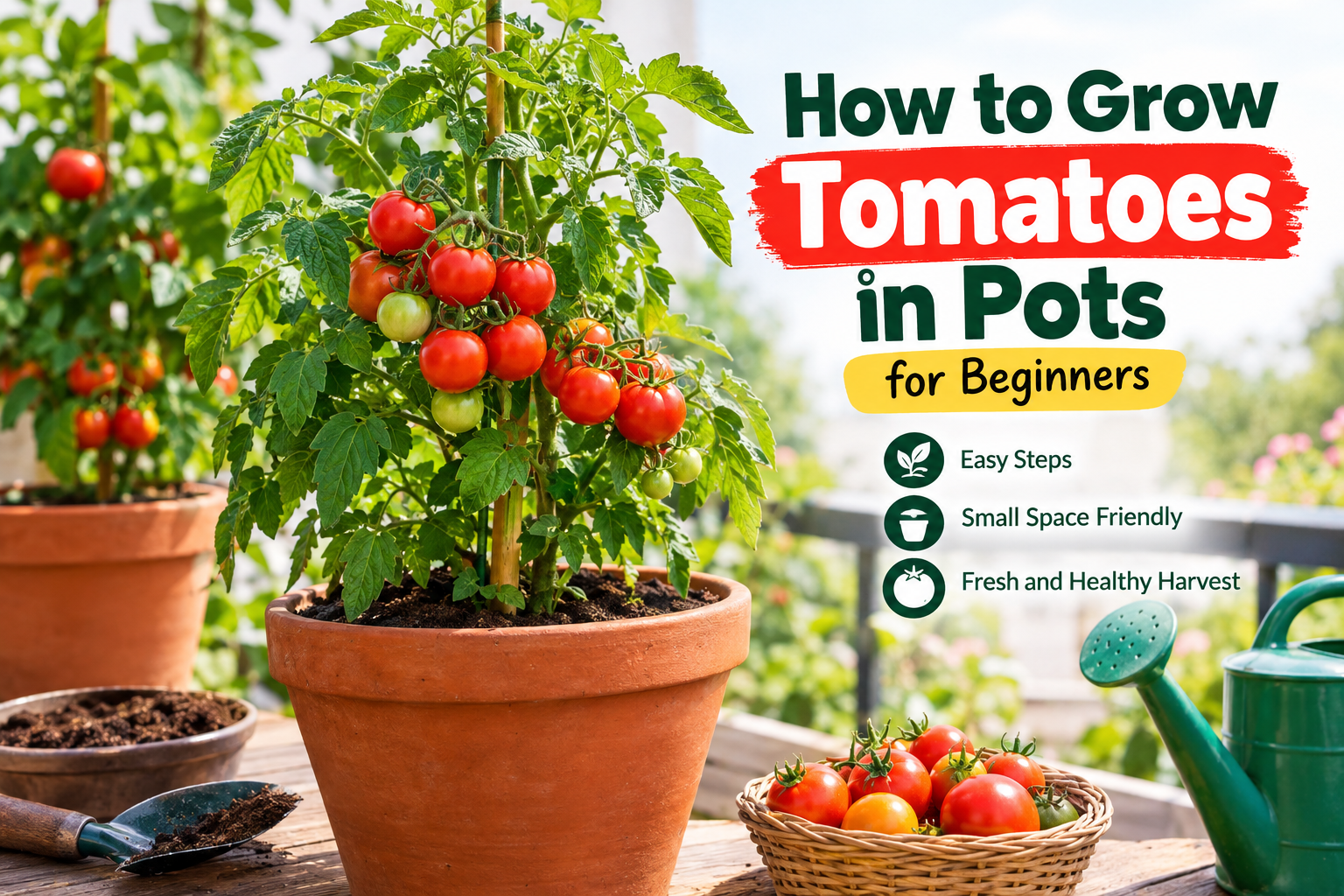
Growing tomatoes in pots is one of the easiest ways to start a small home garden, especially if you do not have a large backyard. I personally like container gardening because it allows me to grow fresh vegetables even when space is limited. With the right pot, good soil, enough sunlight, regular watering, and a little patience, growing tomatoes in pots can be a very rewarding experience.
Tomatoes grow well in containers because their roots can develop properly when they have enough space and suitable soil. You can grow tomatoes on a balcony, terrace, patio, rooftop, or even in a sunny area near your home. In this guide, I will explain how to grow tomatoes in pots for beginners using simple steps that are easy to follow.
Choose the Right Tomato Variety
The first thing I recommend is choosing a tomato variety that is suitable for container gardening. Not every tomato plant has the same growth habit. Some varieties grow compactly while others become very tall and require strong support.
Determinate tomato varieties are usually a good choice for beginners because they have a more compact growth pattern. They produce tomatoes over a shorter period and are easier to manage in containers. Some dwarf and patio tomato varieties are also excellent for small spaces.
If you want to grow larger tomato varieties, you can still use pots, but you will need a larger container and stronger support. Before buying seeds or seedlings, check the expected mature size of the plant.
Select a Suitable Pot
Choosing the right pot is one of the most important parts of growing tomatoes in containers. Tomatoes need enough room for their roots to grow. A pot that is too small can restrict root development and make it difficult for the plant to produce a healthy harvest.
For most tomato plants, I prefer using a pot that is at least 12 inches deep and reasonably wide. Larger varieties may need a container that holds several gallons of soil. Bigger pots also hold moisture for longer, which can make watering easier during hot weather.
Always choose a container with drainage holes at the bottom. Excess water needs somewhere to escape because constantly wet soil can damage tomato roots.
Use Good Quality Potting Soil
The soil you use can make a big difference in your tomato plants. I recommend using a quality potting mix instead of ordinary garden soil. Garden soil can become heavy and compact inside a container, which may reduce drainage and airflow around the roots.
A good potting mix should be loose, well draining, and capable of holding enough moisture for healthy plant growth. You can also mix in compost to provide organic matter and improve the overall quality of the growing medium.
Avoid filling the pot with soil from your garden alone. Container plants need a growing medium that allows both water and air to move around the roots.
Give Tomatoes Plenty of Sunlight
Tomatoes love sunlight. In my experience, placing tomato plants in a bright and sunny location is one of the simplest ways to encourage strong growth.
Try to provide around six to eight hours of direct sunlight each day. A sunny balcony, terrace, patio, or garden area can work well. If your tomato plant receives very little sunlight, it may become weak and produce fewer tomatoes.
Before placing your pot permanently, observe the sunlight in your chosen location throughout the day. This can help you find the brightest area for your plants.
Plant the Tomato Correctly
If you are starting with a young tomato plant, gently remove it from its original container. Be careful not to damage the roots during transplantation.
One useful feature of tomato plants is that they can develop roots along part of their buried stem. Because of this, you can plant a tomato seedling slightly deeper than many other vegetable seedlings. Remove the lower leaves if necessary and place the plant into the soil while keeping the upper healthy leaves above the surface.
After planting, gently press the soil around the plant and water it thoroughly. This helps the roots settle into their new environment.
Water Tomato Plants Properly
Watering is very important when learning how to grow tomatoes in pots. Container plants can dry out faster than plants growing directly in the ground, especially during hot weather.
I usually check the soil with my finger before watering. If the top inch of soil feels dry, it is often time to water. Water slowly around the base of the plant until some water begins to come out of the drainage holes.
Try to keep the moisture level relatively consistent. Allowing the soil to become extremely dry and then giving the plant a large amount of water can create stress. Consistent watering can also help reduce problems such as cracked fruit.
During very hot weather, container tomatoes may need more frequent watering. Always check the soil rather than following a strict schedule.
Support the Tomato Plant
Many tomato plants become heavy as they grow and produce fruit. Without support, the stems may bend or break.
You can use a tomato cage, wooden stake, or another suitable garden support. I prefer adding support early because it is easier to position the support while the plant is still small.
As the plant grows, gently guide the stems toward the support. Avoid tying the plant too tightly because the stem needs room to grow.
Supporting the plant also keeps the leaves and fruit away from the ground, which can improve airflow and make harvesting easier.
Feed Your Tomato Plants
Tomatoes are heavy feeders, especially when they begin producing flowers and fruit. Good soil provides a strong foundation, but plants may benefit from additional nutrients during the growing season.
You can use a fertilizer designed for vegetables or tomatoes and follow the instructions on the product label. Avoid using excessive fertilizer because too many nutrients can encourage lots of leafy growth while reducing fruit production.
Compost can also be useful when preparing your potting mix. I prefer a balanced approach rather than adding large amounts of fertilizer at once.
Remove Unhealthy Leaves
Regularly inspect your tomato plant for yellow, damaged, or diseased leaves. Removing unhealthy leaves can help keep the plant cleaner and improve airflow.
Do not remove large amounts of healthy foliage without a reason. Tomato leaves help the plant produce energy through sunlight, so healthy leaves are important for growth and fruit development.
If you notice unusual spots, discoloration, or pests, inspect the plant carefully and take action early. Problems are generally easier to manage when noticed at an early stage.
Watch for Common Tomato Problems
Growing tomatoes in pots is fairly simple, but plants can still experience problems. Common issues include yellow leaves, wilting, pests, poor fruit production, and fungal diseases.
Many problems are connected to watering, poor airflow, insufficient sunlight, or unsuitable soil. This is why I recommend checking your plants regularly rather than waiting until something looks seriously wrong.
Look underneath the leaves for small insects and inspect the stems for damage. Keeping the area around your pots clean can also help reduce potential problems.
Good spacing is important too. Avoid placing several large tomato plants too close together because crowded plants have less airflow.
Help Your Tomatoes Produce Fruit
Once tomato plants start flowering, you may notice small yellow flowers developing. These flowers eventually become tomatoes when successfully pollinated.
Outdoor tomato plants are often naturally pollinated by wind and insects. If your plants are growing in a sheltered balcony or another location with limited insect activity, gently shaking the plant or tapping the support can help distribute pollen.
Avoid disturbing the flowers too aggressively. A gentle movement is enough.
Harvest Tomatoes at the Right Time
One of the most enjoyable parts of growing tomatoes in pots is harvesting your own fresh tomatoes. Depending on the variety, tomatoes may change from green to yellow, orange, pink, or red as they mature.
I usually harvest tomatoes when they have developed their expected mature color and feel slightly firm. Some tomatoes can also be picked when they are beginning to change color and allowed to finish ripening indoors.
Use clean hands or garden scissors when harvesting. Avoid pulling the fruit forcefully because this can damage the plant.
Tips for Growing Tomatoes in Pots Successfully
If you are a beginner, keep your tomato gardening routine simple. Choose a suitable variety, use a large container, provide good soil, and place the pot somewhere sunny.
Check the soil regularly and water when necessary. Provide support before the plant becomes too large. Feed the plant according to the fertilizer instructions and regularly inspect the leaves for pests or disease.
Another useful tip is to avoid overcrowding your containers. Giving each tomato plant enough room can make maintenance easier and improve airflow.
Most importantly, do not become discouraged if your first plant does not produce a perfect harvest. Gardening is a learning process. Each season gives you a better understanding of sunlight, watering, soil, temperature, and plant growth.
Final Thoughts
Learning how to grow tomatoes in pots for beginners does not have to be complicated. With a suitable container, healthy soil, plenty of sunlight, regular watering, and basic plant support, you can grow productive tomato plants in a surprisingly small space.
I believe tomatoes are one of the best vegetables to start with if you are new to container gardening. They grow quickly, look attractive, and provide a satisfying harvest when cared for properly.
Start with one or two plants and learn how they respond to your growing conditions. Once you understand their watering, sunlight, and feeding needs, you can expand your container garden with more varieties.
Growing tomatoes at home can save you a trip to the store, but for me, the biggest benefit is enjoying fresh tomatoes that I have grown myself. With patience and consistent care, even beginners can successfully grow tomatoes in pots and enjoy a fresh homegrown harvest.
Leave a Reply