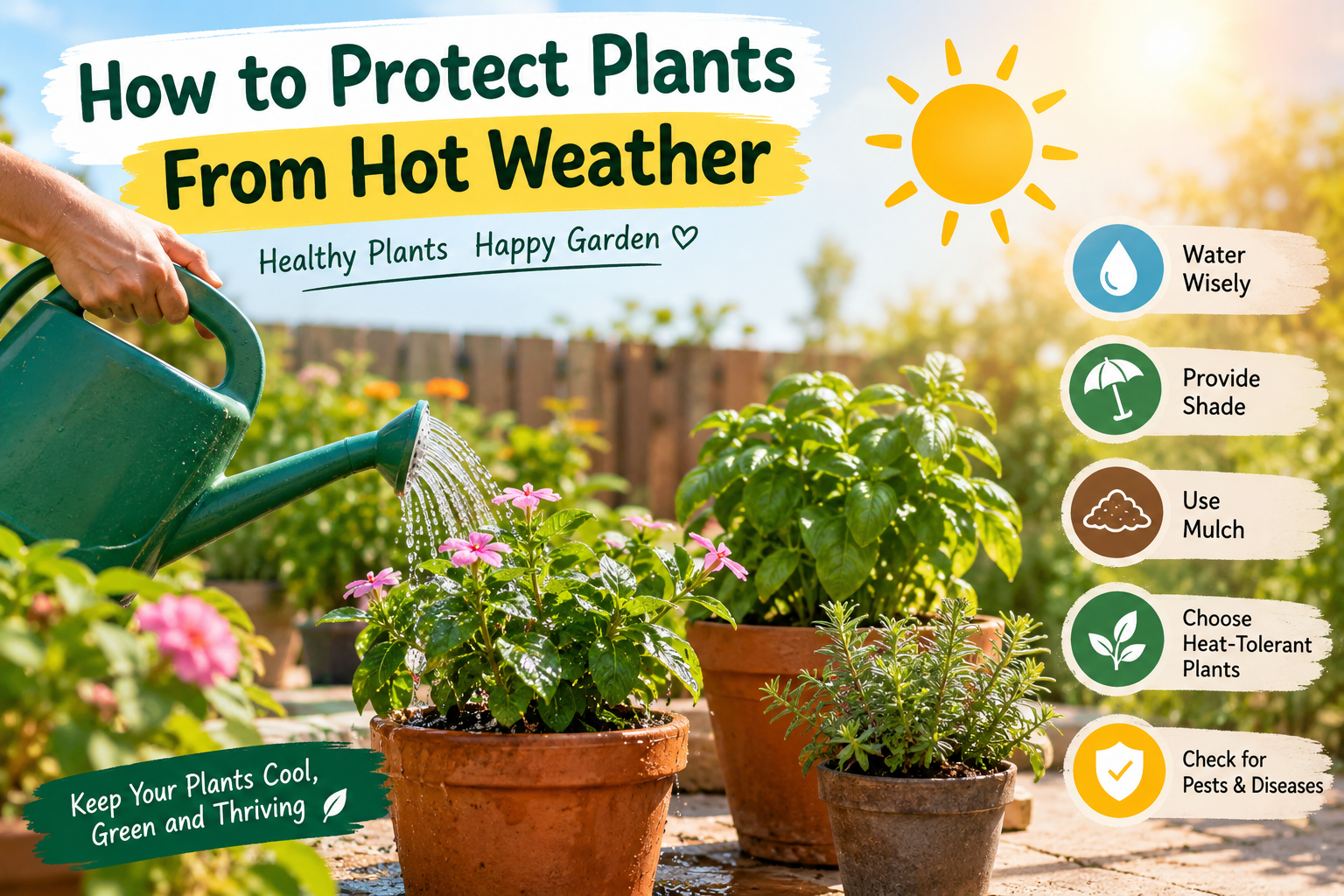
Hot weather can be difficult for plants, especially when temperatures stay high for several days. I have noticed that plants can look healthy in the morning but start to wilt, lose their leaves, or develop dry edges by afternoon. This usually happens because heat increases water loss and puts extra stress on the plant.
Learning how to protect plants from hot weather is important for anyone who grows flowers, vegetables, herbs, or indoor and outdoor plants. The good thing is that protecting plants from extreme heat does not always require expensive equipment. With proper watering, shade, mulch, suitable planting locations, and regular observation, plants can handle hot conditions much better.
In this article, I will share some practical plant care tips that I find useful during hot weather. These methods are simple enough for beginners and can help keep plants healthy, green, and growing throughout the summer.
Why Hot Weather Is Harmful to Plants
Plants need sunlight to produce energy, but too much heat can create problems. When temperatures become very high, water evaporates quickly from the soil. Plants also lose moisture through their leaves. If the roots cannot replace this moisture quickly enough, the plant may begin to wilt.
Extreme heat can also cause leaf burn, dry soil, weak growth, flower loss, and fruit problems. Young plants and plants growing in containers are often more sensitive because their roots have less space and the soil can become hot very quickly.
This is why I believe that plant care during hot weather should focus on keeping the roots cool and providing enough moisture without creating waterlogged soil.
Water Plants at the Right Time
One of the most important ways to protect plants from hot weather is proper watering. During very hot days, plants can lose water much faster than normal.
I prefer watering plants early in the morning because the temperature is usually lower and the soil has more time to absorb the moisture. Morning watering also gives plants access to water before the strongest heat arrives.
If morning watering is not possible, evening can also work. However, I avoid leaving plant leaves wet for long periods overnight because excessive moisture on foliage can sometimes encourage fungal problems.
The important thing is to water the soil deeply rather than giving the plant a small amount of water every few hours. Deep watering encourages roots to grow further into the soil, where moisture may remain available for longer.
Check the Soil Before Watering
A common mistake is watering plants based only on the temperature. Hot weather does not always mean that every plant needs water immediately.
Before watering, I like to check the soil with my finger. If the top layer feels dry, the plant may need water. If the soil is still moist below the surface, additional water may not be necessary.
Different plants also have different water requirements. Succulents, herbs, flowers, vegetables, and tropical plants cannot all be treated in exactly the same way.
Checking the soil helps prevent both underwatering and overwatering. Too little water can cause stress, while too much water can reduce oxygen around the roots and lead to root problems.
Provide Shade During Extreme Heat
Strong sunlight combined with high temperatures can be stressful for many plants. Providing shade during the hottest part of the day can help reduce heat stress.
For plants growing in containers, I find it easier to move them to a location where they receive morning sunlight but get protection from intense afternoon sun.
For garden plants, shade cloth can be useful. A temporary shade structure can protect sensitive plants during heat waves without completely blocking sunlight.
The goal is not always to keep plants in complete darkness. Plants still need light for healthy growth. The idea is to reduce exposure to the strongest heat and sunlight when conditions become extreme.
Use Mulch to Keep Soil Cool
Mulching is one of my favorite ways to protect plants during hot weather. A layer of organic mulch placed around plants can help slow down water evaporation and keep the soil cooler.
Materials such as dry leaves, straw, compost, and other suitable organic matter can be used as mulch. Mulch also helps reduce weed growth, which is useful because weeds compete with plants for water and nutrients.
When applying mulch, I leave a small space around the main stem of the plant. Placing thick, wet mulch directly against the stem can sometimes create problems.
A good layer of mulch can make a noticeable difference during hot and dry weather.
Protect Container Plants From Heat
Plants growing in containers often need extra attention during summer. Containers have limited soil, so they can dry out much faster than plants growing directly in the ground.
Dark colored containers can also become very hot when exposed to direct sunlight. The heat can transfer into the soil and affect the roots.
I recommend placing container plants where they receive suitable sunlight but are protected from the strongest afternoon heat. You can also group containers together so the foliage creates a slightly cooler environment.
It is also important to make sure containers have proper drainage holes. Keeping the roots constantly wet is not a solution to hot weather stress.
Avoid Fertilizing During Severe Heat
Fertilizer can support plant growth, but I prefer avoiding heavy feeding when plants are already struggling with extreme heat.
When a plant is under heat stress, its growth may slow down naturally. Adding a large amount of fertilizer during this period can create additional stress, especially if the soil is dry.
I usually focus first on water, shade, and healthy soil conditions. Once the weather becomes more comfortable and the plant begins actively growing again, regular feeding can be considered according to the needs of that particular plant.
Protect Plants From Hot Afternoon Sun
Not every plant needs protection from sunlight throughout the entire day. Many plants actually need several hours of sunlight for healthy growth.
The afternoon sun is usually the biggest concern during extreme summer weather. If a plant is sensitive to heat, providing protection during the hottest hours can help prevent leaf damage.
You can use shade cloth, a garden umbrella, nearby trees, or temporary structures to reduce direct afternoon exposure.
I always try to understand the plant before changing its location. Some plants love full sun, while others grow better with partial shade.
Keep an Eye on Leaves
Leaves can tell you a lot about how a plant is handling hot weather. Wilting, curling, brown edges, yellowing, and dry patches can all indicate that something is wrong.
However, not every wilted leaf means the plant needs more water. Some plants temporarily droop during extreme afternoon heat and recover when temperatures become cooler.
I recommend checking the plant again in the evening and inspecting the soil before adding more water.
If leaves remain wilted for a long time and the soil is dry, the plant may need deeper watering. If the soil is very wet, adding more water could make the problem worse.
Protect the Roots
Healthy roots are extremely important during hot weather. If the roots remain healthy, plants have a better chance of recovering from temporary heat stress.
Mulch, suitable watering, good soil, and protection from extreme temperature changes can all support root health.
For container plants, avoiding extremely hot surfaces such as metal or concrete can also help. Placing pots on a suitable surface and moving them away from direct afternoon heat can reduce the temperature around the roots.
Choose Heat Tolerant Plants
One of the easiest long term ways to deal with hot weather is choosing plants that naturally tolerate warm conditions.
Some flowers, herbs, vegetables, and ornamental plants are better adapted to heat than others. When choosing plants for your garden, I recommend checking their growing requirements and selecting varieties that suit your local climate.
A plant that naturally performs well in warm conditions will usually require less protection than a plant that prefers cooler temperatures.
This does not mean heat tolerant plants can survive without water. They still need appropriate care, especially during long periods of extreme heat.
Avoid Unnecessary Pruning
Pruning can sometimes help plants, but I avoid heavy pruning during periods of extreme heat unless there is a clear reason to do it.
Leaves provide shade for branches, stems, and sometimes the soil around the roots. Removing too much foliage can expose more parts of the plant to direct sunlight.
If you need to remove damaged leaves, I prefer doing only what is necessary and waiting for cooler conditions before carrying out major pruning.
Watch for Pests During Hot Weather
Hot and dry weather can sometimes create favorable conditions for certain garden pests. Plants already stressed by heat may also become more vulnerable.
I recommend checking both the upper and lower surfaces of leaves regularly. Look for tiny insects, sticky residue, holes, webbing, or unusual spots.
Early detection makes pest problems easier to manage. Instead of immediately using strong treatments, identify the pest first and choose a suitable method based on the plant and the problem.
Give Plants Good Airflow
Good airflow is important even during hot weather. Crowded plants can have difficulty drying properly after watering, while poor airflow can contribute to some plant diseases.
I try to avoid placing plants too close together. Proper spacing allows air to move around the leaves and also makes it easier to inspect plants for pests or diseases.
Good airflow combined with appropriate watering can support healthier foliage throughout the growing season.
Do Not Overwater Heat Stressed Plants
It can be tempting to give a struggling plant lots of water when it looks wilted. However, overwatering can sometimes be just as harmful as underwatering.
If the soil is already wet, adding more water may create poor conditions around the roots. The plant may continue to look unhealthy even though the soil contains plenty of moisture.
This is why I always check the soil before watering. Good plant care is about balance rather than simply adding more water.
Final Thoughts
Protecting plants from hot weather is mainly about reducing stress and maintaining healthy growing conditions. Watering at the right time, checking soil moisture, providing afternoon shade, using mulch, protecting container plants, and choosing suitable plant varieties can make a big difference.
From my experience, regular observation is one of the most useful habits a gardener can develop. Plants often show signs of stress before serious damage occurs. When I notice curled leaves, dry soil, brown edges, or unusual wilting, I check the plant and its growing conditions instead of immediately assuming it needs more water.
Every plant is different, so there is no single method that works perfectly for every garden. The best approach is to understand the needs of your plants and adjust your care routine according to the weather.
With a little preparation and consistent attention, you can help your plants survive hot weather and continue growing beautifully throughout the summer.
Leave a Reply