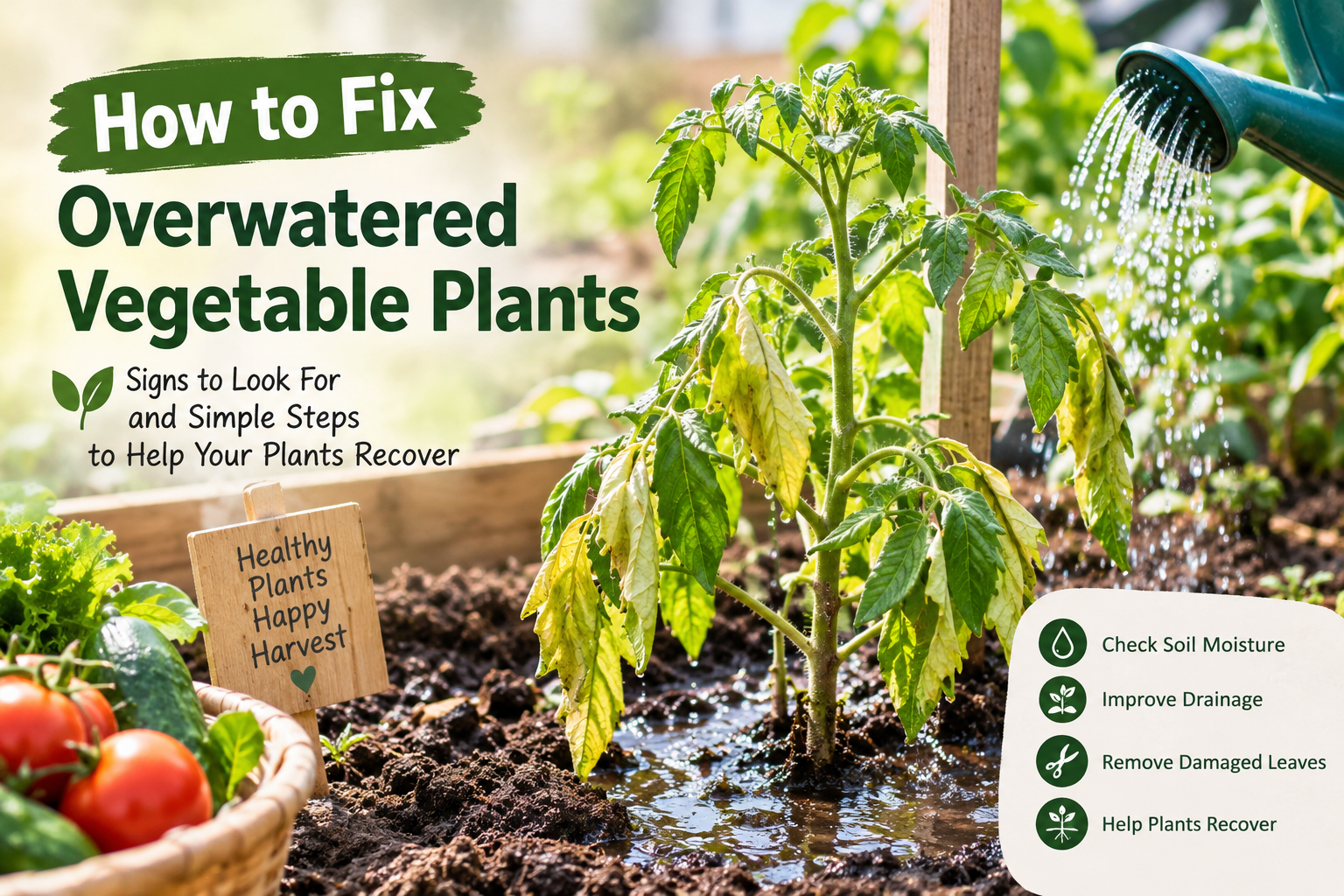
Growing vegetables at home can be very rewarding, but sometimes we can actually give our plants too much care. One of the most common problems I have seen in vegetable gardens is overwatering. Many gardeners think that watering more often will help plants grow faster and healthier. In reality, too much water can create serious problems for the roots and leaves.
If your vegetable plants are looking weak, yellow, droopy, or unhealthy even though you are watering them regularly, overwatering may be the reason. The good news is that an overwatered vegetable plant can often recover if you identify the problem early and take the right steps.
In this article, I will explain how to fix overwatered vegetable plants, how to recognize the signs of excess water, and how to prevent the problem from happening again.
What Happens When Vegetable Plants Get Too Much Water?
Vegetable plant roots need both water and oxygen. When soil stays wet for too long, the spaces around the roots become filled with water instead of air. This makes it difficult for the roots to get enough oxygen.
When roots cannot breathe properly, they become weak and may eventually begin to rot. A damaged root system cannot absorb nutrients and water efficiently. This can cause the plant to look thirsty even when the soil is completely wet.
This is one reason why overwatering can be confusing. A plant may have plenty of water around its roots but still show signs of stress.
From my experience, the best approach is not to follow a fixed watering schedule. Instead, I prefer checking the soil and the condition of the plant before adding more water.
Signs of an Overwatered Vegetable Plant
The first step in fixing an overwatered vegetable plant is recognizing the symptoms. Several signs can indicate that your plant is receiving too much water.
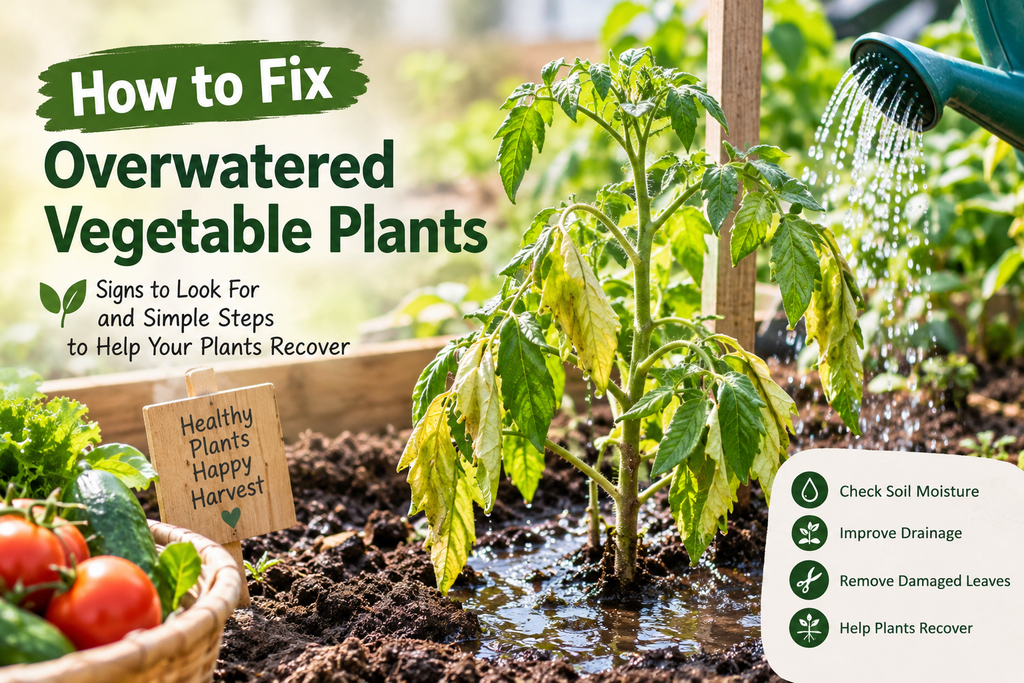
Yellow leaves are one of the most common symptoms. Older leaves may turn yellow first, while newer growth can become weak and pale.
Another common sign is drooping. Many people assume that drooping leaves always mean a plant needs water. However, overwatered plants can also droop because damaged roots cannot function properly.
You may also notice slow growth, soft stems, falling leaves, or soil that remains wet for several days.
In more serious cases, the plant may develop brown or black roots with an unpleasant smell. This can indicate root rot.
Mold or algae growing on the surface of constantly wet soil can also be a warning sign. While surface growth does not automatically mean the roots are damaged, it can suggest that the soil is staying excessively moist.
Stop Watering Temporarily
The first thing I recommend doing when you suspect overwatering is simple. Stop watering the plant for a while.
Do not immediately add more water because the leaves look droopy. Instead, check the moisture level several inches below the surface.
If the soil is still wet, give it time to dry naturally. The exact drying time depends on the weather, soil type, container size, and plant variety.
During this recovery period, place container plants somewhere they can receive suitable light and good airflow. Avoid putting them in an extremely hot location just because you want the soil to dry quickly. Sudden heat stress can create another problem.
Patience is important here. Plants need time to recover after their roots have been stressed.
Check the Soil Moisture
Before watering again, check the soil moisture with your finger. Push your finger into the soil several inches deep if possible.
If the soil feels wet and sticks together easily, you probably do not need to water yet. If the upper layer feels dry but the deeper soil is still wet, wait a little longer.
For larger containers, a moisture meter can also help. However, I believe learning to feel the soil is one of the most useful gardening skills because it does not require special equipment.
The goal is not to keep the soil completely dry. Vegetable plants need consistent moisture. The goal is to maintain balanced moisture without keeping the roots constantly saturated.
Improve Drainage
Poor drainage is one of the biggest causes of overwatering. Even if you water carefully, plants can suffer if excess water has nowhere to go.
For container vegetables, check whether the pot has drainage holes at the bottom. If the holes are blocked, water may remain trapped around the roots.
Make sure the container is not sitting directly in a tray filled with water. Empty excess water from the tray after watering.
For garden beds, compacted soil can also prevent proper drainage. Heavy clay soil may hold water for a long time. Adding suitable organic matter can improve soil structure over time.
Raised beds can also help in areas where the natural soil drains poorly. Good drainage allows excess water to move away from the root zone while still allowing the soil to retain enough moisture for healthy growth.
Remove Severely Damaged Leaves
If some leaves have become completely yellow, brown, or damaged, you can remove them carefully.
I prefer removing only leaves that are clearly dead or badly damaged rather than cutting away healthy green growth. Healthy leaves still help the plant produce energy through photosynthesis.
Use clean garden scissors or pruning shears when removing damaged plant material. Avoid making unnecessary cuts because a stressed plant needs to conserve its energy.
If the plant has only a few damaged leaves, there may be no need for heavy pruning. Give it time and allow healthy leaves to continue supporting recovery.
Check the Roots
If an overwatered plant is still declining after the soil has started drying, checking the roots may be helpful, especially for container plants.
Healthy roots are generally firm and light colored, although the exact appearance varies between plant types. Rotten roots may be soft, dark, slimy, or have an unpleasant smell.
If you find a small amount of damaged root tissue, carefully remove the obviously rotten sections with clean scissors. Be gentle with the remaining healthy roots.
If most of the root system has already been damaged, recovery becomes more difficult. In severe cases, the plant may not survive. However, giving the remaining healthy roots proper conditions can still provide the plant with a chance.
Give the Plant Good Airflow
Good airflow is another important part of helping overwatered vegetable plants recover.
When plants are surrounded by stagnant, humid air, leaves may stay wet for longer periods. This can increase the risk of certain fungal and bacterial problems.
Avoid overcrowding vegetables in the garden. Give plants enough space according to their mature size.
If plants are growing indoors or in a greenhouse, make sure there is reasonable ventilation.
Good airflow does not mean exposing plants to strong damaging winds. The idea is simply to create a healthier growing environment where moisture can evaporate naturally.
Avoid Fertilizing a Severely Stressed Plant
One mistake I would avoid is immediately adding lots of fertilizer when an overwatered vegetable plant looks weak.
A stressed root system may not be ready to absorb nutrients normally. Adding excessive fertilizer can create additional stress around the roots.
I prefer allowing the plant to recover first. Once you see new healthy growth and the root zone is functioning normally, you can return to a suitable feeding routine based on the vegetable and soil conditions.
Healthy soil and balanced watering are more important than trying to solve every plant problem with fertilizer.
Adjust Your Watering Routine
Once your vegetable plant begins recovering, change the way you water it.
Instead of watering every day automatically, check the soil first. Weather conditions also matter. Plants may need more water during hot, dry weather and less during cool or rainy periods.
Water slowly and deeply when the plant actually needs it. This encourages moisture to reach the root zone instead of simply wetting the surface.
Container plants often require more frequent attention because containers can dry faster than garden soil. However, container size, material, plant size, temperature, and sunlight all affect how quickly the soil loses moisture.
A simple habit of checking the soil before watering can prevent many overwatering problems.
Be Careful With Different Vegetable Plants
Not every vegetable has exactly the same watering requirements.
Tomatoes, peppers, cucumbers, lettuce, carrots, beans, and other vegetables can have different moisture preferences depending on their growth stage and growing conditions.
Seedlings usually require careful moisture management because their root systems are small. Mature plants may need deeper watering.
The soil type also makes a big difference. Sandy soil usually drains faster, while heavy soil may remain wet longer.
For this reason, I do not believe there is one watering schedule that works perfectly for every vegetable garden. It is better to observe your individual plants and soil.
How to Prevent Overwatering in the Future
Preventing overwatering is much easier than trying to save a badly damaged plant.
First, make sure your containers have proper drainage holes. Second, use a well structured growing medium that holds moisture without becoming constantly saturated.
Check the soil before watering and pay attention to rainfall. If your garden has received significant rain, you may not need to water at all.
Mulching can also help maintain more stable soil moisture. However, avoid creating an excessively thick or constantly wet layer around the plant stem.
It is also useful to group vegetables according to their general watering needs. This can make garden care easier and prevent some plants from receiving too much water simply because they are growing next to plants that require more frequent watering.
Can an Overwatered Vegetable Plant Recover?
Yes, many overwatered vegetable plants can recover if the problem is caught early.
Recovery depends on how long the roots have remained saturated and whether root rot has developed. A plant with mild stress may begin looking better after the soil moisture becomes balanced.
Do not expect an immediate transformation. Some yellow leaves may remain damaged even after the plant starts recovering. Instead, look for signs of new healthy growth.
New leaves, stronger stems, improved color, and better overall growth are positive signs.
If the roots are severely damaged, recovery may not be possible. In that situation, removing the unhealthy plant and improving the growing conditions before planting again may be the better choice.
Final Thoughts
Learning how to fix overwatered vegetable plants is mostly about understanding what your plants actually need instead of simply giving them more water.
When I see a vegetable plant looking weak or yellow, I do not automatically reach for the watering can. I first check the soil, drainage, leaves, and overall growing conditions. This simple habit can prevent many common gardening problems.
The most important steps are to stop watering temporarily, check soil moisture, improve drainage, remove severely damaged plant material, provide good airflow, and allow the roots time to recover.
Remember that healthy vegetable plants need a balance of water, oxygen, nutrients, light, and good soil conditions. Too little water can cause stress, but too much water can be just as harmful.
With careful observation and a little patience, many overwatered vegetable plants can recover and return to healthy growth. The best gardening routine is not about watering more. It is about watering wisely and paying attention to what your plants are telling you.
Leave a Reply