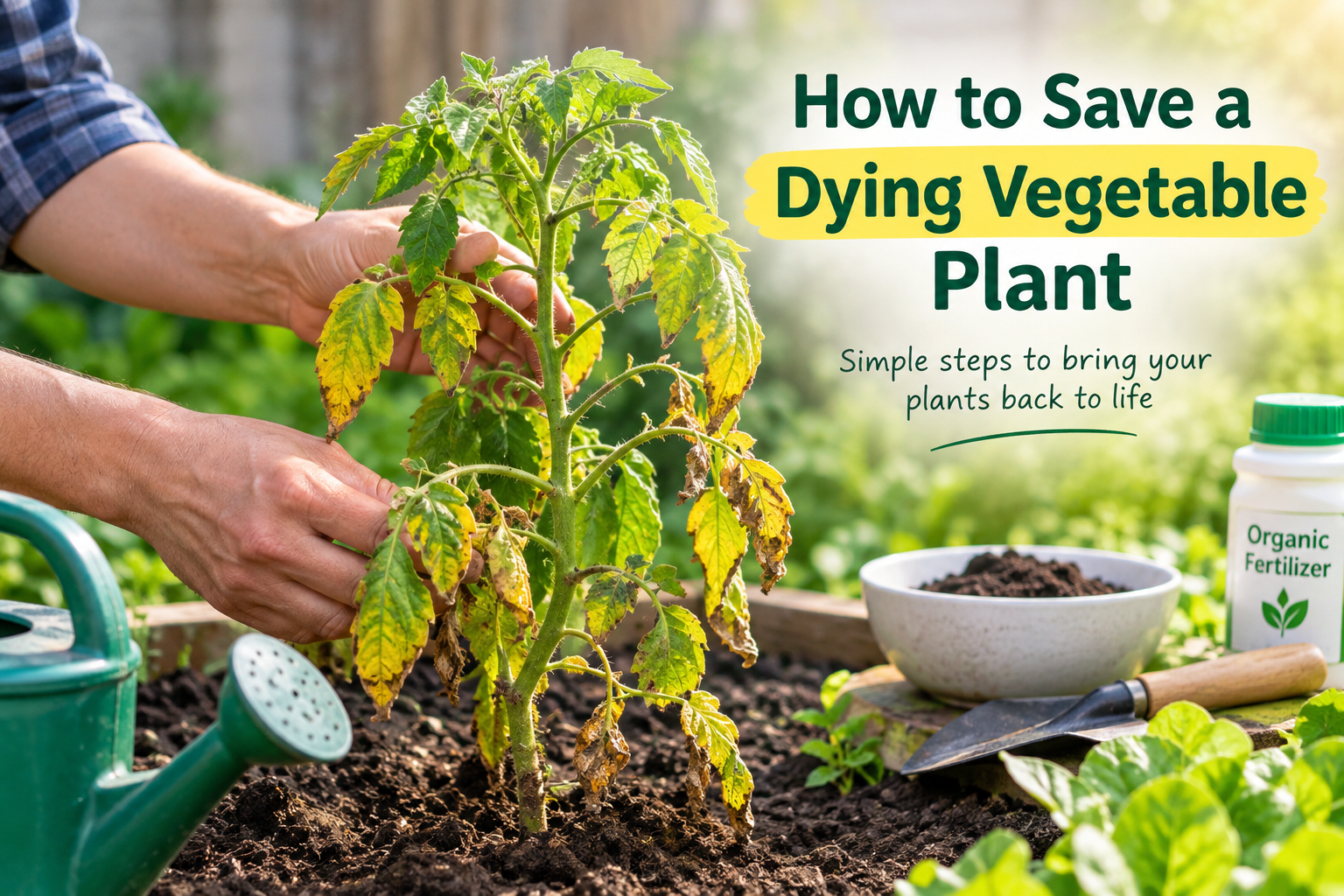
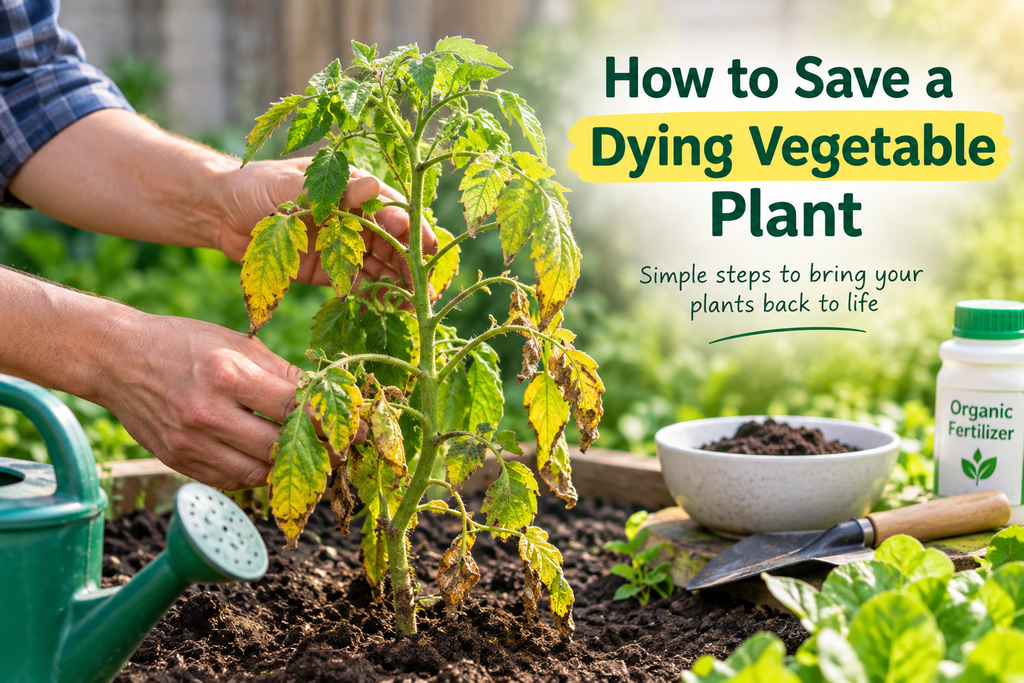
Seeing a vegetable plant slowly lose its color, strength, and healthy leaves can be disappointing, especially after spending weeks caring for it. I have learned that a dying vegetable plant does not always mean the plant is finished. In many cases, the problem can be identified and corrected if you act early.
The first thing I do when a vegetable plant looks unhealthy is avoid making quick changes without understanding the problem. Yellow leaves, wilting, dry soil, weak stems, slow growth, and brown spots can all have different causes. Too much water, too little water, poor soil, pests, diseases, extreme temperatures, and lack of sunlight can all affect plant health.
In this guide, I will explain how to save a dying vegetable plant using simple gardening methods that can work for many common vegetables.
Check the Plant Carefully
Before trying to save a dying vegetable plant, I believe it is important to inspect the entire plant. Look at the leaves, stems, soil, and roots if they are easy to access.
Check whether the leaves are yellow, brown, curled, spotted, or completely dry. Look closely for small insects under the leaves and around the stems. Also check the soil. If it feels extremely dry, the plant may not be receiving enough water. If the soil is constantly wet and smells unpleasant, overwatering may be the problem.
The condition of the stem can also tell you a lot. A healthy stem should normally feel firm for the type of plant you are growing. A soft or damaged stem may indicate disease, root problems, or physical damage.
Check the Soil Moisture
One of the most common reasons vegetable plants struggle is incorrect watering. Both underwatering and overwatering can cause serious problems.
I usually check the soil with my finger before watering. If the top layer feels dry, I check slightly deeper because the surface can sometimes dry faster than the soil around the roots.
If the soil is completely dry and the plant is wilted, give it a slow and thorough watering. Avoid flooding the soil suddenly. Water around the root area so moisture can reach the roots properly.
On the other hand, if the soil is already very wet, stop watering for a while. Allow excess moisture to drain naturally. A vegetable plant that is sitting in water can develop damaged roots, which makes it difficult for the plant to absorb water and nutrients.
Make Sure the Pot Has Drainage
If you are growing vegetables in containers, drainage is extremely important. A pot without proper drainage can trap water around the roots.
When I grow vegetables in containers, I always make sure there are drainage holes at the bottom. These holes allow extra water to escape and help prevent the soil from staying saturated.
If your plant is in a container without drainage, moving it into a suitable pot may make a major difference. Use a good quality growing medium that allows both water movement and air circulation.
Remove Dead and Damaged Leaves
Removing severely damaged leaves can help a struggling plant focus its energy on healthier growth. I do not remove every yellow leaf immediately because some yellowing can happen naturally as older leaves age.
However, completely brown, dead, diseased, or badly damaged leaves should generally be removed. Use clean gardening scissors when cutting damaged plant material.
Do not remove large amounts of healthy green foliage without a reason. Healthy leaves help the plant produce energy through photosynthesis. The goal is to remove unhealthy growth while protecting the healthy parts of the plant.
Check the Roots
Roots are often overlooked because they are hidden beneath the soil, but they are one of the most important parts of a vegetable plant.
If a container plant is seriously declining, carefully remove it from the pot and inspect the roots. Healthy roots are generally firm and suitable in color for the plant. Roots that are extremely soft, mushy, or badly damaged may indicate root problems caused by excessive moisture or disease.
If only some roots are damaged, carefully remove the unhealthy portions using clean tools. Repot the plant into fresh, well draining soil if necessary.
When handling roots, I try to be gentle because healthy roots can be easily damaged during transplanting.
Look for Garden Pests
Small insects can cause a vegetable plant to become weak surprisingly quickly. Aphids, whiteflies, spider mites, caterpillars, and other pests can feed on leaves and stems.
Inspect the underside of leaves because many pests hide there. Look for tiny insects, sticky residue, webbing, holes, or unusual marks.
For a light pest problem, gently washing the plant with water may help remove some insects. You can also use an appropriate garden pest control product according to its label instructions.
I recommend identifying the pest before using any treatment. Applying random products can sometimes harm beneficial insects or stress the plant even more.
Give the Plant Enough Sunlight
Vegetable plants usually need suitable sunlight to grow properly. If a plant is kept in a location that is too dark, it may become weak, thin, and slow growing.
Check the sunlight requirements of the vegetable you are growing. Tomatoes, peppers, cucumbers, and many other fruiting vegetables generally need plenty of sunlight.
If the plant is in a container, you may be able to move it to a better location. Make changes gradually when possible, especially if the plant has been growing in shade for a long time.
Too much intense heat can also cause stress, so sunlight should be balanced with the needs of the specific vegetable.
Improve the Soil
Poor soil can make it difficult for a vegetable plant to recover. Plants need access to water, air, and essential nutrients through their growing medium.
If the soil is compacted, roots may struggle to grow and absorb moisture. Gently loosening the soil around the plant can improve air movement, but avoid damaging the roots.
Adding suitable organic matter or compost can also improve soil structure. Compost can support soil health and provide nutrients, although it should not be used excessively.
If you suspect a serious nutrient deficiency, consider having the soil tested. This is better than adding large amounts of fertilizer without knowing what the plant actually needs.
Be Careful With Fertilizer
When a plant looks weak, it can be tempting to give it a lot of fertilizer. I think this is one of the mistakes gardeners should avoid.
Too much fertilizer can damage roots and create additional stress. A dying plant may first need proper watering, better drainage, suitable light, or pest control rather than extra nutrients.
If the plant has recovered from immediate stress and appears to need nutrients, use a suitable vegetable fertilizer according to the product instructions. Never assume that more fertilizer means faster recovery.
Healthy soil and consistent care are usually more important than excessive feeding.
Protect the Plant From Extreme Weather
Temperature can have a major effect on vegetable plants. Very high temperatures can cause wilting, leaf damage, and flower loss. Very cold temperatures can slow growth or damage sensitive plants.
During extreme heat, make sure the plant has appropriate moisture and protection from harsh conditions when necessary. Container plants can sometimes be moved to a more suitable location.
If cold weather is expected, protect sensitive vegetables according to their growing requirements. Avoid making sudden environmental changes whenever possible.
Give the Plant Time to Recover
One of the most important lessons I have learned about gardening is that plants need time. After fixing the main problem, do not expect a dying vegetable plant to become healthy overnight.
Continue providing suitable water, light, soil conditions, and protection. Watch for new growth because fresh leaves and stronger stems can be signs that the plant is recovering.
Avoid changing several things every day. If you constantly move the plant, change watering amounts, add fertilizer, and apply different treatments, it can become difficult to understand what is actually helping.
Consistent care is often the best approach.
Know When the Plant Cannot Be Saved
Sometimes a vegetable plant is simply too badly damaged to recover. Severe disease, extensive root damage, serious pest infestations, or complete loss of healthy tissue can make recovery unlikely.
If there is no healthy growth left and the roots or stem are severely damaged, replacing the plant may be the practical choice.
Even when a plant cannot be saved, I see it as a useful gardening lesson. Understanding what went wrong can help prevent the same problem with the next plant.
How to Prevent Vegetable Plants From Dying
Prevention is easier than trying to rescue a plant after serious damage has already occurred. I recommend checking vegetable plants regularly instead of waiting until they look very unhealthy.
Water according to the plant and weather conditions rather than following a fixed schedule. Keep an eye on soil moisture, provide suitable sunlight, maintain good drainage, and inspect leaves for pests.
Healthy soil also makes a big difference. Adding compost and organic matter when appropriate can improve the growing environment.
Spacing plants properly is another useful habit. Crowded plants may have poor air circulation, which can increase the risk of certain diseases.
Final Thoughts
Learning how to save a dying vegetable plant takes patience and observation. In my experience, the most important step is finding the real cause before trying to fix the symptoms.
Start by checking the soil, roots, leaves, sunlight, drainage, pests, and temperature. Correct the problem carefully and give the plant enough time to respond.
A wilted or yellowing plant is not always beyond saving. With proper watering, suitable sunlight, healthy soil, good drainage, pest control, and consistent attention, many struggling vegetable plants can recover and produce new growth.
Gardening is a learning process, and even a plant that does not survive can teach you something valuable. The more closely you observe your plants, the easier it becomes to understand what they need and keep your vegetable garden healthy.
Leave a Reply