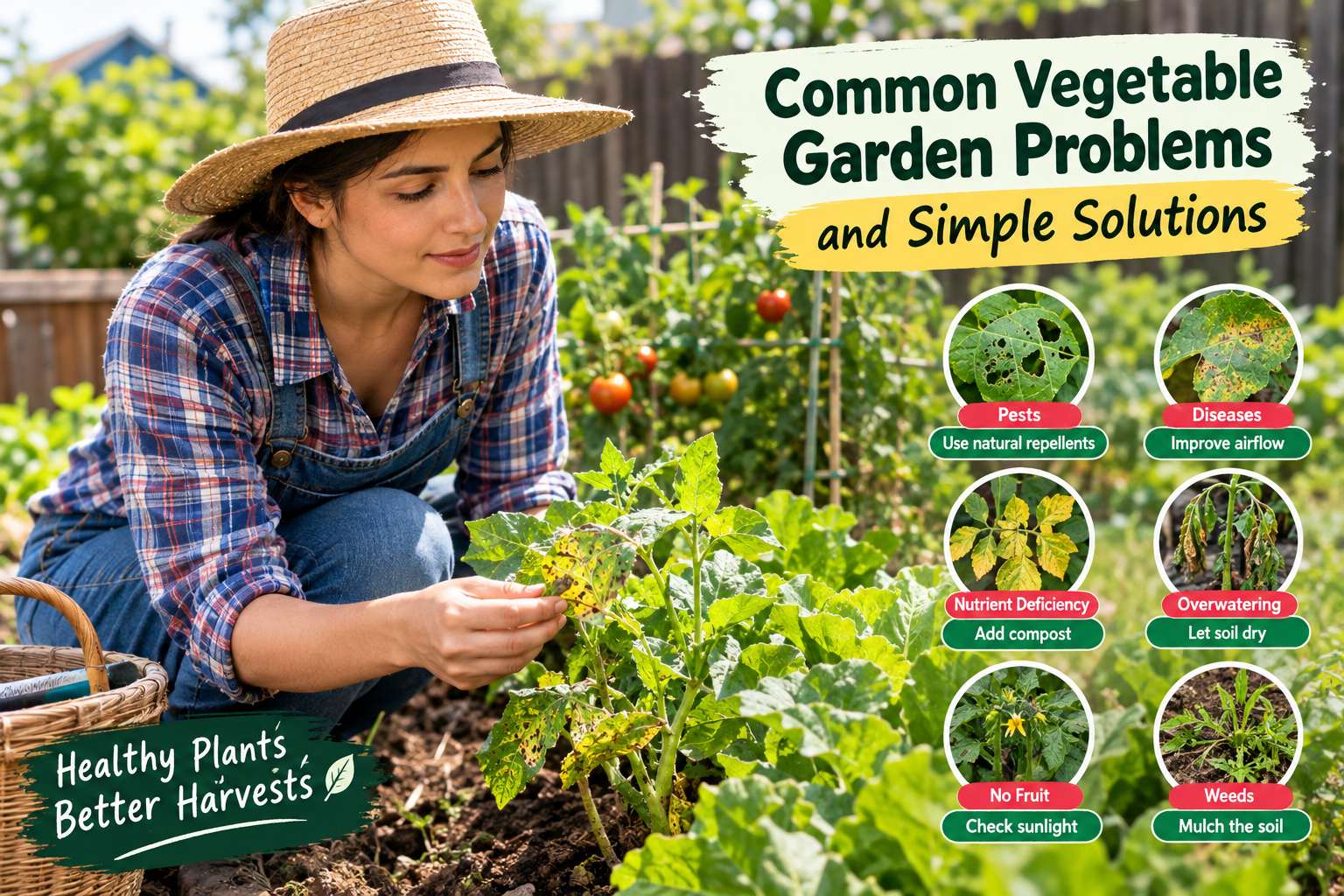
Growing vegetables at home can be a very rewarding experience, but it does not always go as planned. Sometimes plants grow slowly, leaves turn yellow, insects appear, or vegetables fail to develop properly. I have found that most vegetable garden problems are easier to solve when you notice them early and understand what your plants are trying to tell you.
A healthy vegetable garden does not require perfection. Plants can experience problems because of weather, watering, soil conditions, pests, diseases, or a lack of sunlight. The important thing is to identify the problem and make small changes before it becomes serious.
In this article, I will discuss some common vegetable garden problems and simple solutions that can help you grow healthier plants and enjoy a better harvest.
1. Yellow Leaves on Vegetable Plants
Yellow leaves are one of the most common problems in a vegetable garden. There can be several reasons for this issue. Overwatering is one of the first things I check because constantly wet soil can prevent roots from getting enough oxygen.
Nutrient problems can also cause yellow leaves. Plants need nutrients such as nitrogen, potassium, and other minerals to grow properly.
The simple solution is to check the soil before adding anything. If the soil feels very wet, allow it to dry slightly before watering again. If the soil is poor, adding mature compost can improve its condition and provide useful nutrients.
It is also important to remember that older leaves can naturally turn yellow as a plant grows. Look at the overall health of the plant instead of worrying about one or two leaves.
2. Overwatering Vegetable Plants
Overwatering is another common vegetable garden problem, especially for beginners. Many people believe that giving plants more water will make them grow faster. In reality, too much water can create several problems.
Roots need both moisture and air. When soil remains saturated for too long, roots can become weak and may start to rot. Plants may look tired even though the soil is wet.
I recommend checking the top layer of soil before watering. If it still feels moist, wait before adding more water. Containers should also have drainage holes so excess water can escape.
Watering deeply but less frequently is often better than giving plants small amounts of water many times throughout the day.
3. Underwatering and Wilting Plants
The opposite problem is underwatering. A plant that does not receive enough water may develop soft, wilted leaves. The soil may also become dry and hard.
The solution is simple. Water the plant thoroughly so moisture reaches the root area. During hot weather, check plants more frequently because moisture can disappear quickly.
Adding organic mulch around plants can also help. Mulch protects the soil from direct sunlight and slows down moisture loss.
However, I avoid placing thick mulch directly against plant stems because excessive moisture around the stem can create other problems.
4. Vegetable Plants Not Producing Fruit
Sometimes a plant looks healthy but produces very few vegetables. Tomatoes, peppers, cucumbers, and other fruiting plants can experience this problem.
One common reason is insufficient sunlight. Most fruiting vegetables need several hours of direct sunlight each day. Too much nitrogen can also encourage leaves to grow while reducing fruit production.
I would first check how much sunlight the plant receives. If possible, move containers to a brighter location. For plants growing in the ground, remove anything that creates unnecessary shade.
Good watering habits are also important. Irregular watering can stress plants and affect flowering and fruit development.
5. Insects Eating Vegetable Leaves
Finding holes in vegetable leaves can be frustrating. Caterpillars, beetles, aphids, and other insects may feed on plants.
The first step I take is to inspect the leaves carefully. Look underneath leaves because many insects hide there during the day.
For a small garden, manually removing larger insects can be a simple solution. You can also encourage beneficial insects such as ladybugs and other natural predators.
Keeping the garden clean can also help reduce pest problems. Remove badly damaged leaves and clear away plant debris where insects may hide.
If you use any pest control product, always read and follow the label instructions carefully.
6. Plant Diseases and Leaf Spots
Brown spots, white patches, mold, and unusual marks on leaves can indicate a plant disease. Fungal diseases are especially common when plants remain wet for long periods and there is not enough air movement.
One simple solution is to improve airflow. Avoid overcrowding plants and give them enough space to grow. Water the soil rather than repeatedly wetting the leaves.
Remove badly affected plant material and place it in the appropriate waste rather than leaving it around healthy plants.
I also believe prevention is easier than trying to rescue a severely diseased plant. Starting with healthy plants, keeping the garden clean, and avoiding excessive moisture can reduce many problems.
7. Poor Soil Quality
Healthy plants begin with healthy soil. If the soil is compacted, extremely dry, or lacking organic matter, vegetables may struggle to grow.
Poor soil can lead to weak roots, slow growth, and disappointing harvests. The easiest improvement is usually adding mature compost or other suitable organic matter.
Before planting a new vegetable bed, I like to loosen compacted soil and mix in organic material. This can improve drainage, moisture retention, and soil structure.
Avoid adding large amounts of fertilizer without understanding what the soil actually needs. More fertilizer does not always mean healthier plants.
8. Too Many Weeds in the Garden
Weeds compete with vegetables for water, nutrients, sunlight, and growing space. If they are ignored, they can quickly take over a garden.
I prefer removing small weeds when they are young because they are much easier to control. Regular inspection can prevent a small weed problem from becoming a major one.
Mulching around vegetables is another useful method. A suitable layer of mulch can reduce the amount of sunlight reaching weed seeds and can also help the soil retain moisture.
Be careful when removing weeds near vegetable roots. Pull them gently to avoid disturbing the plants you want to keep.
9. Plants Growing Too Slowly
Slow growth can happen for several reasons. Cold temperatures, poor sunlight, weak soil, lack of moisture, and overcrowding can all affect vegetable growth.
Start by checking the basics. Make sure the plant receives enough sunlight and water. Look at the soil condition and make sure nearby plants are not competing for space.
Temperature also matters. Some vegetables grow quickly in warm conditions while others prefer cooler weather.
Patience is important because plants do not all grow at the same speed. Instead of immediately adding fertilizer, I recommend finding the actual cause of slow growth first.
10. Leggy Vegetable Plants
Plants that become tall, thin, and weak are often not receiving enough sunlight. This is especially common when seedlings are grown indoors near a weak window.
If possible, move plants to a location with better natural light. When growing seedlings indoors, provide appropriate supplemental lighting if necessary.
Proper spacing is also important. Crowded plants can compete for light and become weak.
11. Cracked Tomatoes and Vegetables
Tomatoes sometimes develop cracks around the fruit. Uneven watering is one common cause. When plants receive very little water and then suddenly receive a large amount, the fruit can expand quickly and the skin may crack.
The best approach is to keep soil moisture relatively consistent. Mulching can help reduce rapid changes in soil moisture.
Cracked tomatoes are not always a reason to panic. If the fruit is otherwise healthy, harvest it promptly and use it before the damaged area becomes a problem.
12. Garden Plants Falling Over
Some vegetable plants become too heavy to support themselves. Tomatoes, peas, cucumbers, and certain other plants can benefit from support.
Using stakes, cages, or suitable trellises can keep plants upright and improve airflow. Supporting plants can also make harvesting easier.
I prefer adding support early rather than waiting until a plant becomes large and difficult to manage. Installing a support while the plant is still young can reduce the chance of damaging its roots later.
13. Preventing Vegetable Garden Problems
In my experience, prevention is one of the best gardening strategies. You do not need complicated equipment or expensive products to maintain a healthy vegetable garden.
Start by choosing a suitable location with enough sunlight. Prepare the soil with quality organic matter and choose vegetables that are appropriate for your local growing conditions.
Water carefully and check your plants regularly. Spend a few minutes looking at the leaves, stems, soil, and new growth. Early signs are usually much easier to manage than serious problems.
Keeping plants properly spaced is also important. Good airflow can reduce the risk of several diseases and helps plants grow naturally.
Final Thoughts
Common vegetable garden problems can feel discouraging, especially when you have spent time caring for your plants. However, most problems can be managed when you identify the cause early.
Yellow leaves may be related to watering or nutrients. Wilting can indicate a lack of moisture, while holes in leaves may point to insects. Poor fruit production can sometimes be connected to sunlight, watering, or plant health. Soil quality, weeds, overcrowding, and weather can also influence the success of your garden.
My biggest gardening lesson is to observe before taking action. Instead of immediately adding fertilizer or using a treatment, look closely at the plant and its growing environment. Small changes in watering, sunlight, soil care, spacing, and pest management can make a noticeable difference.
A healthy vegetable garden is built through regular attention rather than perfection. If you check your plants often and respond to problems early, you can give your vegetables a much better chance to grow strongly and produce a satisfying harvest.
Leave a Reply