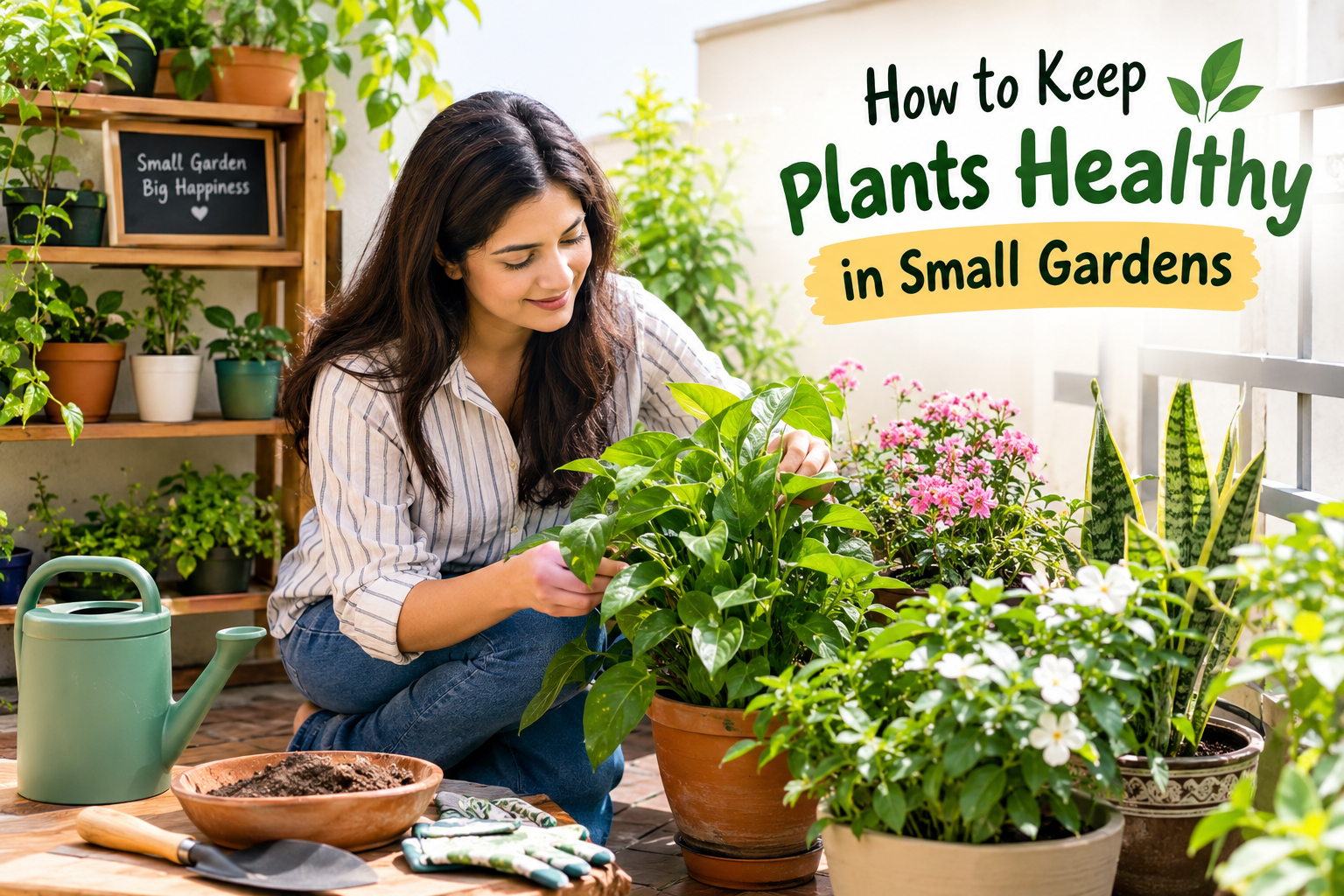
Having a small garden does not mean you cannot enjoy healthy, beautiful, and productive plants. In my experience, a small garden can actually be easier to manage when you understand what your plants need. The key is not having a large amount of space. The key is using the available space wisely and giving every plant proper care.
Small gardens can be found on balconies, rooftops, patios, windowsills, and small outdoor areas. They can contain flowers, herbs, vegetables, indoor plants, or a mixture of different plants. However, because space is limited, plants can sometimes compete for sunlight, water, air, and nutrients.
I have learned that keeping plants healthy in a small garden requires regular observation and simple daily habits. You do not need expensive gardening equipment or complicated techniques. With good soil, proper watering, enough sunlight, suitable containers, and regular maintenance, you can create a healthy garden even in a limited space.
Choose the Right Plants for Your Space
One of the first things I consider when starting a small garden is plant selection. Not every plant is suitable for every small space. Some plants need several hours of direct sunlight, while others can grow well in partial shade.
Before buying plants, I recommend checking how much sunlight your garden receives during the day. If your garden gets strong sunlight, you can choose plants that enjoy bright conditions. If the area receives limited sunlight, shade tolerant plants may be a better choice.
You should also consider the mature size of each plant. A small plant may look perfect when you buy it, but it can become much larger later. Choosing compact varieties helps prevent overcrowding.
Herbs, leafy vegetables, compact flowers, and smaller ornamental plants can be excellent choices for small gardens. Selecting plants according to your available space makes plant care much easier.
Give Plants Enough Sunlight
Sunlight is one of the most important requirements for healthy plant growth. Plants use sunlight to produce energy, and without enough light, many plants become weak and develop slowly.
In my experience, checking sunlight before placing plants can prevent many problems. Watch your garden during different parts of the day and notice which areas receive direct sunlight and which areas remain shaded.
If you are growing plants in containers, you have an advantage because you can move them when necessary. Plants that need more sunlight can be moved to brighter areas, while plants that prefer shade can be placed away from strong afternoon sunlight.
Avoid placing too many plants close together where larger leaves block sunlight from smaller plants. Good spacing helps each plant receive the light it needs.
Water Plants Correctly
Watering seems simple, but it is one of the areas where beginners often make mistakes. Some people water their plants too frequently because they think more water means faster growth. In reality, too much water can cause serious problems.
I usually check the soil before watering. If the top layer feels dry, the plant may need water. If the soil is still wet, I wait before watering again.
The amount of water a plant needs depends on its type, container size, weather, soil, and location. Plants exposed to hot sunlight may dry out faster than plants growing in shaded areas.
When watering container plants, I prefer watering slowly so moisture can reach the roots. Make sure excess water can escape through drainage holes. Standing water around roots can lead to root problems.
Use Good Quality Soil
Healthy soil provides plants with nutrients, air, and proper support. In a small garden, choosing good soil is especially important because plants may depend completely on the soil inside their containers.
I recommend using a quality potting mix suitable for the plants you are growing. Avoid using heavy garden soil in small containers if it does not drain properly.
Good soil should hold enough moisture while still allowing excess water to drain away. If the soil becomes hard and compacted, roots may struggle to receive enough oxygen and water.
Adding suitable organic material can also improve soil quality. However, avoid adding too much fertilizer or compost at once. Plants need balanced nutrition rather than excessive amounts.
Do Not Overcrowd Your Garden
One of the biggest challenges in a small garden is limited space. It can be tempting to place many plants together because you want your garden to look full and colorful.
However, overcrowding can create several problems. Plants may compete for sunlight, water, nutrients, and air. Poor air circulation can also encourage fungal problems.
I prefer giving each plant enough space for its natural growth. Even when plants are small, I think about how large they will become in the future.
Vertical gardening can be a useful solution. Shelves, plant stands, hanging containers, and suitable climbing supports can help you use vertical space without filling every part of the floor.
Choose Containers With Drainage Holes
If you grow plants in containers, drainage should always be a priority. A beautiful container is not useful if water cannot escape from it.
Before purchasing a pot, I check whether it has drainage holes at the bottom. These holes allow excess water to leave the container and help protect plant roots.
Container size also matters. A pot that is too small may restrict root growth, while an unnecessarily large container can hold too much moisture.
When a plant becomes root bound or grows too large for its container, moving it into a slightly larger pot can help. Repotting should be done carefully to avoid damaging the roots.
Feed Plants When Necessary
Plants need nutrients to grow healthy leaves, flowers, and fruits. Even good quality soil can eventually lose some of its nutrients, especially when plants have been growing in the same container for a long time.
I believe fertilizing should be done carefully rather than excessively. Always follow the instructions on the fertilizer product you use.
Different plants have different nutritional requirements. Flowering plants, leafy vegetables, herbs, and fruiting plants may need different types of nutrients.
Organic fertilizers and compost can be useful options when used correctly. The important thing is to avoid assuming that more fertilizer will always produce better growth. Too much fertilizer can damage roots and affect plant health.
Keep Leaves Clean and Healthy
Plant leaves collect dust, especially when plants are growing near roads, balconies, or busy outdoor areas. Dust can reduce the amount of light reaching the leaves.
I like to inspect plant leaves regularly and gently clean them when necessary. For suitable plants, wiping leaves with a soft damp cloth can remove surface dust.
While checking leaves, look for signs of insects, spots, discoloration, or unusual growth. Regular observation allows you to notice problems before they become serious.
Healthy leaves are usually a good sign that a plant is receiving suitable care.
Check Plants for Pests
Even a small garden can attract pests. Aphids, spider mites, whiteflies, and other insects can damage plants if they become established.
I recommend checking both the upper and lower surfaces of leaves because some pests hide underneath leaves.
If you notice a small number of insects, removing them early may help prevent the problem from spreading. You can also use appropriate gardening methods designed for the particular pest and plant.
Avoid using strong chemicals unnecessarily. Always read product instructions carefully and choose treatments that are appropriate for the plants you are growing.
Prune Plants Regularly
Pruning can help maintain the shape and health of plants. Removing dead, damaged, or diseased leaves allows the plant to focus its energy on healthy growth.
In a small garden, pruning is also useful because it helps control plant size. A plant that grows too widely can quickly take over limited space.
I prefer using clean and suitable gardening scissors when pruning. Avoid removing large amounts of healthy growth unless the plant specifically requires it.
Regular light pruning is often easier than allowing a plant to become overgrown and then trying to cut it back heavily.
Provide Good Air Circulation
Air circulation is easy to overlook in a small garden. When plants are packed closely together, humid air can remain around their leaves for long periods.
Good air movement helps leaves dry after watering and can reduce conditions that encourage certain fungal problems.
Try to avoid placing containers so closely together that leaves are constantly touching. Keeping some space between plants can make the garden healthier and easier to maintain.
Protect Plants From Extreme Weather
Small gardens can sometimes be more exposed to weather conditions because they are located on balconies, rooftops, patios, or other open areas.
During extremely hot weather, plants in containers can dry out quickly. During very cold weather, some sensitive plants may need protection.
I recommend paying attention to local weather conditions and moving containers when possible. Providing temporary shade during extreme heat can protect sensitive plants from excessive sunlight.
At the same time, avoid keeping plants permanently in deep shade if they require sunlight for healthy growth.
Remove Dead Leaves and Flowers
Dead leaves and flowers can make a small garden look untidy, but removing them is about more than appearance. Decaying plant material can sometimes attract pests or create an environment where problems develop.
I regularly remove dead leaves and faded flowers when I notice them. This keeps the garden cleaner and gives healthy plants more room to grow.
It also gives me an opportunity to inspect plants closely and identify early signs of stress.
Create a Simple Plant Care Routine
The best way to keep plants healthy in a small garden is to develop a simple routine. You do not need to spend hours every day taking care of your plants.
I recommend checking your plants regularly. Look at the soil, leaves, stems, and overall growth. Check whether plants need water and make sure containers are draining correctly.
Once or twice a week, inspect plants more carefully for pests and damaged leaves. Remove dead growth and clean the surrounding area.
A simple routine helps you understand your plants. Over time, you will learn how quickly the soil dries, which plants need more sunlight, and which plants require less attention.
Final Thoughts
Keeping plants healthy in small gardens is completely possible when you focus on the basics. You do not need a large yard or expensive gardening tools to create a beautiful green space.
In my experience, the most important things are choosing suitable plants, providing enough sunlight, watering correctly, using healthy soil, preventing overcrowding, and checking plants regularly.
Small gardens can actually be very rewarding because you can easily observe your plants and understand their needs. With consistent care, even a small balcony or patio can become a healthy and attractive garden.
The biggest lesson I have learned is that plant care is more about consistency than perfection. You may make mistakes along the way, but observing your plants and adjusting your care routine can make a big difference.
If you give your plants the right environment, enough attention, and suitable care, they can continue growing beautifully even when your gardening space is limited.
Leave a Reply