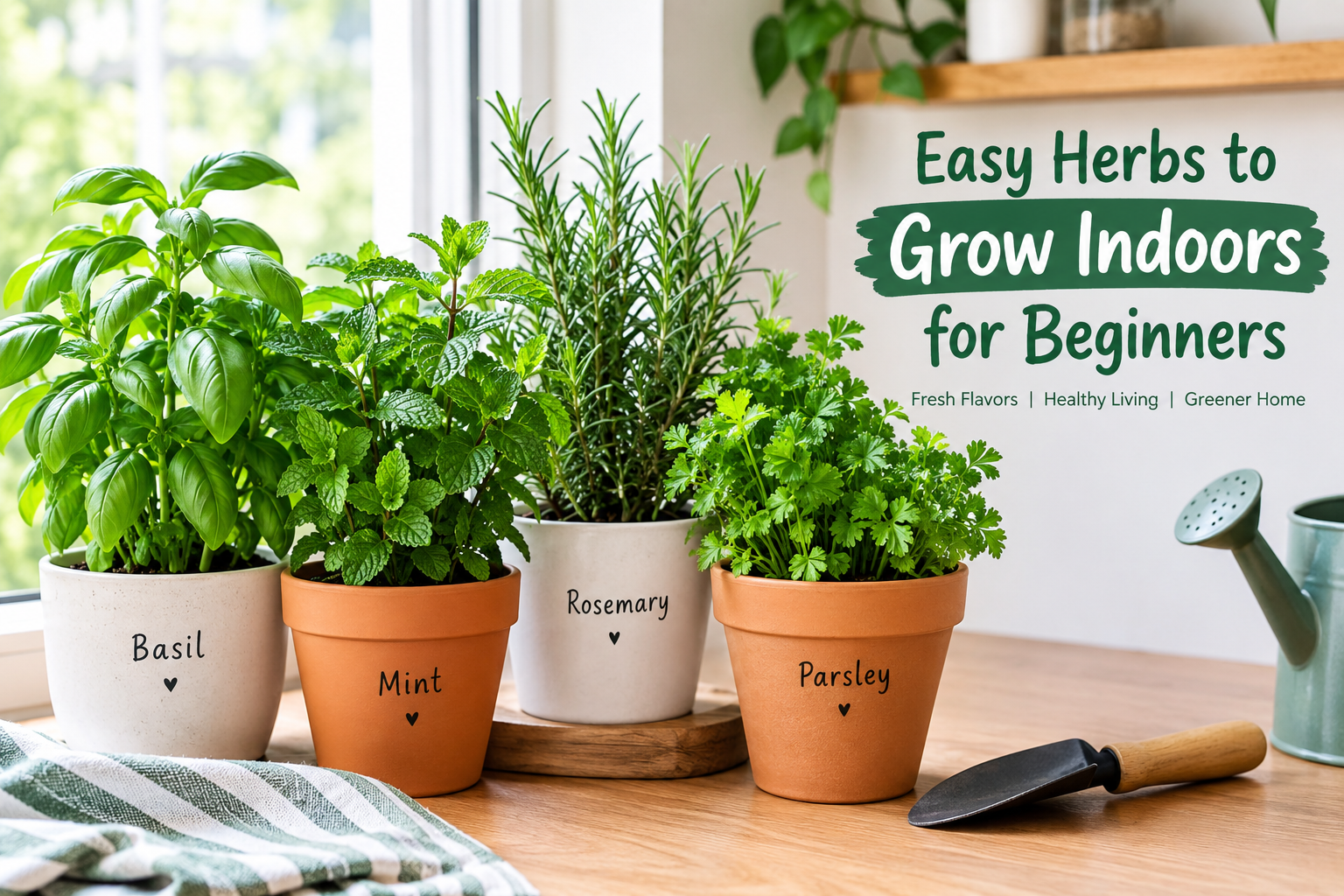
Growing fresh herbs indoors is one of the easiest ways to bring greenery into your home while also having fresh ingredients available for everyday cooking. You do not need a large garden, expensive equipment, or years of gardening experience to get started. With a few suitable pots, good soil, enough light, and regular care, you can grow several useful herbs right inside your home.
In my experience, indoor herb gardening is especially enjoyable for beginners because the plants are easy to observe. When you grow herbs indoors, you can quickly notice changes in their leaves, soil, and growth. This makes it easier to understand what your plants need.
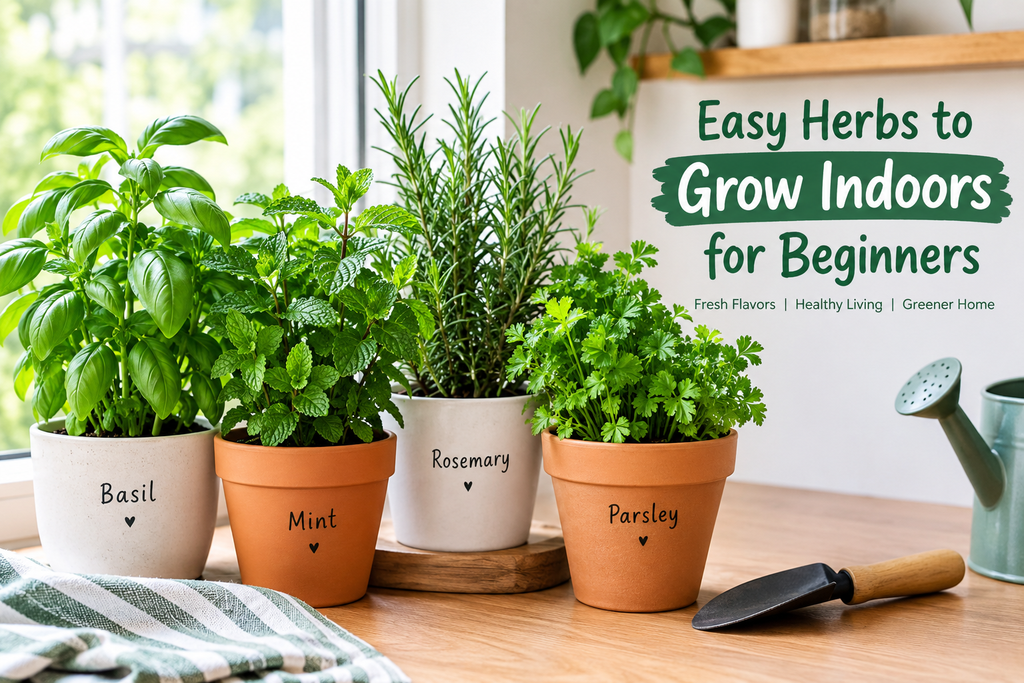
If you are wondering about the easy herbs to grow indoors for beginners, there are several excellent choices. Basil, mint, parsley, chives, oregano, thyme, cilantro, and rosemary can all be grown indoors when their basic growing requirements are met.
Why Grow Herbs Indoors?
There are many reasons to start an indoor herb garden. The first benefit is convenience. Instead of going outside or buying a small bunch of herbs from the grocery store, you can simply pick what you need from your own plants.
Indoor herbs can also make a room look more natural and attractive. A few green pots placed near a sunny window can create a pleasant gardening space even if you live in an apartment.
Another advantage is that you have more control over the growing environment. Outdoor plants can be affected by heavy rain, strong winds, extreme heat, or sudden cold weather. Indoor herbs are generally protected from these conditions.
For beginners, growing herbs indoors is also a great way to develop basic gardening skills.
1. Basil
Basil is one of my favorite herbs for beginners because it grows quickly when given suitable conditions. Its fresh green leaves are commonly used in pasta, salads, sauces, sandwiches, and many other dishes.
Basil needs plenty of sunlight, so placing it near a bright window is usually a good choice. A warm location can also help the plant grow well.
Use a pot with drainage holes and fill it with good quality potting soil. Water the plant when the surface of the soil begins to feel dry. Avoid keeping the soil constantly wet because excessive moisture can cause root problems.
Regularly picking the leaves can encourage the plant to produce more growth. I recommend harvesting the larger leaves while leaving enough healthy growth on the plant.
2. Mint
Mint is another excellent choice for an indoor herb garden. It has a fresh smell and can be used in tea, drinks, salads, sauces, and desserts.
Mint can grow quite actively, so I recommend giving it its own container. This prevents it from competing with other herbs.
Place the pot in a bright location where the plant receives good indirect or direct light depending on the conditions in your home. Keep the soil slightly moist but do not leave the roots sitting in water.
One thing I like about mint is that it can recover well after regular harvesting. You can trim the stems and use the fresh leaves whenever needed.
3. Parsley
Parsley is a useful herb that can add fresh flavor and color to many meals. It is also suitable for indoor growing if it receives enough light.
Parsley generally grows well in a container with good drainage. Choose a pot that gives the roots enough space to develop.
The seeds can take some time to germinate, so beginners should be patient. Once the seedlings appear, provide them with adequate light and water them when the soil starts becoming dry.
There are different types of parsley, including curly parsley and flat leaf parsley. Both can be useful for a small indoor herb garden.
4. Chives
Chives are among the simplest herbs for beginners. They have thin green leaves and a mild onion like flavor.
You can grow chives in a relatively small pot, making them suitable for kitchens, windowsills, or small indoor gardening areas.
Place the pot somewhere bright and water when the soil begins to dry. When the leaves become long enough, you can cut them with clean scissors and use them in eggs, soups, potatoes, salads, or other dishes.
Avoid cutting the entire plant down to the soil. Leaving some healthy growth allows the plant to continue producing new leaves.
5. Oregano
Oregano is a popular herb that is particularly useful for people who enjoy homemade pizza, pasta, sauces, and Mediterranean inspired meals.
It generally prefers plenty of light and well draining soil. Allowing the soil to dry slightly between watering can help prevent excessive moisture around the roots.
Oregano does not need constant attention. Once established, it can provide a steady supply of leaves for cooking.
Regular trimming can also help keep the plant compact. This is helpful when you are growing herbs indoors where space may be limited.
6. Thyme
Thyme is a small herb with a strong aroma and plenty of culinary uses. It can be grown in a container and does not require a huge amount of space.
The most important thing to remember with thyme is to avoid overwatering. Give it a well draining pot and allow the soil to dry somewhat before watering again.
Thyme generally appreciates a bright location. A sunny windowsill can be a suitable place if the plant receives enough light without becoming exposed to extreme heat.
You can harvest small amounts of thyme whenever you need it.
7. Cilantro
Cilantro is another useful herb for an indoor garden, especially if you enjoy fresh herbs in cooking. It can be used in curries, salads, sauces, soups, chutneys, and many other dishes.
Cilantro grows relatively quickly but can sometimes produce flowers when conditions become too warm or the plant matures. For a continuous supply, you can consider planting seeds at different times rather than planting everything at once.
Keep the soil reasonably moist while the seeds are germinating. Once the plants become established, provide sufficient light and avoid excessive watering.
8. Rosemary
Rosemary can also be grown indoors, although it usually requires a little more attention to light and watering than some of the softer herbs.
It prefers a bright location and well draining soil. Rosemary generally does better when the soil is allowed to dry somewhat between watering.
Choose a container with drainage holes and avoid placing the plant in a dark corner. If your home does not receive enough natural sunlight, an indoor grow light can be useful.
Rosemary has a strong aroma and can be used to flavor vegetables, potatoes, breads, soups, and many other dishes.
Choosing the Right Location
Choosing the right location is one of the most important steps when growing herbs indoors. Most culinary herbs need plenty of light to grow properly.
A bright windowsill can be an excellent starting point. South facing or west facing windows may receive strong sunlight, depending on your location and home design.
However, extremely strong sunlight through glass can sometimes make a plant too hot. Pay attention to the leaves and soil and move the plant if necessary.
If natural light is limited, an indoor grow light can provide additional support.
Choosing Pots for Indoor Herbs
Good containers can make indoor herb gardening much easier. Always choose pots with drainage holes at the bottom.
Drainage allows extra water to leave the container instead of remaining around the roots. This is especially important for beginners because overwatering is one of the most common indoor gardening mistakes.
The container should also be large enough for the herb you are growing. Very small pots may dry out quickly, while extremely large containers can hold excess moisture for too long.
How Often Should You Water Indoor Herbs?
There is no single watering schedule that works for every indoor herb. The amount of water a plant needs depends on its size, container, soil, temperature, humidity, and available light.
Instead of watering automatically every day, check the soil first. Place your finger gently into the top layer of soil. If it feels dry, the plant may need water.
Water slowly until a little water comes through the drainage holes. Then allow the excess water to drain away.
Remember that more water does not always mean healthier plants. In many cases, overwatering can be more damaging than underwatering.
Common Mistakes Beginners Should Avoid
One of the biggest mistakes beginners make is choosing a location with insufficient light. Herbs need light for healthy growth, so a dark shelf may not be suitable.
Another common mistake is watering too frequently. Always check the soil before adding more water.
Using containers without drainage holes can also create problems. Excess moisture has nowhere to escape, which can damage the roots.
Crowding too many herbs into one container is another issue. Different herbs have different growing habits, and giving each plant enough space can make care easier.
Finally, do not expect every herb to grow perfectly from the beginning. Gardening is a learning process. Some plants may grow faster than others, and that is completely normal.
How to Harvest Indoor Herbs
Harvesting your herbs correctly can help keep them productive. Use clean scissors or your fingers to remove leaves and soft stems.
For leafy herbs such as basil and mint, regular harvesting can encourage bushier growth. For herbs such as rosemary and thyme, trim small sections rather than removing too much at one time.
Try to harvest only what you need. Freshly picked herbs often have a wonderful aroma and can make simple homemade meals feel much more special.
Final Thoughts
Starting an indoor herb garden does not have to be complicated. If you are a beginner, I recommend starting with two or three easy herbs rather than trying to grow everything at once. Basil, mint, chives, parsley, oregano, thyme, cilantro, and rosemary are all useful choices when their basic growing needs are met.
The key is to provide suitable light, good drainage, quality potting soil, and careful watering. Spend a few minutes observing your plants each day, and you will gradually learn what works best in your home.
For me, the best part of growing herbs indoors is being able to use something fresh that I have grown myself. Even a small windowsill garden can make cooking more enjoyable and bring a little extra greenery into your everyday space.
If you are completely new to gardening, start small, be patient, and learn from each plant. With a little regular care, growing easy herbs indoors for beginners can become a simple and rewarding hobby.
Leave a Reply