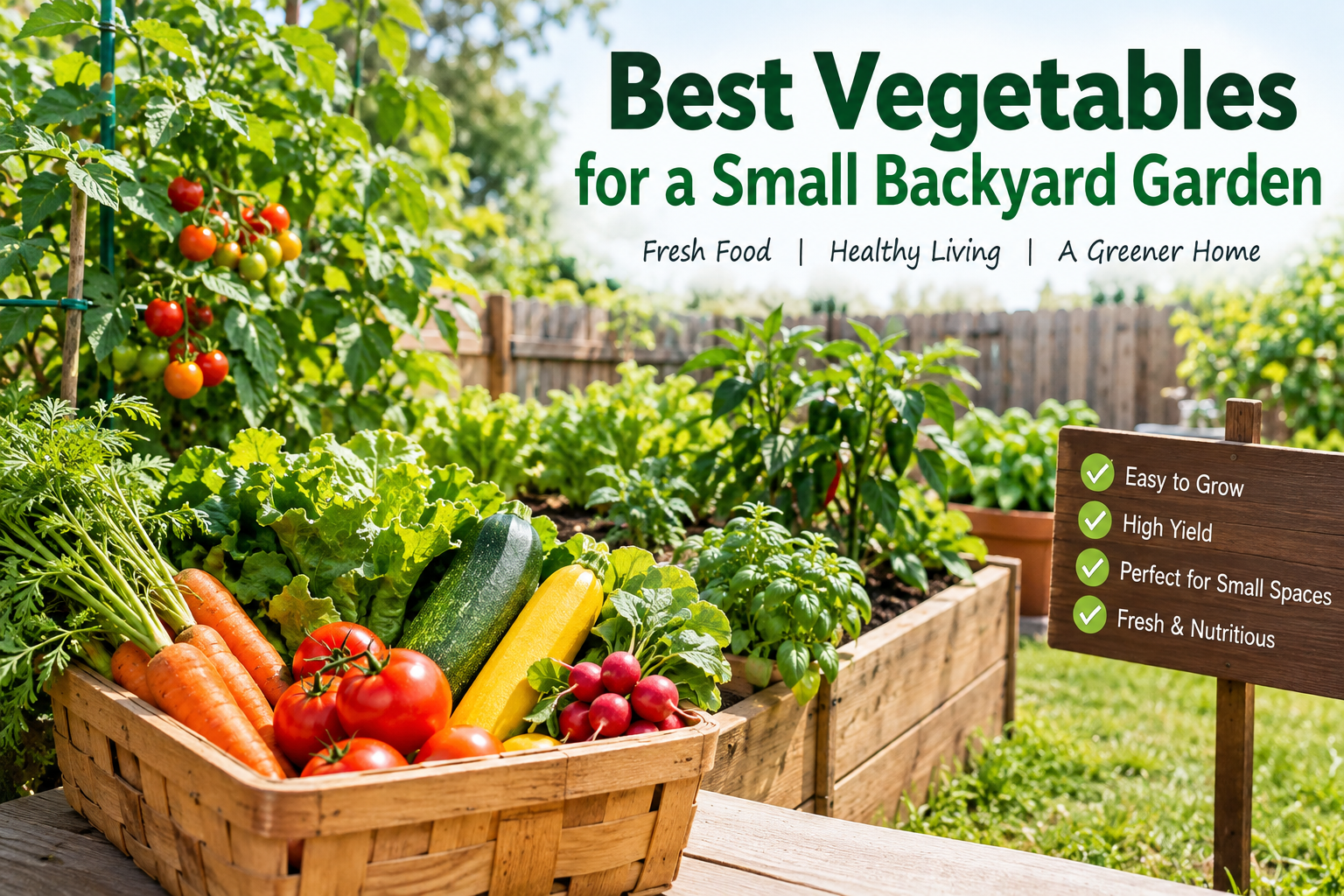
Having a small backyard does not mean I have to give up on growing fresh vegetables. In fact, I have found that a small garden can be easier to manage because I can give more attention to each plant. With the right vegetables, even a limited space can provide fresh and healthy food for the family.
When I think about the best vegetables for a small backyard garden, I look for plants that do not require too much space, are reasonably easy to grow, and can provide a good harvest. Some vegetables can also be grown vertically or in containers, which makes them especially useful for small gardens.
In this article, I will share some of the vegetables I consider excellent choices for a small backyard garden and explain how beginners can grow them successfully.
1. Tomatoes
Tomatoes are one of my favorite vegetables to grow in a small backyard garden. They are productive, useful in many meals, and can be grown in containers or raised beds.
Tomato plants need plenty of sunlight, so I usually choose a location that receives several hours of direct sunlight every day. Some tomato varieties can become quite large, so for a small garden I prefer compact or container friendly varieties.
Tomatoes also benefit from support. A simple stake or cage can keep the plant upright and prevent branches from spreading across the garden.
With regular watering, good soil, sunlight, and basic care, tomato plants can provide a generous harvest throughout the growing season.
2. Lettuce
Lettuce is another excellent choice for a small vegetable garden. It does not require a lot of space and can grow relatively quickly.
I like lettuce because I can plant several small batches instead of planting everything at once. This allows me to enjoy fresh leaves over a longer period.
Lettuce can also be grown in containers, raised beds, and shallow garden spaces. It generally prefers cooler conditions and moist soil.
For a small backyard garden, loose leaf lettuce can be particularly useful because I can harvest the outer leaves while allowing the plant to continue growing.
3. Radishes
If someone is looking for an easy vegetable to grow, I often recommend radishes. They grow quickly and do not need a large amount of garden space.
Radishes can be planted in rows or containers. They are also useful when I want to see quick results from my garden.
The soil should be loose enough for the roots to develop properly. Regular watering is important because inconsistent moisture can affect the quality of the roots.
Because radishes mature relatively quickly, they are a good option for beginners who want a simple vegetable gardening experience.
4. Carrots
Carrots are another good vegetable for a small backyard garden. They do not need a lot of space above the soil, although they need enough depth for their roots to develop.
For the best results, I prefer loose and well prepared soil. Hard or rocky soil can make it difficult for carrots to grow straight.
Carrots can also be grown in deep containers, making them useful when there is not enough ground space.
One thing I enjoy about growing carrots is harvesting them. Pulling a mature carrot from the soil and seeing its bright color is a simple but rewarding gardening experience.
5. Bush Beans
Bush beans can be a great choice when garden space is limited. They generally have a compact growth habit and can provide a useful harvest from a relatively small area.
Beans need sunlight and regular watering. I also make sure the soil drains well so that excess water does not remain around the roots.
Bush beans can be planted in rows or raised beds. If space is particularly limited, I can use containers as long as they are large enough for the plants.
Freshly picked beans can be used in many meals, which makes them a practical addition to a backyard garden.
6. Peppers
Peppers are excellent vegetables for small gardens because many varieties grow well in containers.
I especially like peppers because one or two healthy plants can provide plenty of produce during the growing season. Sweet peppers and hot peppers are both available in many different varieties.
Pepper plants prefer warm conditions and plenty of sunlight. I usually choose a sunny location and avoid placing them in an area where they will be shaded for most of the day.
A container can also make it easier to move the plant if necessary.
7. Cucumbers
Cucumbers can sometimes take up more space than expected, but they can still work very well in a small backyard garden if I grow them vertically.
A simple trellis can encourage cucumber vines to grow upward instead of spreading across the ground. This saves valuable garden space and can also make harvesting easier.
Cucumbers need regular moisture, especially when they are producing fruit. I try to keep the soil consistently moist without making it excessively wet.
For a small garden, compact cucumber varieties can be especially useful.
8. Zucchini
Zucchini is known for producing a large amount of vegetables from just a few plants. This makes it an attractive option when I want a productive backyard garden.
However, zucchini plants can become quite large. Because of this, I would not plant too many zucchini plants in a small garden.
Giving one healthy plant enough room can be better than planting several plants too close together. Good sunlight, fertile soil, and consistent watering can help the plant produce a strong harvest.
9. Spinach
Spinach is a useful leafy vegetable for small gardens because it can be grown in beds and containers.
I like spinach because the leaves can be harvested gradually. Instead of removing the entire plant, I can pick mature leaves and allow the plant to continue producing.
Spinach generally performs well during cooler growing conditions. It is also a practical choice for gardeners who want to grow nutritious leafy greens without needing a large garden.
10. Green Onions
Green onions are one of the easiest vegetables to fit into a small garden. They do not need much space and can even be grown in containers.
They can be planted close together compared with many larger vegetables. This makes them especially useful for small raised beds and container gardens.
I find green onions practical because they can be used in salads, soups, sauces, rice dishes, and many other meals.
How to Choose Vegetables for a Small Garden
When choosing vegetables, I do not simply select the vegetables I like to eat. I also consider how much space each plant needs.
For a small backyard garden, I look for compact varieties whenever possible. I also consider whether a plant can grow vertically or in a container.
Sunlight is another important factor. Most vegetables need good sunlight to grow well, so I first observe which areas of my backyard receive the most light.
I also consider how often I will be able to water the garden. A vegetable garden needs regular attention, and choosing plants that match my available time can make gardening much easier.
Use Containers to Save Space
Containers are one of my favorite solutions for a small backyard garden. They allow me to grow vegetables in places where traditional garden beds may not be practical.
Tomatoes, peppers, lettuce, spinach, radishes, carrots, and green onions can all be suitable for containers when the container size and growing conditions match the plant.
I always make sure containers have drainage holes. Without proper drainage, excess water can remain around the roots and create problems.
Containers also allow me to organize the garden more efficiently and move plants when necessary.
Try Vertical Gardening
Vertical gardening can make a major difference when backyard space is limited.
Instead of allowing climbing plants to spread across the ground, I can provide a trellis or other suitable support. Cucumbers, peas, and some types of beans can benefit from vertical growing.
Using vertical space means I can grow more vegetables without using all of the available ground area.
It can also make the garden look more organized and easier to maintain.
Give Plants Enough Space
One mistake I try to avoid is planting too many vegetables in a small area. It may seem like a good way to increase the harvest, but overcrowded plants can compete for sunlight, water, nutrients, and air circulation.
Before planting, I check the recommended spacing for each vegetable. Giving plants enough room usually makes it easier to water, inspect, harvest, and care for them.
A smaller number of healthy plants can often be more useful than a crowded garden full of struggling plants.
Prepare Good Soil
Healthy soil is one of the foundations of a productive vegetable garden. Before planting, I like to improve the soil with suitable organic matter such as well aged compost.
Good soil should provide nutrients while allowing excess water to drain properly.
If the soil is poor, vegetables may grow slowly or produce smaller harvests. Spending some time preparing the soil at the beginning can make garden care easier later.
Water Your Garden Properly
Watering is important, but more water does not always mean better growth.
I try to water deeply enough to reach the root area while avoiding constantly waterlogged soil. The exact watering needs depend on the vegetable, weather, soil, and container size.
During hot weather, plants may need more frequent watering. Containers can also dry out faster than plants growing directly in the ground.
Checking the soil before watering can help me understand whether the plants actually need more moisture.
Start With a Few Vegetables
For beginners, I believe it is better to start small. Instead of planting ten different vegetables at once, I can begin with a few easy choices such as tomatoes, lettuce, radishes, peppers, and green onions.
Once I understand how much time the garden requires, I can add more vegetables.
Gardening is a learning process. Some plants may grow extremely well while others may struggle because of weather, soil, pests, or watering problems. Learning from each season makes the next garden better.
Final Thoughts
Growing vegetables in a small backyard garden can be both practical and enjoyable. Limited space does not have to stop me from producing fresh food at home.
In my experience, some of the best vegetables for a small backyard garden include tomatoes, lettuce, radishes, carrots, bush beans, peppers, cucumbers, zucchini, spinach, and green onions. The right choices depend on available sunlight, climate, soil, garden space, and personal preferences.
I also recommend using containers and vertical gardening techniques when space is limited. With good soil, proper watering, enough sunlight, and regular care, even a small backyard can become a productive vegetable garden.
The most important thing is to start with vegetables that are suitable for your space and experience level. Once you become comfortable caring for your first plants, you can gradually expand your garden and try new vegetables. A small garden may not produce everything you need, but it can provide fresh food, useful gardening experience, and a rewarding connection with nature.
Leave a Reply