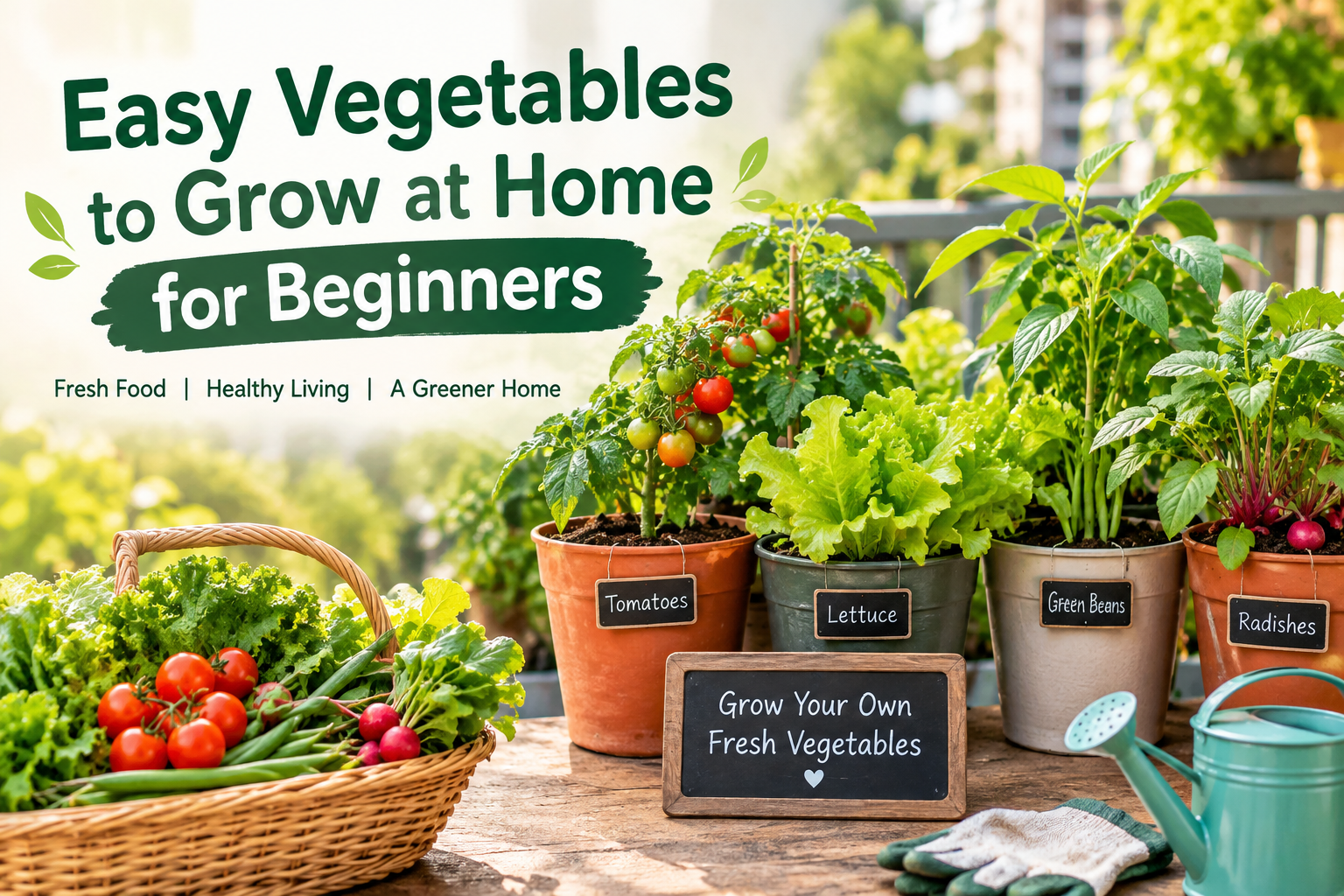
Growing vegetables at home can be a simple and enjoyable way to bring fresh food into your daily life. When I first became interested in home gardening, I thought I needed a large garden, expensive tools, and a lot of experience. I later realized that many vegetables are actually quite easy to grow, even if you have limited space or very little gardening knowledge.
If you are a beginner, I recommend starting with vegetables that grow quickly, require simple care, and can handle small mistakes. You can grow many vegetables in a backyard garden, balcony, terrace, or even in suitable containers near a sunny window.
In this article, I will share some of the easy vegetables to grow at home for beginners and explain what you need to know before planting them.
Why Grow Vegetables at Home?
There are many good reasons to start a home vegetable garden. For me, one of the biggest benefits is having fresh vegetables available close to home. Growing your own food also gives you a better understanding of how plants grow and what they need to stay healthy.
Home gardening can also be a relaxing activity. Spending a little time caring for plants can become a peaceful part of your daily routine. You do not need to grow a large amount of food. Even a few pots can give you a satisfying gardening experience.
Another benefit is that beginners can start with a small budget. Basic containers, good soil, seeds, water, and sunlight are often enough to begin.
1. Lettuce
Lettuce is one of the easiest vegetables to grow at home. It does not usually require a large amount of space, which makes it a good choice for containers and small gardens.
Lettuce grows best when it receives several hours of sunlight each day. The soil should remain slightly moist, but you should avoid keeping it constantly wet.
One thing I like about growing lettuce is that you can harvest the leaves while the plant is still growing. Instead of removing the entire plant, you can pick the outer leaves when you need them.
For beginners looking for easy vegetables to grow in containers, lettuce is an excellent starting point.
2. Radishes
Radishes are another great vegetable for beginner gardeners. They grow relatively quickly and do not need complicated care.
You can plant radish seeds directly into loose soil. They prefer a sunny location and regular watering. If the soil is too hard, the roots may have difficulty developing properly, so preparing the soil before planting is important.
Radishes are also rewarding because you can see results fairly quickly. This can encourage new gardeners to continue growing other vegetables.
3. Green Beans
Green beans are simple to grow and can produce a useful harvest when given the right conditions. They generally enjoy warm weather, sunlight, and regular watering.
Some varieties grow as compact plants, while climbing varieties need support. If you have limited garden space, you can use a container and provide a simple support structure for climbing plants.
I recommend checking the variety before buying seeds because the space requirements can be different.
With regular care, green beans can become a productive part of a small home vegetable garden.
4. Spinach
Spinach is another vegetable that beginners can consider. It can grow well in containers as long as the container has enough depth and good drainage.
Spinach prefers fertile soil and consistent moisture. It generally performs better when protected from extremely hot conditions.
One advantage of growing spinach at home is that you can harvest young leaves for salads and cooking. Regular harvesting can also encourage the plant to continue producing leaves.
If you want a vegetable that is useful in everyday meals, spinach is worth trying.
5. Carrots
Carrots may seem difficult to grow because the edible part develops underground, but they can actually be a good beginner vegetable when planted in suitable soil.
The most important thing is to use loose soil that allows the roots to grow downward. Heavy or rocky soil can cause carrots to develop poorly.
Carrots can also be grown in deep containers. Choose a container that provides enough room for the variety you are growing.
Keep the soil evenly moist while the seeds are developing. Once the plants become established, continue providing regular care and sunlight.
Growing carrots can be especially exciting because you do not see the full vegetable until harvest time.
6. Green Onions
Green onions are among my favorite choices for beginners because they require relatively little space. They can be grown in containers and are useful in many everyday meals.
They prefer sunlight and moist soil with good drainage. You can grow them from seeds or suitable young plants.
Green onions can also be regrown from some kitchen leftovers under suitable conditions. This makes them an interesting option for people who want to experiment with simple home gardening.
A small container of green onions can provide useful fresh leaves for cooking without taking up much space.
7. Peas
Peas can be a good choice when the weather is suitable. They generally prefer cooler growing conditions and need regular watering.
Some pea varieties climb, so they may need a simple support such as a trellis or sticks. Once the plants start producing pods, harvesting them regularly can encourage continued production.
For beginners, peas are useful because they allow you to learn about climbing plants without requiring a complicated gardening setup.
8. Tomatoes
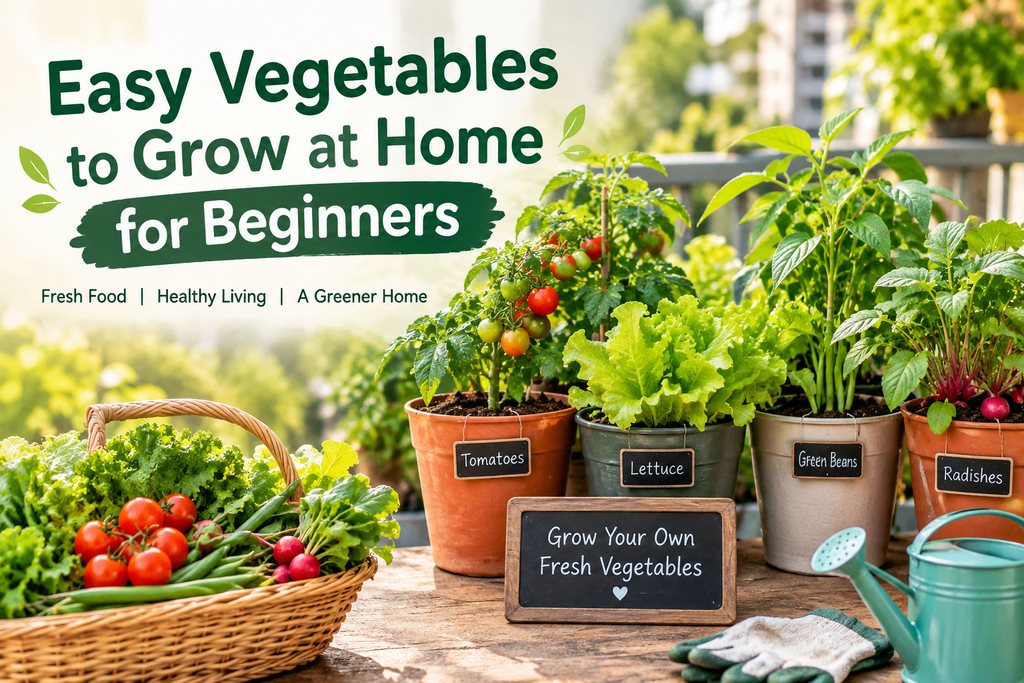
Tomatoes are extremely popular with home gardeners. Although they need a little more attention than lettuce or radishes, beginners can still grow them successfully.
Tomatoes need plenty of sunlight, suitable soil, regular watering, and enough space for the plant to develop.
If you are growing tomatoes in containers, choose a suitable container with drainage holes. Some tomato varieties also benefit from support because the stems can become heavy when fruit develops.
There is something very satisfying about picking a fresh tomato that you have grown yourself. For many beginners, tomatoes become one of the most enjoyable vegetables to grow at home.
9. Cucumbers
Cucumbers can also be grown at home, especially if you have a sunny location. They need regular watering and enough space for their vines to spread or climb.
If you have limited space, a support structure can help guide the plant upward instead of allowing it to spread across the ground.
Cucumbers generally grow well during warm conditions. Make sure the container or garden soil drains properly because constantly wet roots can cause problems.
10. Bell Peppers
Bell peppers are another useful option for a home vegetable garden. They can be grown in containers and are suitable for gardeners who want to produce vegetables in a small space.
They need plenty of sunlight, suitable soil, regular watering, and enough room for their roots.
Bell peppers may take longer to produce compared with radishes or lettuce, but the experience can be rewarding. With proper care, you can enjoy fresh peppers for cooking and salads.
How to Start a Beginner Vegetable Garden
You do not need to plant ten different vegetables at once. I recommend starting with two or three easy vegetables. Lettuce, radishes, green onions, and spinach are good choices for a simple beginning.
First, choose a location that receives enough sunlight. Most vegetables need several hours of sunlight each day.
Next, select good quality soil. Healthy soil gives plants access to nutrients and helps their roots develop properly.
Choose containers with drainage holes if you are growing vegetables on a balcony, terrace, or patio. Poor drainage can cause excess water to remain around the roots.
Finally, create a simple watering routine. Check the soil regularly instead of watering automatically every day. The amount of water plants need can change depending on the weather, container size, soil, and type of vegetable.
Common Beginner Gardening Mistakes
One common mistake is planting too many vegetables at once. Starting small makes it easier to understand what each plant needs.
Another mistake is overwatering. Many beginners think more water means healthier plants, but excessive moisture can damage roots.
Choosing the wrong location can also create problems. A vegetable may struggle if it does not receive enough sunlight.
I also recommend reading the instructions on your seed packet. Different vegetables have different planting depths, spacing requirements, and preferred growing conditions.
Do not become discouraged if something goes wrong. Gardening is a learning process, and even experienced gardeners sometimes lose plants.
Tips for Growing Vegetables Successfully
Start with vegetables that match your available space and local weather conditions. Use containers when you do not have access to a traditional garden.
Check your plants regularly for signs of stress, insects, yellow leaves, or dry soil. Early attention can make it easier to solve problems.
Harvest vegetables at the appropriate stage instead of leaving everything on the plant for too long. Regular harvesting can help some plants continue producing.
Most importantly, be patient. Plants do not all grow at the same speed. Give them time and observe how they respond to sunlight, water, soil, and temperature.
Final Thoughts
Growing vegetables at home does not have to be complicated. In my experience, the best way for beginners to learn is to start small and choose vegetables that are easy to manage.
Lettuce, radishes, green beans, spinach, carrots, green onions, peas, tomatoes, cucumbers, and bell peppers can all be useful choices depending on your space and growing conditions.
You do not need a large garden to enjoy fresh vegetables. A few suitable containers and a sunny location can be enough to begin. As you gain experience, you can gradually add more plants and experiment with different varieties.
The most important thing is to enjoy the process. Your first garden may not be perfect, but every plant can teach you something new. Once you successfully grow your first vegetables, you may find that home gardening becomes a rewarding and enjoyable part of your everyday life.
Leave a Reply