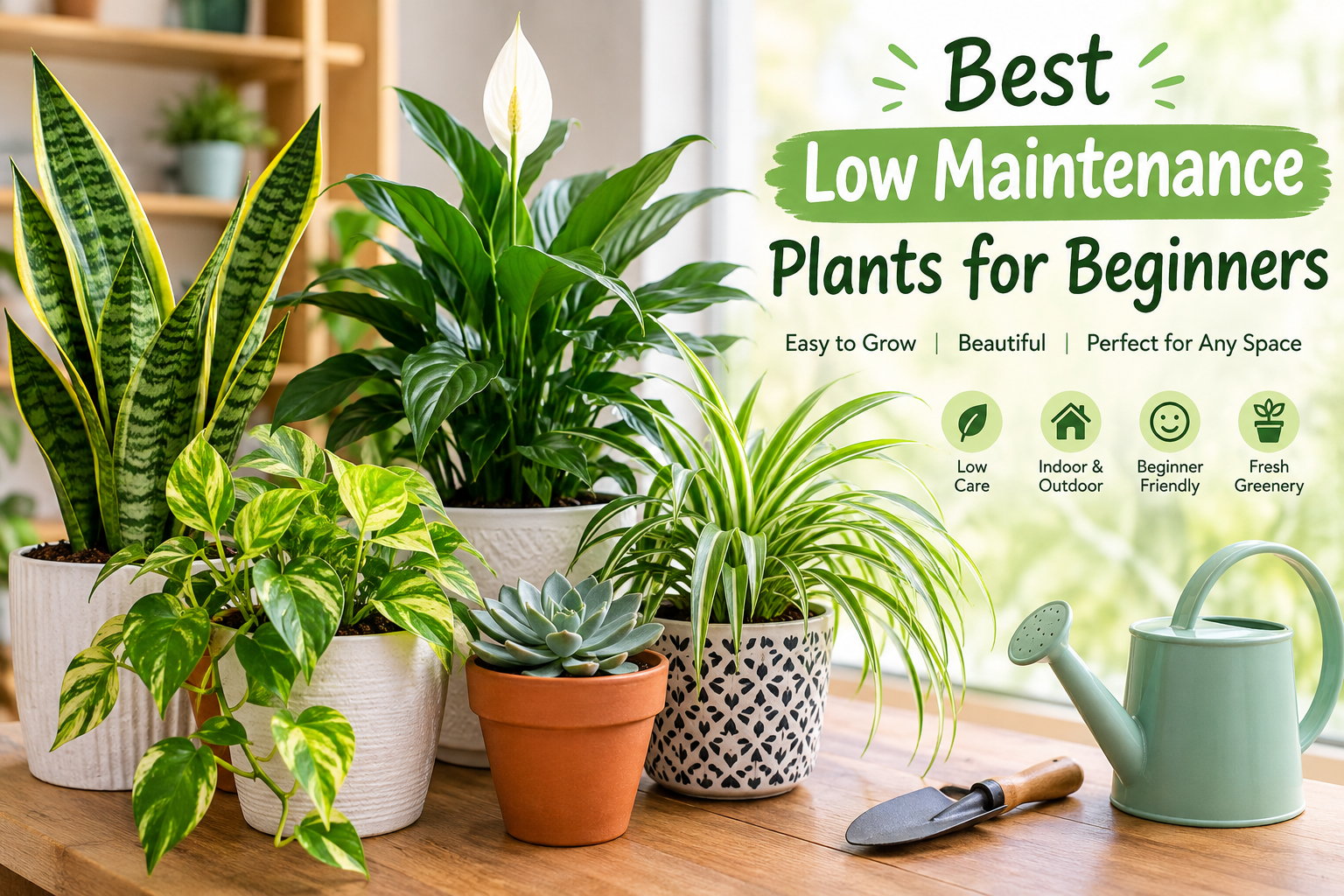
Starting a small garden can feel exciting, but it can also feel a little difficult when you are new to plant care. I used to think that keeping plants healthy required a lot of time, regular attention, and gardening experience. Over time, I learned that this is not always true. There are many beautiful plants that can grow well with simple care, making them perfect for beginners.
If you are looking for the best low maintenance plants for beginners, you have plenty of choices. Some plants need very little water, while others can handle different lighting conditions and occasional neglect. The key is choosing a plant that matches your home, available light, and daily routine.
In my experience, starting with easy plants is one of the best ways to build confidence as a gardener. Once you understand how a few simple plants grow, caring for other plants becomes much easier.
Snake Plant
The snake plant is one of my favorite choices for beginners because it is extremely easy to care for. It has tall, attractive leaves that can add a fresh look to bedrooms, living rooms, offices, and other indoor spaces.
Snake plants can tolerate lower light conditions, although they usually grow better when they receive bright indirect light. They also do not need frequent watering. I usually recommend checking the soil before watering instead of following a strict schedule.
One common mistake beginners make is giving snake plants too much water. Their roots can suffer when the soil stays wet for too long. A pot with drainage holes and well draining soil can make a big difference.
Pothos
Pothos is another excellent low maintenance plant for beginners. It is popular because it grows quickly and produces attractive trailing vines. You can place it on a shelf, table, or hanging planter.
Pothos can adapt to several indoor lighting conditions. Bright indirect light can help maintain strong growth, while lower light can also be tolerated. Watering is simple because you can allow the soil to become slightly dry before watering again.
I especially like pothos because it gives beginners the opportunity to watch a plant grow. The vines can become quite long, and you can trim them when necessary. If you want an easy houseplant that also looks decorative, pothos is worth considering.
Spider Plant
Spider plants are another great choice for people who are new to gardening. They have long green and white leaves that create a bright and attractive appearance.
Spider plants generally prefer bright indirect light but can adapt to moderate indoor light. They need regular watering, but you should still avoid keeping their roots constantly wet.
One thing I like about spider plants is that they can produce small baby plants from mature growth. These can eventually be separated and grown in their own containers. This makes the plant enjoyable for beginners who want to learn about propagation.
Aloe Vera
Aloe vera is a practical choice for beginners who prefer plants that do not need frequent watering. It stores water in its thick leaves, which helps it handle dry conditions.
Aloe vera generally prefers bright light, so placing it near a sunny window can help it grow well. However, extremely intense direct sunlight can sometimes cause problems, especially if the plant has not been gradually introduced to strong light.
The most important part of aloe vera care is avoiding excessive watering. I usually allow the soil to dry properly before watering again. A container with good drainage is also important.
ZZ Plant
The ZZ plant is well known for being one of the easiest indoor plants to maintain. Its thick stems and glossy green leaves can make a room look fresh without requiring constant care.
It can tolerate lower light and does not need frequent watering. This makes it particularly useful for busy people who may forget to water their plants from time to time.
When caring for a ZZ plant, I recommend paying more attention to the soil than the calendar. If the soil is still damp, there is usually no reason to water it again. Overwatering is more likely to cause problems than occasional dryness.
Peace Lily
Peace lily is a beautiful indoor plant that can be a good choice for beginners who want something with attractive flowers. It has dark green leaves and produces elegant white flowers under suitable growing conditions.
Peace lilies generally prefer bright indirect light and evenly moist soil. Unlike some other beginner plants, they may need watering a little more often.
One helpful feature is that peace lilies can show signs of thirst by allowing their leaves to droop. However, I would not recommend waiting until the plant is severely wilted every time. Checking the soil regularly is a better approach.
Succulents
Succulents are excellent low maintenance plants for beginners because many varieties can handle periods of dry soil. They come in many shapes, sizes, and colors, so it is easy to find one that fits your space.
Most succulents prefer plenty of bright light. A sunny window can often be a good location, although you should observe how the plant responds to the light in your home.
The biggest lesson I learned with succulents is that less water is often better than too much water. Their leaves store moisture, so they usually do not need frequent watering. Always use a container with drainage and avoid allowing excess water to remain around the roots.
Cast Iron Plant
The cast iron plant is another strong option for beginners. Its name reflects its reputation for being tough and adaptable. It can handle lower light conditions and does not require constant attention.
This plant grows more slowly than some other houseplants, but that can actually be an advantage for beginners. You do not have to worry about constant pruning or rapid growth.
Keep the soil moderately moist while avoiding excessive water. With suitable conditions, a cast iron plant can remain attractive for a long time with relatively little effort.
Rubber Plant
Rubber plants can be a good choice if you want a larger indoor plant. Their broad leaves can create a strong visual effect in a living room, bedroom, or office.
They generally prefer bright indirect light, although they can tolerate somewhat lower light. Water when the upper part of the soil becomes dry and make sure the container drains properly.
I recommend choosing a suitable location before bringing a rubber plant home because mature plants can become quite large. Giving them enough space can make routine care much easier.
How to Choose a Low Maintenance Plant
Choosing the right plant is more important than simply buying the easiest plant available. Every home has different light levels, temperatures, humidity, and available space.
First, look at how much natural light your room receives. A bright room near a window can support plants that need more light. A darker corner may be better suited to plants that tolerate lower light.
Next, consider how often you are available to water. If you have a busy schedule, plants such as snake plants, ZZ plants, aloe vera, and many succulents can be practical choices.
You should also consider the size of the plant. A small apartment may be better suited to compact plants, while a larger room can accommodate bigger varieties.
Basic Plant Care Tips for Beginners
Even low maintenance plants need basic care. The first thing I recommend is learning how to check the soil. Do not water simply because it is a particular day of the week. Touch the soil and understand what your plant actually needs.
Good drainage is equally important. Containers should have drainage holes so excess water can escape. This helps reduce the risk of root problems caused by constantly wet soil.
Light is another important factor. A plant may survive in poor light, but survival and healthy growth are not always the same thing. Try to give each plant the type of light it naturally prefers.
Cleaning leaves occasionally can also help your plants look healthier. Dust can collect on broad leaves and make them appear dull. A soft, slightly damp cloth can be useful for suitable plants.
Finally, do not panic when a plant develops a yellow leaf or loses an older leaf. Some leaf changes are normal. Instead, look at the overall condition of the plant and check its light, soil, watering, and container.
Common Mistakes Beginners Should Avoid
One of the biggest mistakes I see beginners make is overwatering. People often believe that more water means healthier plants, but this is not true for many houseplants.
Another mistake is placing every plant in direct sunlight. Some plants enjoy strong light, while others can develop leaf damage when exposed to intense sunlight.
Using a container without drainage is another common problem. Even an easy plant can struggle if its roots remain surrounded by excess water.
Beginners should also avoid moving plants around constantly. After placing a plant in a suitable location, give it some time to adjust. Observe its growth before making major changes.
Final Thoughts
The best low maintenance plants for beginners are the ones that fit your lifestyle and home environment. Snake plants, pothos, spider plants, aloe vera, ZZ plants, peace lilies, succulents, cast iron plants, and rubber plants can all be useful choices depending on your space and growing conditions.
From my point of view, starting small is the easiest way to enjoy gardening without feeling overwhelmed. Choose one or two plants, learn how they respond to light and water, and gradually build your collection.
You do not need to be an expert gardener to keep plants healthy. A little observation, suitable light, proper watering, and good drainage can take you a long way. Once you see your first plants growing successfully, you may find that gardening becomes a relaxing and enjoyable part of your daily routine.
Leave a Reply