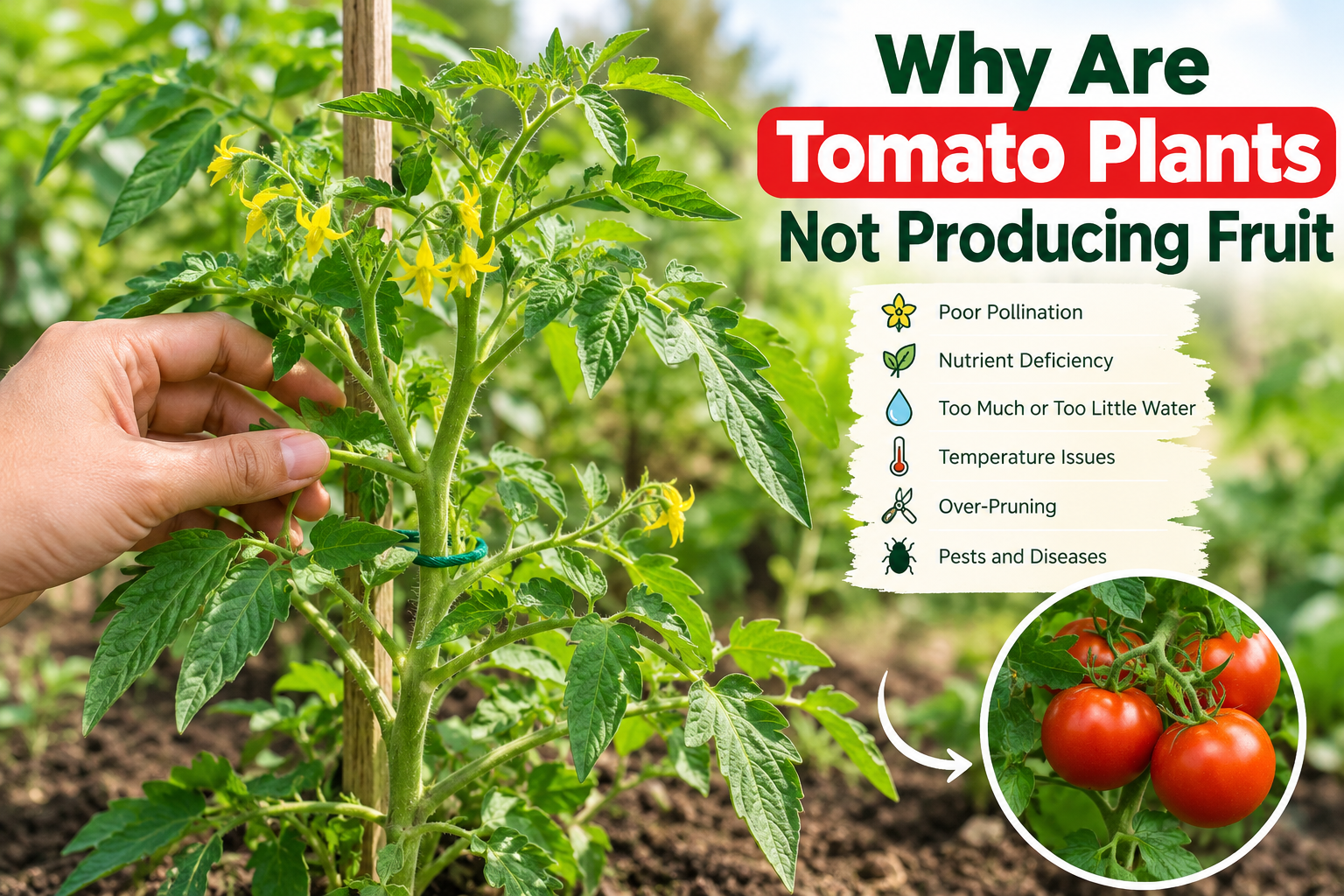
Growing tomatoes can be one of the most rewarding parts of having a vegetable garden. I personally think there is something special about watching a small tomato plant grow from a young seedling into a large green plant covered with yellow flowers. However, one of the most frustrating gardening problems is seeing plenty of flowers but no tomatoes.
If your tomato plants are flowering but not producing fruit, there is usually a reason behind it. The good news is that most causes can be corrected with a few changes in plant care. In my experience, tomato plants need the right balance of sunlight, water, nutrients, temperature, pollination, and overall care to produce healthy fruit.
In this article, I will explain the most common reasons tomato plants are not producing fruit and what you can do to encourage better tomato production.
Too Much Heat Can Stop Tomato Fruit Production
One of the most common reasons tomato plants fail to produce fruit is extreme temperature. Tomatoes grow best when the weather is comfortably warm, but very high temperatures can interfere with pollination.
When daytime temperatures become extremely hot, tomato flowers may drop before fruit develops. The plant may continue growing and producing flowers, but those flowers may not turn into tomatoes.
I have found that providing some afternoon protection during very hot weather can help. A little shade during the hottest part of the day may reduce stress on the plant. However, tomatoes still need plenty of sunlight, so avoid placing them in deep shade.
If your tomato plant is healthy but suddenly stops producing fruit during a heat wave, temperature may be the main reason.
Poor Pollination Can Cause Tomato Flowers to Drop
Tomato plants have flowers that contain both male and female reproductive parts, so you usually do not need two tomato plants for pollination. However, the flowers still need movement to release and transfer pollen properly.
Wind and insects can help with this process. In a quiet garden with little air movement, pollination may sometimes be poor.
You can gently shake the tomato plant or tap the flower clusters when the flowers are open. I find that doing this lightly can help distribute pollen. You do not need to shake the plant aggressively.
If your tomato plant has many yellow flowers but no tiny green tomatoes, checking pollination is a good place to start.
Tomato Plants Need Enough Sunlight
Tomatoes are sun loving plants. If a tomato plant receives too little sunlight, it may produce lots of leaves but fewer flowers and fruits.
For strong tomato production, choose a location where the plant can receive several hours of direct sunlight each day. More sunlight generally means more energy for flowering and fruit development.
Sometimes gardeners plant tomatoes in a location that looks bright but becomes shaded for much of the day because of walls, trees, fences, or other plants. If possible, move container grown tomatoes to a sunnier location.
In my opinion, sunlight is one of the first things I would check when a tomato plant looks healthy but produces very little fruit.
Too Much Nitrogen Can Produce Leaves Instead of Tomatoes
Fertilizer is important, but using too much nitrogen can create another problem. Nitrogen encourages leafy green growth. When there is excessive nitrogen, a tomato plant may become large and bushy while producing fewer flowers and fruits.
This is something many new gardeners experience. The plant looks extremely healthy because it has lots of green leaves, but there are very few tomatoes.
Instead of continuously adding high nitrogen fertilizer, use a balanced fertilizer designed for vegetables or tomatoes. Always follow the instructions on the product label.
If your tomato plant is extremely leafy with limited flowering, excessive nitrogen may be worth considering.
Inconsistent Watering Can Affect Fruit Production
Tomato plants need regular moisture, especially when they are flowering and developing fruit. Allowing the soil to become extremely dry and then soaking it heavily can put unnecessary stress on the plant.
I prefer keeping the soil consistently moist without leaving it waterlogged. Water the soil around the base of the plant rather than constantly wetting the leaves.
Container grown tomatoes may need more frequent watering because containers can dry out quickly. During hot weather, check the soil regularly.
Consistent watering supports healthy growth and can help tomato plants handle stressful weather conditions.
Overwatering Can Also Cause Problems
While tomatoes need water, too much water can be just as problematic as too little. Constantly wet soil can reduce oxygen around the roots and may contribute to root problems.
Overwatered tomato plants can sometimes have yellowing leaves, weak growth, or other signs of stress. If the soil remains wet for a long time after watering, improve drainage and reduce unnecessary watering.
Before watering, I like to check the soil rather than following a strict schedule. If the upper layer of soil still feels reasonably moist, the plant may not need more water yet.
Poor Soil Nutrition Can Reduce Flowering
Tomato plants need several nutrients for healthy growth and fruit production. If the soil is poor, the plant may struggle to produce strong flowers and fruit.
Adding mature compost to the soil can improve its structure and provide organic matter. A suitable vegetable fertilizer can also provide important nutrients when needed.
However, I recommend avoiding the idea that more fertilizer always means more tomatoes. Too much fertilizer can create its own problems.
A simple soil test can be useful if your plants repeatedly struggle despite good watering and sunlight.
Lack of Calcium Is Not Always the Main Problem
Gardeners often blame calcium whenever tomatoes have fruit problems. Calcium is important for tomato growth, but adding calcium without understanding the actual problem may not solve the issue.
For example, blossom end rot is often associated with calcium availability, but inconsistent watering can make it worse because the plant has difficulty moving calcium into developing fruit.
Instead of immediately adding supplements, focus first on consistent watering, healthy soil, and proper plant care.
Tomato Plants Need Enough Space
Crowded tomato plants can compete for sunlight, water, and nutrients. Poor air circulation can also increase the risk of certain plant diseases.
When planting tomatoes, give each plant enough space based on the variety and its mature size. Avoid placing plants so close together that their leaves become one large tangled mass.
Good spacing makes it easier for sunlight and air to reach the plant. It also makes watering, pruning, inspection, and harvesting easier.
Pests Can Interfere With Tomato Production
Pests can cause stress and damage to tomato plants. Aphids, whiteflies, caterpillars, and other insects may attack leaves, stems, or flowers.
I recommend checking tomato plants regularly. Look underneath leaves and around new growth because some pests can be difficult to notice at first.
If you find a small pest problem, removing affected insects by hand or using a suitable garden treatment according to the label may help. Keeping plants healthy is also important because stressed plants can become more vulnerable to problems.
Disease May Be Affecting the Plant
Tomato diseases can affect leaves, stems, flowers, and fruit production. If the plant has unusual spots, widespread yellowing, wilting, or damaged leaves, inspect it carefully.
Good air circulation, proper watering, clean gardening tools, and removing seriously affected plant material can help reduce some disease problems.
Do not automatically assume every yellow leaf means disease. Older leaves naturally change as tomato plants grow. Look at the overall condition of the plant before deciding what is wrong.
Avoid Excessive Pruning
Pruning can be useful for some tomato varieties, but excessive pruning can remove too many leaves. Tomato leaves are important because they capture sunlight and help the plant produce energy.
If too many leaves are removed, the plant may have less ability to support fruit development. I prefer removing damaged or diseased growth and managing unnecessary growth carefully rather than aggressively cutting the plant.
The correct pruning method also depends on whether you are growing a determinate or indeterminate tomato variety.
Give the Plant Time
Sometimes tomato plants simply need more time. Young plants may grow for several weeks before they begin producing significant fruit.
Weather conditions, variety, planting time, and growing conditions can all affect how quickly tomatoes develop.
If the plant looks healthy, has good green growth, receives enough sunlight, and is beginning to flower, patience may be all that is needed.
What I Would Check First
If my tomato plant was flowering but not producing tomatoes, I would inspect a few basic things before making major changes.
First, I would check the amount of sunlight the plant receives. Next, I would look at the temperature and recent weather conditions. After that, I would check whether the soil is too dry or too wet.
I would also inspect the flowers for signs of successful pollination and look closely for insects or disease. Finally, I would consider whether I have been using too much fertilizer, especially a fertilizer high in nitrogen.
This simple process can help identify the problem without making unnecessary changes.
Final Thoughts
When tomato plants are not producing fruit, it can be disappointing, especially when the plants look healthy and have plenty of flowers. However, there is usually a reason for the lack of tomatoes.
Temperature problems, poor pollination, insufficient sunlight, inconsistent watering, excessive nitrogen, poor soil, pests, diseases, and excessive pruning can all affect fruit production.
In my experience, the best approach is to observe the plant carefully instead of changing everything at once. Look at the leaves, flowers, soil, sunlight, weather, and watering routine. Once you understand what the plant is telling you, it becomes much easier to make the right adjustment.
With proper care and a little patience, a tomato plant that is not producing fruit can often return to healthy growth and begin developing those small green tomatoes that every gardener wants to see.
Leave a Reply