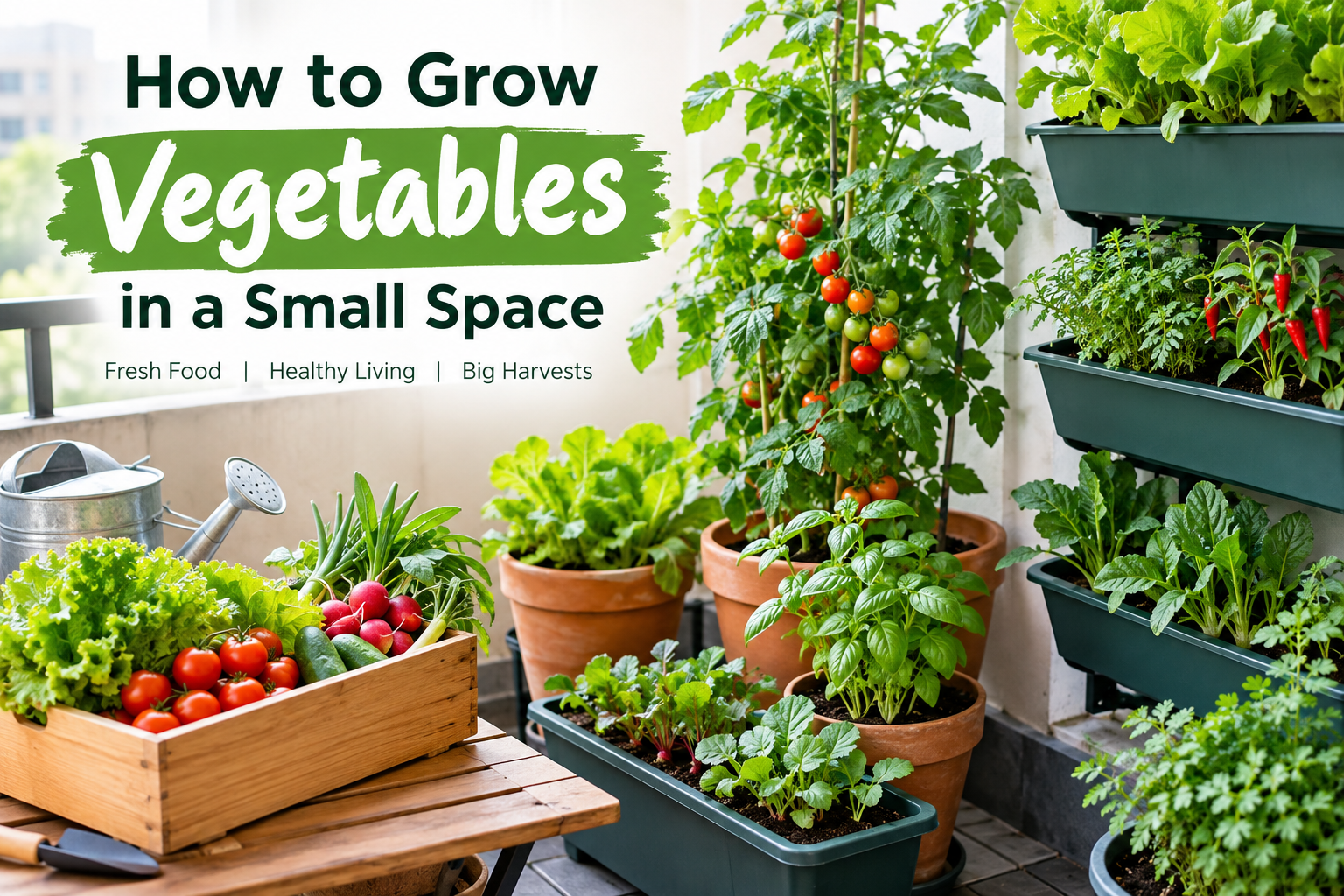
Growing vegetables at home does not always require a large backyard or a big garden. In my experience, even a small balcony, patio, rooftop, window area, or tiny outdoor corner can become a productive vegetable garden when the available space is used wisely. The key is to choose the right vegetables, suitable containers, good soil, and a simple growing method.
If you are wondering how to grow vegetables in a small space, you do not need to make the process complicated. With a little planning and regular care, you can grow fresh vegetables for your kitchen while enjoying the experience of gardening.
In this guide, I will share some simple methods that I believe are useful for beginners who want to start a small vegetable garden at home.
Choose the Right Location
The first thing I consider when growing vegetables in a small space is sunlight. Most vegetables need several hours of sunlight every day to grow well. Before buying seeds or containers, look around your home and find the brightest suitable location.
A balcony with good sunlight can work very well. A rooftop, patio, terrace, or sunny area near a window can also be useful. Leafy vegetables may tolerate slightly less sunlight, while vegetables such as tomatoes, peppers, cucumbers, and beans generally perform better when they receive plenty of direct sunlight.
If your space receives limited sunlight, do not give up. Start with vegetables that can tolerate partial shade, such as lettuce, spinach, radishes, and some herbs.
Start With Containers
Containers are one of the easiest ways to grow vegetables in a small space. You can use pots, boxes, buckets, grow bags, or other suitable containers as long as they are clean and have proper drainage.
I prefer containers with drainage holes because excess water needs somewhere to escape. Without good drainage, the roots can remain wet for too long, which may cause root problems.
The size of the container should match the vegetable you want to grow. Small vegetables such as radishes and lettuce can grow in relatively shallow containers. Tomatoes and other larger plants usually need deeper and wider containers.
You do not need to buy expensive gardening containers. A simple container can work perfectly when it has enough space for the roots and proper drainage.
Select Vegetables That Save Space
When space is limited, choosing the right vegetables makes a big difference. I recommend starting with compact vegetables that do not require a huge amount of growing area.
Some vegetables that can work well in a small vegetable garden include:
Lettuce
Spinach
Radishes
Green onions
Carrots
Cherry tomatoes
Peppers
Bush beans
Cucumbers
Herbs
These vegetables can be grown in containers and can provide a useful harvest without requiring a large garden.
Cherry tomatoes are particularly useful because they can produce a good amount of fruit from a relatively small growing area. Radishes and leafy greens are also excellent choices for beginners because they can grow fairly quickly.
Use Vertical Gardening
One of my favorite solutions for a small garden is vertical gardening. Instead of using only the floor, you can use walls, shelves, hanging containers, and supports to grow plants upward.
Cucumbers, beans, and some tomato varieties can be trained to grow vertically with suitable support. This allows the plant to use upward space instead of spreading across the ground.
You can also place smaller containers on shelves. This creates several growing levels while keeping the footprint small.
However, always make sure the structure is stable and strong enough to support the containers and plants. Safety should come before saving space.
Prepare Good Soil
Good soil is one of the most important parts of successful vegetable gardening. Even if you have excellent seeds, poor soil can make it difficult for plants to grow properly.
For container gardening, I recommend using a good quality potting mix rather than relying only on heavy garden soil. A suitable growing mix should allow water to drain while still holding enough moisture for the roots.
Healthy soil also provides plants with access to important nutrients. You can improve the growing medium with suitable organic matter or compost.
Before planting, I like to make sure the soil feels loose and easy to work with. Compact soil can make it harder for roots to spread and can interfere with drainage.
Plant Vegetables According to Their Size
When growing vegetables in a small space, overcrowding is one of the easiest mistakes to make. It can be tempting to put many plants into one container because space is limited, but plants still need enough room for their roots, leaves, air circulation, and sunlight.
Always check the recommended spacing for the vegetable you are growing. If plants are placed too close together, they may compete for water and nutrients.
I have found that growing fewer healthy plants is usually better than trying to grow too many plants in a small container.
Try Succession Planting
Succession planting is another useful method for small vegetable gardens. Instead of planting everything at the same time, you can plant small amounts at different times.
For example, you can sow a few radish or lettuce seeds, wait for them to develop, and then plant another small batch later. This can help you enjoy fresh vegetables over a longer period rather than having everything ready for harvest at the same time.
This method is especially useful when your growing space is limited because you can reuse containers after harvesting one crop.
Water Your Plants Carefully
Watering is important, but more water does not always mean healthier plants. In my experience, beginners often make the mistake of watering container vegetables too frequently.
The amount of water required depends on the vegetable, container size, soil, temperature, and weather. Check the soil before watering. If the upper layer feels dry, the plant may need water.
During hot weather, containers can dry out more quickly than garden soil. You may need to check them more frequently.
Water slowly and allow excess water to drain from the bottom. Avoid keeping containers permanently soaked.
Feed Your Vegetables
Plants growing in containers have limited access to nutrients because they cannot spread their roots through a large area of soil. As a result, nutrients can become depleted over time.
Using compost or a suitable vegetable fertilizer can help provide nutrients during the growing season. Always follow the instructions on any fertilizer product you use.
I prefer keeping plant care simple. Regular watering, healthy soil, enough sunlight, and appropriate feeding can go a long way.
Grow Herbs Alongside Vegetables
Herbs are excellent for small gardens because many of them grow well in containers. You can grow herbs such as basil, mint, coriander, parsley, and other suitable varieties depending on your climate.
Growing herbs alongside vegetables can make your small garden more useful. Instead of using your limited space for only one type of plant, you can create a mixture of vegetables and herbs.
Just remember that some herbs can spread quickly, so it is often better to keep aggressive spreading plants in their own containers.
Use Hanging Containers
Hanging containers can be helpful when floor space is extremely limited. They allow you to grow plants above the ground while leaving the lower area available for other containers.
Small leafy vegetables and herbs can work well in suitable hanging containers. Some trailing plants can also be grown this way.
Before using hanging containers, make sure the hooks and support points are strong enough. A container becomes much heavier after it is filled with wet soil and a mature plant.
Protect Plants From Pests
Even a small vegetable garden can attract pests. You may notice insects feeding on leaves, stems, or young vegetables.
The best approach is to check your plants regularly. Look underneath leaves and around new growth because some pests can be easy to miss.
Remove damaged leaves when appropriate and keep the growing area clean. Good air circulation and proper watering can also help maintain healthy plants.
If you notice a serious pest problem, identify the pest before choosing a treatment. I believe it is better to understand the problem first rather than immediately applying unnecessary products.
Harvest Vegetables at the Right Time
Harvesting is one of the most enjoyable parts of growing vegetables at home. Picking vegetables at the right stage can encourage some plants to continue producing.
Leafy greens can often be harvested gradually instead of removing the entire plant. Herbs can also be harvested regularly by taking suitable amounts from the plant.
For vegetables such as radishes, carrots, tomatoes, and peppers, check their size and appearance to determine when they are ready.
Regular harvesting can also give you more space to start another crop in your container garden.
Make a Simple Small Space Garden Plan
Before buying many seeds, I recommend making a simple plan. Look at the amount of sunlight available and measure the space you have.
Then decide how many containers you can comfortably manage. Choose vegetables based on the available space rather than choosing too many varieties.
For a beginner, a few containers can be enough. You could start with lettuce, radishes, green onions, one tomato plant, and a few herbs.
Once you understand how your plants respond to your local weather and growing conditions, you can gradually expand the garden.
Final Thoughts
Learning how to grow vegetables in a small space is much easier when you focus on practical methods instead of trying to create a perfect garden immediately. You can grow fresh vegetables in containers, use vertical space, choose compact varieties, and make good use of balconies, patios, rooftops, and other small areas.
The most important thing is to start small and learn as you go. Give your plants enough sunlight, use suitable soil, water carefully, provide nutrients when needed, and check your plants regularly.
You do not need a huge backyard to enjoy homegrown vegetables. With thoughtful planning, even a small space can become a productive vegetable garden. For me, that is one of the best things about gardening. It allows almost anyone to grow something fresh at home, regardless of how much space they have.
Leave a Reply