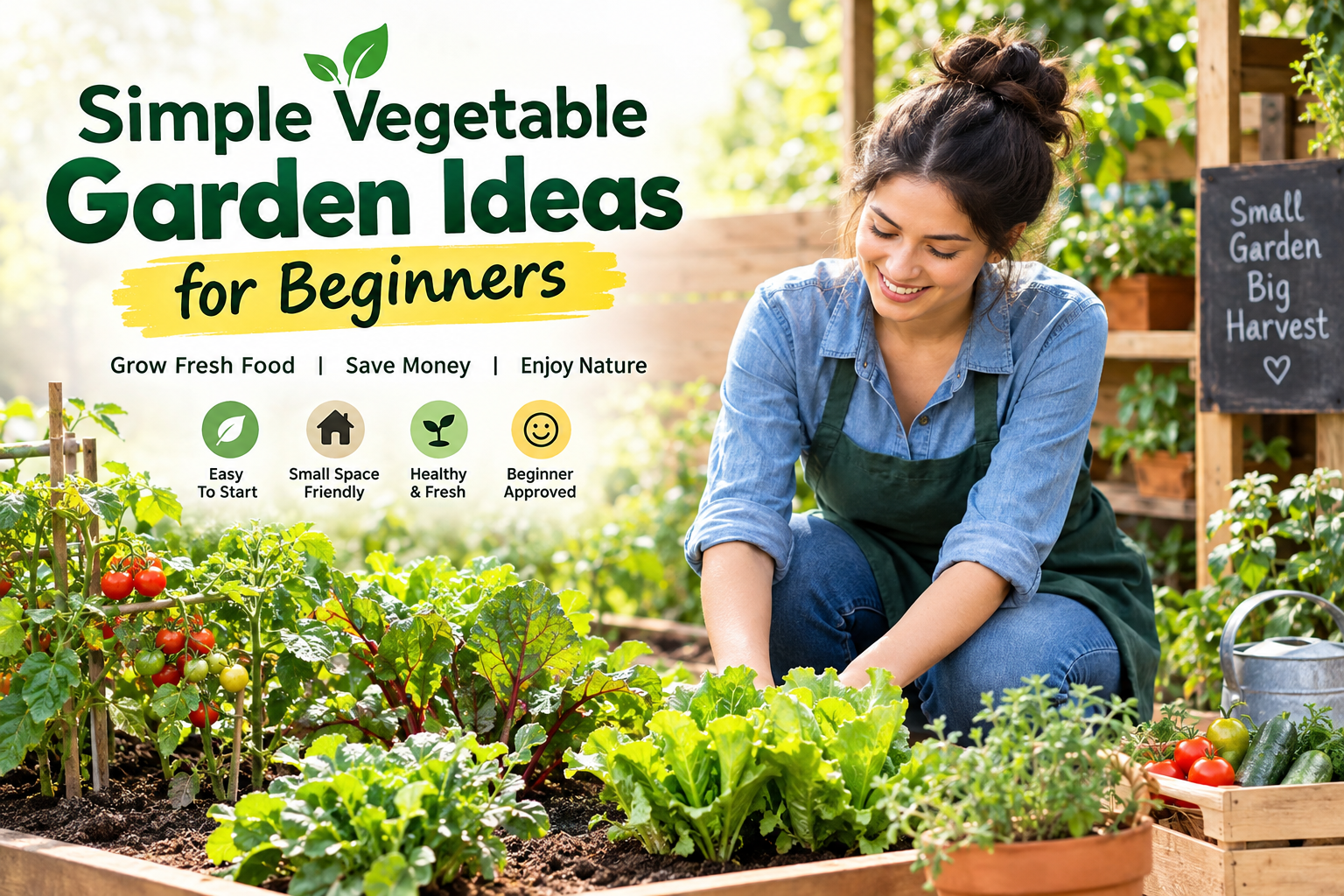
Starting a vegetable garden can feel difficult when you have never grown vegetables before. I used to think that growing fresh vegetables required a large backyard, expensive tools, and a lot of gardening experience. With time, I learned that this is not true. You can start with a small space, a few easy vegetables, good soil, and regular care.
If you are looking for simple vegetable garden ideas for beginners, my biggest advice is to start small. A small garden is easier to manage and gives you the confidence to learn. Once you understand how plants grow, you can slowly expand your garden.
In this article, I will share some simple vegetable garden ideas that beginners can use at home. These ideas are practical, affordable, and suitable for people who want to enjoy fresh vegetables without making gardening complicated.
Start With a Small Garden
One of the easiest vegetable gardening ideas for beginners is to start with a small garden. You do not need a huge area to grow useful vegetables. Even a small corner of your backyard can produce fresh food.
If you have limited space, choose an area that receives several hours of sunlight each day. Most vegetables need good sunlight to grow properly. Before planting, remove weeds, stones, and other unwanted materials from the area.
I recommend starting with a garden that is easy for you to reach. You should be able to water the plants, check the leaves, remove weeds, and harvest vegetables without difficulty.
A small garden also helps you understand how much time gardening requires. After gaining experience, you can decide whether you want to create a larger vegetable garden.
Grow Easy Vegetables First
Beginners should choose vegetables that are relatively easy to grow. There is no reason to start with plants that require complicated care.
Some good vegetables for beginners include lettuce, radishes, spinach, green beans, carrots, cucumbers, tomatoes, and green onions. These vegetables can be rewarding because you can see their growth and eventually enjoy them in your meals.
I personally believe that growing vegetables you already like to eat is one of the best ways to stay interested in gardening. If you love tomatoes, grow tomatoes. If you regularly use green onions in cooking, give them a place in your garden.
Growing familiar vegetables also makes the experience more useful because you can enjoy the results of your work.
Use Containers for Small Spaces
If you do not have a backyard, do not assume that vegetable gardening is impossible. Container gardening is one of my favorite simple vegetable garden ideas for beginners because it works well in small spaces.
You can grow vegetables in suitable pots, containers, buckets, or garden boxes as long as they provide enough space and drainage.
Tomatoes, peppers, lettuce, spinach, herbs, and green onions can work well in containers. Choose containers according to the size of the plants you want to grow.
Make sure the containers have drainage holes. Excess water needs a way to leave the container because constantly wet soil can create problems for plant roots.
Place your containers somewhere that receives enough sunlight. A balcony, patio, rooftop, or sunny area near your home can become a useful small vegetable garden.
Prepare Healthy Soil
Good soil is one of the most important parts of successful vegetable gardening. Even the easiest vegetables may struggle if the soil is poor.
Before planting, I recommend improving the soil with organic material such as compost. Compost can help improve soil structure and provide nutrients for plants.
The soil should not be extremely hard or compacted. Roots need space to grow, while water needs to move through the soil properly.
If you are using containers, choose good quality potting soil instead of simply filling the container with heavy garden soil. Healthy soil gives your plants a better starting point.
You do not need to make the soil preparation complicated. Start with basic improvements and observe how your plants respond.
Create Simple Garden Rows
Another easy idea is to organize your vegetable garden into simple rows. Rows make the garden look neat and make it easier to walk between plants.
Leave enough space between rows so you can reach the plants without stepping on the soil around their roots.
You can use small sticks or garden markers to identify different vegetables. This is especially helpful when several plants look similar during their early growth.
A simple layout also makes watering and weeding easier. Instead of creating a complicated garden design, focus on making the space practical.
Try a Raised Garden Bed
Raised garden beds can be a useful option for beginners. They give you more control over the soil and can make gardening more organized.
A raised bed does not need to be very large. You can create a small rectangular growing area using suitable garden materials.
Fill it with healthy soil and compost, then plant vegetables according to their space requirements.
One benefit I like about raised beds is that they create a clear separation between the growing area and the surrounding space. This can make weed control easier and give the garden a cleaner appearance.
If you have enough room, you can create several small raised beds and use each one for different vegetables.
Grow Vegetables Vertically
When space is limited, growing upward can be a smart solution. Some vegetables naturally grow as vines and can be supported with a suitable structure.
Cucumbers, beans, peas, and some types of tomatoes can benefit from support.
You can use a simple trellis or another safe garden structure to help plants grow upward. This saves ground space and can make harvesting easier.
Vertical gardening can also make a small garden look attractive. However, make sure the support is strong enough to hold mature plants and their vegetables.
Keep Watering Simple
Watering is an important part of vegetable gardening, but beginners often make it more complicated than necessary.
Instead of watering according to a fixed rule every day, check the soil. If the surface feels dry, the plants may need water. If the soil is already wet, additional water may not be necessary.
The exact watering needs depend on the vegetable, weather, soil, container size, and growing conditions.
I prefer watering the soil around the base of plants instead of constantly wetting the leaves. Morning watering can also be convenient because plants have time to use the moisture during the day.
The goal is to provide enough moisture without keeping the soil constantly soaked.
Add Mulch Around Plants
Mulching is another simple garden idea that beginners can try. A layer of suitable organic mulch around plants can help the soil retain moisture and may reduce weed growth.
You can use appropriate natural materials such as dry leaves or other suitable organic garden materials.
Avoid placing a thick layer directly against plant stems. Leave some space around the base of the plant.
Mulch can also help keep the soil surface from drying too quickly during warm weather.
Choose a Simple Planting Schedule
You do not have to plant everything at the same time. A simple planting schedule can help you manage the garden more easily.
Start with a few vegetables and observe how they grow. Once you understand their needs, you can add more plants.
You can also plant certain vegetables in stages. This can help you enjoy fresh harvests over a longer period instead of having everything ready at once.
Keep a small gardening notebook where you write down what you planted and when you planted it. I find this especially useful because gardening becomes easier when you learn from previous seasons.
Use Natural Pest Prevention
Garden pests are a common concern, but beginners should not immediately assume that every insect is harmful.
Check your plants regularly. Look at the leaves, stems, and soil for signs of damage. If you notice insects, identify the problem before taking action.
Keeping the garden clean, removing damaged plant material, providing proper spacing, and checking plants regularly can help reduce many common problems.
Avoid using unnecessary chemical products. If you need pest control, choose an appropriate method for the specific problem and always follow the product instructions carefully.
Do Not Try to Make Your Garden Perfect
This is probably the most important advice I can give to someone starting a vegetable garden.
Your first garden does not have to look perfect. Some plants may grow faster than others. Some seeds may not germinate. You may water too much or too little while learning.
That is completely normal.
Gardening is a learning process. Every mistake teaches you something about your soil, weather, plants, and watering routine.
Instead of becoming frustrated, pay attention to what works and what does not. The experience you gain will make your next garden better.
Final Thoughts
Creating a vegetable garden does not have to be expensive or complicated. With the right approach, even beginners can grow fresh vegetables at home.
The best simple vegetable garden ideas for beginners are usually the ones that are easy to maintain. Start with a small space, choose vegetables that are easy to grow, prepare healthy soil, provide enough sunlight, water carefully, and check your plants regularly.
You can use containers if you have limited space, raised beds if you want better organization, or simple garden rows if you have a backyard.
Most importantly, give yourself time to learn. A vegetable garden is not only a way to grow fresh food. For me, it is also a relaxing activity that connects me with nature and gives me a real sense of satisfaction when I harvest something I planted myself.
Start with a few vegetables, keep things simple, and enjoy the process. As your experience grows, your garden can grow with you.
Leave a Reply