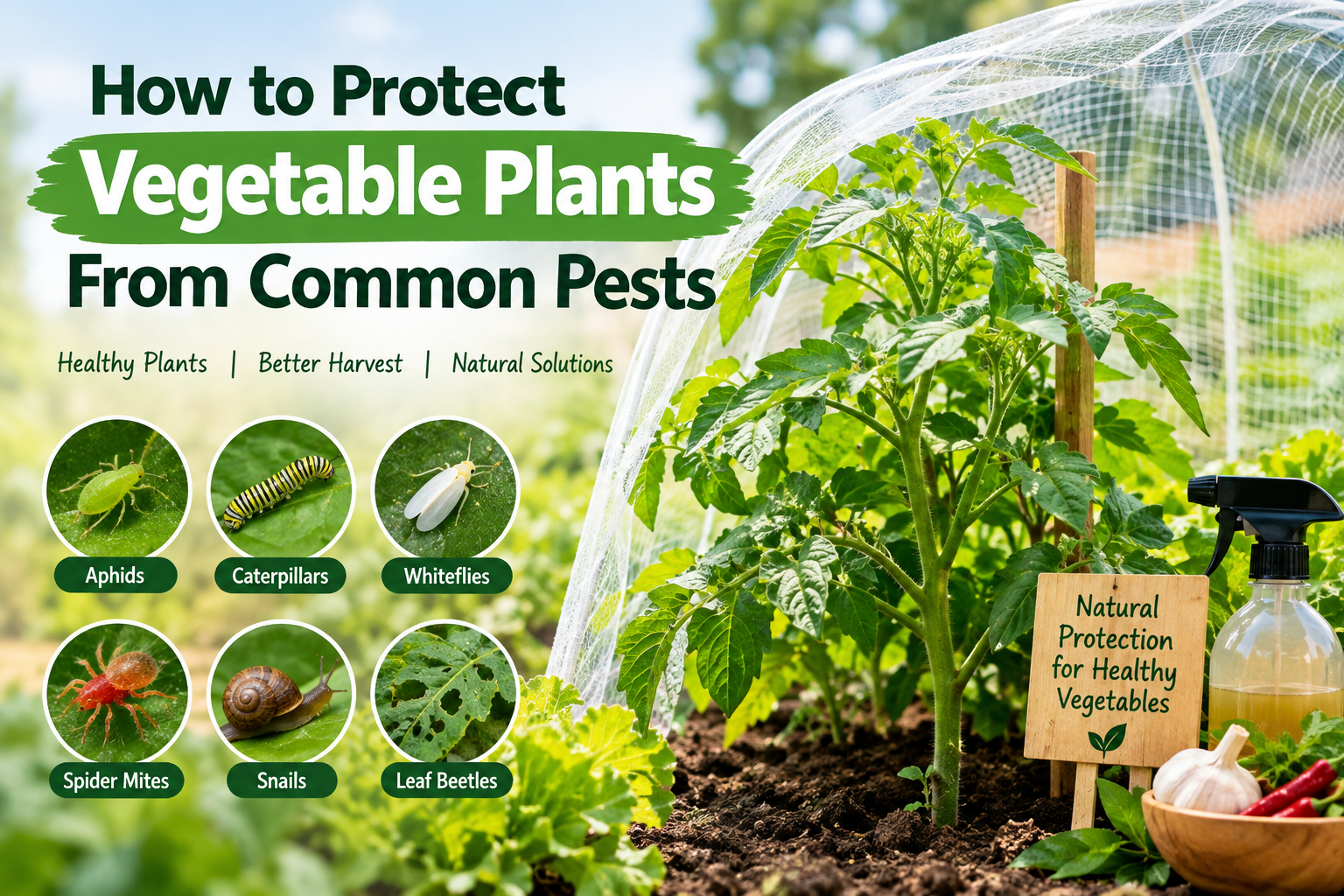
Growing vegetables at home can be a rewarding experience, but common garden pests can quickly turn healthy plants into weak and damaged ones. When I started paying more attention to my vegetable garden, I realized that preventing pests is much easier than trying to save a plant after serious damage has already happened. A few simple habits can make a big difference in keeping vegetable plants healthy.
Common garden pests such as aphids, caterpillars, whiteflies, spider mites, beetles, snails, and slugs can attack different parts of vegetable plants. Some insects feed on leaves, while others damage stems, roots, flowers, or young vegetables. The good thing is that you do not always need strong chemical pesticides to protect your garden.
In this guide, I will share some simple methods that I find useful for protecting vegetable plants from common pests.
Why Vegetable Plants Attract Pests
Vegetable plants provide insects with food, shelter, and a place to reproduce. Young plants are especially attractive because their leaves are soft and easy for many insects to eat.
A garden with weak plants, poor soil, excessive moisture, or too many weeds can also become more attractive to pests. I have found that healthy plants are generally better able to handle small pest problems.
Regular observation is one of the most important steps. If you notice a few insects or small holes in the leaves early, you can often deal with the problem before it spreads throughout the garden.
Check Your Plants Regularly
One of the easiest ways to protect vegetable plants is to inspect them regularly. I recommend checking the leaves, stems, and soil several times a week.
Look carefully under leaves because many pests hide there. Aphids, whiteflies, and some caterpillars can be difficult to notice from a distance. Also look for yellowing leaves, sticky surfaces, holes, curled leaves, or unusual spots.
When you find a pest early, remove it by hand if possible. For a small garden, this simple method can be surprisingly effective.
Keep the Garden Clean
Garden cleanliness plays an important role in pest prevention. Remove dead leaves, fallen vegetables, weeds, and damaged plant material from around your vegetable plants.
Weeds can provide shelter for insects and may compete with vegetables for water and nutrients. I prefer to remove weeds regularly instead of allowing them to become established.
At the end of the growing season, clean old plant material from the garden. This can reduce the places where certain pests may survive.
Use Physical Barriers
Physical barriers are one of my favorite ways to protect vegetable plants because they can reduce pest problems without applying products directly to the plants.
Garden netting, insect mesh, row covers, and simple plant covers can prevent many insects from reaching vegetables. These barriers can be particularly useful for young plants.
Make sure the cover is secured around the edges so insects cannot easily enter from underneath. At the same time, plants still need enough sunlight, air movement, and water.
For larger plants such as tomatoes, simple support structures can hold protective netting above the plant without restricting its growth.
Encourage Helpful Insects
Not every insect in the garden is harmful. Some insects actually help protect vegetable plants by feeding on pests.
Ladybugs, lacewings, praying mantises, and some other beneficial insects can help reduce populations of unwanted insects. Bees and other pollinators are also important for many vegetable plants.
I try to avoid disturbing helpful insects whenever possible. Growing a variety of flowers and plants can make the garden more welcoming to beneficial insects.
A healthy garden ecosystem can sometimes provide natural pest control without requiring constant treatment.
Protect Plants From Aphids
Aphids are small insects that often gather on young leaves and stems. They can cause leaves to curl, become weak, or develop unusual growth.
If I notice only a few aphids, I usually remove them by hand or gently wash them from the plant with water. Regularly checking new growth can help because aphids often gather around soft plant parts.
Encouraging beneficial insects can also help control aphid populations naturally.
If you decide to use any pest control product, always read the label carefully and make sure it is suitable for edible vegetable plants.
Deal With Caterpillars
Caterpillars can create large holes in vegetable leaves and may cause significant damage when their numbers increase.
I recommend checking both sides of leaves when looking for caterpillars or their eggs. If you find only a few, removing them by hand can be a simple solution.
Protective garden netting can also help prevent certain adult insects from reaching plants and laying eggs.
Keeping the garden clean and checking plants frequently can make caterpillar problems much easier to manage.
Control Snails and Slugs
Snails and slugs can be especially troublesome in damp gardens. They often feed at night and may leave large holes in young leaves.
I find it helpful to inspect the garden during the evening or early morning when these pests are more active. Remove hiding places such as unnecessary boards, piles of leaves, and garden debris.
Avoid creating constantly wet conditions around vegetable plants. Good drainage can help make the garden less attractive to moisture loving pests.
Watch for Whiteflies and Spider Mites
Whiteflies are tiny insects that often fly away when an affected plant is disturbed. They commonly gather underneath leaves.
Spider mites are even smaller and can be difficult to see. Their damage may appear as tiny pale spots on leaves, and serious infestations can cause leaves to become dry or weak.
Regular inspection is important because these pests can multiply quickly during suitable weather conditions.
Keeping plants properly watered and healthy can help them handle stress better. However, avoid overwatering because constantly wet soil can create other problems.
Use Healthy Soil
Healthy soil is an important part of natural pest prevention. Vegetable plants growing in good soil usually have better access to nutrients and water.
Before planting, improve the soil with suitable organic matter such as well prepared compost. Make sure the soil drains properly and avoid creating conditions where plant roots remain constantly wet.
I believe that garden care should focus on the whole plant rather than only treating insects when they appear. Strong plants, healthy soil, proper watering, and enough sunlight all contribute to a healthier vegetable garden.
Avoid Overwatering and Overfertilizing
Too much water can create weak growing conditions and may contribute to fungal problems. Excessive fertilizer can also encourage soft plant growth that may attract certain pests.
Water vegetable plants according to their needs and local weather conditions. Water deeply when necessary rather than constantly giving very small amounts.
Use fertilizer according to the instructions on the product. More fertilizer does not always mean better growth.
Balanced care is usually more useful than trying to make plants grow as quickly as possible.
Rotate Your Vegetable Crops
Crop rotation is another useful strategy for reducing recurring pest problems. Instead of planting the same type of vegetable in the same location every season, change the planting area when possible.
Different vegetable families have different pest and disease problems. Rotating crops can make it harder for some pests and diseases to continue using the same area year after year.
For small gardens, even simple rotation can be helpful. Keep a basic record of where you plant tomatoes, peppers, beans, leafy vegetables, and other crops.
Remove Seriously Damaged Leaves
If a leaf is heavily damaged or covered with pests, removing it can sometimes prevent the problem from spreading.
Use clean garden scissors when removing affected plant material. Do not leave badly infested leaves lying around the garden because pests may simply move to another plant.
However, avoid removing large amounts of healthy foliage unnecessarily. Vegetable plants need their leaves to produce energy through photosynthesis.
Use Pest Control Products Carefully
Sometimes a pest problem becomes too large for simple methods. In such cases, a suitable garden pest control product may be considered.
I believe chemical control should not be the first step when a simple prevention method can solve the problem. Always identify the pest before choosing a treatment.
Read the product label carefully and follow all instructions. Pay particular attention to information about edible crops, application rates, waiting periods, and safety precautions.
Never assume that a product is safe for vegetables simply because it is marketed for gardens.
Prevention Is Better Than Treatment
The best way to protect vegetable plants from common pests is to combine several simple practices. Regular inspection, clean garden beds, healthy soil, physical barriers, beneficial insects, proper watering, and crop rotation can all work together.
I have found that spending a few minutes checking plants regularly is much easier than dealing with a serious infestation later. You do not need a perfect garden to grow healthy vegetables. You simply need to pay attention and respond early when something looks unusual.
Final Thoughts
Protecting vegetable plants from common pests does not have to be complicated. Most home gardeners can reduce pest problems by creating healthy growing conditions and checking plants regularly.
Start by looking closely at your plants several times a week. Remove visible pests, clean the garden, control weeds, and use protective covers when necessary. Encourage helpful insects and focus on keeping your vegetable plants strong.
If you notice a pest problem, identify the pest before choosing a treatment. This helps you avoid unnecessary products and gives you a better chance of solving the actual problem.
For me, successful vegetable gardening is not about completely eliminating every insect. It is about maintaining a healthy balance where vegetables can grow well while common pest problems remain under control. With patience, regular observation, and simple preventive habits, you can protect your vegetable plants and enjoy a healthier harvest from your home garden.
Leave a Reply