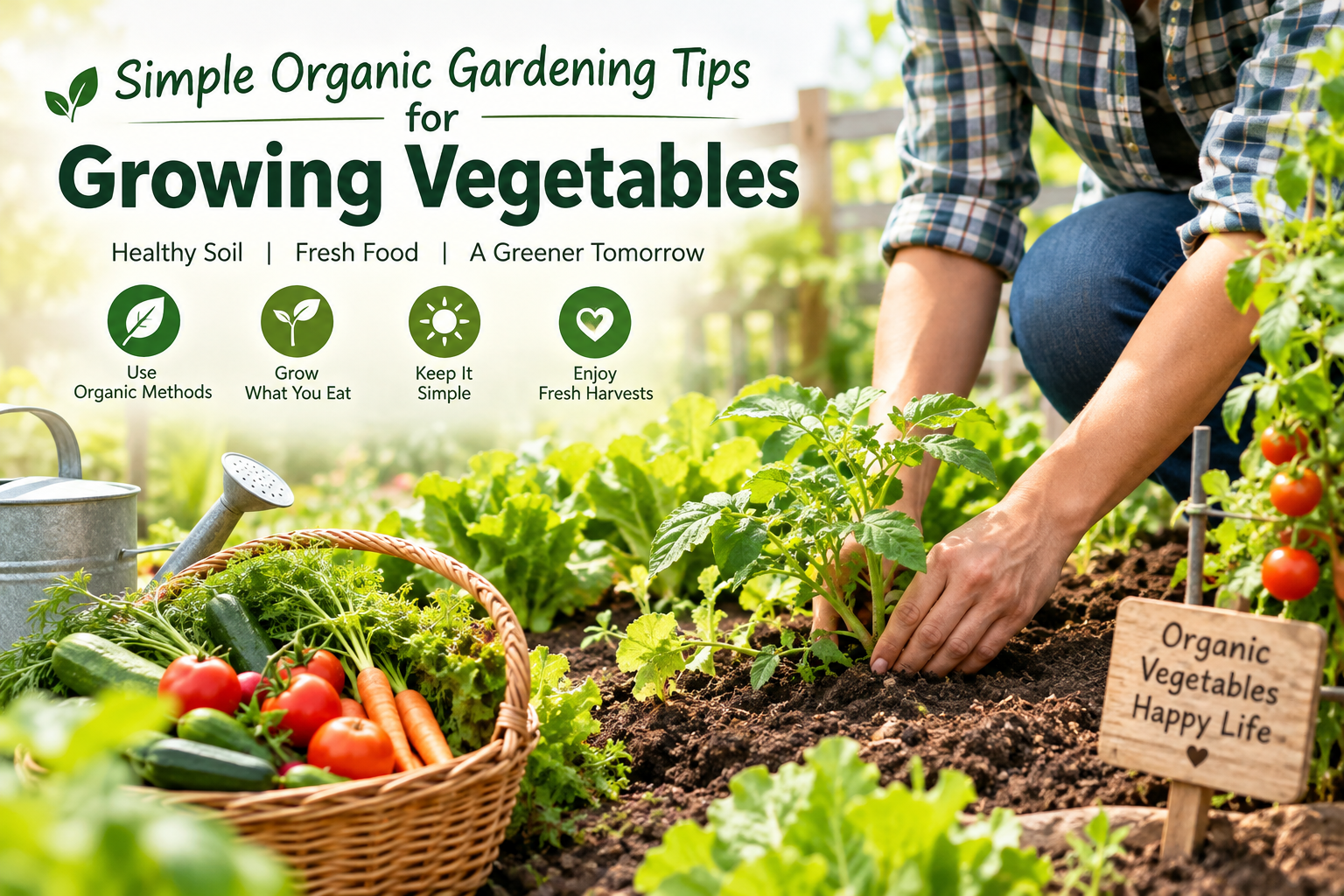
Growing vegetables organically is one of the most rewarding things I have found for a home garden. You do not need a large backyard, expensive equipment, or complicated gardening methods to get started. With healthy soil, good seeds, proper watering, enough sunlight, and regular care, you can grow fresh vegetables naturally at home.
When I think about organic gardening, I focus on keeping things simple. The goal is not only to grow vegetables but also to create healthy soil and a garden environment where plants can grow naturally. Organic gardening can also be a good way to learn more about plants, reduce unnecessary chemical use, and enjoy fresh produce from your own garden.
In this article, I will share some simple organic gardening tips for growing vegetables that beginners can easily follow.
Start With Healthy Soil
I believe healthy soil is the foundation of every successful vegetable garden. If the soil is poor, plants may struggle even when you provide enough water and sunlight.
Before planting vegetables, take some time to improve the soil. You can add mature compost, well aged organic matter, or other suitable natural materials to increase soil quality. Compost can help improve soil structure and provide nutrients that plants need for healthy growth.
Avoid adding fresh manure directly around young plants because it can be too strong and may damage plant roots. Well aged organic materials are generally a better choice for a home vegetable garden.
You can also check whether your soil drains properly. Vegetables need moisture, but their roots should not remain in standing water for long periods.
Choose Vegetables That Suit Your Garden
One of the simplest organic gardening tips is to choose vegetables that are suitable for your local growing conditions.
Before buying seeds, consider how much sunlight your garden receives. Most vegetables grow well when they receive several hours of direct sunlight each day. Some leafy vegetables can tolerate less sunlight than plants that produce fruits.
For beginners, I recommend starting with vegetables that are relatively easy to grow. Lettuce, radishes, spinach, carrots, beans, cucumbers, tomatoes, and green onions can be good choices depending on your climate and growing season.
Starting with a few vegetables also makes gardening easier to manage. Once you become comfortable, you can gradually add more plants.
Use Good Quality Seeds
Good quality seeds can make a noticeable difference in your vegetable garden. Choose seeds from a reliable source and check the recommended planting season.
If possible, select vegetable varieties that are known to perform well in your region. Local varieties can sometimes be easier to grow because they are suited to the conditions of the area.
I also recommend reading the information on the seed packet. It usually provides useful details about planting depth, spacing, sunlight, and harvesting time.
Do not plant every seed in one small area. Giving plants enough space helps improve airflow and allows them to receive adequate sunlight.
Make Your Own Compost
Compost is one of my favorite tools for organic gardening. It allows gardeners to turn many natural materials into useful soil enrichment.
You can create compost from materials such as vegetable scraps, fruit scraps, dry leaves, grass clippings, and other suitable organic materials. A healthy compost pile needs a balance of different materials, moisture, air, and time.
Avoid putting meat, oily food, plastic, or materials treated with harmful chemicals into a home compost pile.
Once compost becomes dark and crumbly with an earthy smell, it can be used around the garden according to the needs of your plants.
Making compost can reduce household organic waste while giving your garden a useful natural resource.
Water Vegetable Plants Properly
Watering is important, but more water does not always mean healthier plants. Overwatering can cause root problems and create conditions that encourage certain plant diseases.
I prefer to check the soil before watering. If the top layer feels dry, it may be time to water. If the soil is still moist, you may be able to wait.
Water the soil around the base of the plant rather than constantly wetting the leaves. Morning watering is often useful because plants have time to absorb moisture during the day.
The exact watering requirement depends on the vegetable, soil type, weather, and stage of plant growth.
Use Organic Mulch
Mulching is another simple technique that can make vegetable gardening easier. Organic mulch can include dry leaves, straw, grass clippings, or other suitable natural materials.
A layer of mulch around plants can help the soil retain moisture. It can also reduce weed growth and protect the soil surface from extreme temperature changes.
Do not place thick wet mulch directly against plant stems. Leave some space around the base of the plant to encourage good airflow.
As organic mulch breaks down, it can also contribute organic matter to the soil.
Control Garden Pests Naturally
Pests are one of the common challenges in vegetable gardening. Instead of immediately reaching for strong chemical products, I prefer to start with simple natural methods.
Inspect your plants regularly. Look underneath leaves because some insects hide there. Remove damaged leaves when appropriate and pick larger pests by hand if there are only a few.
Keeping the garden clean can also help. Remove severely damaged plant material and avoid allowing weeds to take over the growing area.
You can also encourage beneficial insects by growing flowers near your vegetable garden. Some helpful insects feed on common garden pests, while others assist with pollination.
If a pest problem becomes serious, identify the pest first and then choose an appropriate organic gardening method.
Keep Weeds Under Control
Weeds compete with vegetables for water, sunlight, nutrients, and growing space. Regular weed control can therefore make a big difference.
I find that removing small weeds is much easier than waiting until they become large. Gently pull weeds from the soil while they are young, taking care not to disturb vegetable roots.
Mulching can also reduce the number of weeds that appear.
Try not to leave large areas of bare soil if you can avoid it. Healthy plants, suitable mulch, and good garden planning can all help reduce weed problems.
Rotate Your Vegetable Crops
Crop rotation is a useful organic gardening practice, especially if you grow vegetables in the same area every year.
Instead of planting the same type of vegetable in exactly the same location each season, move different plant families around the garden.
For example, you might grow leafy vegetables in one section one season and grow beans or another suitable crop there later.
Crop rotation can help reduce the buildup of certain pests and diseases associated with repeatedly growing the same crops in one place. It can also help you manage soil nutrients more effectively.
Give Plants Enough Sunlight
Sunlight is essential for most vegetable plants. Before creating your garden, observe your outdoor space during the day and identify areas that receive good sunlight.
Fruit producing vegetables such as tomatoes, peppers, and cucumbers generally need plenty of sunlight. Leafy vegetables can sometimes perform well with less direct sunlight.
If you are growing vegetables in containers, you have the advantage of moving them when necessary. This can be especially useful in small gardens, balconies, or patios.
Grow Vegetables in Containers
You do not need a large garden to practice organic vegetable gardening. Containers can be an excellent option for people with limited space.
Tomatoes, peppers, lettuce, herbs, radishes, and some other vegetables can grow successfully in suitable containers.
Make sure the containers have drainage holes. Use good quality growing soil and choose a container that provides enough room for the plant’s roots.
Container gardening also makes it easier to control the growing environment and move plants when sunlight conditions change.
Pay Attention to Your Plants
One of the best gardening habits is simply observing your plants regularly.
Look at the leaves, stems, flowers, and soil. Healthy plants often show steady growth and strong color. Changes in appearance can provide early clues that something needs attention.
For example, yellow leaves can have several possible causes, including watering problems, nutrient issues, pests, or natural aging. Instead of immediately adding fertilizer, I recommend checking the overall growing conditions first.
Regular observation allows you to solve small problems before they become major ones.
Avoid Overusing Natural Fertilizers
Organic does not mean that more fertilizer is always better. Even natural fertilizers should be used carefully.
Too much fertilizer can create nutrient problems and may affect plant growth. Before adding anything, consider the condition of your soil and the needs of the specific vegetable.
Compost is often a useful general soil improvement material, but different plants have different nutrient requirements.
I believe the best approach is to improve the soil gradually and observe how your plants respond.
Harvest Vegetables at the Right Time
Harvesting is one of the most enjoyable parts of growing vegetables at home. Picking vegetables at the appropriate stage can encourage continued production for some crops.
Leafy greens can often be harvested gradually by removing outer leaves. Beans and cucumbers are usually picked while they are still tender. Tomatoes can be harvested according to the variety and your preferred level of ripeness.
Use clean tools when necessary and handle plants gently during harvesting.
Freshly harvested vegetables can be used immediately in meals, which is one of the biggest benefits of having a home vegetable garden.
Keep Gardening Simple
Organic gardening does not need to be complicated. I have found that simple habits often make the biggest difference.
Start with healthy soil, choose suitable vegetables, provide enough sunlight, water carefully, use organic mulch, control weeds, watch for pests, and give your plants regular attention.
Do not worry if every plant does not grow perfectly. Gardening is a learning process. Some seasons will be better than others, and every problem can teach you something useful.
Final Thoughts
Growing vegetables organically can be a simple and enjoyable hobby for beginners. You can start with a small garden and a few easy vegetables rather than trying to grow everything at once.
The most important organic gardening tips are to build healthy soil, choose suitable plants, water correctly, use natural soil improvements, protect plants from pests, and observe your garden regularly.
In my opinion, the best part of organic vegetable gardening is the connection you develop with the growing process. You plant a seed, care for it, watch it develop, and eventually harvest something that you can use in your own kitchen.
With patience and consistent care, even a small garden can produce fresh vegetables while creating a healthier and more natural growing environment.
Leave a Reply