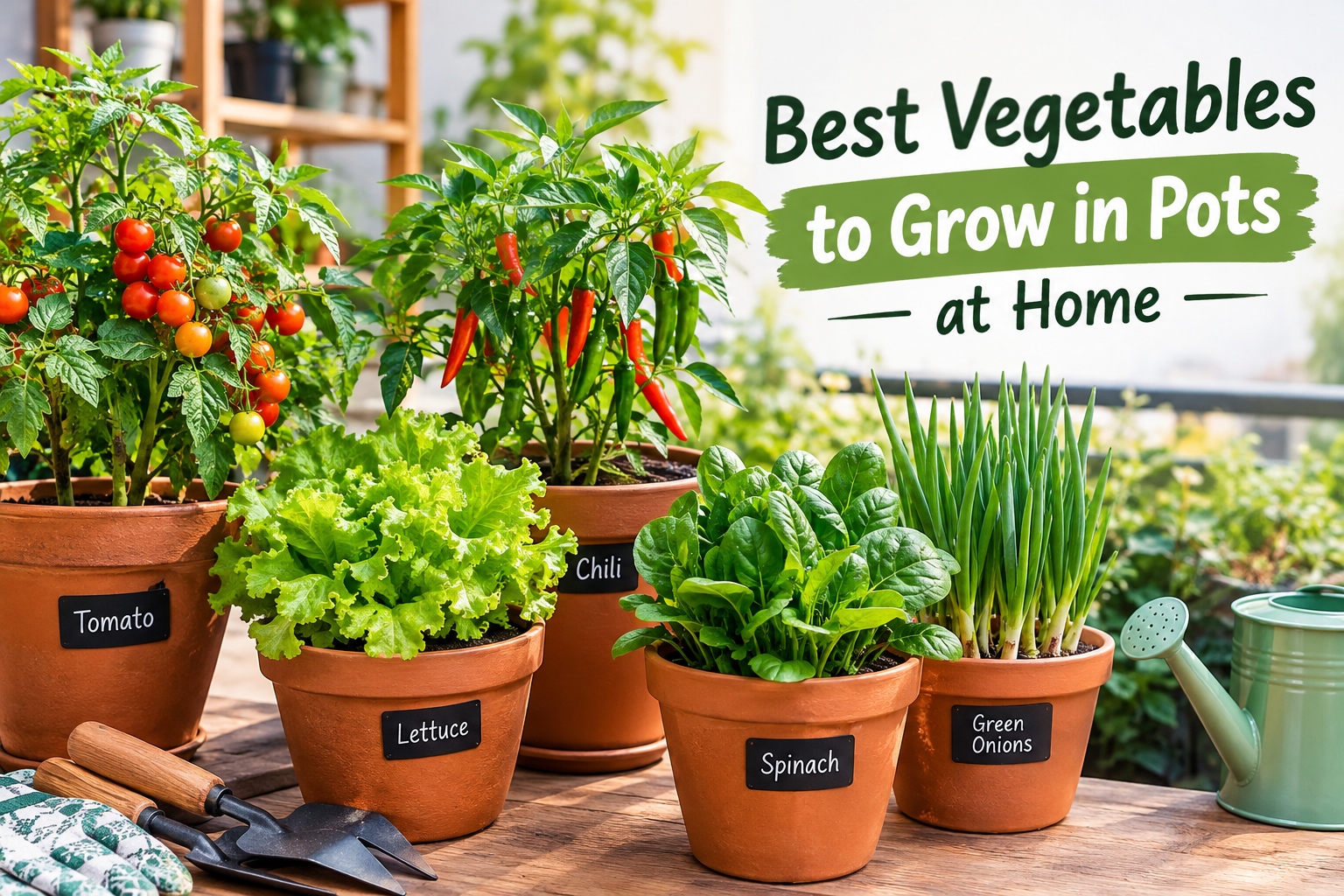
Growing vegetables at home has become one of my favorite ways to enjoy fresh food while making better use of a small space. You do not need a large garden to grow useful vegetables. A balcony, terrace, patio, windowsill, or small outdoor area can be enough if you choose the right plants and containers.
In my experience, the best vegetables to grow in pots at home are those that grow well in limited space, do not require complicated care, and can produce a good harvest from one or two containers. Tomatoes, peppers, lettuce, spinach, radishes, carrots, green onions, beans, and several other vegetables can grow successfully in pots when they receive enough sunlight, water, and suitable soil.
Container gardening is also a good option for beginners because you have more control over the soil, watering, and location of each plant. If one area does not receive enough sunlight, you can move the pot to a better location.
1. Tomatoes
Tomatoes are among the most popular vegetables to grow in pots at home. They can produce a surprisingly large harvest when planted in a suitable container.
I recommend choosing compact or determinate tomato varieties if you have limited space. Tomatoes generally need a large pot, good quality potting soil, regular watering, and plenty of sunlight. A container with drainage holes is important because excess water can damage the roots.
Tomato plants may also need support as they grow. A simple stake or tomato cage can keep the plant upright and help support the fruit.
One thing I like about growing tomatoes in pots is that you can watch the fruits develop from small green tomatoes into ripe, colorful fruits.
2. Peppers
Peppers are another excellent choice for container gardening. Both sweet peppers and hot peppers can grow well in pots.
Pepper plants usually stay more compact than many other vegetable plants, making them suitable for balconies and patios. Choose a pot that provides enough room for the roots and place it somewhere that receives several hours of sunlight.
Regular watering is important, especially during hot weather. However, the soil should not remain constantly wet.
If you enjoy cooking, growing peppers at home can be especially useful because you can pick fresh peppers whenever you need them.
3. Lettuce
Lettuce is one of the easiest vegetables for beginners to grow in pots. It does not require a very deep container, so even gardeners with limited space can grow it successfully.
You can grow lettuce from seeds or small seedlings. The soil should remain lightly moist, and the plant should receive suitable sunlight. During very hot weather, some afternoon shade can help protect lettuce from excessive heat.
I particularly like lettuce for container gardening because it grows relatively quickly. You can harvest individual leaves instead of removing the entire plant, allowing it to continue producing new growth.
4. Spinach
Spinach is another practical vegetable for growing in pots at home. It grows well in containers and does not need a huge amount of space.
A moderately deep pot with good drainage is usually enough. Plant the seeds in suitable potting soil and keep the soil consistently moist while the plants are becoming established.
Spinach prefers cooler growing conditions, so choosing the right season is important. In warm climates, it may perform better during cooler months.
Fresh spinach can be used in salads, sandwiches, soups, omelets, and many other homemade meals.
5. Radishes
If you want a vegetable that is simple and relatively quick to grow, radishes are worth considering. They do not need a large garden and can grow in containers with enough depth for their roots.
Use loose soil that allows the developing roots to expand easily. Crowded plants may produce smaller roots, so giving them enough space can improve the harvest.
Radishes can be a great beginner vegetable because you can see their progress within a relatively short growing period. They also provide a useful introduction to growing root vegetables in containers.
6. Carrots
Carrots can also be grown in pots, but choosing the right container is especially important. The pot should be deep enough for the variety you are growing.
I suggest using loose, fine soil without large stones or compacted areas. Hard or crowded soil can cause carrots to develop unusual shapes.
Shorter carrot varieties are often more convenient for container gardening because they require less depth than long varieties.
Growing carrots in pots can also make harvesting easier because you can control the growing environment and reduce competition from weeds.
7. Green Onions
Green onions are one of my favorite choices for small containers. They require little space and can be grown on balconies, patios, and even sunny windowsills.
You can grow them from seeds, sets, or suitable kitchen leftovers with roots attached. A small container with drainage holes can work well.
Green onions are useful because they can be added to salads, soups, noodles, eggs, and many homemade dishes. You can harvest the green tops as needed while allowing the plant to continue growing.
8. Bush Beans
Bush beans can be a good choice when you want a productive vegetable that does not require a large garden.
Unlike climbing beans, bush varieties usually remain more compact. They can grow successfully in a suitably sized container placed in a sunny location.
Beans generally need regular watering and fertile soil. Once the plants begin producing pods, harvesting them regularly can encourage continued production.
Growing beans in pots is also enjoyable because the plants can develop quickly when the conditions are suitable.
9. Peas
Peas are another vegetable that can work well in containers, especially during cooler growing seasons. Some varieties climb, so they need a simple support structure.
You can use a small trellis or another safe support to give the plants something to climb. Make sure the container is stable enough that the growing plant does not easily tip it over.
Fresh peas have a sweet flavor when harvested at the right time. They can be eaten fresh or added to different homemade meals.
10. Cucumbers
Cucumbers can grow in pots, although they need more space than vegetables such as lettuce or green onions. Choosing a compact variety can make container growing easier.
Cucumber plants usually benefit from a trellis or other support because their vines can spread across a large area. Vertical growing can save space and keep the fruits away from the ground.
Consistent watering is important because irregular moisture can affect plant growth and fruit quality.
Choosing the Right Pots
Choosing the right container is one of the most important parts of successful container gardening. The pot should provide enough room for the plant’s roots and should always have drainage holes.
Small vegetables such as lettuce and green onions can grow in relatively shallow containers. Tomatoes, peppers, carrots, and cucumbers generally need more room.
I also recommend using containers that are easy to move when necessary. A plant may need a different location if it receives too much heat, too little sunlight, or protection from strong weather.
Use Good Quality Soil
Regular garden soil may become heavy and compact inside a container. For this reason, I prefer using a quality potting mix designed for container plants.
Good soil should provide drainage while still holding enough moisture for healthy root growth. Adding suitable organic material can also help improve the growing environment.
Before planting, I always make sure the soil is loose and free from large pieces that could interfere with root development.
Give Vegetables Enough Sunlight
Sunlight is another major factor when growing vegetables in pots. Many vegetables need several hours of sunlight each day to grow strongly and produce a good harvest.
Before placing your pots, observe your balcony, patio, terrace, or other growing area throughout the day. Look for the location that receives the most suitable sunlight.
Leafy vegetables can sometimes tolerate less sunlight than fruiting vegetables, while tomatoes and peppers generally benefit from plenty of direct sunlight.
Water Carefully
Container plants can dry out faster than vegetables growing directly in the ground. This is particularly noticeable during hot and dry weather.
I usually check the soil before watering rather than following a strict schedule. If the surface feels dry, it may be time to water. However, avoid keeping the soil constantly soaked.
Water slowly until some water begins to drain from the bottom of the pot. This helps moisten the root area while also confirming that the container has proper drainage.
Final Thoughts
The best vegetables to grow in pots at home are those that match your available space, sunlight, container size, and local growing conditions. Tomatoes, peppers, lettuce, spinach, radishes, carrots, green onions, beans, peas, and cucumbers are all useful options for a home container garden.
My advice for beginners is to start with only a few vegetables rather than trying to grow everything at once. Choose two or three plants that you enjoy eating and learn how they respond to your space and weather.
Once you become comfortable with watering, soil preparation, sunlight, and harvesting, you can gradually add more containers. The biggest advantage of growing vegetables at home is not only having fresh produce. It is also the satisfaction of watching a small seed become a healthy plant that eventually provides food for your kitchen.
With the right pots, good soil, regular care, and a little patience, even a small home space can become a productive vegetable garden.
Leave a Reply