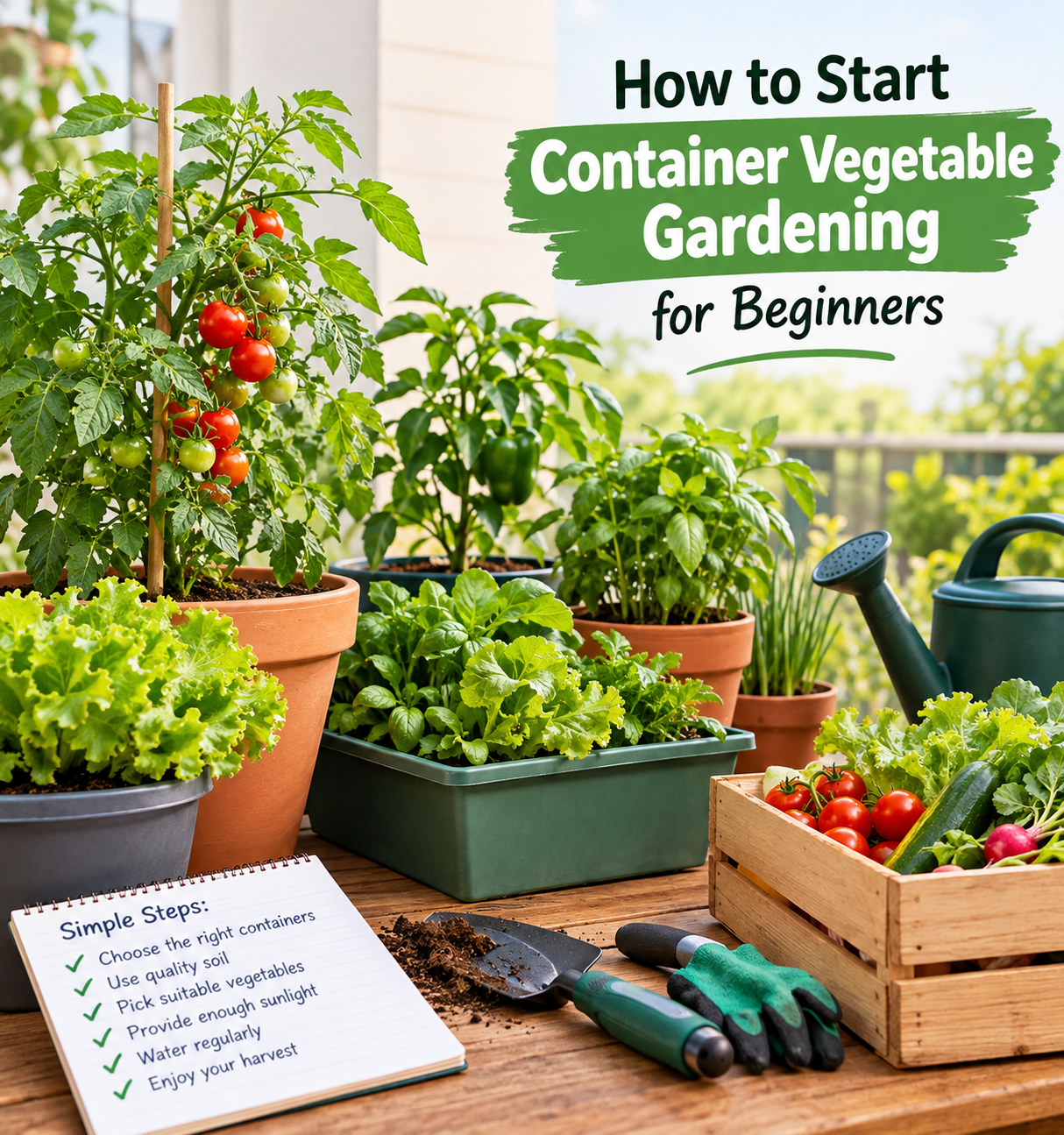
Container vegetable gardening is one of the easiest ways to grow fresh vegetables at home, especially if you do not have a large garden. I personally think it is a great option for beginners because you can start with just a few pots, some good soil, and vegetables that you actually enjoy eating. You do not need a large backyard to create a productive vegetable garden.
Many people believe gardening requires a lot of space and experience, but that is not always true. With the right containers, suitable vegetables, enough sunlight, regular watering, and a little patience, almost anyone can grow vegetables in pots.
In this guide, I will explain how to start container vegetable gardening for beginners and share the simple steps I would follow when starting a garden from scratch.
Choose the Right Location
The first thing I would consider before buying containers is the location. Most vegetables need plenty of sunlight to grow well. A place that receives around six to eight hours of direct sunlight each day is usually a good starting point for many common vegetables.
A balcony, patio, rooftop, terrace, windowsill, or sunny area near your home can work well. If you have limited outdoor space, do not worry. You can still grow smaller vegetables and herbs in containers.
Before placing your pots permanently, observe the area during the day. Notice how much sunlight it receives and whether nearby walls or buildings create shade.
Good air circulation is also helpful. I would avoid placing containers in a location that stays completely closed or damp for long periods.
Select Suitable Containers
Choosing the right containers is one of the most important parts of container vegetable gardening. You can use plastic pots, clay pots, wooden planters, fabric grow bags, or other suitable gardening containers.
The container should have drainage holes at the bottom. Excess water needs somewhere to escape because constantly wet soil can damage plant roots.
The size of the container depends on the vegetable you want to grow. Smaller vegetables such as lettuce, radishes, and herbs can grow in relatively small containers. Tomatoes, peppers, eggplants, and larger plants usually need more space.
I recommend beginners start with a few medium or large containers rather than buying too many pots at once. This makes the garden easier to manage and gives you a chance to understand what works best in your space.
Use Good Quality Potting Soil
Garden soil from the ground is not always the best choice for containers. It can become compacted and may not provide the drainage and air circulation that container plants need.
For container vegetable gardening, I prefer using a quality potting mix designed for containers. A good mix should be loose, well draining, and able to hold enough moisture for plant roots.
You can also improve your container soil with suitable organic material such as compost. Compost can provide nutrients and improve the overall structure of the growing medium.
Avoid filling every container with heavy soil from your yard. Container plants depend on their limited growing space, so the quality of the soil can make a noticeable difference.
Pick Easy Vegetables for Beginners
One of the biggest mistakes beginners make is trying to grow too many difficult vegetables at once. I think it is better to start with vegetables that are relatively easy to manage.
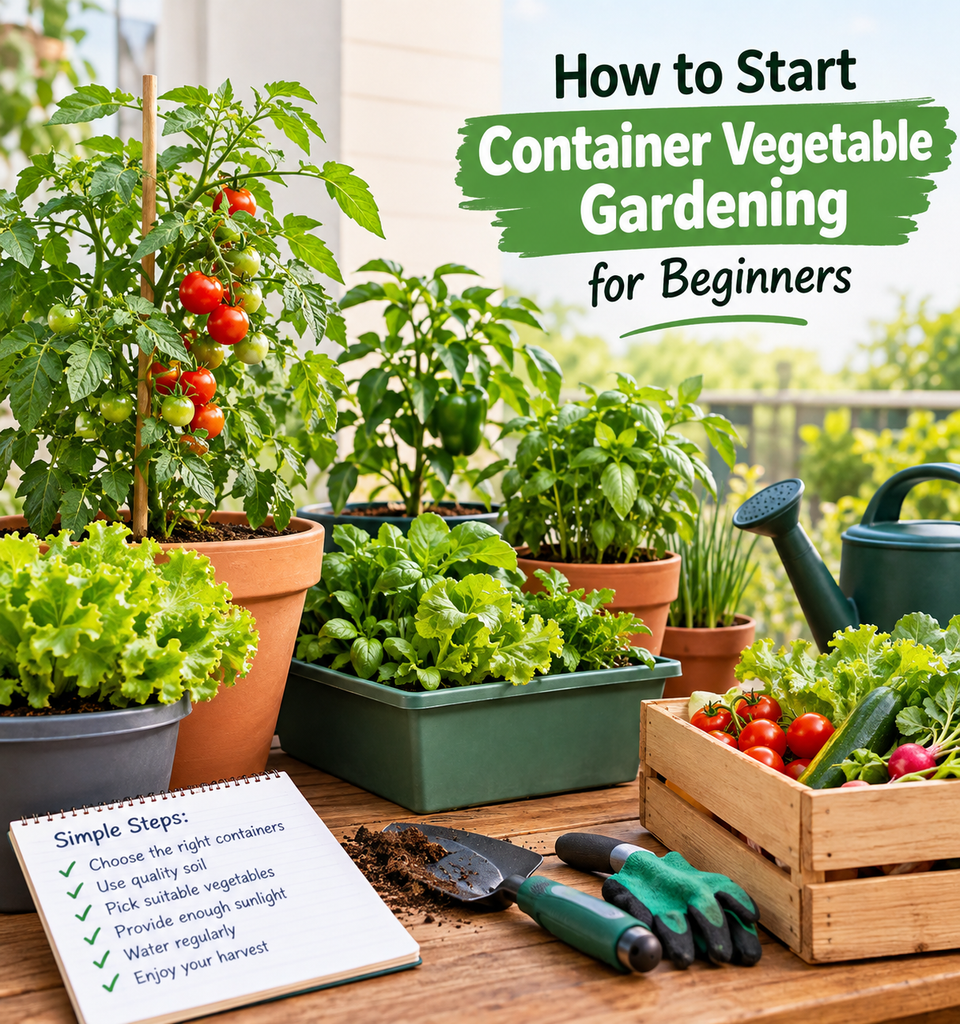
Some good vegetables for container gardening include tomatoes, peppers, lettuce, spinach, radishes, carrots, green onions, beans, cucumbers, and herbs.
Cherry tomatoes can be a fun choice because they can produce a good amount of fruit when given proper care. Lettuce and spinach are also useful because they can grow in containers without requiring extremely deep soil.
Radishes are another beginner friendly option because they generally grow quickly. Green onions and herbs can also be convenient choices for small spaces.
Choose vegetables that your family actually enjoys eating. There is little benefit in growing a vegetable that nobody wants to harvest.
Understand Container Size
Every vegetable has different root requirements. Before planting, check how much space the selected vegetable normally needs.
For example, lettuce can grow successfully in relatively shallow containers, while tomatoes usually need a much larger container. Root vegetables such as carrots need enough depth for the roots to develop properly.
Overcrowding is another problem I would avoid. It may look attractive to place many plants in one container, but crowded plants compete for water, nutrients, sunlight, and root space.
Giving plants enough room can improve air circulation and make watering and harvesting easier.
Plant Seeds or Seedlings
Beginners have two main options. You can grow vegetables from seeds or purchase young plants from a nursery.
Growing from seeds can be inexpensive and satisfying, but it requires patience. Some vegetables are easy to start from seeds, while others may take longer to establish.
Seedlings are convenient because they already have a head start. If you are completely new to gardening, starting with healthy seedlings can make the process easier.
If you choose seeds, follow the planting depth and spacing instructions on the seed packet. Planting seeds too deeply is a common mistake.
After planting, gently water the soil so the seeds do not get displaced.
Provide Enough Sunlight
Sunlight is essential for healthy vegetable plants. Most fruiting vegetables, including tomatoes and peppers, need several hours of direct sunlight each day.
Leafy vegetables such as lettuce and spinach can sometimes tolerate slightly less sunlight, particularly in warmer conditions.
If your plants receive too little light, they may become weak and stretched. Leaves can also appear smaller or less healthy.
I would regularly observe the plants rather than simply assuming they are receiving enough sunlight. If necessary, move the containers to a brighter location.
Water Your Container Vegetables Properly
Watering is one of the most important parts of container vegetable gardening. Containers can dry out faster than garden beds because they have a limited amount of soil.
I recommend checking the soil before watering instead of following a strict schedule every day. Push your finger gently into the top layer of soil. If it feels dry, the plant may need water.
When watering, apply enough water to moisten the soil thoroughly. Some water should eventually drain from the bottom of the container.
However, avoid keeping the soil constantly soaked. Too much water can reduce oxygen around the roots and may contribute to root problems.
During hot and dry weather, container plants may need more frequent watering.
Feed Your Plants
Plants growing in containers have access to a limited amount of nutrients. Over time, nutrients can be used by the growing plants or washed out when you water.
A suitable vegetable fertilizer or compost can help provide nutrients during the growing season.
Always follow the instructions on the fertilizer package. More fertilizer does not automatically mean more vegetables. Excess fertilizer can damage plants.
I prefer keeping feeding simple when starting out. Focus on healthy soil, proper watering, sunlight, and appropriate fertilizer rather than using many different products.
Support Tall Plants
Some vegetables need physical support as they grow. Tomatoes, cucumbers, beans, and certain other plants can become too heavy or tall to stand properly without help.
You can use stakes, cages, trellises, or other suitable supports depending on the plant.
It is usually easier to add support early rather than waiting until the plant becomes large. Early support can also help keep the plant organized and make harvesting easier.
Make sure the support is stable enough to handle the mature size of the plant.
Watch for Pests and Plant Problems
Container gardening does not completely protect plants from insects and diseases. You should regularly inspect leaves, stems, and new growth.
Look for holes in leaves, unusual spots, curled leaves, discoloration, or visible insects.
The earlier you notice a problem, the easier it may be to manage. Remove badly damaged leaves when appropriate and keep the growing area clean.
Avoid automatically using strong chemicals whenever you see an insect. First identify the problem and consider whether the insect is actually damaging the plant.
Good air circulation, proper watering, healthy soil, and regular observation can help keep many common problems under control.
Harvest Vegetables at the Right Time
Harvesting is probably my favorite part of container vegetable gardening. There is something satisfying about picking vegetables that you have grown yourself.
Different vegetables have different harvesting times. Lettuce can often be harvested by removing outer leaves, while tomatoes should generally be picked when they reach the desired stage of ripeness.
Regular harvesting can also encourage some plants to continue producing.
Do not be afraid to harvest. Beginners sometimes wait too long because they want the vegetables to become as large as possible. In many cases, younger vegetables can be tender and flavorful.
Start Small and Learn
If you are completely new to gardening, my biggest advice is to start small. You do not need twenty containers and ten different vegetable varieties.
Start with three or four vegetables that are suitable for your climate and available space. Learn how often they need water, how much sunlight they prefer, and how quickly they grow.
Keep simple notes about your garden. You can write down when you planted seeds, when you watered, when you fertilized, and when you harvested your first vegetables.
These notes can become very useful during the next growing season because you will have your own experience to guide you.
Common Container Gardening Mistakes
There are several common mistakes beginners can avoid. Using containers without drainage holes is one of them. Another is choosing a container that is too small for the plant.
Overwatering is also very common. People sometimes assume that plants need water every day regardless of the soil condition.
Poor sunlight, overcrowding, low quality soil, and ignoring pests can also affect plant growth.
The good thing is that gardening is a learning process. Even if a plant does not grow well, you can learn from the experience and improve your next attempt.
Final Thoughts
Starting container vegetable gardening for beginners does not have to be complicated. You can begin with a few suitable containers, quality potting soil, easy vegetables, enough sunlight, and regular care.
In my opinion, the best way to become a better gardener is to start growing and pay attention to your plants. You will quickly learn how different vegetables respond to sunlight, water, soil, temperature, and feeding.
Container gardening is also a practical way to enjoy fresh vegetables when you have limited outdoor space. Whether you live in an apartment, have a small balcony, or simply want a few vegetables near your kitchen, containers can make gardening much more accessible.
Start with a few plants, keep your routine simple, and give yourself time to learn. With patience and consistent care, your small container garden can eventually become a productive and enjoyable part of your home.
Leave a Reply