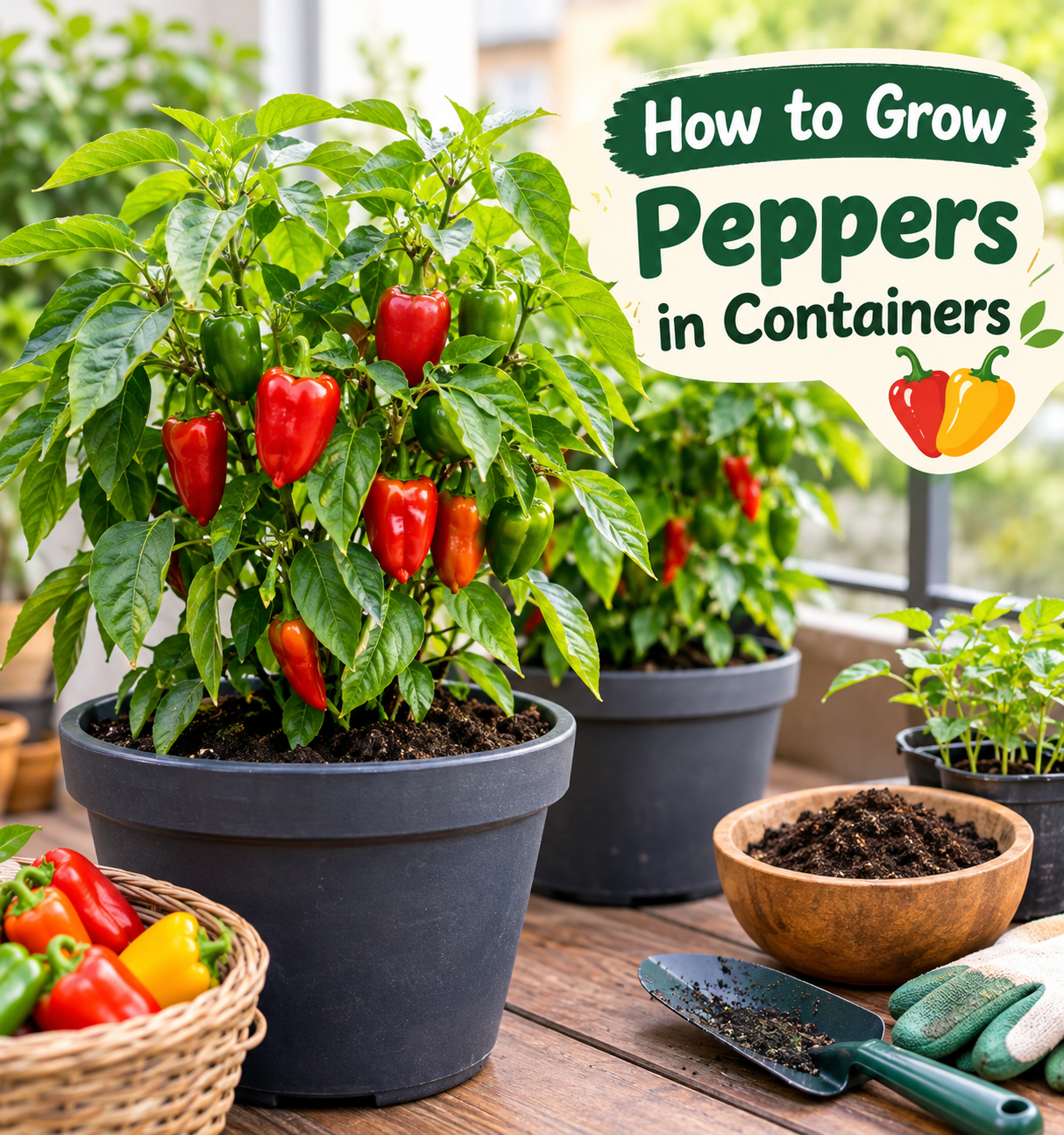
Growing peppers in containers is one of my favorite ways to enjoy fresh vegetables at home. You do not need a large garden or a big backyard to grow healthy pepper plants. With the right container, good soil, enough sunlight, regular watering, and a little patience, you can grow peppers successfully on a balcony, patio, rooftop, or small outdoor space.
I personally like container gardening because it gives me more control over the growing environment. I can choose the soil, move the plants when necessary, and keep a closer eye on watering and pests. If you are new to gardening, peppers are also a great vegetable to start with because they can produce a good harvest when their basic needs are met.
In this guide, I will explain how to grow peppers in containers from choosing the right variety to harvesting fresh peppers.
Choose the Right Pepper Variety
The first step in growing peppers in containers is choosing a variety that grows well in limited space. Some pepper plants become quite large, while others stay compact and are better suited to pots.
For container gardening, I recommend choosing compact varieties whenever possible. Bell peppers, jalapenos, chili peppers, banana peppers, and many small hot pepper varieties can grow successfully in containers.
Before buying seeds or seedlings, check the expected mature size of the plant. A compact plant is usually easier to manage and may not require as much support as a large variety.
If you are growing peppers for the first time, starting with a healthy nursery seedling can be easier than growing from seed. However, growing peppers from seeds can also be rewarding if you have enough time and patience.
Select a Suitable Container
Choosing the right container is very important for growing peppers successfully. Pepper plants need enough room for their roots to develop, so I avoid using very small pots.
A container that is around 12 inches deep and wide can work well for many pepper plants. Larger varieties may benefit from an even bigger container.
Make sure the pot has drainage holes at the bottom. This is one of the most important things I look for when choosing a container. Excess water needs somewhere to escape because constantly wet soil can damage the roots.
Plastic pots, clay pots, fabric containers, and other suitable gardening containers can all work. I prefer containers that are strong, stable, and easy to move.
Use Good Potting Soil
The soil you use can make a big difference in container gardening. Garden soil taken directly from the ground is usually not my first choice for pots because it can become heavy and compacted.
Instead, use a quality potting mix that provides good drainage while still holding enough moisture for the plant. A good container mix can include materials such as compost, coco coir, and other ingredients designed for container plants.
The soil should feel loose rather than hard and compact. Pepper roots need access to both moisture and air.
Adding compost can also provide organic matter and nutrients. I always make sure the soil is fresh and suitable for vegetable gardening before planting.
Plant Peppers at the Right Time
Peppers are warm season plants, so they generally grow best when temperatures are warm. Cold weather can slow their growth and may damage young plants.
If you are starting peppers from seeds, you can begin them indoors in a warm location and transplant them outdoors once the weather becomes suitable.
When planting a young pepper plant, gently remove it from its original container and place it into the prepared pot. Avoid damaging the roots during the process.
After planting, water the soil thoroughly. The plant may look slightly stressed after transplanting, but it usually begins adjusting once it becomes established.
Give Pepper Plants Plenty of Sunlight
One of the most important requirements for growing peppers in containers is sunlight. Pepper plants generally perform best when they receive several hours of direct sunlight each day.
I recommend placing the container in the sunniest suitable location available. A sunny balcony, patio, terrace, or garden area can work well.
If a pepper plant receives too little sunlight, it may become weak and produce fewer flowers and fruits. Good sunlight helps the plant develop strong growth and supports fruit production.
If you notice that your plant is growing toward one direction, it may be responding to the available light. You can rotate the container occasionally so the plant receives more balanced exposure.
Water Peppers Correctly
Watering is another important part of container pepper care. Pots can dry out faster than garden soil, especially during hot weather.
I usually check the soil before watering instead of following a strict schedule. Push your finger slightly into the soil. If the upper layer feels dry, it may be time to water.
When watering, give the plant enough water to moisten the soil thoroughly. Allow excess water to drain through the holes at the bottom.
Try not to keep the soil constantly soaked. At the same time, do not allow the plant to remain severely dry for long periods.
During very hot weather, container plants may need more frequent watering. Always consider the temperature, container size, sunlight, and soil condition.
Feed Your Pepper Plants
Peppers need nutrients to produce healthy leaves, flowers, and fruits. A good quality potting mix can provide some nutrients, but plants may eventually need additional feeding.
I prefer using a balanced vegetable fertilizer according to the instructions on the product label. Avoid applying more fertilizer than recommended because excessive fertilizer can create problems for the plant.
Compost can also be useful for improving the soil and adding organic matter.
Once the plant begins producing flowers and fruits, consistent nutrition can help support continued growth. However, fertilizer should always be used carefully.
Support the Plant When Necessary
Some pepper plants remain compact, while others can become tall and heavy when they produce many peppers.
If your plant starts leaning, a simple garden stake can provide support. Place the stake carefully into the container and loosely tie the plant to it using soft garden ties.
I avoid tying the stem too tightly because this can damage the plant as it grows.
Supporting the plant is especially useful when it produces several large peppers at the same time.
Protect Peppers From Pests
Container gardening can reduce some gardening problems, but pepper plants can still attract pests. Aphids, spider mites, whiteflies, and other insects may sometimes appear on the leaves.
I recommend checking the plant regularly instead of waiting until there is serious damage. Look underneath leaves and around new growth because small insects can sometimes hide in these areas.
If you notice pests, remove badly affected leaves when appropriate and use a suitable gardening treatment according to the product instructions.
Keeping the plant healthy is also important because strong plants are generally better able to handle normal gardening challenges.
Encourage Healthy Fruit Production
Once pepper plants begin flowering, you will hopefully start seeing small peppers develop. Flowers may naturally pollinate outdoors because of wind and insects.
If you are growing peppers in a protected location with limited insect activity, gently moving the plant or lightly shaking the branches can help distribute pollen.
Avoid disturbing the plant too much. A gentle movement is usually enough.
Good sunlight, consistent watering, suitable nutrition, and healthy growth are the main things I focus on when I want a better pepper harvest.
Harvest Peppers at the Right Time
One of the most enjoyable parts of growing peppers in containers is harvesting them. You can often harvest many peppers while they are still green, depending on the variety.
Some peppers change color as they mature. They may become red, yellow, orange, or another color when fully ripe.
I usually harvest peppers with clean scissors or garden shears instead of pulling them forcefully from the plant. This helps reduce unnecessary damage to the branches.
Regular harvesting can also encourage the plant to continue producing more peppers during the growing season.
Common Mistakes to Avoid
There are a few common mistakes that can make container pepper gardening more difficult.
Using a container that is too small can restrict root growth. Poor drainage can cause serious root problems. Too little sunlight can reduce plant growth and fruit production.
Another common mistake is inconsistent watering. Allowing the plant to become extremely dry and then heavily watering it can create unnecessary stress.
Overfertilizing is also something I try to avoid. More fertilizer does not automatically mean more peppers. Plants need balanced care rather than excessive feeding.
Finally, do not forget to check your plants regularly. A few minutes of observation can help you notice pests, dry soil, broken branches, or other problems before they become serious.
Final Thoughts
Learning how to grow peppers in containers is easier than many beginners expect. You mainly need a suitable container, quality potting soil, plenty of sunlight, proper watering, and regular care.
From my experience, the most important thing is consistency. You do not need to spend hours caring for your pepper plants every day. Checking the soil, observing the leaves, providing enough sunlight, and watching for pests can make a big difference.
Container gardening is also a great option for people who have limited outdoor space. Whether you have a balcony, patio, rooftop, or small garden area, you can enjoy fresh peppers without needing a traditional vegetable garden.
Start with one or two healthy plants and learn how they respond to your growing conditions. Once you become comfortable with the basics, you can try different pepper varieties and increase your container garden. With a little patience and regular care, growing peppers in containers can become a simple and rewarding part of your home gardening routine.
Leave a Reply