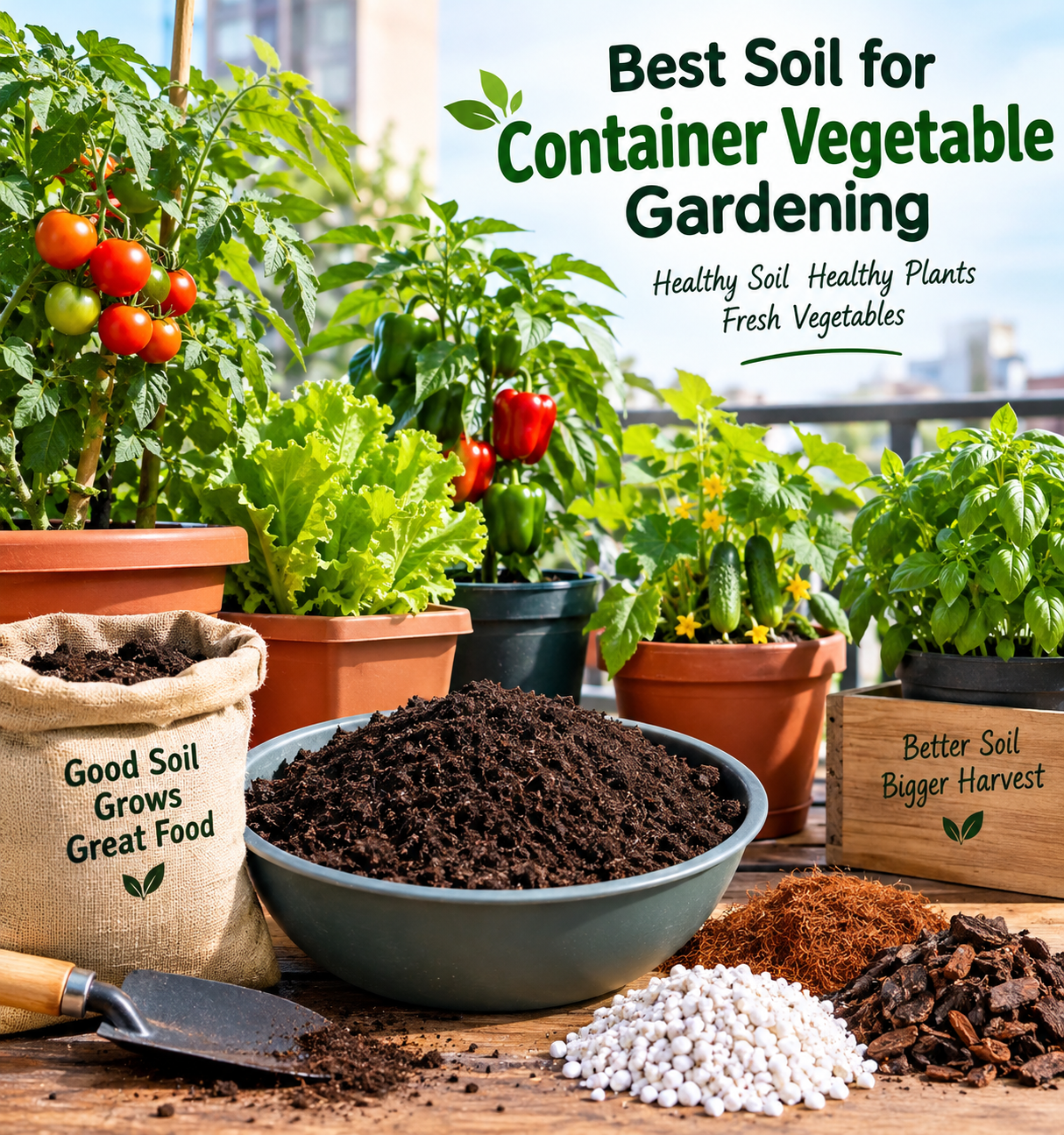
Growing vegetables in containers is one of my favorite ways to enjoy fresh food when there is limited garden space. Whether you have a balcony, small patio, rooftop, or just a few pots near a sunny window, you can grow many useful vegetables with the right setup. However, I have learned that one of the most important parts of container gardening is often overlooked. That is the soil.
The best soil for container vegetable gardening is not simply regular soil taken from the backyard. Vegetables growing in pots need a growing medium that is lightweight, fertile, well draining, and able to hold enough moisture for healthy roots. Since containers have limited space, the quality of the soil can make a big difference in plant growth and vegetable production.
In this guide, I will explain what I look for in good container soil, which ingredients work well, what mistakes to avoid, and how you can create a simple soil mix for your own vegetable garden.
Why Soil Matters in Container Gardening
When vegetables grow in the ground, their roots have access to a large area where they can find moisture, nutrients, air, and minerals. Container plants do not have that advantage. Their roots are restricted to the space inside the pot.
This is why choosing the best soil for container vegetable gardening is so important. A poor soil mix can become compacted, drain badly, or dry out too quickly. When that happens, vegetable plants may struggle even if they receive enough sunlight and water.
Good container soil gives roots enough air while also holding moisture. It should provide nutrients and remain loose enough for roots to expand. In my experience, healthy roots are the foundation of healthy plants, so I always pay attention to the soil before planting anything.
Should You Use Garden Soil in Containers?
I would generally avoid using ordinary garden soil by itself in vegetable pots. Garden soil can be heavy, especially when it becomes wet. It may also become compacted inside a container, making it difficult for water and air to move through the root area.
Another problem is drainage. A container needs to drain excess water efficiently. Heavy garden soil can remain wet for too long, which may create unhealthy conditions for roots.
This does not mean garden soil is always useless. It can sometimes be included in a carefully prepared mix, but for beginners, a quality container potting mix is usually a much easier and safer choice.
What Makes the Best Soil for Container Vegetables?
The best soil for container vegetable gardening should have several important qualities.
First, it should be lightweight. Heavy soil makes containers difficult to move and can restrict root development.
Second, it should drain well. Excess water needs to leave through the drainage holes so roots are not sitting in constantly wet soil.
Third, the soil should retain some moisture. Good drainage does not mean the soil should dry out immediately after watering.
Fourth, it should contain organic matter and nutrients. Vegetables need nutrients throughout the growing season to produce healthy leaves, flowers, and fruits.
Finally, the soil should have a loose texture. Roots need air as well as water, and compacted soil can make healthy root growth difficult.
Peat Moss or Coconut Coir
Peat moss is commonly used in potting mixes because it is lightweight and can hold moisture. It helps create a soft growing medium where vegetable roots can spread easily.
Coconut coir is another option that I really like for container gardening. It is made from coconut fiber and has good moisture holding ability while still allowing air around the roots.
If you are preparing your own soil mix, either peat moss or coconut coir can form part of the base. Coconut coir is especially useful when you want a lightweight mixture that does not become too dense.
Compost for Nutrients
Compost is one of the most useful ingredients for container vegetable gardening. It adds organic matter and can provide a range of nutrients that vegetables need for healthy growth.
I like adding good quality compost to a container mix rather than depending entirely on synthetic fertilizer. Compost can also improve the structure of the growing medium.
However, more compost is not always better. A container mix should remain light and well aerated. Adding too much heavy organic material can change the texture and drainage of the soil.
Use mature, well finished compost rather than fresh organic material. Good compost should have a pleasant earthy smell and a dark, crumbly appearance.
Perlite for Better Drainage
Perlite is a lightweight material that is often added to potting soil to improve drainage and aeration. It creates small spaces in the soil that allow water to move through while helping roots receive air.
This can be especially helpful for vegetables that do not like constantly wet roots.
I find perlite useful when preparing a container mix because it helps prevent the soil from becoming too dense. It is particularly helpful for pots that are exposed to frequent watering or heavy rain.
Vermiculite for Moisture Retention
Vermiculite is another lightweight material used in growing mixes. It can help hold moisture and nutrients while keeping the mixture relatively light.
Although perlite and vermiculite are sometimes discussed together, they serve slightly different purposes. Perlite is commonly used to improve drainage and aeration, while vermiculite can help with moisture retention.
You do not necessarily need both in every container. The right choice depends on your climate, watering habits, and the vegetables you are growing.
A Simple Container Soil Mix
If I were preparing a basic soil mix for vegetables, I would keep it simple. A useful starting point is a mixture containing quality coconut coir or peat moss, compost, and perlite.
For example, you can use approximately two parts coconut coir or peat moss, one part compost, and one part perlite.
Mix everything thoroughly before filling your containers. The finished mixture should feel light and crumbly rather than sticky or heavy.
This type of mix works well for many common container vegetables, including tomatoes, peppers, lettuce, spinach, beans, and herbs.
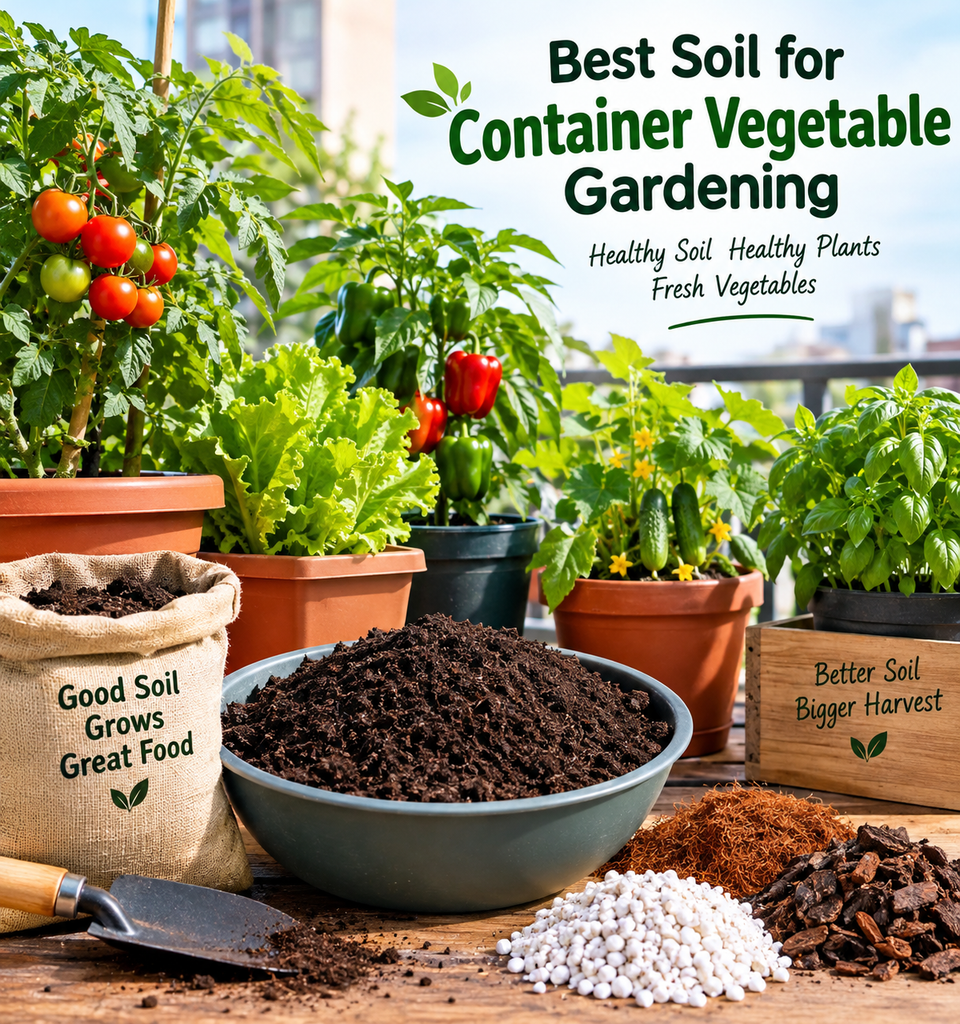
Soil for Tomatoes and Peppers
Tomatoes and peppers are popular container vegetables, but they need enough space and nutrients to perform well.
For these plants, I prefer a rich but well draining potting mix. Compost can provide organic matter, while perlite helps prevent excessive moisture retention.
Large containers are also important because tomato and pepper plants can develop substantial root systems. Even the best soil will not solve problems caused by a container that is too small.
A good soil mixture combined with enough sunlight, regular watering, and appropriate feeding can help these plants produce a healthy harvest.
Soil for Leafy Greens
Lettuce, spinach, kale, and other leafy vegetables generally have less demanding root systems than large fruiting plants.
For leafy greens, I focus on a light soil mix that holds moisture without becoming waterlogged. Coconut coir or peat moss combined with compost and a little perlite can work well.
Because leafy vegetables can grow quickly, maintaining consistent moisture is important. I usually check the soil with my finger before watering rather than following a strict watering schedule.
Soil for Root Vegetables
Growing carrots, radishes, and similar vegetables in containers requires special attention to soil texture.
The soil should be loose and free from large stones or hard pieces that could interfere with root development. A compacted growing medium can cause carrots to become short, twisted, or poorly shaped.
For root vegetables, I would avoid heavy soil and use a fine, lightweight mixture with good drainage. A deeper container is also important, especially for longer varieties of carrots.
How Often Should You Replace Container Soil?
Container soil does not necessarily need to be completely replaced after every harvest. However, its quality can decline over time as plants use nutrients and repeated watering affects its structure.
Before starting a new growing season, I like to inspect the old soil. If it still looks healthy and has a good texture, it can sometimes be refreshed with compost and other suitable ingredients.
If the soil has become compacted, smells unpleasant, contains pests, or has developed serious drainage problems, replacing it may be the better option.
Common Container Soil Mistakes
One of the biggest mistakes beginners make is using heavy garden soil alone. Another common mistake is using a mixture that holds too much water.
Poor drainage can lead to unhealthy roots and weak plant growth. At the same time, soil that dries out extremely quickly can make watering difficult.
I also recommend avoiding excessive fertilizer. More nutrients do not automatically mean more vegetables. Too much fertilizer can damage roots and create unnecessary problems.
Another mistake is ignoring the drainage holes at the bottom of the container. Even excellent soil cannot drain properly if the container has nowhere for excess water to escape.
How to Improve Old Potting Soil
If your old potting soil still looks healthy, you may be able to refresh it instead of throwing it away.
Remove old roots and plant debris first. Break apart any compacted areas and mix in fresh compost. If the mixture has become too dense, adding some perlite or another suitable aeration material can improve its structure.
You should also inspect the soil for insects, disease problems, or unpleasant odors. If you notice serious issues, starting with fresh potting mix may be the safer choice.
Final Thoughts
Finding the best soil for container vegetable gardening does not have to be complicated. In my experience, the most important thing is to create a growing medium that is light, fertile, well draining, and capable of holding enough moisture for healthy roots.
A simple combination of coconut coir or peat moss, compost, and perlite can work well for many vegetables. From tomatoes and peppers to lettuce, spinach, beans, and herbs, the right soil gives plants a much better environment for growth.
I believe beginners should focus on soil quality before buying lots of gardening products. A healthy growing medium, a suitable container, enough sunlight, proper watering, and regular plant care can take you a long way.
When the roots are happy, the plants usually show it. They grow stronger, produce healthier leaves, and have a better chance of giving you a satisfying harvest. If you are starting a container vegetable garden, choosing good soil is one of the simplest improvements you can make.
Leave a Reply