Growing vegetables in pots can be one of the easiest ways to enjoy fresh food at home, especially when you do not have a large garden. I have found that container gardening gives me a lot of control over the plants, soil, sunlight, and watering. However, watering vegetables in pots can sometimes be confusing because potted plants can dry out faster than vegetables growing directly in the ground.
If you are wondering how often to water vegetables in pots, there is no single schedule that works for every plant. The right watering frequency depends on the type of vegetable, pot size, soil, temperature, sunlight, wind, and stage of plant growth. In my experience, checking the soil before watering is much better than simply following a fixed schedule.
In this guide, I will explain how often to water vegetables in pots, how to know when plants need water, and how to avoid both underwatering and overwatering.
How Often Should You Water Vegetables in Pots?
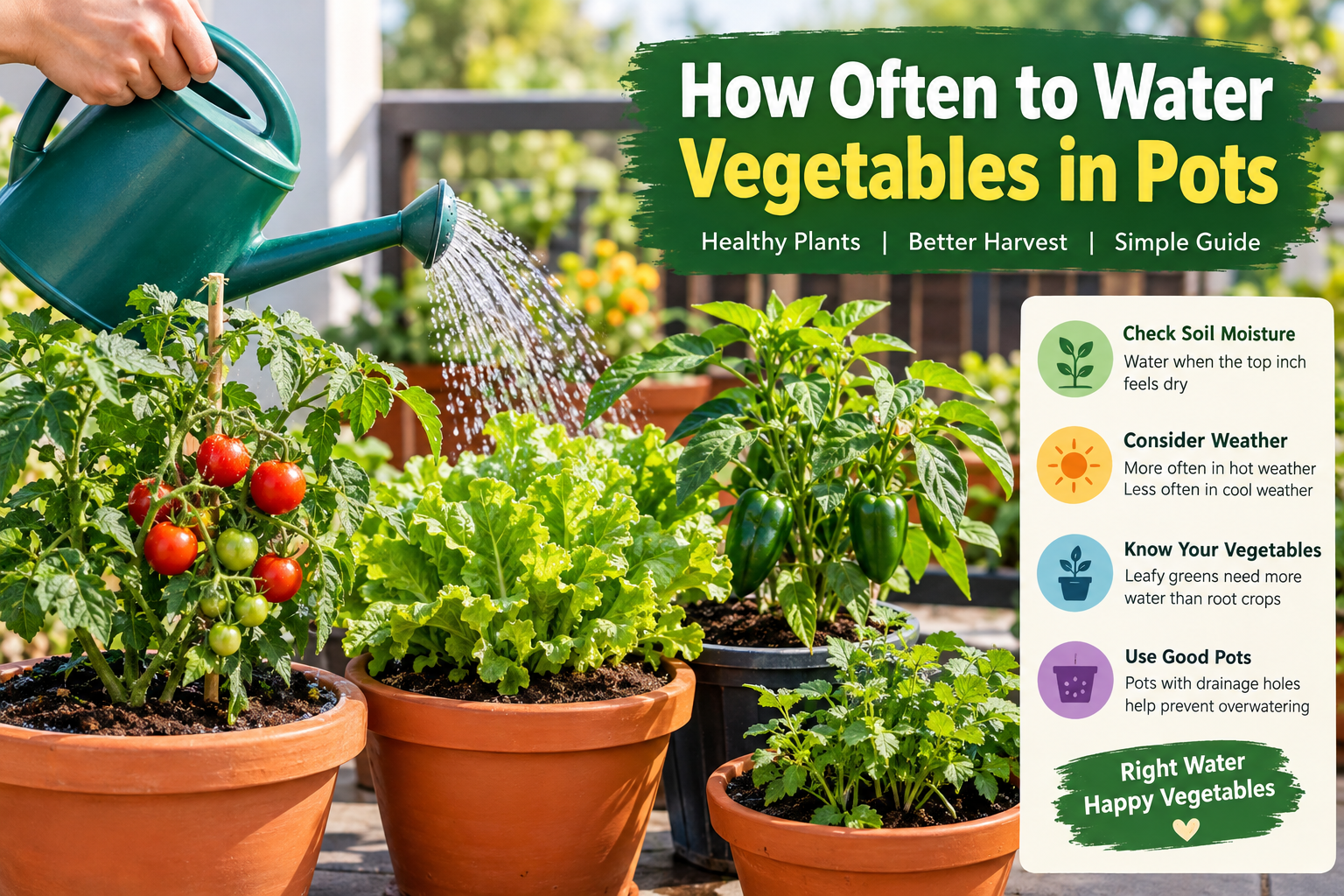
Most vegetables grown in containers need watering when the top layer of soil feels dry. During warm and sunny weather, this may mean watering once a day. Some small pots may even need water twice a day during extremely hot weather.
During cooler weather, plants may need water every two or three days. The important thing is to check the soil instead of watering automatically.
I usually place my finger about one inch into the soil. If the soil feels dry at that depth, it is usually time to water. If it still feels moist, I wait and check again later.
Newly planted vegetables may require more careful watering because their roots are still developing. Once the plants become established, their watering needs can change.
Why Vegetables in Pots Dry Out Quickly
Vegetables growing in pots usually have less soil around their roots compared with vegetables planted in the ground. This smaller amount of soil can lose moisture quickly.
The material of the pot also makes a difference. Terracotta pots are porous, so they can lose moisture faster than plastic containers. Dark colored pots can also become warmer when placed in direct sunlight.
Wind can increase evaporation as well. If your balcony or patio is exposed to strong wind, your containers may dry out faster than containers placed in a protected area.
This is why I believe it is important to look at the actual condition of the soil rather than copying another gardener’s watering schedule.
Check the Soil Before Watering
One of the simplest ways to determine when to water vegetables in pots is to check the soil.
Push your finger about one inch into the soil. If it feels dry, water the plant thoroughly. If the soil feels slightly moist, you may be able to wait another day.
For larger pots, you can check moisture several inches below the surface because the top layer may dry out while the lower soil remains moist.
Another useful sign is the weight of the pot. After watering, a container usually feels heavier. When the soil becomes dry, the pot may feel noticeably lighter. With practice, this can become an easy way to judge moisture.
Water Vegetables Thoroughly
When I water vegetables in pots, I prefer giving them a deep and thorough watering instead of adding a small amount of water every few hours.
Water slowly around the base of the plant until you see a little water coming from the drainage holes. This shows that moisture has reached the lower part of the pot.
However, do not allow the pot to sit in a tray full of water for a long time. Standing water can reduce oxygen around the roots and may contribute to root problems.
The goal is to keep the soil evenly moist without keeping it constantly soaked.
Watering Tomatoes in Pots
Tomatoes are popular container vegetables, but they can need regular watering, especially when the weather is hot.
A tomato plant growing in a large pot may need water once a day during warm weather. Smaller containers may dry out even faster.
I pay special attention to tomatoes when they are producing flowers and fruit. Uneven watering can put stress on the plant and may affect fruit development.
A good approach is to check the soil each morning. If the top inch feels dry, water deeply around the base of the tomato plant.
Adding a layer of organic mulch can also help slow moisture loss from the soil.
Watering Peppers in Containers
Pepper plants generally like consistently moist soil, but they do not like sitting in water.
I usually check the soil around pepper plants before watering. If the surface and upper layer feel dry, the plant is ready for water.
During hot weather, container peppers may need watering daily. During cooler conditions, watering may be less frequent.
Using a reasonably large container can help because more soil can hold moisture around the roots.
Watering Lettuce and Leafy Vegetables
Lettuce and other leafy vegetables can have higher moisture needs because they grow quickly and have relatively shallow roots.
I find that leafy vegetables can dry out quickly, particularly when grown in shallow containers.
Check these plants regularly, especially during warm weather. If the leaves begin to look soft or wilted, check the soil immediately.
Morning watering is often a good choice because it gives plants access to moisture during the day while allowing excess moisture on leaves to dry.
Watering Root Vegetables in Pots
Root vegetables such as radishes, carrots, and beets need consistent moisture while their roots develop.
If the soil becomes extremely dry and then receives a large amount of water, the plants may experience stress.
For container root vegetables, I try to maintain fairly even soil moisture. A suitable pot with enough depth is also important because the roots need enough room to develop.
How Weather Changes Watering Needs
Weather is one of the biggest factors affecting how often vegetables in pots need water.
Hot temperatures increase evaporation. Sunny locations can also cause containers to dry faster. Wind can make the situation even more noticeable.
During a hot summer period, I check my pots every morning and sometimes again in the afternoon. During cool or cloudy weather, I may not need to water for several days.
Rain also changes the watering schedule. If your pots receive significant rainfall, always check the soil before adding more water.
Signs Your Vegetables Need More Water
Plants often give you clues when they are thirsty.
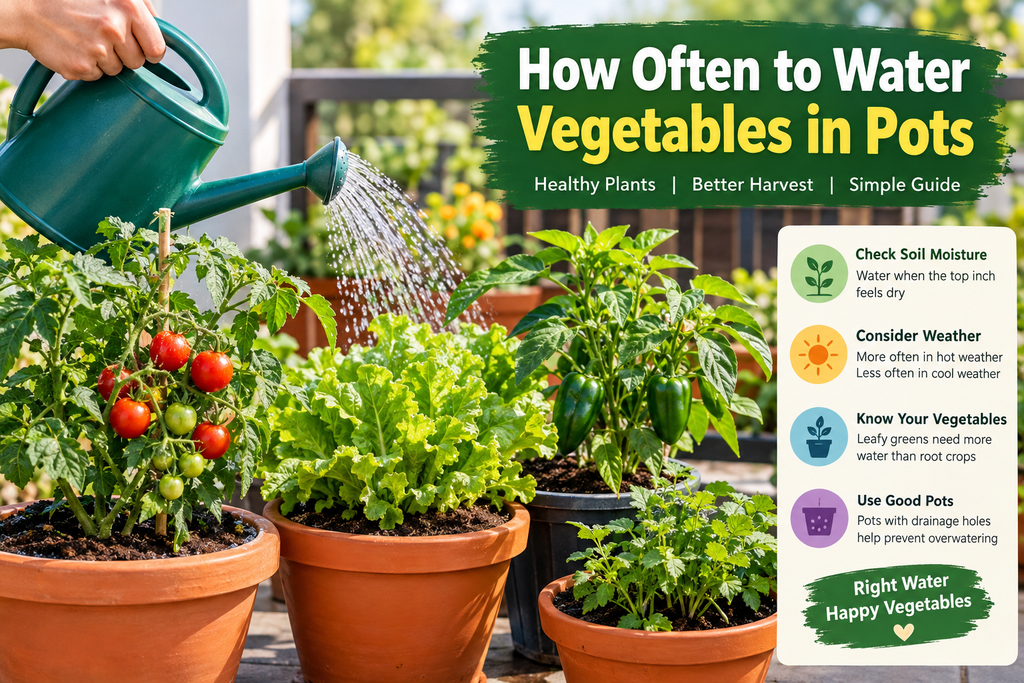
Some common signs include drooping leaves, dry soil, slow growth, and leaves that appear less firm than usual.
However, wilting does not always mean a plant needs water. Root problems caused by excessive moisture can also make plants wilt.
This is why I recommend checking the soil before watering. The combination of soil moisture and plant appearance gives you a better idea of what is happening.
Signs You Are Overwatering
Overwatering is just as important to avoid as underwatering.
If the soil stays wet for a long time, roots may not receive enough oxygen. You may notice yellowing leaves, weak growth, unpleasant soil odors, or persistent moisture.
One of the easiest ways to prevent overwatering is to use pots with drainage holes.
Good drainage allows excess water to escape. I also avoid watering simply because it is part of my routine. If the soil is still wet, I wait.
Best Time of Day to Water Vegetables
Morning is usually my preferred time to water vegetables in pots.
Morning watering gives plants moisture before the warmer part of the day arrives. It also gives leaves time to dry if they become wet.
If you cannot water in the morning, evening can also work. Try to water the soil around the base instead of regularly soaking the leaves.
During extremely hot weather, you may need to check plants more than once a day.
How Pot Size Affects Watering
Pot size has a major effect on watering frequency.
Small containers hold less soil and usually dry faster. Large containers contain more soil and can retain moisture for longer periods.
For vegetables that grow large, I prefer using a container that provides enough room for the roots. A larger pot can also make watering easier because the soil does not dry out as quickly.
However, a large pot does not mean you should water automatically every day. Always check the moisture level first.
Simple Watering Routine for Container Vegetables
If you are new to container gardening, you can start with a simple routine.
Check your plants every morning. Feel the top inch of soil. If it is dry, water thoroughly until some water drains from the bottom.
During hot weather, check the plants again later in the day. During cooler weather, you may be able to wait longer.
Keep an eye on individual vegetables because different plants can have different water requirements.
Over time, you will begin to understand how quickly your containers dry out. This makes watering much easier.
Final Thoughts
Learning how often to water vegetables in pots is mostly about observing your plants and soil. There is no perfect watering schedule that works for every container garden.
In my experience, checking soil moisture is one of the easiest and most reliable methods. Water when the soil begins to dry, provide enough water to reach the roots, and make sure your containers have good drainage.
Remember that temperature, sunlight, wind, pot size, soil type, and vegetable variety can all change watering needs. During hot weather, your plants may need water every day, while cooler conditions may require much less frequent watering.
Once you develop a simple habit of checking your pots regularly, container vegetable gardening becomes much easier. With consistent moisture and proper drainage, your vegetables can grow stronger, healthier, and more productive throughout the growing season.
Leave a Reply