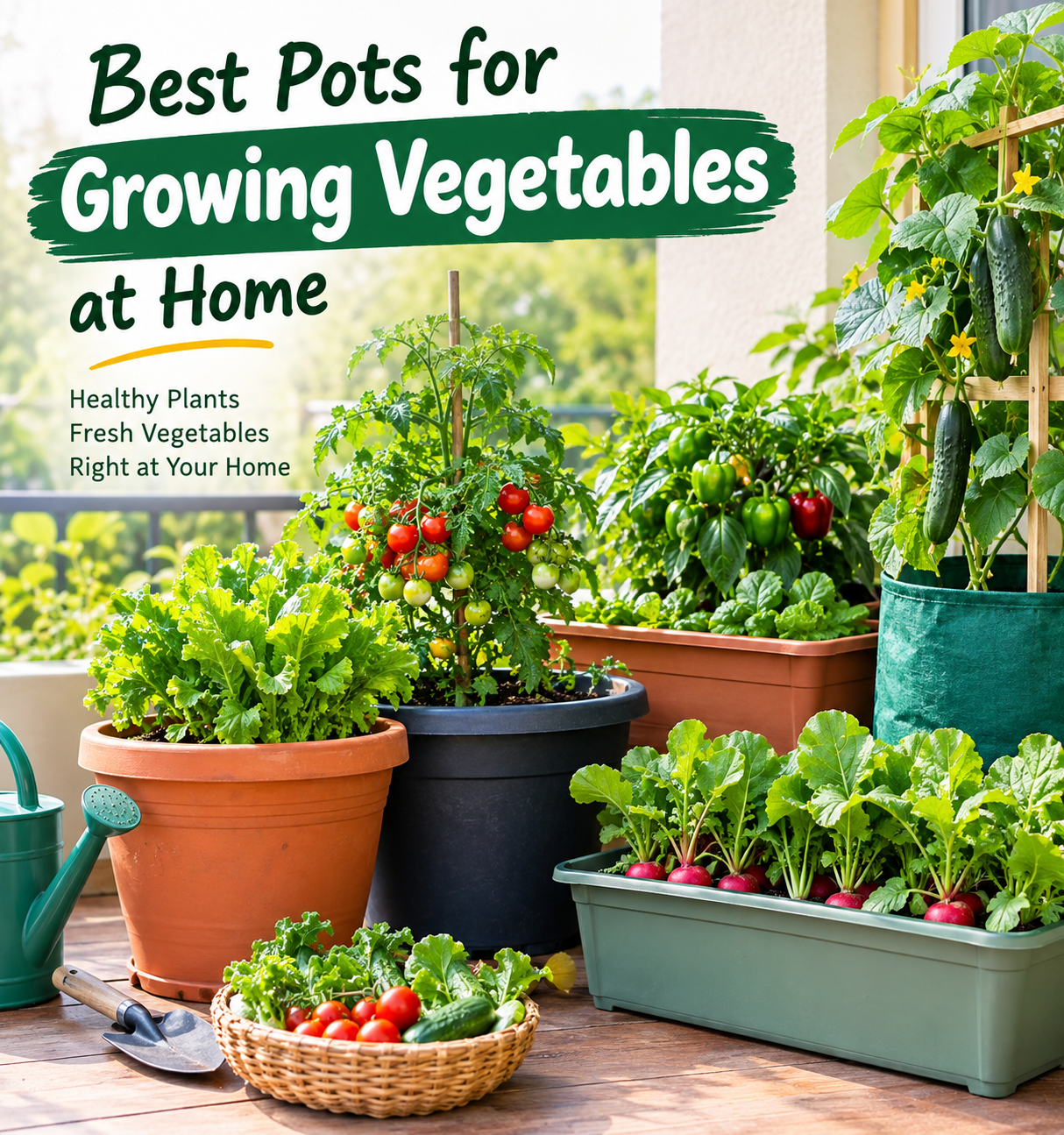
Growing vegetables at home is one of the easiest ways to enjoy fresh food while making your outdoor space more useful. You do not need a large garden to grow tomatoes, peppers, lettuce, radishes, spinach, or other vegetables. With the right pots, good soil, enough sunlight, and regular care, you can create a productive vegetable garden on a balcony, patio, terrace, or even a small outdoor area.
In my experience, choosing the right pot is one of the most important decisions when starting container gardening. A beautiful pot is not always the best pot for vegetables. The size, material, drainage, weight, and shape can all affect how well your plants grow. The right container gives roots enough room, helps control moisture, and provides a healthy environment for vegetables.
In this guide, I will explain the best pots for growing vegetables at home and how to choose the right container for different types of plants.
Why Choosing the Right Pot Matters
Vegetable plants depend heavily on their roots. When roots have enough space to grow, the plant usually has a better chance of developing strong stems, healthy leaves, and good vegetables. A pot that is too small can restrict root growth and may cause the soil to dry out quickly.
Another important factor is drainage. Vegetable roots need moisture, but they also need air around them. If water remains trapped in the bottom of a container, the roots can become damaged. This is why I always recommend choosing pots with proper drainage holes.
The right pot can also make gardening easier. A suitable container holds enough soil, stays stable in windy conditions, and allows you to move the plant when necessary.
Best Overall Pots for Vegetable Gardening
Plastic pots are among my favorite choices for beginners because they are affordable, lightweight, and available in many sizes. Good quality plastic containers can last for several growing seasons when protected from extreme weather.
Plastic pots also hold moisture longer than some other materials. This can be helpful during hot weather when vegetable plants need regular watering.
Another advantage is that plastic pots are easy to move. If your plants need more sunlight, you can move them to a better location without too much effort.
When buying plastic pots, I suggest choosing strong containers with several drainage holes. Very thin plastic can become weak after long exposure to sunlight, so a durable container is usually a better investment.
Terracotta Pots for Vegetables
Terracotta pots are a traditional choice for home gardening. They have a natural appearance and can make a balcony or patio garden look attractive.
One thing I like about terracotta is that the material is breathable. However, terracotta also dries out faster because moisture can escape through the sides of the pot. This means vegetables growing in terracotta may require more frequent watering.
Terracotta works well for smaller vegetables and herbs, especially when you are able to check the soil regularly. For larger vegetables such as tomatoes, I prefer a bigger and more stable container.
Terracotta pots can also become heavy, especially after adding soil and water. This is something to consider if you are gardening on a balcony.
Fabric Grow Bags
Fabric grow bags have become very popular among home gardeners, and there is a good reason for that. They are lightweight, easy to store, and available in different sizes.
Grow bags allow good airflow around the root area. They are particularly useful for vegetables that need larger containers, including tomatoes, potatoes, peppers, and some types of cucumbers.
I also like grow bags because they are easy to move when they are empty. When filled with soil, larger bags can become heavy, so it is better to place them where you plan to keep them before filling them.
One thing to remember is that fabric containers can dry out faster than plastic pots. During hot weather, you may need to water your vegetables more frequently.
Wooden Planter Boxes
Wooden planter boxes are an excellent option if you want to grow several vegetables together. They can provide plenty of space for lettuce, spinach, herbs, radishes, and other shallow rooted vegetables.
A wooden planter can also look attractive and natural. If you have a patio or balcony with enough space, a rectangular planter box can help you organize your garden.
When choosing a wooden container, make sure it is made from durable material and is suitable for outdoor use. The container should also have proper drainage so excess water can escape.
I recommend avoiding containers that have been treated with materials that are not intended for vegetable gardening. Since you are growing food, it is better to choose gardening containers designed specifically for plants.
Large Pots for Tomatoes
Tomatoes are one of the most popular vegetables to grow at home, but they need enough root space. A small decorative pot may look good at first, but it can quickly become unsuitable as the plant grows.
For tomatoes, I prefer a large and deep container. A strong pot also helps prevent the plant from becoming unstable when it becomes tall and produces fruit.
Choose a container with good drainage and fill it with quality potting mix. You may also need a tomato cage or support stake to help the plant remain upright.
The exact container size can depend on the tomato variety. Compact varieties can grow in smaller containers, while larger varieties generally benefit from more soil and root space.
Pots for Growing Peppers
Peppers are well suited to container gardening. They do not usually need extremely large pots, which makes them a good choice for balconies and small spaces.
A medium sized container with good drainage can work well for many pepper plants. I recommend placing the pot in a sunny location because peppers generally perform best when they receive plenty of light.
If you live in a hot climate, pay attention to the moisture level of the soil. Containers can become warm and dry quickly during hot days. Mulching the surface can help reduce moisture loss.
Best Pots for Leafy Vegetables
Leafy vegetables such as lettuce, spinach, and kale are excellent choices for containers. They usually have shallower roots than large fruiting plants, so you do not always need a very deep pot.
Long rectangular planters are particularly useful because you can grow several plants together. A wide container also makes harvesting easier.
For leafy vegetables, I focus more on width and drainage than on having an extremely deep pot. The container should still hold enough soil for healthy root development.
Pots for Root Vegetables
Root vegetables require special attention because the edible part develops below the soil. Vegetables such as radishes, carrots, and beets need containers with enough depth.
For carrots, choose a deeper container that allows the roots to develop without hitting the bottom too early. Shorter carrot varieties are often easier to grow in containers.
Radishes are much easier because they mature quickly and generally do not need a very deep container. A wide planter can produce a useful harvest in a small space.
Drainage Is More Important Than Appearance
One of the biggest mistakes I see in container gardening is choosing a pot based only on appearance. A beautiful container is not useful if it does not drain properly.
Before buying a pot, check the bottom. There should be drainage holes that allow extra water to leave the container.
If a decorative container does not have drainage holes, you should think carefully before using it directly for vegetables. You can instead place a suitable growing pot inside the decorative container, while making sure excess water does not remain trapped.
Good drainage helps prevent many common problems associated with overly wet soil.
Choosing the Right Pot Size
The size of your pot should match the vegetable you want to grow. Small herbs and leafy greens can grow successfully in smaller containers, while tomatoes, eggplants, and larger peppers need more space.
If you are unsure, I generally prefer choosing a slightly larger container rather than one that is too small. A larger pot can hold more soil and moisture, giving the roots additional room to develop.
However, extremely large containers are not always necessary. They require more soil, can be expensive to fill, and may become difficult to move.
The goal is to find a practical balance between the plant’s needs and the available space.
Best Pots for Small Spaces
If you live in an apartment or have a small balcony, you can still grow vegetables successfully. Vertical planters, window boxes, hanging containers, and compact pots can help you use limited space efficiently.
For small spaces, I recommend growing vegetables such as lettuce, spinach, radishes, green onions, herbs, and compact pepper varieties.
Make sure the balcony or surface can safely support the weight of containers filled with wet soil. Large pots can become surprisingly heavy.
My Tips for Choosing Vegetable Pots
When I choose containers for vegetable gardening, I focus on a few simple things. First, I check the size. Second, I make sure the pot has good drainage. Third, I consider how much sunlight the container will receive.
I also think about the plant’s mature size. A small seedling may look perfect in a small pot, but it can become root bound as it grows.
Another useful tip is to consider the weather. Dark containers can become very warm in direct sunlight, while terracotta can dry out quickly. In a hot climate, monitoring soil moisture is especially important.
Finally, I prefer containers that are practical to maintain. There is no benefit in choosing a heavy pot if you need to move your plants frequently.
Final Thoughts
The best pots for growing vegetables at home are not necessarily the most expensive ones. A simple plastic container, fabric grow bag, terracotta pot, wooden planter, or suitable raised container can all work well when it provides enough space and proper drainage.
For beginners, I think plastic pots and fabric grow bags are among the easiest options. They are practical, affordable, and available in many sizes. For a more decorative garden, terracotta and wooden planters can be excellent choices.
The most important thing is to match the pot with the vegetable you want to grow. Give the roots enough room, use quality potting soil, provide adequate sunlight, and avoid keeping the soil constantly soaked.
With the right containers and regular care, even a small balcony or patio can become a productive home vegetable garden. Starting with a few easy vegetables is often the best approach. Once you become comfortable with watering, feeding, and caring for container plants, you can gradually expand your garden and enjoy fresh vegetables grown right at home.
Leave a Reply