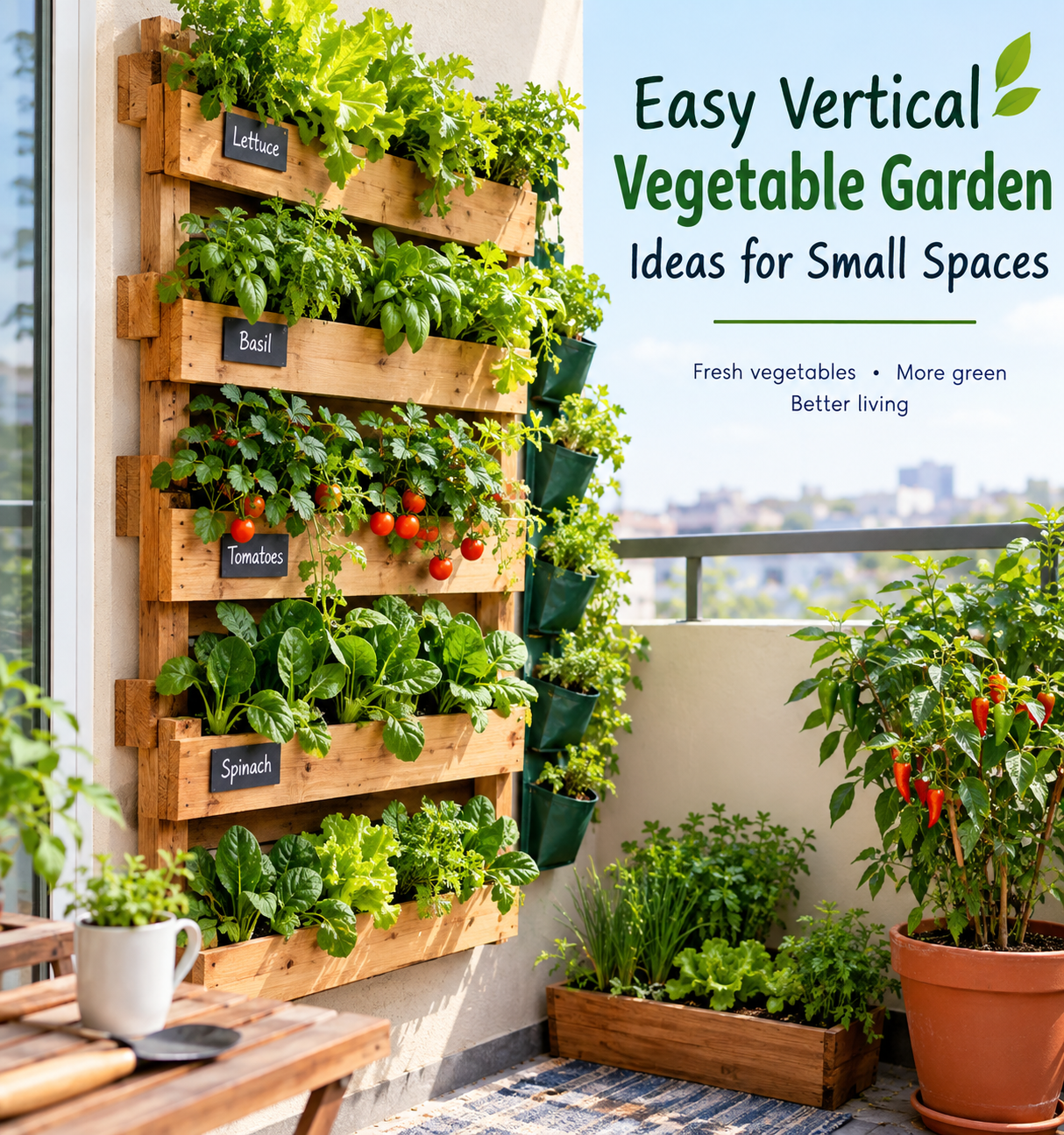
Growing vegetables at home is something I really enjoy because it gives me fresh produce and also makes a small space feel more alive. The only problem many people face is limited space. If you live in an apartment, have a small balcony, or only have a tiny backyard, a traditional vegetable garden may not be practical. This is where a vertical vegetable garden can make a big difference.
In my experience, vertical gardening is one of the easiest ways to grow vegetables when floor space is limited. Instead of spreading plants across the ground, you grow them upward using shelves, containers, wall planters, hanging pockets, trellises, or other simple structures. You can use a small balcony wall or even a sunny corner to create a productive garden.
In this article, I will share some easy vertical vegetable garden ideas for small spaces, including the vegetables that work well, the containers I prefer, and some simple tips that can help beginners get better results.
Why Choose a Vertical Vegetable Garden?
The biggest advantage of vertical gardening is that it saves space. A single wall can hold several containers, allowing you to grow more plants without needing a large garden.
I also like vertical gardens because they can make gardening more organized. Instead of having pots scattered around the floor, you can arrange them neatly on shelves or wall mounted planters.
Another benefit is that many vertical gardens are easier to maintain. When plants are raised from the ground, watering, checking leaves, harvesting vegetables, and removing damaged leaves can become more convenient.
Vertical gardening can also improve the appearance of a balcony or patio. Green plants growing on a wall can make an ordinary outdoor area look fresh and welcoming.
Use Wooden Vertical Planters
One of my favorite ideas for a small vegetable garden is a wooden vertical planter. You can buy one or make a simple structure yourself if you enjoy basic DIY projects.
Wooden planters can have several levels where you place small containers or planting boxes. You can grow lettuce, spinach, herbs, radishes, and other compact vegetables in these spaces.
Before using any wooden planter, I recommend checking that it has proper drainage. Excess water should be able to escape easily because vegetables do not grow well when their roots remain constantly wet.
A wooden vertical planter is especially useful on balconies because it uses wall space instead of taking up much floor area.
Try Hanging Vegetable Planters
Hanging planters are another simple option for small spaces. You can hang several containers from a strong support, balcony railing, or suitable outdoor structure.
I find hanging planters useful for vegetables and herbs that do not need extremely deep containers. Leafy greens, herbs, strawberries, and some compact pepper varieties can work well depending on the container size.
Always make sure the support is strong enough to hold the weight of the container, soil, water, and mature plant. A container can become surprisingly heavy after watering.
Hanging planters also allow you to use space above the floor that would otherwise remain empty.
Grow Vegetables in Wall Pockets
Fabric wall pockets are becoming popular among people who want to create a vertical vegetable garden in a very small area. These pockets can be attached to a suitable wall and filled with potting mix.
They are lightweight and can hold several small plants in one vertical arrangement.
I would use wall pockets mainly for shallow rooted vegetables and herbs. Lettuce, spinach, parsley, coriander, basil, and similar plants can be good choices.
One thing I would pay close attention to is watering. Fabric pockets can dry out faster than larger containers, especially during hot weather. Checking the soil regularly is important.
Build a Simple Trellis
A trellis is one of the most useful tools for growing climbing vegetables vertically. Instead of allowing the plant to spread across the ground, you provide a structure for it to climb.
Cucumbers, peas, beans, and some varieties of tomatoes can benefit from vertical support.
A simple trellis does not need to be complicated. You can use a garden trellis, strong netting, or another suitable support that gives the plant something to hold onto.
I recommend installing the support early rather than waiting until the plant becomes large. Young plants are much easier to guide, and early support can prevent stems from becoming tangled.
Use Stackable Containers
Stackable containers are another excellent solution when floor space is limited. Several containers can be arranged vertically, giving you multiple planting levels.
This setup can work particularly well for herbs and smaller vegetables.
For example, you might grow lettuce in one level, spinach in another, and herbs in another. This makes it easier to organize plants according to their needs.
I would avoid placing too many containers together because crowded plants may receive less sunlight and air movement. Leave enough room for plants to grow properly.
Use a Vertical Pallet Garden Carefully
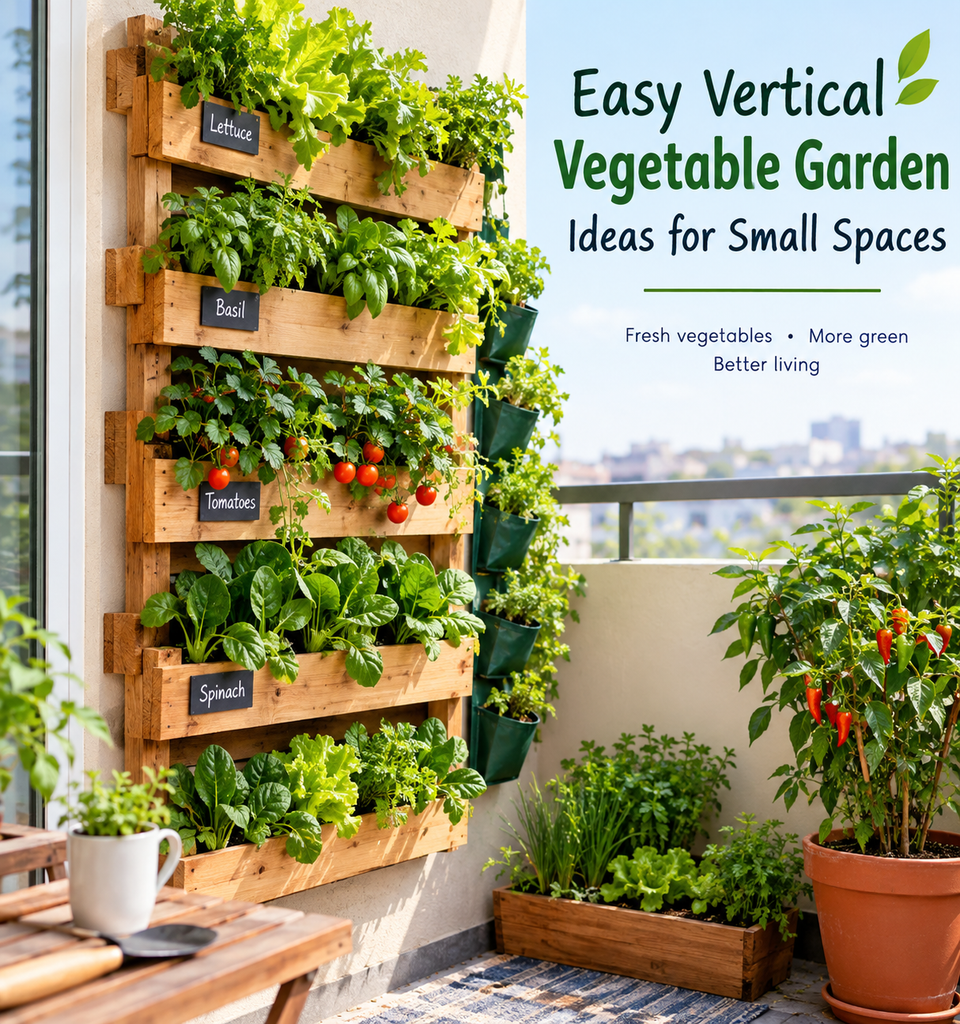
An old wooden pallet can sometimes be turned into a vertical planter. It can provide several sections for growing small vegetables and herbs.
However, I would always check the condition and safety of the wood before using a pallet for gardening. Avoid materials that may have been treated with substances unsuitable for growing food.
If you find a suitable pallet, you can attach planting boxes or containers securely and position it in a sunny area.
A pallet garden can be a low cost option, but safety and stability should come before appearance.
Choose the Right Vegetables
Choosing suitable vegetables is one of the most important parts of successful vertical gardening.
Leafy vegetables are generally excellent choices because they do not always require deep containers. Lettuce, spinach, kale, and similar greens can grow well in compact spaces when they receive enough sunlight and water.
Herbs are also ideal. Basil, parsley, coriander, mint, and chives can be grown in small containers.
For vertical support, beans, peas, and cucumbers are useful choices because they naturally want to climb.
Compact tomatoes and peppers can also work well, but they usually need stronger containers and support as they become larger.
Before planting anything, I recommend checking the mature size of the plant and the container depth it needs.
Give Your Garden Enough Sunlight
Sunlight is extremely important for growing vegetables successfully. Most vegetables need several hours of good sunlight each day.
Before building your vertical garden, observe your balcony, patio, or wall throughout the day. Notice which areas receive direct sunlight and which remain shaded.
Place plants that need more sunlight in the brightest locations. Vegetables that tolerate partial shade can be placed in areas with less direct light.
A vertical garden may look attractive, but good sunlight should always be one of the main priorities.
Use Good Quality Potting Soil
Good soil can make a noticeable difference in container gardening. Since vertical gardens usually depend on containers, the roots need a growing medium that provides air, moisture, and nutrients.
I prefer using a quality potting mix designed for containers instead of heavy garden soil. Heavy soil can become compacted inside containers and may not provide the drainage that vegetable roots need.
The soil should hold enough moisture for healthy growth while still allowing excess water to escape.
Adding suitable organic matter can also help improve the growing environment, depending on the type of vegetables you are growing.
Water Plants Regularly
Container vegetables can dry out faster than vegetables planted directly in the ground. This is especially true during hot and dry weather.
I do not recommend following a strict watering schedule without checking the soil. Instead, feel the top layer of soil and observe the plants.
If the soil feels dry and the plant needs water, water thoroughly until some moisture drains from the bottom of the container.
At the same time, avoid keeping the soil constantly soaked. Good drainage is just as important as regular watering.
Keep Plants Organized
One simple trick I find helpful is labeling containers. This is especially useful when you grow several vegetables at the same time.
You can also organize plants according to their height. Taller plants should not block sunlight from smaller plants.
Climbing vegetables should have their own support, while compact leafy vegetables can occupy lower containers.
Keeping everything organized makes the garden easier to manage and helps you notice problems quickly.
Start Small and Expand Slowly
If you are new to vertical gardening, I recommend starting with only a few containers. You do not need to build a large garden immediately.
Try growing two or three easy vegetables first. Learn how often they need water, how much sunlight they prefer, and how quickly they grow.
Once you understand what works in your space, you can add more containers or another vertical structure.
Starting small also makes gardening less stressful. You can enjoy the process instead of trying to manage too many plants at once.
Final Thoughts
Creating a vertical vegetable garden is a practical way to grow fresh vegetables when you have limited space. You do not need a large backyard or expensive equipment. With a sunny wall, balcony, shelves, hanging containers, or a simple trellis, you can create a productive garden in a surprisingly small area.
From my point of view, the most important things are choosing suitable vegetables, using good containers, providing enough sunlight, maintaining proper drainage, and checking plants regularly.
If you are a beginner, start with easy vegetables such as lettuce, spinach, herbs, beans, or compact peppers. Once you gain confidence, you can experiment with cucumbers, tomatoes, and other plants that need vertical support.
A small vertical garden can provide more than fresh vegetables. It can make your home feel greener, give you an enjoyable hobby, and help you appreciate where your food comes from. Even a tiny balcony can become a useful growing space when you learn to garden upward instead of only outward.
Leave a Reply