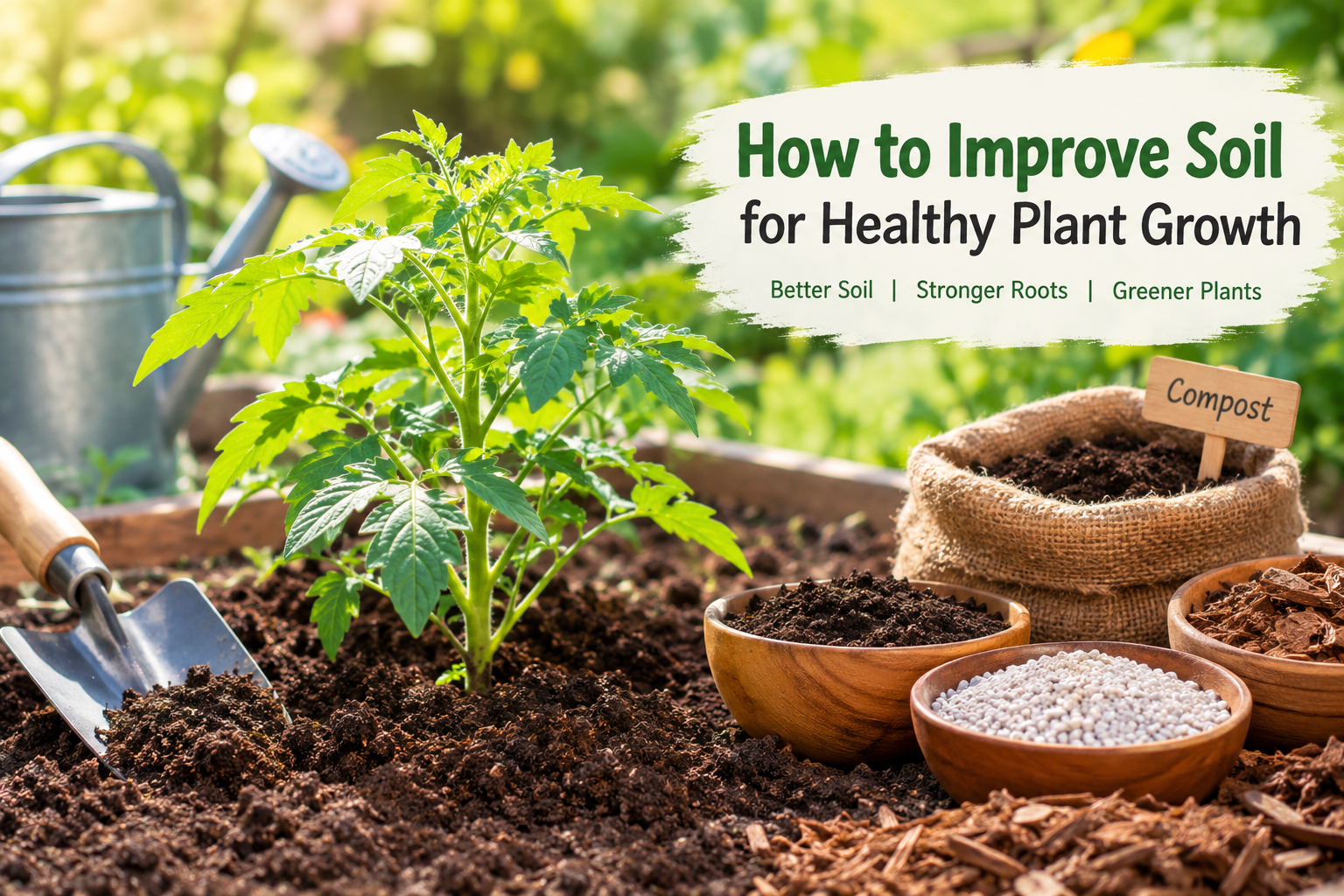
Healthy plants usually start with healthy soil. From my experience with gardening, I have learned that even a good watering routine and plenty of sunlight may not be enough if the soil is poor. Plants depend on soil for water, nutrients, oxygen, and support. When the soil is healthy, roots can grow properly and plants have a much better chance of staying strong and producing healthy leaves, flowers, fruits, or vegetables.
The good news is that improving garden soil does not always require expensive products or complicated methods. Simple changes such as adding compost, improving drainage, protecting the soil with mulch, and avoiding excessive fertilizer can make a noticeable difference.
In this article, I will share the methods I find most useful for improving soil and supporting healthy plant growth at home.
Understand Your Soil First
Before adding anything to your garden soil, I believe it is important to understand what you are working with. Soil can be sandy, clay based, loamy, or somewhere between these types.
Sandy soil usually drains water quickly but may struggle to hold nutrients. Clay soil can hold water and nutrients well, but it may become compacted and drain slowly. Loamy soil is generally considered a good balance because it can hold moisture while still allowing air and water to move through it.
You can learn a lot simply by looking at and touching your soil. If it feels very hard when dry and becomes sticky when wet, it may contain a lot of clay. If water disappears very quickly and the soil feels loose and gritty, it may be sandy.
Understanding your soil helps you choose the right way to improve it instead of adding materials without knowing what your garden actually needs.
Add Compost to Improve Soil
One of my favorite ways to improve soil for healthy plant growth is adding compost. Compost is made from decomposed organic materials and can help improve the overall condition of garden soil.
Compost can improve the structure of sandy soil by helping it hold moisture and nutrients. It can also help heavy clay soil become more open and easier for roots to grow through.
I usually prefer adding mature compost rather than using too much fertilizer. Compost slowly contributes organic matter and supports a healthy soil environment.
You can mix compost into the soil before planting or add a layer around established plants. Avoid placing large amounts directly against plant stems. A moderate amount used regularly is usually more useful than adding a huge amount at one time.
Use Organic Matter Regularly
Organic matter is one of the most important parts of healthy garden soil. Besides compost, materials such as well decomposed leaves and other suitable organic materials can contribute to soil improvement.
As organic matter breaks down, it helps improve soil structure. It can also support beneficial organisms that naturally live in the soil.
I have found that soil often becomes easier to work with when organic matter is added regularly over time. Soil improvement is not always something that happens after one application. It is better to think of it as an ongoing part of garden care.
Adding organic matter also gives the soil a more natural and productive environment for plant roots.
Improve Soil Drainage
Good drainage is important because plant roots need both water and oxygen. Soil that stays wet for too long can create problems for many plants, especially plants that prefer well drained conditions.
If your garden soil drains poorly, first try to understand why. Compacted soil may prevent water from moving properly. Heavy clay can also contribute to slow drainage.
Adding organic matter can improve soil structure over time. Raised planting areas can also be useful where natural drainage is poor.
I would avoid making random changes without checking the needs of your plants. Some plants enjoy consistently moist soil, while others prefer the soil to dry slightly between watering.
Avoid Soil Compaction
Compacted soil is another common problem that can affect healthy plant growth. When soil becomes tightly pressed together, there may be less space for air and water. Roots can then have difficulty spreading through the soil.
Walking repeatedly over garden beds is one simple way soil becomes compacted. Heavy equipment and working with very wet soil can also cause problems.
I try to keep unnecessary foot traffic away from planting areas. If soil is already compacted, gently loosening it and adding organic matter can help improve its structure.
For established plants, be careful when digging around roots. Damaging roots can create additional stress for the plant.
Check Soil pH
Soil pH can affect how easily plants access nutrients. Different plants prefer different soil conditions, so knowing the approximate pH of your garden can be useful.
A basic soil test can give you information about soil pH and sometimes nutrient levels as well. This can help you make better decisions instead of guessing.
I think soil testing is especially useful when plants repeatedly struggle despite receiving enough water and sunlight. Poor growth can sometimes be connected to nutrient availability rather than a lack of fertilizer.
If your soil needs a pH adjustment, follow recommendations based on your soil test and the plants you are growing. Avoid adding large amounts of amendments without understanding their effect.
Use Mulch to Protect Soil
Mulch is another simple way to improve garden soil and protect it. Organic mulch can include materials such as shredded leaves, wood materials, or other suitable garden coverings.
A layer of mulch can help reduce moisture loss from the soil surface. It can also help moderate soil temperature and reduce the growth of some weeds.
As organic mulch breaks down, it can contribute organic matter to the soil. This makes mulch useful not only for protecting the soil but also for supporting long term soil improvement.
When applying mulch, I leave some space around plant stems. Keeping mulch directly against stems can create an overly damp environment and may contribute to plant problems.
Be Careful With Fertilizer
Fertilizer can be useful when plants need additional nutrients, but I do not believe that more fertilizer automatically means healthier plants.
Too much fertilizer can damage roots and create nutrient problems. It can also encourage excessive leafy growth without necessarily producing stronger plants or better flowers and fruit.
Before using fertilizer, consider whether your soil actually needs it. A soil test can provide useful information.
When fertilizer is necessary, follow the product instructions carefully. Using the recommended amount is usually a better approach than adding extra because you want faster growth.
Healthy soil should provide a balanced environment rather than depending entirely on fertilizer.
Grow Cover Crops When Appropriate
Cover crops can be useful in larger gardens or areas that are not being used for regular planting. Certain plants can help protect the soil from erosion and contribute organic material when managed properly.
Even if you have a small garden, you can focus on keeping unused soil covered with suitable organic material instead of leaving it completely exposed.
Bare soil can dry out quickly and may be more vulnerable to erosion. Keeping soil protected is a simple part of maintaining a healthy garden environment.
Avoid Overwatering
Water is essential for plants, but too much water can be harmful. Overwatering can reduce the amount of oxygen available around roots and may create conditions that encourage root problems.
Before watering, I prefer checking the soil rather than following a strict schedule every day. Insert your finger into the soil near the plant and check whether it is still moist.
Different plants have different water requirements, so it is important to understand the needs of each plant.
Improving soil structure can also make watering easier because healthy soil can hold moisture while allowing excess water to drain.
Add Compost Over Time
One mistake I think beginners often make is expecting soil to become perfect immediately. In reality, soil improvement can take time.
Instead of making a major change all at once, I prefer improving soil gradually. Adding compost, protecting the surface with mulch, reducing compaction, and observing plant growth can produce better long term results.
As organic materials break down, the condition of the soil can change. Regular observation helps you understand what is working and what needs adjustment.
Encourage Healthy Soil Life
Healthy soil contains many living organisms. Tiny organisms help break down organic materials and contribute to the natural processes happening in the soil.
Adding organic matter can support this living environment. Avoid unnecessary disturbance and excessive chemical applications that may negatively affect soil life.
I think of garden soil as a living part of the garden rather than simply a place where plants are placed. When the soil environment is healthy, plants can often establish stronger roots and grow more naturally.
Choose Plants That Suit Your Soil
Sometimes the easiest way to achieve healthy plant growth is to choose plants that naturally suit your soil conditions.
If your soil is sandy, look for plants that tolerate faster drainage. If you have heavier soil, choose plants that can handle those conditions while continuing to improve the soil gradually.
You can also use containers or raised beds if your existing garden soil is extremely difficult to manage.
Trying to force every plant to grow in the same conditions can create unnecessary work. Matching plants with suitable growing conditions can make gardening much easier.
Final Thoughts
Learning how to improve soil for healthy plant growth has changed the way I approach gardening. Instead of focusing only on watering and fertilizer, I pay attention to the soil itself.
Adding compost, increasing organic matter, improving drainage, reducing compaction, using mulch, checking soil pH, and avoiding excessive fertilizer are some of the most practical ways to build healthier soil.
The most important thing I have learned is that soil improvement takes patience. You do not need to change everything in one day. Small improvements made consistently can create better growing conditions over time.
When roots have access to suitable moisture, nutrients, oxygen, and space, plants have a stronger foundation for healthy growth. Whether you are growing vegetables, flowers, herbs, or houseplants, taking care of the soil is one of the best investments you can make in your garden.
Good soil does not just support plants. It creates the foundation for a healthier and more productive garden.
Leave a Reply