Watering plants may seem like one of the easiest parts of gardening, but from my experience, it is also one of the most common reasons plants become weak, yellow, or unhealthy. I used to think that giving plants water every day was the best way to keep them fresh. Later, I learned that plants need the right amount of water at the right time, and every plant can have slightly different needs.
If you want healthy plants at home, learning how to water plants correctly is very important. Good watering habits help roots grow properly, keep leaves healthy, and support steady plant growth. Whether you have indoor plants, outdoor plants, herbs, flowers, or vegetables, understanding the basics of plant watering can make a noticeable difference.
Understand When Your Plants Need Water
One of the biggest mistakes I see beginners make is watering plants according to a fixed schedule. For example, some people water every morning or every two days without checking the soil. I believe it is better to check the plant first.
The easiest method is to touch the top layer of soil with your finger. If the soil feels dry, the plant may need water. If it still feels moist, you can usually wait.
The correct watering schedule depends on several things, including the plant type, pot size, soil, temperature, sunlight, and humidity. A plant sitting near a sunny window may dry out faster than one placed in a shaded room.
Check the Soil Before Watering
Checking the soil is one of my favorite simple plant care habits. You do not need expensive equipment to do it. Simply place your finger about an inch into the soil.
If the soil feels dry at that depth, it is usually a good indication that watering may be needed. If the soil feels wet, wait a little longer.
For larger pots, the surface can sometimes look dry while the soil underneath is still damp. This is why checking slightly below the surface is more useful than looking at the top alone.
Some plants prefer their soil to dry out more between waterings, while others prefer consistently moist soil. Learning what your specific plant prefers will make watering much easier.
Water Slowly and Thoroughly
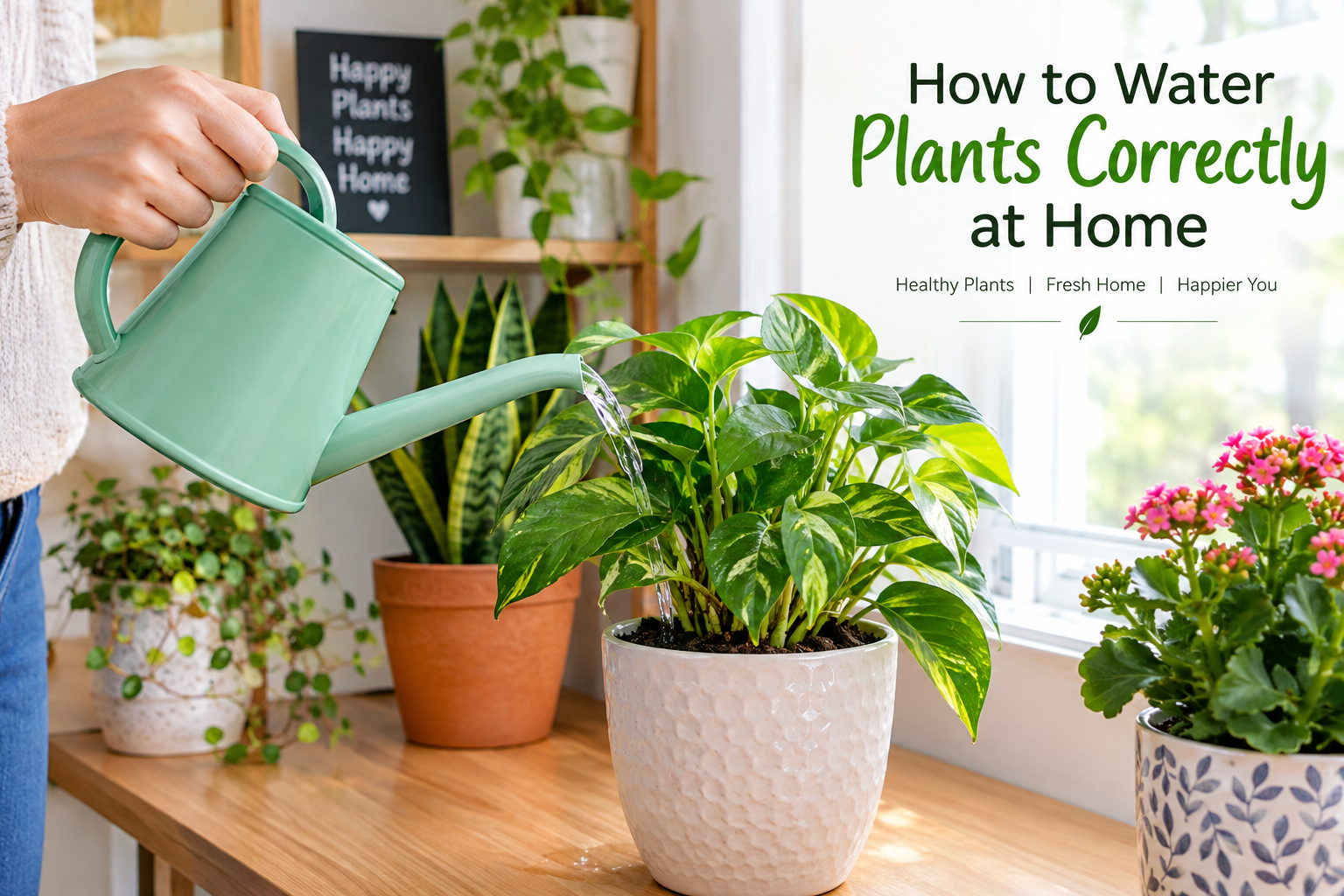
When I water plants at home, I prefer to water slowly rather than pouring a large amount of water all at once. Slow watering gives the soil time to absorb moisture properly.
For plants growing in containers, I usually water around the soil rather than directly onto the leaves. I continue watering until I see a small amount of water coming through the drainage holes.
This can help show that the water has reached the lower part of the root area. After watering, I allow excess water to drain away instead of letting the pot sit in a full tray of water.
Thorough watering followed by an appropriate drying period is often better than giving a plant tiny amounts of water every day.
Make Sure Your Pots Have Drainage
Good drainage is just as important as watering. Even if you know how to water plants correctly, poor drainage can cause problems.
A pot should normally have drainage holes that allow extra water to escape. Without proper drainage, water can remain around the roots for too long.
Too much moisture around roots can contribute to root problems and may cause leaves to turn yellow or wilt. This is why I always pay attention to the type of container I use.
If you have a decorative container without drainage holes, consider using a smaller plant pot with drainage holes inside it. This gives you better control over excess water.
Avoid Overwatering Your Plants
Overwatering is one of the most common plant care mistakes. Many beginners assume that a plant with yellow or drooping leaves must need more water. In reality, too much water can sometimes produce similar symptoms.
Signs of overwatering can include constantly wet soil, yellowing leaves, soft stems, unpleasant soil odor, and leaves that begin falling from the plant.
Instead of adding more water immediately, check the soil first. If it is still very wet, give the plant time to dry according to its needs.
I have found that patience is often an important part of plant care. Sometimes the best thing you can do is wait and observe.
Do Not Let Plants Become Extremely Dry
While overwatering can be harmful, allowing plants to become extremely dry can also create problems. Very dry soil may pull away from the sides of the pot, become hard, or become difficult to rehydrate.
A severely thirsty plant may have drooping leaves, dry leaf edges, or slow growth. Some plants can recover quickly after watering, while others may suffer lasting damage if they remain dry for too long.
The goal is to find a healthy balance. I do not try to keep the soil constantly soaked. Instead, I try to provide enough moisture based on the plant’s individual needs.
Water Indoor Plants Properly
Indoor plants often need less water than people expect. Because indoor environments usually have less direct sunlight and less wind, soil can remain moist for longer.
Before watering an indoor plant, I check the soil and look at the leaves. I also consider the season. During warmer months, some plants may need water more frequently. During cooler periods, their water requirements may decrease.
Plants placed close to windows can dry faster because of sunlight and warmth. At the same time, plants in darker corners may stay moist for longer.
This is why I prefer observing each plant instead of treating every plant in my home exactly the same way.
Water Outdoor Plants Carefully
Outdoor plants can have very different watering needs. Sunlight, wind, temperature, rainfall, and soil type all affect how quickly moisture disappears.
During hot weather, container plants may dry out quickly. Plants in the ground can sometimes hold moisture longer because they have access to a larger area of soil.
I usually check the soil before watering outdoor plants, especially after rain. There is no reason to add more water if the soil is already naturally moist.
For vegetable gardens and flower beds, watering the soil around the roots is generally more useful than constantly spraying the leaves.
Choose the Right Time to Water
The time of day can also affect watering. For many outdoor plants, watering in the morning is a practical choice. The plants have time to absorb moisture during the day, and the foliage can dry naturally.
I try to avoid unnecessarily wetting leaves late in the evening, especially when the weather is cool and humid.
For indoor plants, the exact time is usually less important than checking the soil and avoiding excessive moisture. The most important thing is to develop a routine based on the plant’s actual needs.
Use the Right Amount of Water
There is no single amount of water that works for every plant. A small herb in a small container needs a different amount than a large plant growing in a big pot.
Instead of measuring every drop, I focus on the condition of the soil and the size of the container. For many potted plants, watering thoroughly until a little excess drains from the bottom works well.
However, plants that prefer drier conditions may need less frequent watering, while plants that naturally grow in moist environments may require more consistent moisture.
Knowing the plant’s natural growing conditions can help you understand its watering preferences.
Consider the Soil Type
Soil plays a major role in plant watering. Some soils hold moisture for a long time, while others drain quickly.
A heavy soil may remain wet for longer. A well draining potting mix can allow excess water to move away from the roots more easily.
When I choose soil for plants, I think about drainage as well as nutrition. Healthy roots need both moisture and access to air.
If water sits in the soil for too long, the roots may struggle. If water disappears too quickly, the plant may become thirsty more often.
Pay Attention to the Leaves
Leaves can provide useful clues about watering. A plant that is thirsty may develop drooping or limp leaves. Dry leaf edges can also indicate that the plant is not receiving enough moisture, although other factors can cause similar symptoms.
Yellow leaves can sometimes be related to overwatering, but they can also have other causes.
That is why I do not rely on one symptom alone. I check the soil, lighting, temperature, pot, drainage, and overall condition of the plant before changing my watering routine.
Water According to the Season
Plant watering needs can change throughout the year. During warm and sunny weather, plants may lose moisture faster. During cooler weather, many plants grow more slowly and may need less water.
This means a watering routine that works in summer may not work during winter.
I recommend checking plants regularly instead of keeping the exact same schedule all year. A small adjustment can make a big difference in plant health.
Common Watering Mistakes to Avoid
There are several simple mistakes that can make plant care harder than it needs to be. Watering every plant on the same schedule is one of them.
Another mistake is watering only the surface of the soil. Small amounts of water may not reach the deeper root area properly.
Using containers without drainage can also cause serious problems. Leaving plants sitting in water for long periods is another habit worth avoiding.
Finally, do not ignore the plant after watering. Observe how it responds over the next few days. Plants can tell you a lot when you pay attention to them.
My Simple Plant Watering Routine
My approach to watering plants at home is quite simple. First, I check the soil. Then I consider the plant type, weather, location, and pot size.
If the plant needs water, I water the soil slowly and thoroughly. I make sure the container has proper drainage and remove excess water from the tray.
After that, I leave the plant alone and allow the soil to reach the appropriate moisture level before watering again.
This routine may sound simple, but I have found that consistent observation is much more useful than following a strict watering calendar.
Final Thoughts
Learning how to water plants correctly at home does not have to be complicated. The most important lesson I have learned is that plants should not be watered simply because a certain day has arrived. Instead, I check the soil and consider what each plant actually needs.
Good watering means providing enough moisture without keeping the roots constantly soaked. Proper drainage, suitable soil, correct timing, and regular observation all play an important role.
If you are new to gardening, start by checking your plants regularly. Touch the soil, observe the leaves, notice how quickly the soil dries, and adjust your routine when necessary.
With a little patience and attention, you can develop better plant watering habits and enjoy healthier, greener plants throughout your home.
Leave a Reply