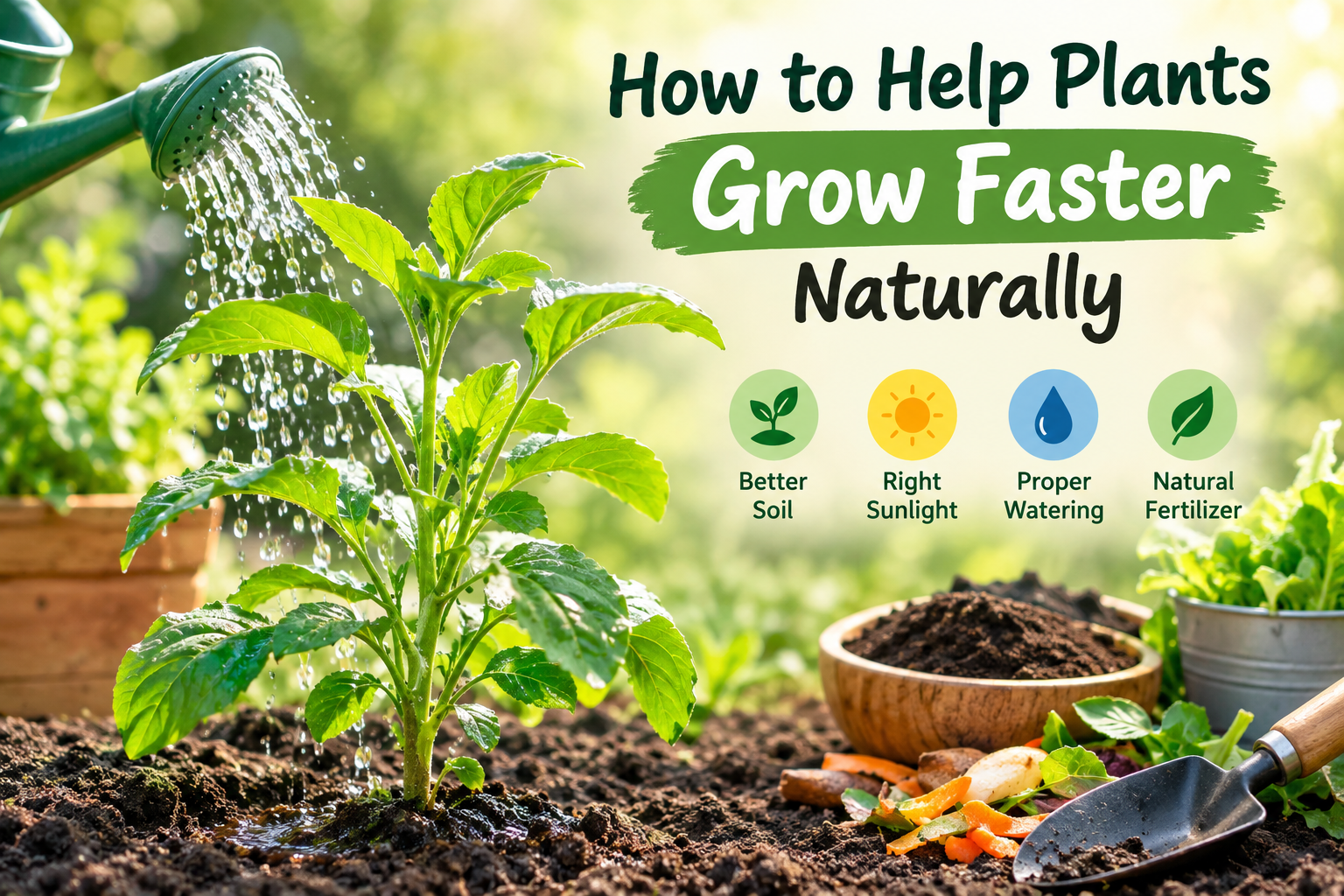
Growing healthy plants at home does not always require expensive fertilizers, complicated equipment, or special gardening products. In my experience, plants usually grow better when we understand what they naturally need and provide those things consistently. Good soil, enough sunlight, proper watering, fresh air, and suitable nutrition can make a noticeable difference in plant growth.
If you are wondering how to help plants grow faster naturally, the first thing I would suggest is to focus on the basic growing conditions. A plant cannot grow quickly if its roots are struggling, the soil is poor, or it is receiving too much or too little water. Natural plant care is mostly about creating a healthy environment where the plant can grow at its own pace.
In this guide, I will share practical methods that I find useful for encouraging faster and healthier plant growth without relying heavily on synthetic products.
Choose Healthy Soil for Better Plant Growth
Soil is one of the most important factors when trying to help plants grow faster naturally. Healthy soil provides roots with nutrients, moisture, air, and support. If the soil is hard, compacted, or lacking organic matter, even regular watering may not produce good results.
I prefer using loose and well draining soil for most plants. Good soil should hold enough moisture for the roots while allowing excess water to escape. Adding organic compost can also improve soil structure and provide nutrients naturally.
Compost made from properly decomposed plant material can be especially helpful. You can mix a reasonable amount of compost into garden soil before planting or add a thin layer around established plants.
Avoid using large amounts of fresh organic material directly around roots because it may cause problems as it breaks down. Well matured compost is generally a better choice.
Give Plants the Right Amount of Sunlight
Sunlight is essential for photosynthesis, which is the process plants use to produce energy. Without sufficient light, many plants become weak, pale, and slow growing.
However, more sunlight is not always better. Different plants have different light requirements. Some vegetables and flowering plants need several hours of direct sunlight, while certain houseplants prefer bright indirect light.
Before choosing a location, I recommend checking what type of light your plant prefers. If you are growing vegetables, observe how much direct sunlight your garden receives during the day.
Plants that are receiving insufficient light may develop long, weak stems as they stretch toward a light source. Moving them to a brighter suitable location can often improve their growth.
Water Plants Correctly
Proper watering is another simple way to encourage healthy plant growth naturally. Both overwatering and underwatering can cause problems.
I usually check the soil before watering instead of following a strict daily schedule. Push your finger gently into the top layer of soil. If it feels dry where the plant roots are located, it may be time to water.
When watering, apply enough water to moisten the root area thoroughly. For container plants, excess water should be able to drain through the bottom of the pot.
Avoid keeping plants constantly soaked unless they are species that naturally require very wet conditions. Too much water can reduce oxygen around the roots and contribute to root problems.
Improve Soil With Natural Compost
Compost is one of my favorite natural methods for improving plant soil. It can add organic matter and help create a healthier environment for beneficial soil organisms.
You can make compost from suitable kitchen and garden materials such as vegetable scraps, fruit scraps, dry leaves, and grass clippings. These materials need to decompose properly before the finished compost is added to soil.
A small amount of mature compost can be mixed into planting soil or placed around established plants. Over time, organic matter can improve soil structure and moisture retention.
Compost should not be treated as a magic solution. Plants still need suitable light, water, temperature, and space. Think of compost as one part of a complete plant care routine.
Use Natural Fertilizers Carefully
Natural fertilizers can provide nutrients that support plant growth. Options may include compost, well aged manure, worm castings, and other properly prepared organic fertilizers.
One important lesson I have learned is that more fertilizer does not automatically mean faster growth. Excess nutrients can damage roots and create unhealthy growth.
Always follow the instructions when using a commercial organic fertilizer. If you are using homemade materials, make sure they are properly prepared and safe for plants.
Different plants also have different nutritional needs. Leafy vegetables, flowering plants, and fruiting plants may benefit from different nutrient balances.
Provide Enough Space for Roots
Plants need room for their roots to spread. If a container becomes too small, roots may become crowded and the plant can struggle to absorb water and nutrients efficiently.
When growing plants in pots, choose a container that suits the mature size of the plant. Make sure it has drainage holes.
If you notice roots circling around the inside of the container, water draining extremely quickly, or growth slowing despite good care, the plant may need a larger container.
Repotting should be done carefully. Avoid damaging the main root system and give the plant time to adjust afterward.
Keep the Leaves Clean
For indoor plants, keeping leaves reasonably clean can support healthy growth. Dust can collect on broad leaves and make them look dull.
I like to gently wipe large leaves with a soft, slightly damp cloth when needed. This also gives me an opportunity to inspect the plant for insects, spots, or other signs of trouble.
Avoid using household cleaning products on plant leaves. Plain water is usually enough for routine cleaning.
Plants with naturally fuzzy or delicate leaves may require different care, so always consider the specific plant before wiping its foliage.
Protect Plants From Pests Naturally
Pests can slow plant growth by damaging leaves, stems, flowers, or roots. Regular observation is one of the easiest natural pest control methods.
I recommend checking the underside of leaves and the newest growth because small insects can sometimes hide there. Catching an issue early is much easier than dealing with a serious infestation.
For minor problems, physically removing insects or washing suitable plants gently with water may help. Encouraging beneficial insects in outdoor gardens can also support natural pest management.
If you use any homemade pest treatment, test it on a small part of the plant first. Some plants can be sensitive to certain ingredients.
Improve Air Circulation
Good air circulation is often overlooked, especially with indoor plants. Crowded plants can have poor airflow, which may create conditions that encourage certain fungal problems.
Give plants enough space between them so air can move around the foliage. Avoid placing indoor plants directly against walls or packing many pots tightly together.
Outdoor plants usually receive natural airflow, but overcrowded garden beds can still benefit from proper spacing.
Remove Damaged Leaves
Removing severely damaged or dead leaves can help keep plants looking healthier and make it easier to notice new growth or pest problems.
Use clean scissors or pruning tools when removing damaged plant material. Avoid cutting healthy growth unnecessarily.
For flowering plants, proper pruning can sometimes encourage new branches or flowers, but pruning requirements vary significantly between plant types. It is always better to understand the plant before making major cuts.
Use Mulch Around Outdoor Plants
Mulching can be a useful natural technique for garden plants. Organic mulch such as dry leaves, straw, or suitable compost can help the soil retain moisture and reduce temperature changes around the roots.
Mulch can also reduce weed competition. Weeds compete with plants for water, nutrients, light, and space.
Keep mulch slightly away from the main stem or trunk. Placing thick, wet material directly against stems can create an unfavorable environment for some plants.
Avoid Overcrowding Your Garden
When plants are planted too close together, they compete for resources. Their roots may compete for water and nutrients while their leaves compete for light and airflow.
Following the recommended spacing for each plant can help create healthier growing conditions.
I have found that giving plants enough space often makes maintenance easier too. Watering, pruning, checking for pests, and harvesting become much simpler when plants are not overcrowded.
Pay Attention to Temperature
Temperature can have a major effect on plant growth. Most plants have a preferred temperature range where they grow best.
Protect sensitive plants from extreme heat, cold, frost, or sudden environmental changes when possible. Indoor plants should also be kept away from strong heating or cooling sources.
If a plant suddenly stops growing, temperature may be one of several factors worth checking along with water, light, soil, and pests.
Be Consistent With Plant Care
One of the biggest mistakes beginners make is changing everything at once. A plant may not need ten different treatments. It may simply need consistent basic care.
I prefer to observe my plants regularly and make small adjustments when necessary. Check the soil, look at the leaves, observe new growth, and notice whether the plant is responding positively.
Healthy plant growth usually happens gradually. Some plants naturally grow faster than others, so comparing two different species is not always useful.
Final Thoughts
Learning how to help plants grow faster naturally is mostly about giving plants the conditions they need to stay healthy. Good soil, appropriate sunlight, correct watering, natural organic matter, sufficient space, and regular observation can make a meaningful difference.
I believe the most effective approach is to work with nature rather than constantly trying to force growth. A healthy root system, suitable environment, and consistent care are more valuable than using large amounts of fertilizer or complicated gardening products.
Remember that every plant is different. Before changing your care routine, learn about the particular plant you are growing and adjust your approach accordingly. With patience and regular attention, you can create a healthier growing environment and enjoy stronger, greener plants naturally.
Leave a Reply