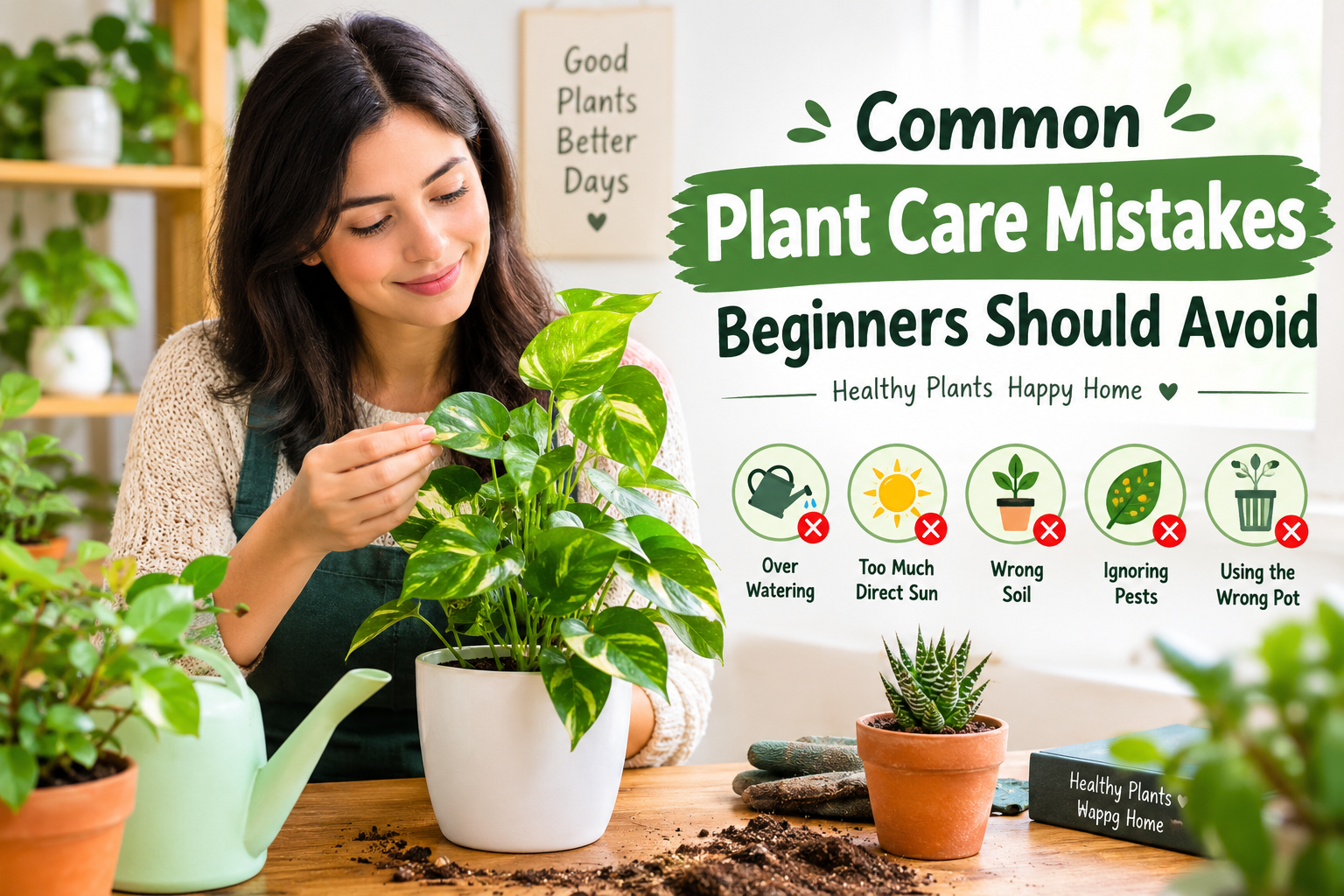
Taking care of plants can be a relaxing and enjoyable hobby. When I first started learning about plant care, I thought keeping plants healthy was mostly about watering them regularly and giving them sunlight. With time, I realized that plants need much more than basic watering. Even small mistakes can affect their growth, leaves, roots, and overall health.
Many beginners make the same plant care mistakes without realizing what they are doing wrong. The good thing is that most of these mistakes are easy to avoid once you understand the basic needs of your plants. In my experience, successful plant care is more about paying attention to your plant than following a strict routine.
In this article, I will discuss some common plant care mistakes beginners should avoid. These tips can help you build better plant care habits and keep your indoor and outdoor plants healthy.
1. Watering Plants Too Often
One of the most common plant care mistakes beginners make is overwatering. Many new plant owners believe that watering their plants every day will help them grow faster. In reality, too much water can create serious problems.
Plant roots need both moisture and air. When the soil stays wet for too long, there may not be enough air around the roots. This can lead to root problems and weak plant growth.
I recommend checking the soil before watering instead of following a fixed daily schedule. Put your finger into the top layer of soil and see whether it feels dry. If the soil is still moist, the plant may not need more water.
Different plants also have different watering needs. Succulents and some drought tolerant plants usually need less water, while tropical plants may prefer more consistent moisture.
2. Not Providing Enough Light
Light is one of the most important parts of plant care. A plant may receive plenty of water and still struggle if it does not receive enough suitable light.
A common mistake is placing a plant in a dark corner simply because it looks attractive there. While some plants can tolerate lower light conditions, most plants need an appropriate amount of light to remain healthy.
Before placing a plant in your home, I suggest learning about its light requirements. Some plants prefer bright indirect light, while others can handle several hours of direct sunlight.
You should also watch the plant itself. Slow growth, pale leaves, or weak stems can sometimes indicate that the plant needs more light.
3. Giving Too Much Direct Sunlight
While insufficient light can be a problem, too much direct sunlight can also damage certain plants. Beginners sometimes assume that more sunlight is always better.
This is not true for every plant.
Some indoor plants can develop brown patches or scorched leaves when they are placed directly beside a hot sunny window. Plants that naturally grow under trees or in shaded environments may be particularly sensitive to strong sunlight.
I prefer to understand where a plant naturally grows before deciding where to place it. If a plant prefers bright indirect light, a location near a bright window but away from intense direct rays may work better.
4. Using the Wrong Soil
Soil is another important part of healthy plant growth. One mistake I often see beginners make is using the same soil for every type of plant.
Different plants have different soil requirements. Some prefer soil that holds moisture, while others need fast draining soil.
For example, succulents and many cactus varieties generally prefer a well draining growing mixture. Plants that naturally grow in moist environments may have different requirements.
Good soil should provide roots with moisture, nutrients, and enough air. Choosing the right soil can make a noticeable difference in plant health.
5. Choosing a Pot Without Drainage
A beautiful pot can make a plant look even better, but appearance should not be the only thing you consider when choosing a container.
One of the most common plant care mistakes is using a pot without proper drainage. If excess water cannot escape, it can remain around the roots and create an unhealthy growing environment.
Whenever possible, I choose containers with drainage holes. If you prefer decorative pots without holes, you need to be especially careful about watering and moisture management.
The right pot should provide enough room for the roots while also allowing excess water to escape.
6. Ignoring Humidity Requirements
Humidity can be especially important for indoor plants. Some tropical plants naturally grow in environments with higher humidity and may struggle in very dry indoor air.
A beginner may notice brown leaf edges and assume that the plant needs more water. However, the actual problem may sometimes be low humidity.
You can improve humidity by grouping suitable plants together or using a humidifier when appropriate. It is also important to understand that not every plant needs high humidity.
Before changing the environment, learn what your specific plant prefers.
7. Failing to Check for Pests
Plant pests can appear even when you are taking good care of your plants. Common pests include insects that feed on leaves, stems, or plant sap.
Beginners sometimes ignore small spots, tiny insects, or unusual leaf damage because the problem does not seem serious at first. Unfortunately, pests can multiply quickly.
I recommend checking your plants regularly. Look at the leaves, stems, and the area around the soil. If you notice unusual spots, sticky residue, damaged leaves, or tiny insects, investigate the problem early.
Early detection usually makes plant pest problems easier to manage.
8. Fertilizing Too Much
Plants need nutrients, but giving them more fertilizer does not necessarily make them grow faster.
Over fertilizing can damage roots and cause other problems. Some beginners apply fertilizer too frequently because they want their plants to become bigger and healthier.
I believe it is better to start carefully and follow the instructions for the specific fertilizer and plant. The plant’s growing season and condition should also be considered.
A healthy plant does not always need constant feeding. Sometimes proper light, suitable soil, correct watering, and good drainage are more important.
9. Repotting Too Frequently
Repotting can be helpful when a plant has outgrown its container, but doing it too often can create unnecessary stress.
Some beginners repot a plant immediately after buying it or whenever they notice slow growth. In many cases, the plant simply needs time to adjust to its new environment.
Before repotting, check whether the roots are actually becoming crowded or whether the existing container has drainage problems.
When repotting is necessary, choose a container that is only moderately larger than the previous one. A very large pot can hold excess moisture and may create new problems.
10. Not Cleaning Plant Leaves
Dust can collect on indoor plant leaves over time. A layer of dust can make leaves look dull and may interfere with their ability to receive light.
Cleaning plant leaves is a simple habit that many beginners overlook.
I like to gently wipe larger leaves with a clean, soft, slightly damp cloth when needed. The method should depend on the plant because delicate leaves may require extra care.
Clean leaves can also make it easier to notice pests and other problems early.
11. Moving Plants Around Too Much
Plants need time to adjust to their environment. Constantly moving a plant from one location to another can make it difficult to understand what conditions work best.
For example, you may move a plant from a window to a dark corner and then back again because you are unsure about its light requirements.
Instead, I recommend observing the plant after placing it in a suitable location. Give it some time to adjust and watch its leaves and growth.
If the plant shows signs of stress, then consider making gradual changes.
12. Following a Strict Watering Schedule
A calendar can be useful as a reminder, but it should not completely control your plant care routine.
Plants do not always need the same amount of water every few days. Temperature, humidity, sunlight, season, soil type, pot size, and plant variety can all affect how quickly soil dries.
This is why I prefer checking the soil rather than automatically watering on a specific day.
Learning to observe your plant and its soil is one of the most useful skills for beginners.
13. Ignoring Seasonal Changes
Plant care needs can change throughout the year. A plant may require more water during a warm growing period and less water during cooler months.
Indoor conditions can also change when you use heating or air conditioning.
I recommend paying attention to seasonal changes rather than using exactly the same plant care routine throughout the year. Your plant’s needs may change as the temperature, sunlight, and humidity change.
14. Expecting Every Plant to Grow the Same Way
Every plant is different. Some plants grow quickly, while others naturally grow slowly. Some produce new leaves frequently, while others may take longer.
Comparing one plant with another can lead to unnecessary changes in care.
A slow growing plant is not automatically unhealthy. Before changing its care routine, learn about its natural growth pattern.
The more you understand your specific plant, the easier it becomes to recognize what is normal and what may be a problem.
How I Recommend Beginners Approach Plant Care
In my opinion, beginners should focus on observation instead of trying to become perfect plant owners immediately.
Start by learning the name of your plant and understanding its basic requirements. Find out how much light it needs, how often the soil usually dries, what type of soil is suitable, and whether it needs special humidity conditions.
Then create a simple routine based on observation.
Check the soil before watering. Look at the leaves regularly. Watch for pests. Make sure the pot has proper drainage. Notice how the plant responds when you change its environment.
These simple habits can help you avoid many common plant care mistakes.
Final Thoughts
Plant care becomes much easier when you stop treating every plant exactly the same. Beginners often make mistakes because they want to help their plants grow quickly, but too much water, too much fertilizer, excessive sunlight, or unnecessary repotting can sometimes do more harm than good.
From my point of view, patience is one of the most important parts of growing healthy plants. Take time to understand what your plant needs and observe how it responds to your care.
Avoiding common plant care mistakes does not require expensive equipment or complicated techniques. Good light, suitable soil, proper watering, drainage, regular observation, and a little patience can make a big difference.
If you are new to gardening, do not worry about making mistakes. Every plant teaches you something. With experience, you will become better at recognizing what your plants need and creating an environment where they can grow naturally and stay healthy.
Leave a Reply