Taking care of plants can be very rewarding, but I have learned that watering is one of the easiest things to get wrong. Many people think that giving plants plenty of water will always help them grow faster. In reality, overwatering plants can cause serious problems and may even damage the roots.
I have found that plants often tell us when something is wrong. Yellow leaves, soft stems, drooping foliage, and constantly wet soil can all be signs that a plant is receiving more water than it needs. The important thing is to recognize these signs early and change the watering routine before the plant becomes severely damaged.
In this guide, I will explain how to identify overwatered plants, what causes overwatering, how it affects plant roots, and what you can do to help your plant recover.
What Does Overwatering Mean?
Overwatering does not simply mean giving a plant a large amount of water one time. In most cases, the problem happens when the soil stays wet for too long and the roots do not get enough air.
Plant roots need both moisture and oxygen. When the soil remains constantly saturated, the spaces that normally contain air become filled with water. This can make it difficult for roots to function properly.
I always recommend checking the soil before watering instead of following a strict watering schedule. Different plants have different water requirements, and indoor conditions can also affect how quickly soil dries.
Yellow Leaves Can Be a Warning Sign
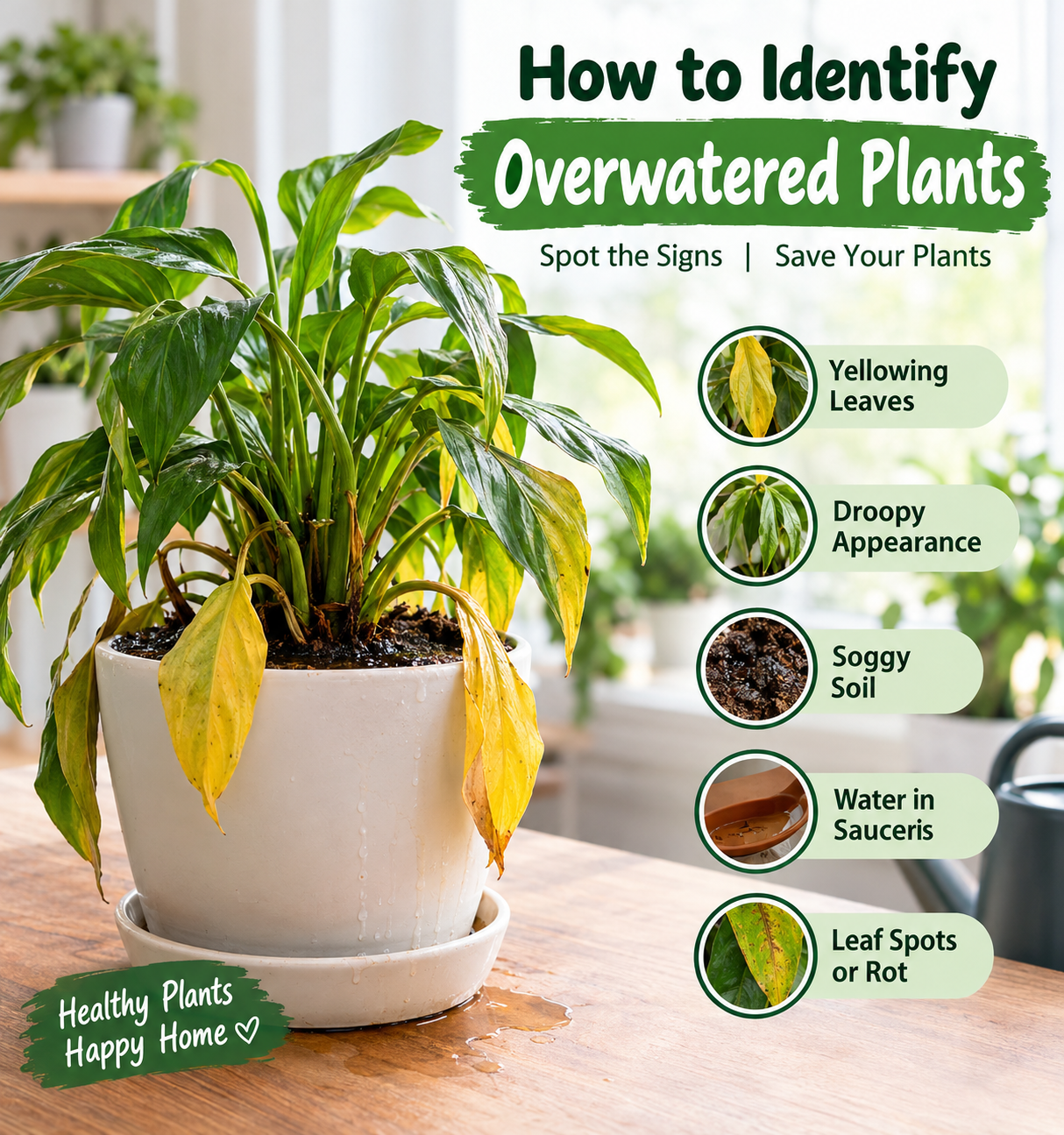
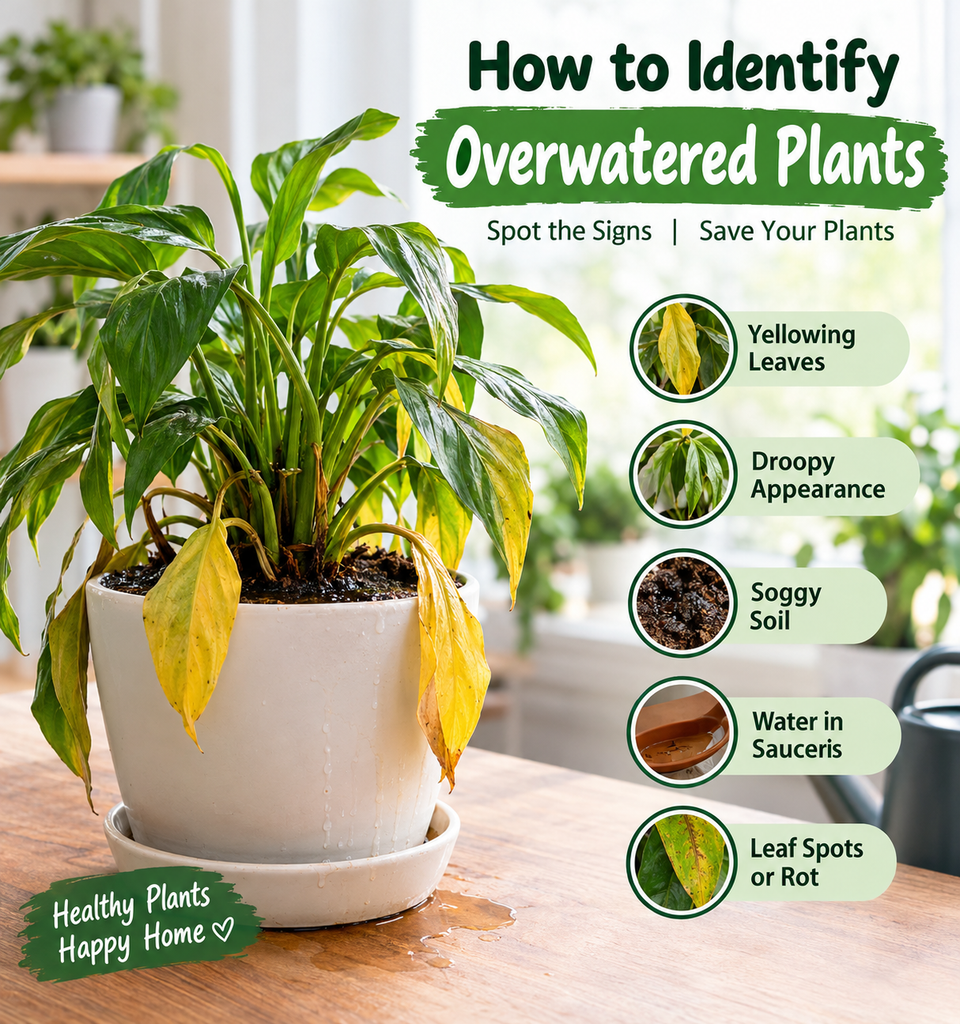
One of the most common signs of overwatered plants is yellowing leaves. If several leaves begin turning yellow even though the plant is receiving regular water, I would check the soil before adding more water.
Yellow leaves can have many causes, including poor lighting, natural aging, nutrient problems, pests, and disease. However, when yellow leaves appear together with constantly wet soil, overwatering becomes a strong possibility.
The lower leaves may turn yellow first because the plant is struggling to maintain healthy growth. If the problem continues, more leaves can become affected.
Drooping Leaves Do Not Always Mean the Plant Needs Water
This is one of the most confusing things about plant care. When a plant looks wilted, many people immediately give it more water.
However, an overwatered plant can also have drooping leaves.
When roots are damaged by excessive moisture, they may not be able to absorb water properly. As a result, the plant can appear thirsty even though the soil is already very wet.
Before watering a drooping plant, I recommend putting your finger into the soil. If the soil feels wet several centimeters below the surface, adding more water may make the situation worse.
Check the Soil Moisture
Checking the soil is one of the easiest ways to identify an overwatered plant.
I usually check the top layer of soil with my finger. If it feels damp or wet and the plant is showing other warning signs, I wait before watering again.
For larger pots, the surface can sometimes appear dry while the deeper soil remains very wet. In that situation, checking deeper into the pot can provide a better idea of the actual moisture level.
A wooden stick can also be useful. Insert it carefully into the soil and remove it. If it comes out with wet soil attached, the plant may still have plenty of moisture.
Watch for Soft or Weak Stems
Another warning sign I pay attention to is a soft or weak stem.
Healthy stems generally have a firm structure, although the exact texture depends on the plant. If stems become unusually soft, weak, or mushy, excessive moisture may be contributing to the problem.
This can be especially concerning when softness appears near the base of the plant. Combined with wet soil, unpleasant smells, or yellow leaves, it can indicate that the roots or lower stem are beginning to rot.
Check for a Bad Smell
Healthy potting soil can have a natural earthy smell. Extremely wet soil that remains saturated for a long period can sometimes develop an unpleasant smell.
If I notice a strong rotten or sour smell coming from the pot, I take it seriously. It may indicate that the soil is not drying properly and that root problems are developing.
This is a good reason to inspect the roots rather than simply continuing the normal watering routine.
Look at the Roots
When I strongly suspect overwatering, checking the roots can provide useful information.
Healthy roots are generally firm and have a normal appearance for the particular plant. Damaged roots may become brown, black, soft, or mushy.
If the plant can be safely removed from its pot, gently inspect the root system. Avoid pulling or damaging healthy roots unnecessarily.
If many roots appear rotten, the plant may need immediate attention. Damaged roots should be handled carefully, and severely affected areas may need to be removed with clean tools.
Water Sitting in the Saucer Is a Warning
After watering a plant, excess water may drain into the saucer underneath the pot. This is normal for a short period, but leaving the pot sitting in water for a long time can keep the soil unnecessarily wet.
I prefer to empty excess water from the saucer after the plant has finished draining.
This is particularly important for indoor plants because evaporation can be slower inside a home. A pot that sits in water may remain saturated much longer than expected.
Poor Drainage Can Cause Overwatering
Sometimes the problem is not simply how much water you provide. The container itself may be preventing proper drainage.
A pot without drainage holes can trap excess water around the roots. Even if you follow a careful watering routine, the plant may still remain too wet.
I always consider drainage when choosing containers. Pots with suitable drainage holes allow excess water to escape and make it easier to maintain healthier soil moisture.
The type of soil also matters. Heavy soil can hold water for a long time, while a suitable potting mix can provide better drainage and air circulation.
How to Save an Overwatered Plant
If I discover that one of my plants has been overwatered, the first thing I do is stop watering temporarily.
I then check the soil, drainage, leaves, stems, and roots if necessary. The exact recovery process depends on how serious the problem is.
Move the plant to a location with suitable light and airflow for its specific needs. Do not place it in extreme sunlight simply to dry the soil quickly, because sudden environmental changes can create additional stress.
If the soil is extremely wet and the container does not drain properly, repotting may be necessary. Remove the plant carefully and inspect the roots. Rotten roots should be removed carefully with a clean cutting tool.
After repotting, avoid immediately returning to the old watering routine. Allow the plant’s needs and soil moisture to guide your next watering.
Do Not Follow the Same Watering Schedule for Every Plant
One mistake I see often is treating every plant as though it needs water on the same schedule.
That approach rarely works because plants have different requirements. A tropical plant may prefer more consistent moisture, while a drought tolerant plant may need much less water.
Light, temperature, humidity, pot size, soil type, season, and plant size can all influence how quickly water disappears from the soil.
For this reason, I prefer checking the plant instead of simply saying, “It is watering day.”
How to Prevent Overwatering in the Future
Prevention is much easier than trying to save a severely damaged plant.
I recommend developing a simple habit of checking the soil before watering. Learn how quickly each plant normally dries out and adjust your routine according to the season.
Make sure containers have suitable drainage holes and use an appropriate potting mix. Avoid leaving standing water in saucers for extended periods.
It is also useful to observe your plants regularly. Changes in leaf color, growth, soil moisture, and overall appearance can help you identify problems early.
Overwatering vs Underwatering
Overwatering and underwatering can sometimes look surprisingly similar. Both problems can cause leaves to droop, which is why checking the soil is so important.
With underwatering, the soil is usually dry and the plant may look wilted or stressed. With overwatering, the soil often remains wet while the plant still looks unhealthy.
Yellowing leaves, wet soil, soft stems, and root problems together can point toward excessive moisture.
Instead of relying on one symptom, I prefer looking at several signs at the same time.
Final Thoughts
Learning how to identify overwatered plants can make plant care much easier. The biggest lesson I have learned is that more water does not always mean healthier plants.
Yellow leaves, drooping foliage, constantly wet soil, soft stems, unpleasant soil smells, poor drainage, and unhealthy roots can all provide clues that a plant is receiving too much moisture.
The best approach is to observe the plant, check the soil, provide proper drainage, and water according to the plant’s actual needs. Once you understand these signs, it becomes much easier to prevent overwatering and maintain healthier plants.
With a little patience and regular observation, most plant care becomes much less complicated. Instead of watering automatically, I believe it is better to listen to what the plant and soil are telling you. That simple habit can make a big difference in keeping your indoor and outdoor plants healthy.
Leave a Reply