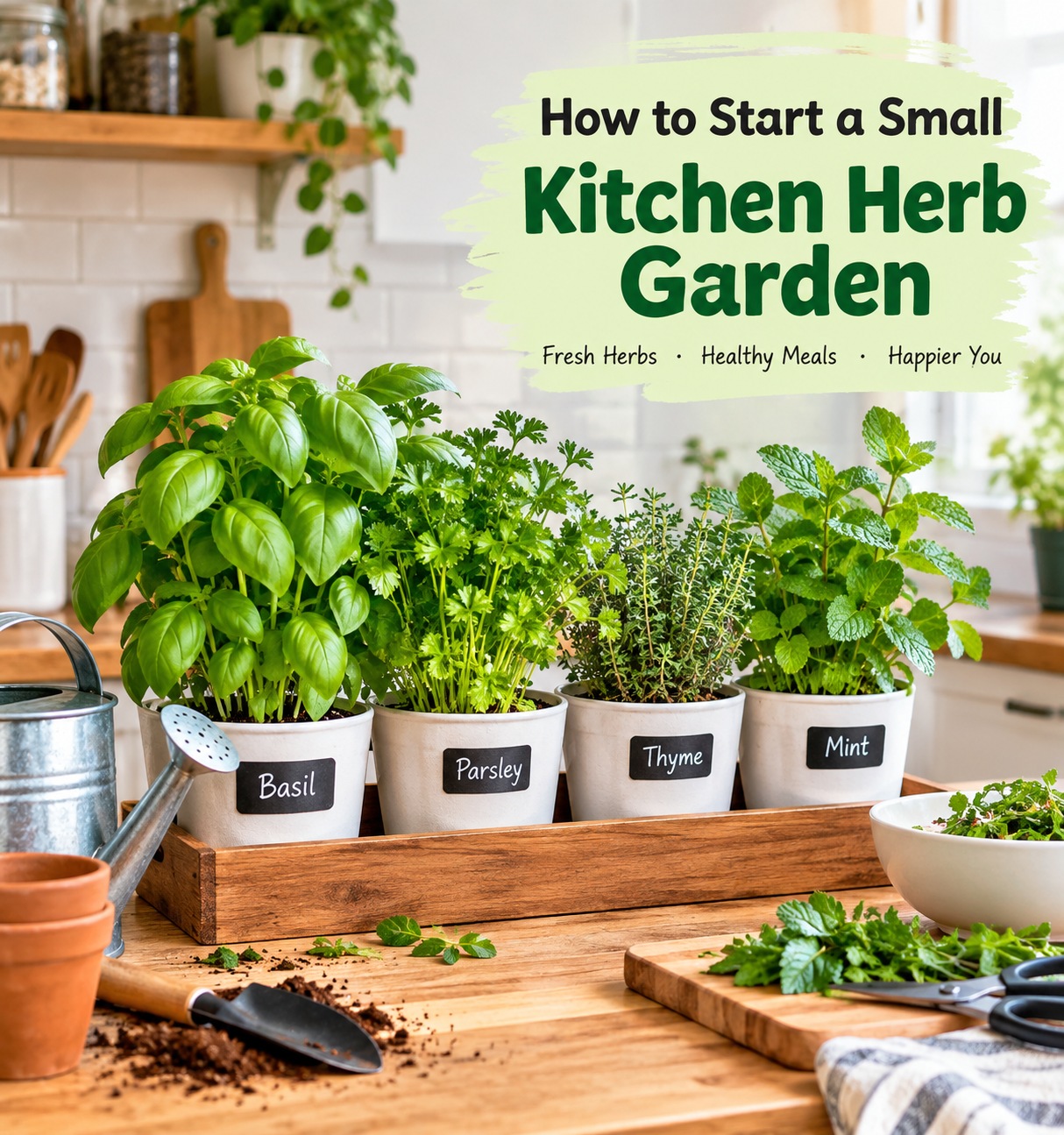
Starting a small kitchen herb garden is one of the easiest ways to bring fresh flavor and a little greenery into your home. I personally think you do not need a large garden, expensive equipment, or years of gardening experience to grow useful herbs. Even a small kitchen windowsill, countertop, balcony corner, or sunny shelf can become a productive herb garden with the right setup.
Fresh herbs can make simple meals taste much better. Instead of buying a whole package of herbs and using only a small amount, you can simply pick what you need when cooking. Growing herbs at home can also be relaxing and enjoyable. Once you see new leaves growing, gardening starts to feel like a rewarding daily habit.
In this guide, I will explain how to start a small kitchen herb garden, which herbs are easiest for beginners, what containers and soil to use, how much sunlight herbs need, and how to keep your plants healthy.
Why Start a Kitchen Herb Garden
There are many reasons to grow herbs at home. The biggest advantage for me is convenience. When I am preparing food, I can simply walk over to my herb plants and cut a few fresh leaves. This saves time and helps reduce food waste.
A kitchen herb garden can also make your cooking more enjoyable. Fresh basil works beautifully in pasta and sandwiches, while fresh mint can add a refreshing flavor to drinks and salads. Parsley, coriander, thyme, rosemary, and chives can also be useful for everyday meals.
Another benefit is that herbs do not usually require a lot of space. Many herbs grow well in small pots, which makes them suitable for apartments and small homes.
Step 1: Choose the Right Location
The first thing I recommend is choosing a suitable location. Most kitchen herbs need plenty of natural light to grow properly. A sunny windowsill is often one of the best places for a small indoor herb garden.
Try to choose a location that receives several hours of sunlight each day. A south facing or west facing window can often provide good light, although the amount of sunlight depends on your home and climate.
If your kitchen does not receive enough natural light, you can consider using a simple indoor grow light. However, I would start with natural sunlight if it is available because it keeps the setup simple and inexpensive.
Avoid placing herbs directly beside a very hot stove or oven. Excessive heat can dry the soil quickly and may damage delicate leaves.
Step 2: Pick Easy Herbs for Beginners
When starting a small kitchen herb garden, I recommend choosing herbs that are easy to grow and that you actually use in cooking.
Basil is one of my favorite choices because it grows quickly and produces plenty of fresh leaves. It is especially useful for pasta, pizza, salads, and sauces.
Mint is another beginner friendly herb. It grows quickly and can be used in tea, lemonade, desserts, and salads. Mint can spread aggressively, so I prefer keeping it in its own container.
Parsley is also useful because it works well with many different meals. You can use it in soups, rice dishes, salads, and sauces.
Chives are another good option for small spaces. They do not need a huge container and can add a mild onion flavor to many dishes.
Thyme and rosemary are excellent choices if you enjoy cooking savory meals. They generally prefer plenty of sunlight and well draining soil.
Coriander is also popular, especially if you regularly cook foods that use fresh herbs. It can be grown in containers, although it may require more frequent replanting than some perennial herbs.
Step 3: Choose Suitable Containers
Choosing the right container is very important. You do not necessarily need expensive gardening pots. Simple containers can work well as long as they have proper drainage holes.
I prefer using individual pots for most herbs because it makes watering and maintenance easier. It also prevents fast growing herbs such as mint from taking over the space.
The size of the pot should match the herb. Very small pots can restrict root growth, while extremely large pots may hold too much moisture. A medium sized container is often suitable for many common kitchen herbs.
If you use decorative containers without drainage holes, place the actual plant pot inside them rather than planting directly into the decorative container. This helps prevent excess water from remaining around the roots.
Step 4: Use Good Quality Potting Soil
Good soil gives your herbs a strong foundation. For a small kitchen herb garden, I recommend using a quality potting mix designed for containers.
Avoid using heavy garden soil by itself in indoor pots. It can become compacted and may not provide the drainage that container grown herbs need.
A good potting mix should hold enough moisture for the plant while allowing excess water to drain away. Herbs generally do not like sitting in constantly wet soil.
Before planting, fill the container with soil and leave a little space near the top. This makes watering easier and prevents soil from spilling over the sides.
Step 5: Plant Your Herbs
You can start your kitchen herb garden from seeds or young plants. For beginners, I often recommend young plants because they provide faster results and are easier to manage.
If you prefer growing from seeds, follow the instructions on the seed packet. Plant the seeds at the recommended depth and keep the soil lightly moist.
Do not overcrowd several herbs in one small container. While it may look attractive at first, crowded plants can compete for sunlight, water, nutrients, and root space.
Give each plant enough room to grow naturally. Your garden does not need to look full immediately. Healthy growth is more important than having many plants at the beginning.
Step 6: Learn How to Water Herbs
Watering is one of the most important parts of growing herbs indoors. A common mistake is watering plants too frequently.
Instead of watering according to a strict schedule, I recommend checking the soil first. Push your finger gently into the top layer of soil. If it feels dry, the plant may need water.
When watering, add enough water to moisten the soil thoroughly and allow excess water to drain from the bottom. Do not leave the pot sitting in a tray full of water for long periods.
Different herbs have slightly different moisture preferences. Basil generally enjoys consistent moisture, while herbs such as rosemary and thyme prefer soil that dries somewhat between watering.
Step 7: Give Herbs Enough Light
Light is essential for healthy herb growth. If your herbs receive insufficient light, they may become tall, weak, and pale.
Place your pots close to a bright window while avoiding locations where leaves become damaged by extreme heat.
Rotate the pots occasionally so different sides of the plant receive light. This can encourage more balanced growth.
If natural light is limited, an indoor grow light can help. Follow the instructions that come with the light and avoid placing it extremely close to the leaves.
Step 8: Prune and Harvest Regularly
One thing I enjoy about growing herbs is that harvesting can actually encourage useful growth. Instead of allowing the plant to become too tall, regularly remove some healthy leaves or stems when needed.
With basil, for example, I like to pinch the growing tips above a pair of leaves. This can encourage the plant to produce more branches.
Do not remove most of the leaves at one time. The plant still needs its leaves to produce energy and continue growing.
Harvest herbs when you need them for cooking. Freshly picked herbs usually have a wonderful aroma and flavor.
Step 9: Watch for Common Problems
Indoor herbs can still experience problems. Yellow leaves, slow growth, wilting, or mold can sometimes indicate watering or lighting issues.
Overwatering is one of the most common problems. If the soil stays wet for a long time, roots may become unhealthy. Make sure your pots have drainage holes and avoid watering automatically when the soil is still moist.
Pests can also appear. Check the leaves regularly for tiny insects or unusual spots. If you notice a problem early, it is usually easier to manage.
Good air circulation around the plants can also help. Avoid placing too many pots together in a crowded area.
Step 10: Create a Simple Herb Care Routine
You do not need to spend hours caring for your kitchen herb garden. I find that a few minutes of attention every day or two is usually enough to notice what the plants need.
Check the soil, look at the leaves, remove damaged growth, and rotate pots when necessary. Harvest herbs when you cook and keep the growing area clean.
I also recommend keeping a small pair of clean gardening scissors nearby. This makes harvesting quick and convenient.
Best Herbs for a Small Kitchen Garden
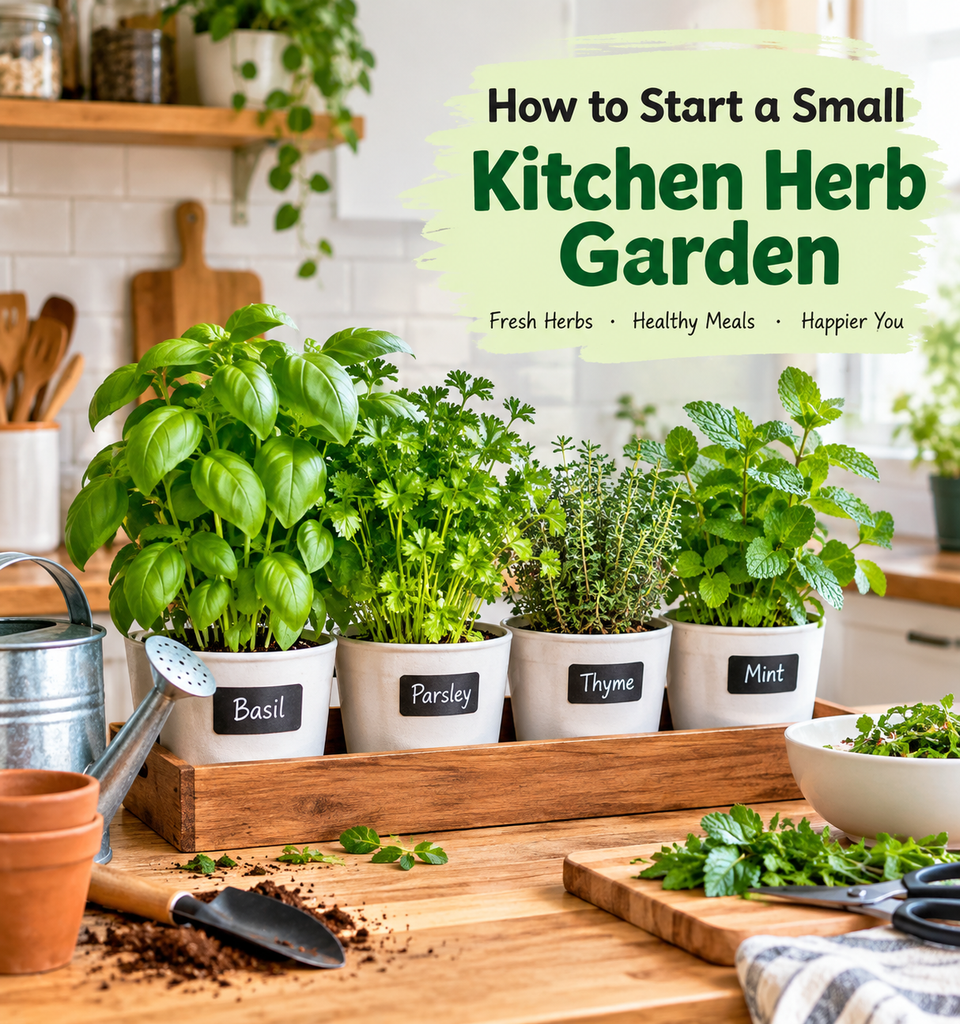
If you have very limited space, start with three or four herbs instead of trying to grow everything at once.
Basil is excellent for pasta, pizza, salads, and sauces.
Mint is useful for tea, drinks, desserts, and salads.
Parsley works well in soups, rice dishes, sauces, and salads.
Chives provide a mild onion flavor and are useful as a topping for many meals.
Thyme is excellent for roasted vegetables, soups, and savory dishes.
Rosemary is particularly useful for potatoes, vegetables, and roasted foods.
Starting small allows you to learn how each plant behaves before adding more herbs.
Final Thoughts
Starting a small kitchen herb garden does not have to be complicated. In my experience, the most important things are choosing the right herbs, giving them enough sunlight, using containers with drainage, and avoiding overwatering.
You can begin with just two or three pots and expand your garden as you become more comfortable. The best part is that your herbs are not only decorative plants. They can become a useful part of your daily cooking routine.
Whether you live in a small apartment or a larger home, a kitchen herb garden can provide fresh ingredients within easy reach. Once you experience the convenience of picking fresh basil, mint, parsley, or chives whenever you need them, you may find yourself wanting to grow even more herbs.
With a little patience and regular care, even a very small space can become a productive and enjoyable kitchen herb garden.
Leave a Reply