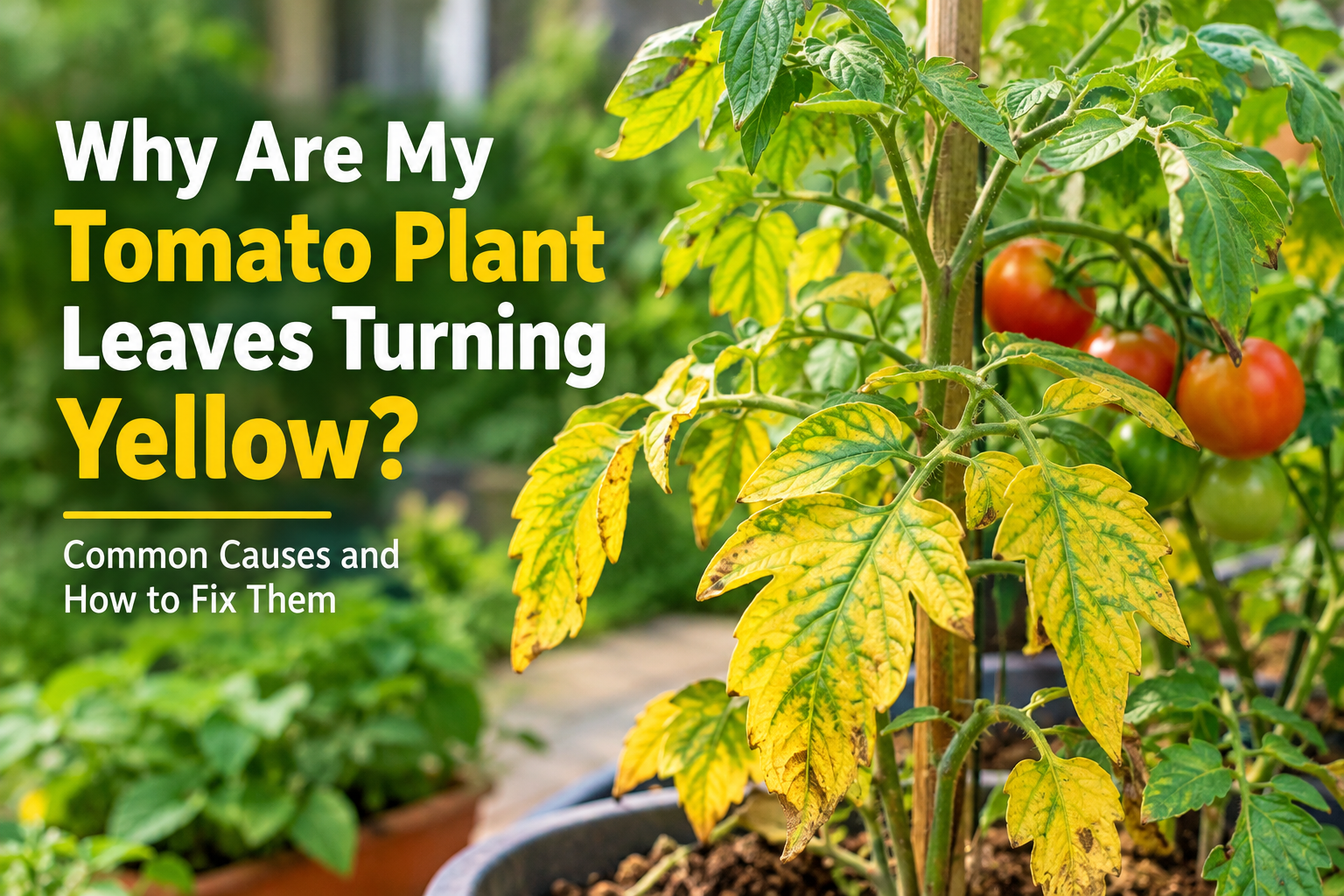
Growing tomatoes at home can be one of the most enjoyable parts of having a garden. I personally like watching tomato plants grow from small seedlings into healthy plants covered with green leaves and fresh tomatoes. However, one problem that can quickly become worrying is when tomato plant leaves start turning yellow.
If you are asking, “Why are my tomato plant leaves turning yellow?” you are not alone. Yellow leaves on tomato plants are very common, and the cause can be something simple such as too much water, poor soil, or a lack of nutrients. In some cases, yellowing leaves can also be a sign of pests or plant disease.
The good news is that yellow tomato leaves do not always mean your plant is dying. The important thing is to look at where the yellowing is happening and check the growing conditions around the plant. In this article, I will explain the most common reasons tomato plant leaves turn yellow and what you can do to help the plant recover.
Too Much Water Can Cause Yellow Leaves
One of the first things I check when tomato leaves turn yellow is the amount of water the plant is receiving. Tomato plants need regular moisture, but they do not like sitting in constantly wet soil.
When the soil remains too wet for a long time, the roots may not receive enough oxygen. This can affect the plant’s ability to absorb nutrients and can eventually lead to yellow leaves.
Overwatering is especially common when tomatoes are grown in containers. If the pot does not have proper drainage holes, excess water can remain around the roots.
I recommend checking the soil before watering. Put your finger about an inch into the soil. If it still feels wet, I usually wait before watering again. When the soil feels slightly dry, it is generally a better time to water.
Not Enough Water Can Also Turn Leaves Yellow
Although overwatering is common, underwatering can also cause yellow tomato leaves. Tomato plants need consistent moisture, especially during hot weather and when they are producing fruit.
When a plant does not receive enough water, the leaves may become weak, dry, curled, or yellow. The soil may also pull away slightly from the sides of the container when it becomes extremely dry.
I prefer deep and consistent watering rather than giving the plant a very small amount of water every day. The goal is to provide enough moisture around the root zone without leaving the soil soaked.
During hot weather, container grown tomatoes may need more frequent watering because pots can dry out quickly.
Nutrient Deficiency
Another common reason for yellow leaves on tomato plants is a lack of nutrients. Tomatoes need several nutrients to grow healthy stems, leaves, flowers, and fruit.
Nitrogen deficiency is one possibility. Nitrogen helps plants produce healthy green growth. When nitrogen is low, older leaves may begin turning pale yellow while the newer growth remains greener.
Other nutrient problems can also cause yellowing between the veins of the leaves. This can happen when the plant is unable to access certain nutrients from the soil.
Instead of adding large amounts of fertilizer immediately, I recommend first checking the soil and using a balanced tomato fertilizer according to the instructions on the package. Too much fertilizer can create additional problems, so more fertilizer is not always better.
Poor Soil Drainage
Soil quality plays a major role in tomato plant health. Even if you water correctly, poor drainage can keep the roots too wet.
Heavy garden soil may hold too much water around tomato roots. This can create an environment where roots struggle to breathe and may become damaged.
For container tomatoes, I prefer using a good quality potting mix designed for vegetables. The container should also have drainage holes at the bottom.
If tomatoes are planted directly in the garden, adding organic matter such as compost can help improve soil structure. Healthy soil should hold moisture while still allowing excess water to drain away.
Lack of Sunlight
Tomato plants need plenty of sunlight to grow properly. If your tomato plant is growing in a location with too much shade, the leaves may become pale or yellow and the plant may produce fewer tomatoes.
Tomatoes generally perform best when they receive several hours of direct sunlight each day. I always try to place tomato plants in the brightest suitable location in my garden.
If your tomato plant is surrounded by taller plants, walls, or other objects that block sunlight, consider whether moving the container or improving the planting location is possible.
Good sunlight also helps the plant produce energy through photosynthesis, which supports healthy growth and fruit production.
Tomato Plant Diseases
Sometimes yellow tomato leaves are caused by a disease rather than watering or nutrition problems. Certain fungal and bacterial diseases can cause yellow patches, brown spots, wilting, or leaf drop.
Early blight, for example, can cause dark spots surrounded by yellow areas. Disease problems often begin on older leaves and can gradually move upward through the plant.
If you notice yellow leaves together with unusual spots, damaged stems, rapid wilting, or widespread leaf loss, take a closer look at the plant.
I also recommend removing badly affected leaves when appropriate and keeping fallen leaves away from the soil. Good air circulation around tomato plants can also help reduce conditions that encourage some diseases.
Pests Can Damage Tomato Leaves
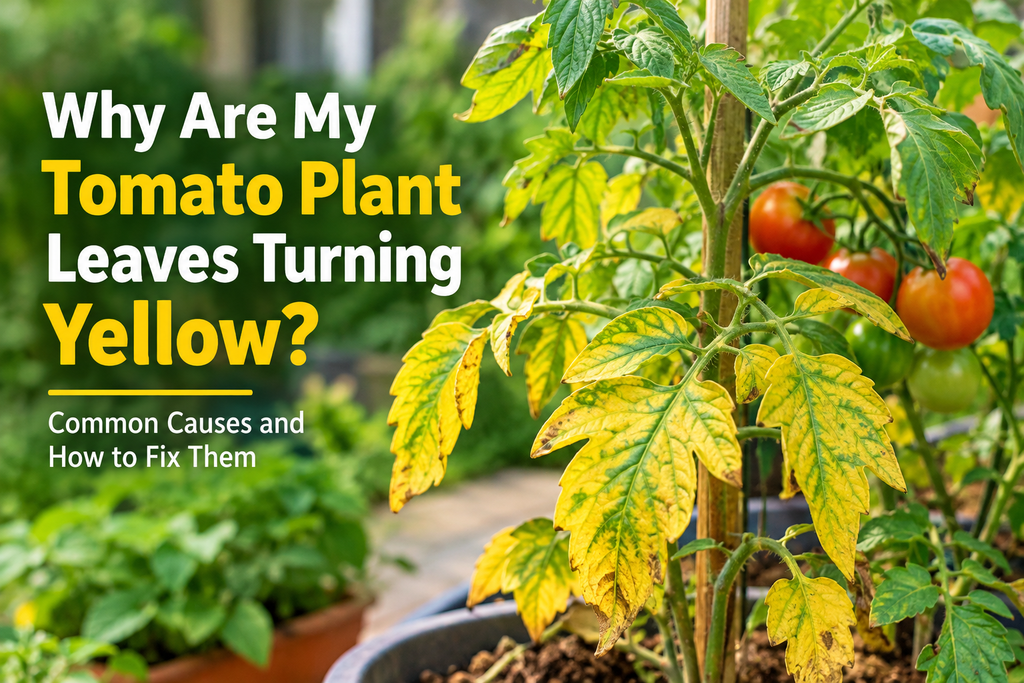
Small insects can also cause tomato plant leaves to turn yellow. Aphids, spider mites, whiteflies, and other pests may feed on plant tissue and weaken the leaves.
When I notice unusual yellowing, I like to inspect both the upper and lower sides of the leaves. Some pests are very small and can be difficult to notice at first.
Look for tiny insects, sticky residue, webbing, distorted leaves, or small pale spots.
A strong stream of water can sometimes help remove certain soft bodied insects. For larger pest problems, gardeners may consider an appropriate garden treatment and should always follow the product instructions carefully.
Natural Aging of Tomato Leaves
Not every yellow leaf is a serious problem. Tomato plants naturally produce older leaves that eventually become yellow and drop.
If only a few of the oldest leaves near the bottom of the plant are turning yellow while the rest of the plant looks healthy, the yellowing may simply be part of the plant’s normal growth cycle.
I usually focus more on the overall condition of the plant. If the new leaves are green, the stems look strong, the plant is flowering, and tomatoes are developing normally, a few older yellow leaves may not be a major concern.
Temperature Stress
Tomatoes are warm season plants, so extreme temperatures can affect their growth. Very cold conditions can slow the plant down, while intense heat can cause stress and increase water loss.
During periods of extreme heat, tomato plants may require more careful watering. Providing suitable mulch around plants can help the soil retain moisture and remain more stable.
At the same time, avoid creating conditions where the soil stays constantly wet.
How I Would Troubleshoot Yellow Tomato Leaves
When I see yellow leaves on a tomato plant, I prefer checking the problem step by step rather than immediately adding fertilizer or using a chemical treatment.
First, I check the soil moisture. If it is extremely wet, I look at drainage and reduce unnecessary watering. If it is very dry, I provide a thorough watering.
Next, I check the leaves carefully for insects, spots, discoloration, or other unusual symptoms.
Then I look at the plant’s sunlight. If it receives very little direct light, that may be contributing to weak growth.
After that, I consider the soil and nutrients. If the plant has been growing in the same soil for a long time, it may benefit from suitable organic matter or a balanced tomato fertilizer.
Finally, I look at the overall plant. A few yellow older leaves are very different from a plant where most leaves are rapidly turning yellow.
How to Prevent Yellow Leaves on Tomato Plants
Prevention is usually easier than trying to fix a stressed tomato plant later. I try to give tomato plants the basic conditions they need from the beginning.
Use well draining soil and choose containers with drainage holes. Give the plants enough sunlight and water them consistently without keeping the soil constantly saturated.
Adding compost can help improve soil quality, while a suitable tomato fertilizer can provide nutrients when needed.
Spacing is also important. Tomato plants need enough room for air to move around their leaves. Crowded plants can stay damp for longer periods and may have more disease problems.
I also like to remove unhealthy fallen leaves from around the base of the plant and regularly inspect the leaves for early signs of pests or disease.
Final Thoughts
So, why are your tomato plant leaves turning yellow? There can be several reasons, including overwatering, underwatering, nutrient deficiency, poor drainage, lack of sunlight, pests, disease, temperature stress, or simply natural aging.
The best approach is not to panic when you see one or two yellow leaves. Instead, inspect the plant carefully and look for other symptoms. Check the soil, watering routine, sunlight, leaves, and overall growth.
In my experience, paying attention to small changes can make tomato plant care much easier. When you understand what your plant is showing you, it becomes easier to make the right adjustment.
Healthy tomato plants need balanced care rather than constant attention. Give them suitable soil, enough sunlight, consistent moisture, proper nutrition, and good air circulation. With these simple habits, you can give your tomato plants a much better chance of producing healthy green growth and a good harvest of fresh tomatoes.
Leave a Reply