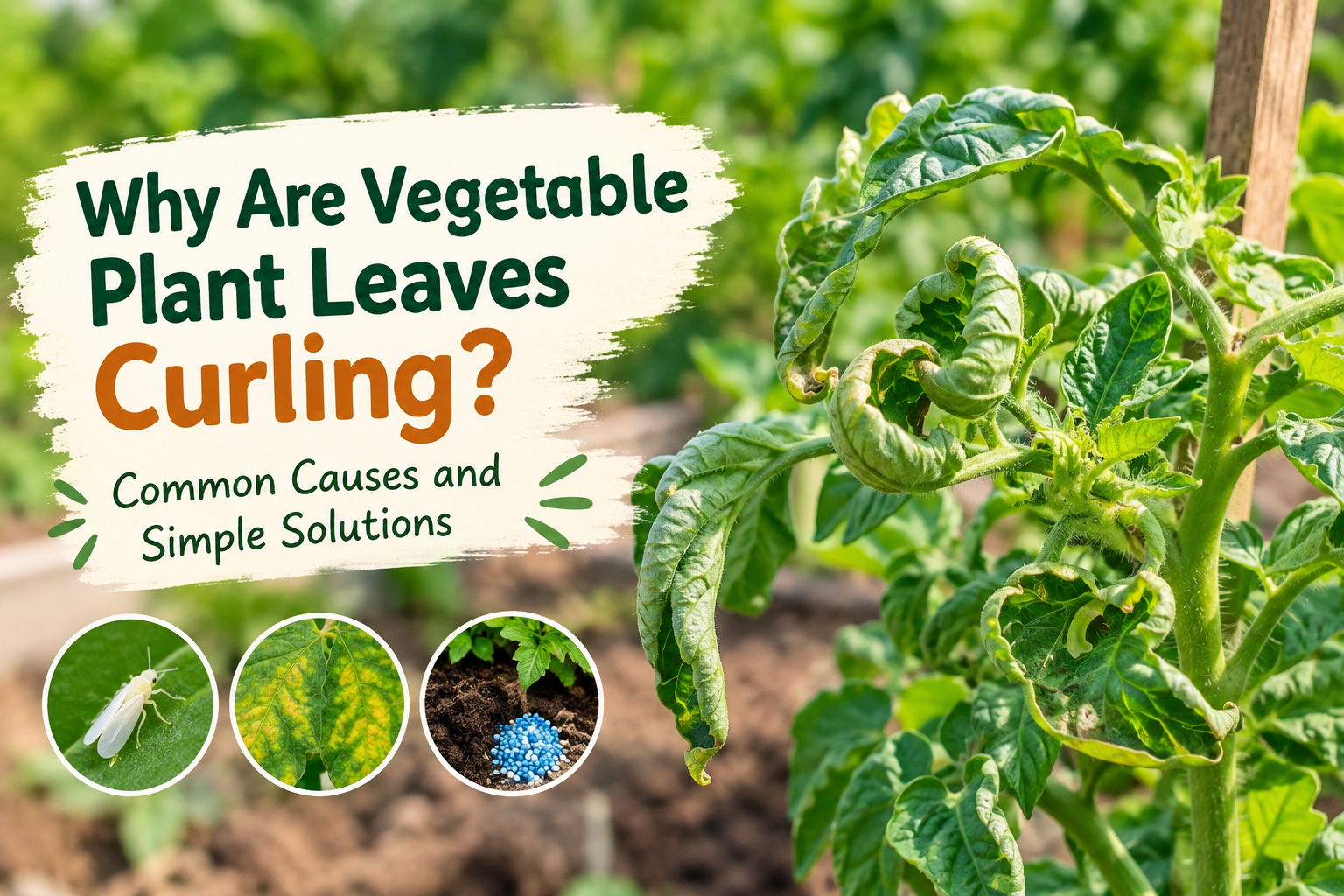
If you grow vegetables at home, you may have noticed that the leaves sometimes start curling, twisting, or folding inward. I have seen this problem in different vegetable plants, and it can be confusing when the plant looks healthy at first. Leaf curling is not always a sign of a serious disease. In many cases, it happens because the plant is reacting to changes in water, temperature, sunlight, soil conditions, or pests.
When I notice curled leaves on a vegetable plant, I do not immediately remove the leaves or use any chemical treatment. I first look closely at the plant and try to understand what is causing the problem. This simple approach can help protect the plant and prevent the problem from becoming worse.
In this article, I will explain the common reasons why vegetable plant leaves curl and what you can do to help your plants recover.
What Does Leaf Curling Mean?
Leaf curling happens when the edges or entire surface of a vegetable leaf bends upward, downward, inward, or sometimes outward. The exact appearance can provide useful clues about the cause.
Some leaves curl because they are losing water faster than they can absorb it. Other leaves curl because insects are feeding on them. Temperature stress, poor watering habits, nutrient problems, and plant diseases can also cause curling.
The first thing I recommend is checking the entire plant instead of focusing only on the curled leaves. Look at the soil, stems, new growth, underside of leaves, and overall color of the plant. These details can help you identify the real problem.
Too Much Water Can Cause Curling
One common reason vegetable plant leaves curl is overwatering. Many beginner gardeners believe that giving plants plenty of water will always help them grow faster. In my experience, this can create problems.
When soil remains wet for a long time, the roots may not receive enough oxygen. Damaged or stressed roots cannot absorb water and nutrients properly. As a result, the leaves may curl, become soft, turn yellow, or begin to fall.
Tomato plants are particularly sensitive to inconsistent watering. If the soil stays constantly wet, the plant may show signs of stress even though there appears to be plenty of water.
To avoid this problem, I check the soil before watering. If the top layer feels reasonably dry, I water the plant deeply. If the soil is still wet, I usually wait rather than adding more water.
Good drainage is also important. Containers should have drainage holes, and garden soil should not remain waterlogged after watering or rainfall.
Not Enough Water Can Curl Leaves
Underwatering can cause a similar problem. When a vegetable plant does not receive enough water, the leaves may curl inward to reduce moisture loss.
This often happens during hot weather. Strong sunlight and high temperatures increase water loss through the leaves. If the roots cannot replace that moisture quickly enough, the plant can become stressed.
I usually notice this problem when leaves look curled, soft, or slightly wilted, while the soil feels dry several inches below the surface.
The solution is to water the plant deeply and consistently. Instead of giving a very small amount of water every day, it is often better to provide enough water to reach the root zone while allowing the soil to drain properly.
Adding organic mulch around the plant can also help maintain soil moisture and reduce evaporation.
Heat and Strong Sunlight
High temperatures are another common cause of curled vegetable leaves. During extremely hot days, plants lose water quickly through their leaves. Curling can be a natural response that helps reduce moisture loss.
Tomatoes, peppers, cucumbers, beans, and other vegetables can experience heat stress when temperatures become very high.
If the leaves curl mainly during the hottest part of the day but look better in the evening, heat stress may be responsible.
I prefer to protect young plants from extreme heat when possible. Providing some afternoon shade, especially during unusually hot weather, can help. Mulching the soil can also keep the root area cooler.
However, I would not completely block sunlight from vegetables that require full sun. Most fruit producing vegetable plants still need sufficient sunlight for healthy growth.
Cold Weather Can Affect Leaves
Cold temperatures can also cause vegetable leaves to curl. Plants that prefer warm weather can become stressed when temperatures suddenly drop.
Young tomato and pepper plants are particularly vulnerable to cold conditions. Their leaves may curl, become darker, or develop an unusual appearance.
If leaf curling starts after a cold night, temperature stress could be the reason. In this situation, improving the growing environment is more useful than immediately adding fertilizer.
When growing warm season vegetables, I try to plant them after the danger of very cold weather has passed. Young plants can also benefit from temporary protection during unexpected cold conditions.
Insects Can Cause Curled Leaves
Small insects are another important cause of curling leaves. Aphids, whiteflies, thrips, and other plant pests can feed on young leaves and cause them to curl or become distorted.
Aphids are especially easy to miss because they are very small. They often gather underneath leaves or around soft new growth.
When I see unusual curling, I always check the underside of the leaves. I also inspect the newest leaves because many pests prefer fresh growth.
Sticky or shiny areas on leaves can sometimes indicate insect activity. Ants around plants may also be worth investigating because they can sometimes be associated with aphid populations.
For a small infestation, gently washing the plant with water can remove many insects. Keeping the garden clean and regularly checking plants can also help prevent pest populations from becoming severe.
Nutrient Problems
Vegetable plants need several nutrients for healthy leaf development. A deficiency can sometimes cause leaves to curl, discolor, or develop unusual patterns.
For example, problems with nitrogen, potassium, calcium, magnesium, or other nutrients may affect plant growth. However, I do not recommend adding fertilizer simply because leaves are curling.
Overfertilizing can create additional problems. Too much fertilizer can damage roots and cause leaf edges to burn.
Before adding nutrients, I look at the whole plant and consider the soil condition, watering routine, plant age, and recent weather. A soil test can also provide useful information when nutrient problems continue.
Balanced feeding is usually better than applying large amounts of a single nutrient without knowing what the plant actually needs.
Plant Diseases Can Cause Curling
Some vegetable diseases can cause leaves to curl and become distorted. Viral diseases are one example, and they can sometimes cause unusual leaf shapes, discoloration, and reduced plant growth.
Disease problems are more concerning when curling appears together with other symptoms such as yellow patterns, spots, stunted growth, or unusual new leaves.
If only one plant is affected while nearby plants look completely healthy, I monitor it closely. If the plant continues to decline and disease appears likely, removing the affected plant may help reduce the chance of spreading problems to other plants.
Avoid putting clearly diseased plant material into a home compost pile unless you know that your composting method can safely destroy the disease.
Herbicide Exposure
Sometimes vegetable leaves curl because they have been exposed to herbicides. This can happen when weed control products drift from another area or when garden tools or containers have been contaminated.
Herbicide injury can cause strange twisting, curling, or distorted new growth. If several plants suddenly develop similar symptoms after weed control work nearby, chemical exposure may be worth considering.
I prefer to keep weed control products away from vegetable growing areas whenever possible. Preventing exposure is much easier than trying to restore a severely damaged plant.
Natural Leaf Curl in Some Plants
It is also important to remember that not every curled leaf means something is wrong. Some vegetable varieties naturally have slightly curled or unusual leaves.
Environmental conditions can also temporarily change the shape of leaves without causing permanent damage. If the plant is growing well, producing healthy new leaves, and showing no other warning signs, there may be no serious problem.
This is why I always look at the overall health of the plant rather than judging it by one or two leaves.
How to Prevent Vegetable Leaves From Curling
The best way to prevent leaf curling is to maintain consistent plant care.
I start with healthy soil and make sure plants have enough space for air circulation. I water according to soil moisture rather than following a fixed schedule. During hot weather, I check plants more frequently because their water needs can change.
I also inspect plants regularly for insects. Spending a few minutes checking the leaves each week can help identify pest problems before they become serious.
Good sunlight is important too, but plants should be protected from extreme environmental conditions when necessary. Mulching around the root zone can help maintain moisture and reduce temperature changes in the soil.
Most importantly, I try not to make several changes at once. If I suspect a watering problem, I correct the watering routine and observe the plant. This makes it easier to understand what is actually helping.
When Should You Be Concerned?
A few curled leaves are not always a reason to panic. However, you should pay closer attention when the curling spreads quickly or appears together with other symptoms.
Watch for yellowing, brown spots, sticky leaves, insect activity, weak stems, poor growth, or sudden changes in new leaves.
If the plant stops growing or begins to decline rapidly, the problem may require more careful investigation. Identifying the cause early gives the plant a better chance of recovery.
Final Thoughts
Vegetable plant leaves can curl for many different reasons, including overwatering, underwatering, heat stress, cold temperatures, insects, nutrient problems, diseases, and chemical exposure. The most important thing is not to assume that every curled leaf has the same cause.
When I see curling leaves in my garden, I first check the soil, watering routine, weather, sunlight, and leaves for insects. I then look at the newest growth and the overall condition of the plant. This simple process often gives me a much better idea of what the plant needs.
Healthy vegetable plants need consistent care rather than constant attention. With proper watering, suitable sunlight, healthy soil, good drainage, and regular inspection, many causes of leaf curling can be prevented or corrected.
If you notice curled leaves on your vegetables, take a little time to observe the plant before taking action. Understanding the cause is usually the first and most important step toward bringing the plant back to healthy growth.
Leave a Reply