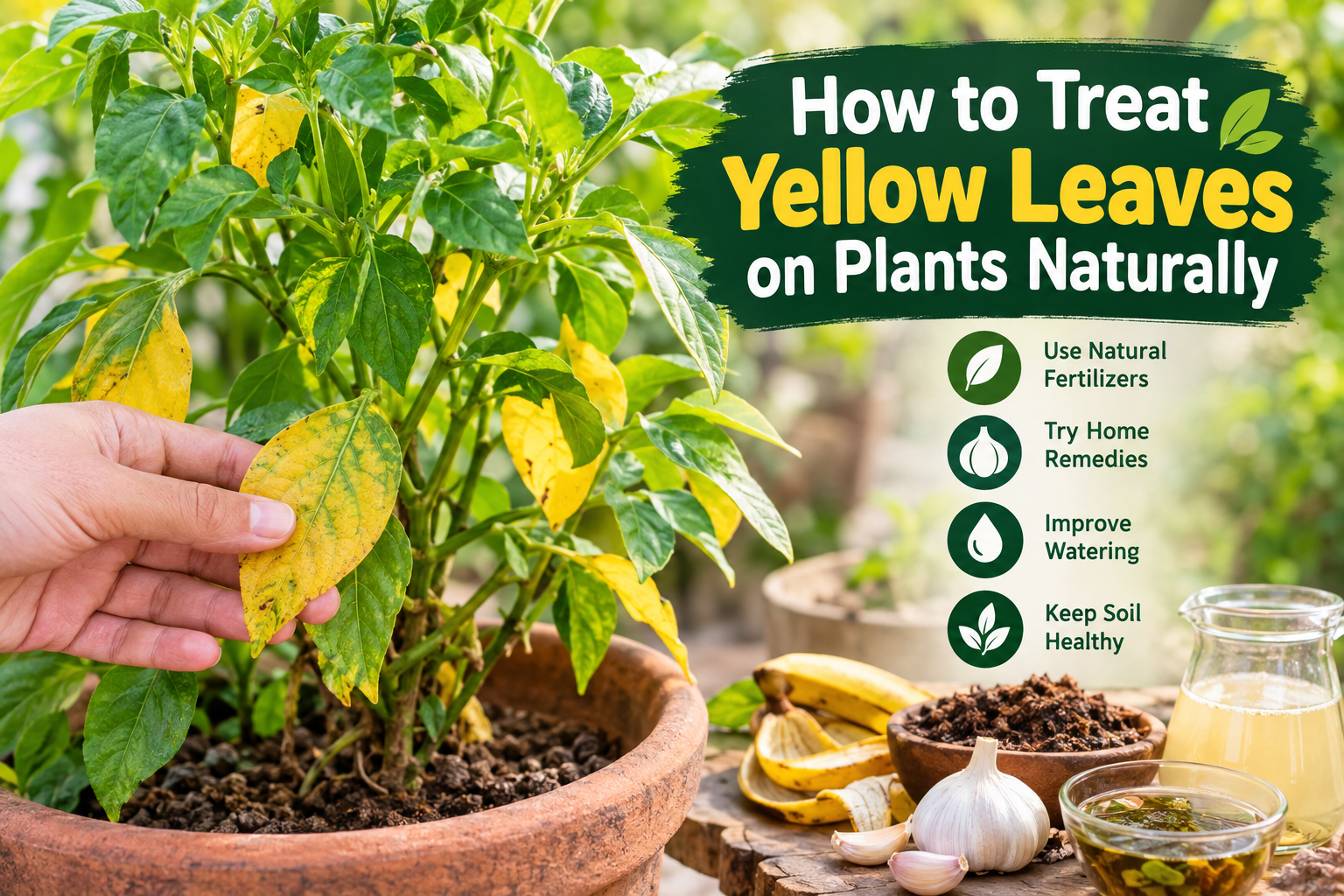
Yellow leaves are one of the most common problems I notice when caring for plants. Even when a plant looks healthy overall, a few yellow leaves can make you wonder what went wrong. In my experience, yellow leaves are usually a sign that the plant is under some kind of stress. The good thing is that many common causes can be corrected naturally without using harsh chemicals.
If you are wondering how to treat yellow leaves on plants naturally, the first step is to understand why the leaves are turning yellow. Problems such as overwatering, poor drainage, lack of sunlight, nutrient deficiencies, pests, and natural aging can all cause yellow leaves. Once you identify the cause, treating the plant becomes much easier.
Check How Often You Water the Plant
One of the first things I check when I see yellow leaves is the soil. Overwatering is a very common reason plants develop yellow leaves. When plant roots remain in wet soil for too long, they may not receive enough oxygen. This can weaken the roots and eventually cause the leaves to turn yellow.
Instead of watering according to a strict schedule, I prefer checking the soil first. Put your finger about an inch into the soil. If it still feels moist, wait before watering again. If the soil feels dry, the plant may need water.
The right watering routine depends on the plant, pot size, weather, and growing conditions. Indoor plants often need less water than outdoor plants, especially during cooler periods.
Improve Drainage Naturally
Sometimes the problem is not simply how much water you give the plant. Poor drainage can also keep the roots wet for too long.
I always make sure my plant containers have drainage holes at the bottom. These holes allow extra water to escape instead of collecting around the roots.
If the soil is heavy and compacted, gently loosening the top layer can improve airflow. You can also repot the plant using good quality potting soil that drains well.
Avoid placing a small plant in a very large container just because you want it to grow faster. A large amount of unused wet soil can stay damp for a long time and increase the risk of root problems.
Give the Plant Enough Natural Light
Light is another important factor when treating yellow leaves naturally. Plants need the right amount of light to produce energy and maintain healthy green foliage.
If a plant is kept in a dark corner, its leaves may gradually become pale or yellow. I usually move plants closer to a suitable window when they are not receiving enough natural light.
However, more light is not always better. Some plants prefer bright indirect light, while others can tolerate several hours of direct sunlight. Sudden exposure to strong sunlight can also damage sensitive leaves.
Try to learn the light requirements of the specific plant you are growing. A good balance of natural light can make a noticeable difference in plant health.
Check the Soil for Nutrient Problems
Plants need nutrients to produce healthy leaves. If the soil has been used for a long time without replenishment, certain nutrients may become limited.
A lack of nitrogen can cause older leaves to become pale or yellow. Other nutrient problems can also affect leaf color and growth.
One natural option I like is adding mature compost to the soil. Compost can improve soil structure while providing a gentle source of nutrients. A small amount mixed into the soil can be useful for many garden plants.
You should avoid adding too much fertilizer or compost at once. More nutrients do not automatically mean healthier plants. Excess fertilizer can damage roots and create additional problems.
Use Homemade Compost Carefully
Compost is one of my favorite natural ways to support plant health. Well finished compost contains organic matter that can improve the condition of the soil.
You can make compost from suitable kitchen and garden materials such as vegetable scraps, dry leaves, grass clippings, and other compostable organic material.
The important thing is to use finished compost rather than fresh kitchen waste directly around plant roots. Properly decomposed compost has a dark, crumbly texture and an earthy smell.
For potted plants, I prefer using a small amount because containers have limited space. For garden beds, compost can be mixed into the soil before planting or added around established plants.
Remove Severely Yellow Leaves
If a leaf is completely yellow and damaged, removing it can help keep the plant looking healthier. I usually use clean scissors or pruning shears when removing damaged leaves.
Do not remove every slightly yellow leaf immediately. First try to determine the reason behind the color change. A few older yellow leaves can be completely normal, especially when the plant is producing new growth.
When pruning, avoid damaging healthy stems and leaves. Clean tools also reduce the chance of spreading problems between plants.
Look for Pests
Small insects can sometimes cause yellow leaves. Aphids, spider mites, whiteflies, and other pests may feed on plant tissue and weaken the plant.
I recommend checking both sides of the leaves because many pests hide underneath them. Look for tiny insects, sticky residue, webbing, spots, or distorted new growth.
For a mild pest problem, gently washing the leaves with water can help remove some insects. A strong stream of water should be avoided on delicate plants because it may damage the leaves.
Neem based products are another natural option used by many gardeners, but they should always be used according to the product instructions and tested carefully on sensitive plants.
Avoid Sudden Environmental Changes
Plants can react badly to sudden changes. Moving an indoor plant from a protected room directly into strong outdoor sunlight can cause stress. Similarly, placing a plant near a cold window, heater, or air conditioner can affect its health.
I prefer making changes gradually. If a plant needs more sunlight, I move it closer to the brighter location over time.
Temperature and humidity can also influence plant health. Keeping plants in conditions suitable for their particular needs can prevent unnecessary stress.
Check the Roots if the Problem Continues
If yellow leaves continue despite proper watering and lighting, I would check the roots. This is especially important when the soil stays wet for a long time.
Healthy roots are usually firm and have a normal appearance for the plant. Roots that are soft, mushy, or have an unpleasant smell may indicate a serious moisture problem.
If the roots are damaged, carefully remove the plant from its container and inspect the root system. Remove badly damaged roots with clean scissors and place the plant into fresh, well draining soil if necessary.
This process should be done carefully because stressed plants need gentle handling.
Use Natural Mulch in Outdoor Gardens
For plants growing outdoors, natural mulch can help maintain more stable soil moisture. Materials such as dry leaves, straw, or suitable organic mulch can protect the soil surface from drying too quickly.
I like leaving some space around the main stem instead of piling mulch directly against it. Too much moisture around the stem can create other problems.
Mulch can also gradually add organic matter as it breaks down. It is a simple way to support soil health while reducing moisture fluctuations.
Be Careful With Homemade Remedies
There are many homemade plant remedies available online, but not all of them are suitable for every plant. I would avoid putting random kitchen ingredients directly onto leaves or soil without understanding how they affect the plant.
Things such as concentrated vinegar, excessive baking soda, or undiluted household ingredients can damage plants instead of helping them.
Natural does not always mean harmless. I believe the safest approach is to start with basic plant care such as proper watering, suitable light, good drainage, clean leaves, healthy soil, and regular observation.
Give the Plant Time to Recover
One mistake I often see is expecting yellow leaves to become green again immediately after correcting a problem. Unfortunately, plant recovery takes time.
A leaf that has already turned completely yellow may not return to its original color. Instead, look for signs of new healthy growth. New green leaves, stronger stems, and improved growth can indicate that the plant is recovering.
Once the cause has been corrected, consistent care is usually more helpful than making several changes at the same time.
How to Prevent Yellow Leaves in the Future
Prevention is easier when you understand what your plant needs. I recommend checking plants regularly rather than waiting until the leaves become severely damaged.
Feel the soil before watering. Observe how much sunlight the plant receives. Check leaves for pests. Make sure containers drain properly. Refresh old soil when necessary and provide nutrients through suitable organic matter.
It also helps to learn about each plant individually. A tomato plant, snake plant, basil plant, and peace lily can have very different watering and lighting requirements.
Final Thoughts
Learning how to treat yellow leaves on plants naturally does not have to be complicated. In most cases, the best solution begins with careful observation. Yellow leaves are often the plant’s way of showing that something in its growing environment needs attention.
From my experience, I would start by checking watering, drainage, sunlight, soil quality, and pests. These simple factors are responsible for many common plant problems. Natural solutions such as compost, better drainage, appropriate sunlight, gentle pruning, and improved watering habits can help plants become healthier over time.
Most importantly, do not panic when you see a yellow leaf. A few yellow leaves do not always mean that your plant is dying. Sometimes it is simply getting rid of old leaves as new growth develops.
With regular observation and consistent care, you can usually identify the cause early and give your plants a much better chance to recover naturally.
Leave a Reply