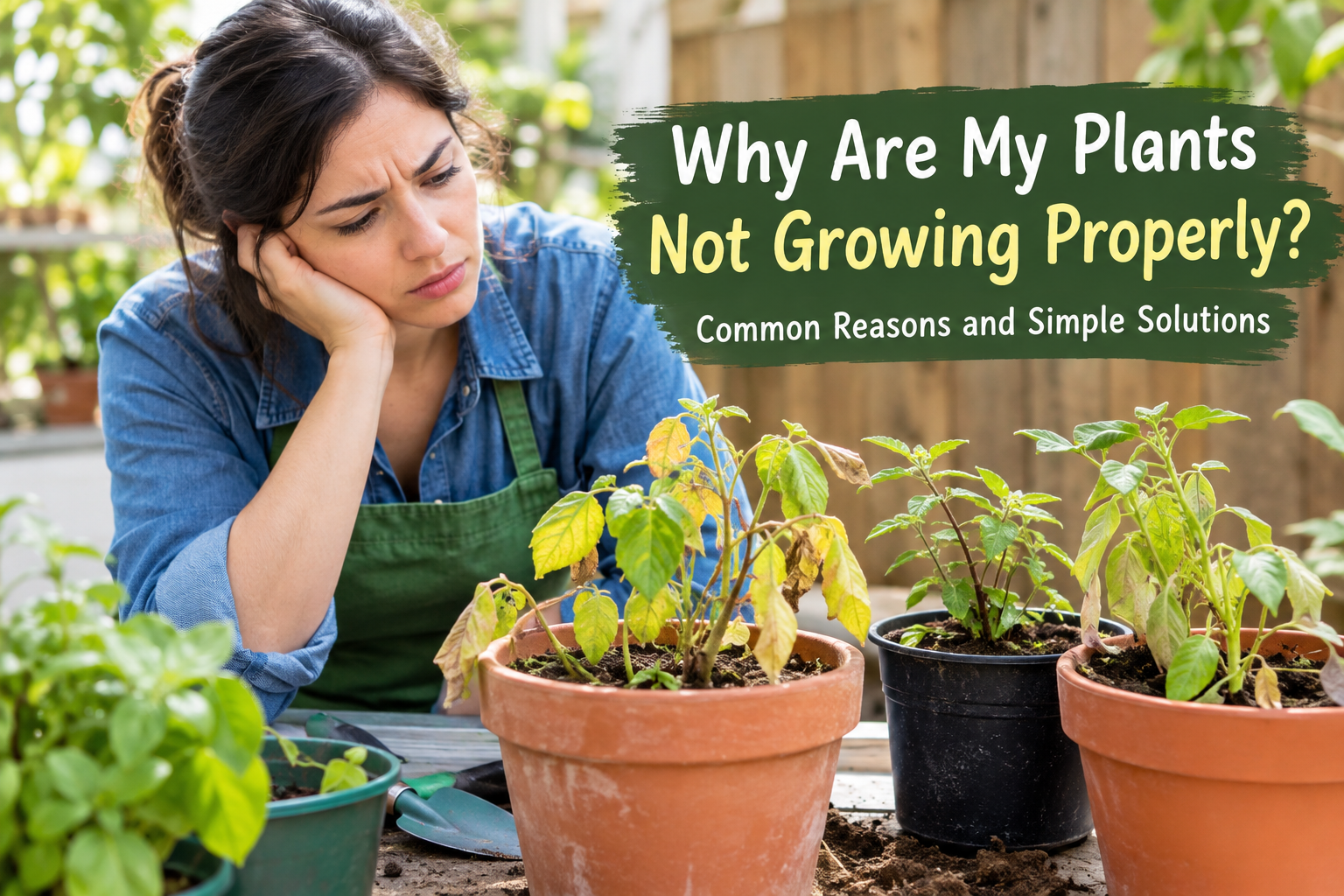
Growing plants at home can be a very rewarding experience, but sometimes plants simply stop growing the way we expect. You may water them regularly, place them near a window, and still notice that the leaves are small, new growth is slow, or the plant looks exactly the same for weeks. I have noticed that when plants are not growing properly, there is usually a simple reason behind it. Plants need the right combination of sunlight, water, nutrients, temperature, soil, and space to grow well.
If your plants are not growing properly, do not immediately assume that the plant is unhealthy or dying. In many cases, the plant is simply missing one important thing. Understanding the common causes can help you correct the problem and encourage healthy new growth.
Not Enough Sunlight
One of the most common reasons plants stop growing is insufficient sunlight. Plants need light to produce energy through photosynthesis. Without enough light, a plant may survive, but its growth can become very slow.
I always pay attention to where I place my plants. A room may look bright to us, but the amount of light available to a plant can be much lower than it appears. Plants kept in dark corners often produce smaller leaves and fewer new shoots.
Some plants need several hours of direct sunlight, while others prefer bright indirect light. Before moving your plant, check what type of light it naturally prefers.
If your plant is stretching toward a window, has long spaces between leaves, or produces pale new growth, lack of light could be the problem. Moving it gradually toward a brighter location may help.
Incorrect Watering
Watering seems simple, but it is one of the easiest parts of plant care to get wrong. Both too much water and too little water can cause poor plant growth.
When I water plants, I try not to follow a strict schedule. Instead, I check the soil first. The top layer of soil should give me an idea of whether the plant actually needs water.
Overwatering can leave the soil constantly wet. This reduces the oxygen available around the roots and can eventually lead to root problems. A plant with damaged roots cannot absorb water and nutrients properly.
Underwatering creates a different problem. When the soil becomes extremely dry, roots may struggle to absorb enough moisture. Leaves can become weak, dry, or wilted, and growth can slow considerably.
The best approach is to understand the watering needs of each plant rather than giving every plant the same amount of water.
Poor Soil Quality
Healthy roots need healthy soil. If the soil is compacted, extremely heavy, or lacking organic matter, plants may struggle to develop strong roots.
I have found that loose and well draining soil is especially important for container plants. Good soil allows water to move through it while still holding enough moisture for the roots.
Old potting soil can also become less useful over time. It may lose structure and become compacted. Adding suitable organic material or replacing poor quality soil can improve the growing environment.
However, avoid changing soil unnecessarily. If a plant is growing well, there may be no reason to disturb its roots.
Lack of Nutrients
Plants require nutrients for healthy leaves, roots, flowers, and new growth. If the soil does not contain enough nutrients, growth may become slow.
Important nutrients include nitrogen, phosphorus, and potassium, along with several micronutrients. Each plant has different nutritional requirements.
Nitrogen is particularly important for healthy leafy growth. A deficiency can sometimes cause older leaves to become pale while the plant produces very little new growth.
I prefer using fertilizer carefully rather than assuming that more fertilizer will make a plant grow faster. Too much fertilizer can damage roots and create additional problems.
A balanced fertilizer used according to the instructions can help when nutrient deficiency is actually responsible for poor growth.
The Pot May Be Too Small
Sometimes a plant stops growing because its roots have filled most of the available space. When roots become crowded, the plant may have difficulty accessing enough water and nutrients.
If you notice roots coming out of drainage holes, soil drying unusually quickly, or a plant becoming root bound, it may be time to consider a larger pot.
When repotting, I avoid choosing a container that is dramatically larger than the existing one. A slightly larger pot is usually easier to manage because excessive soil can retain too much moisture.
Make sure the new container has proper drainage holes so excess water can escape.
Temperature Problems
Temperature can also affect plant growth. Most common houseplants grow best when temperatures remain relatively stable.
Very cold conditions can slow plant processes, while excessive heat can cause stress and increase water loss. Sudden changes in temperature can also affect sensitive plants.
I try to keep indoor plants away from strong drafts, air conditioning vents, heaters, and other locations where temperatures change quickly.
If a plant has suddenly stopped growing after a major change in weather or room temperature, environmental stress may be responsible.
Low Humidity
Some plants naturally grow in humid environments and may struggle when indoor air is extremely dry. Low humidity can cause brown leaf edges, curling leaves, and slow growth.
This is especially common during dry weather or in rooms where heating or cooling systems are running frequently.
You can improve humidity by grouping plants together or using a suitable humidifier. However, increasing humidity is not always necessary for every plant.
I think it is better to understand the natural requirements of the plant before making major environmental changes.
Poor Drainage
A pot without proper drainage can create serious problems for plant roots. Water may remain trapped around the roots for too long, especially when the soil is heavy.
Good drainage allows excess water to escape. This helps maintain a healthier balance between moisture and oxygen around the roots.
Whenever I buy or use a container, I check for drainage holes. A decorative container without drainage can still be used as an outer cover, but the plant itself should ideally remain in a suitable container that allows water to drain.
Pests Can Slow Plant Growth
Small pests can also cause plants to stop growing properly. Aphids, spider mites, mealybugs, and other insects may feed on leaves or new growth.
Sometimes the signs are easy to notice. You may see tiny insects, sticky residue, damaged leaves, webbing, or distorted new growth.
I recommend checking the leaves regularly, especially the undersides where pests can hide.
If you discover a small pest problem early, it is generally easier to manage. Remove heavily damaged leaves when appropriate and use a plant safe
Leave a Reply