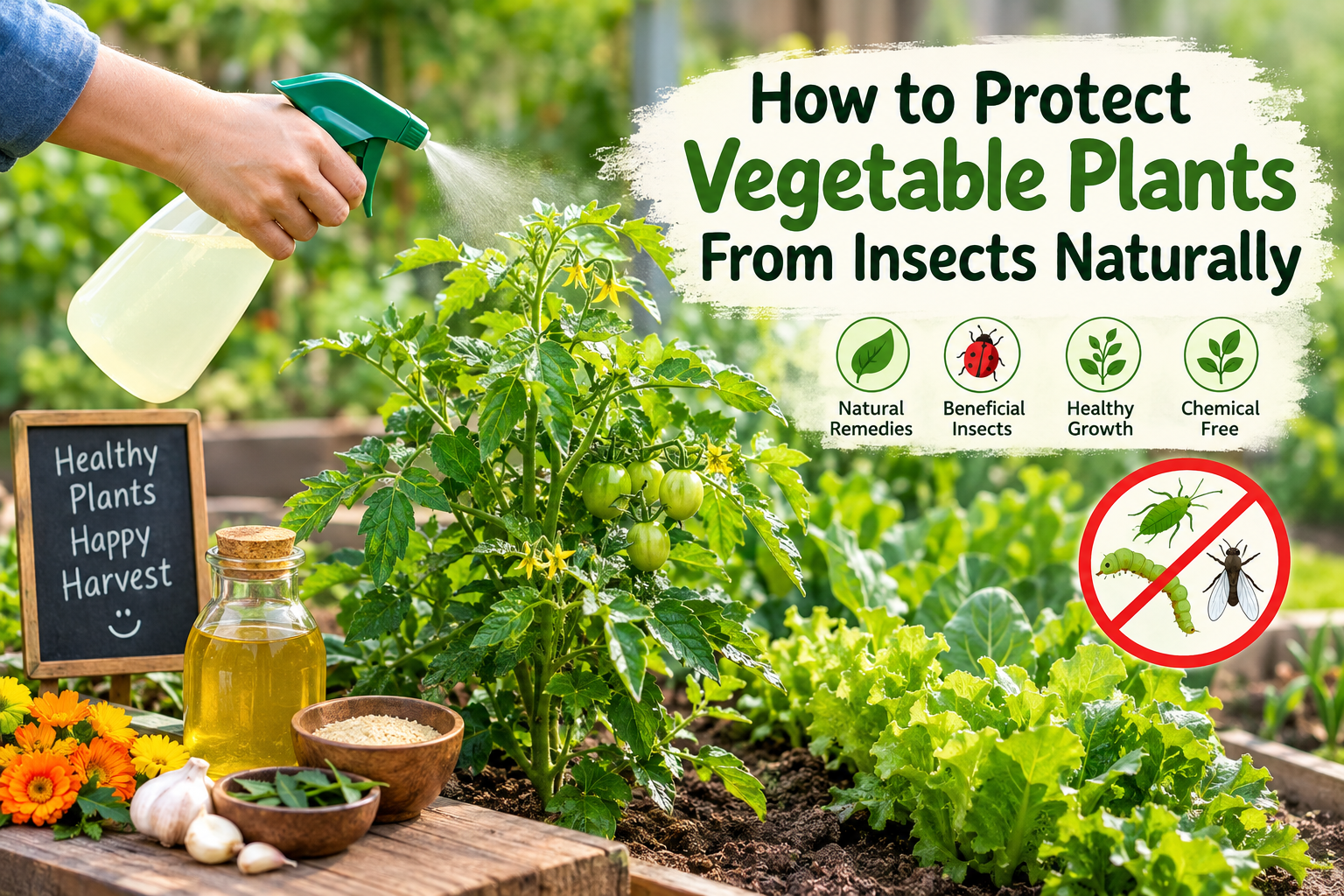
Growing vegetables at home can be a rewarding experience, but insects can quickly become a problem. One morning, your plants may look healthy and fresh, and a few days later, you may notice holes in the leaves, curled growth, sticky spots, or small insects hiding underneath the foliage. I have found that dealing with insects early is much easier than waiting until the plants are seriously damaged.
The good news is that you do not always need strong chemical pesticides to protect a vegetable garden. There are several natural pest control methods that can help reduce insect problems while keeping your garden healthier. In my experience, the best approach is to combine healthy gardening habits with simple natural solutions.
Inspect Your Vegetable Plants Regularly
The first step in natural insect control is regular inspection. I recommend checking vegetable plants at least a few times each week, especially during warm weather when insect activity can increase.
Look carefully at both sides of the leaves, new shoots, stems, and around the base of the plant. Aphids, caterpillars, whiteflies, spider mites, and other pests can be very small and easy to miss.
If you find only a few insects, remove them by hand instead of immediately treating the entire plant. For larger insects such as caterpillars, you can pick them off and move them away from the garden.
Regular inspection gives you a chance to deal with a small problem before it becomes a serious infestation.
Keep Plants Healthy
Healthy vegetable plants are generally better able to handle minor insect damage. Good soil, proper watering, enough sunlight, and suitable nutrition all contribute to strong plant growth.
I try not to overwater my vegetable plants because constantly wet soil can create other problems. At the same time, plants should not be left extremely dry for long periods.
Adding compost to the soil can improve its structure and provide organic matter. A healthy growing environment also supports beneficial organisms that contribute to a balanced garden.
Instead of focusing only on killing insects, I believe it is better to create conditions where plants can grow strongly and recover from small amounts of damage.
Use Water to Remove Small Insects
A simple stream of water can be surprisingly useful against some soft bodied insects. Aphids and other small pests often gather underneath leaves and around young stems.
Using a gentle spray of water can knock these insects from the plant. Make sure the water pressure is not strong enough to damage delicate leaves or stems.
This method may need to be repeated because some insects can return. However, it is inexpensive, simple, and does not leave chemical residues on your vegetables.
For plants that are especially delicate, test the water pressure on a small area first.
Try a Simple Soap Spray
Mild soap sprays are another commonly used natural pest control option. They can help manage certain soft bodied insects by affecting their outer surfaces.
When using soap, choose a product that is suitable for plants rather than using a strong household cleaning product. Mix it according to the product instructions and test the solution on a small part of the plant before treating the entire plant.
I think this testing step is important because different vegetables can react differently to sprays. Applying treatments during the cooler part of the day can also help reduce the chance of leaf damage.
Avoid spraying flowers heavily because you do not want to disturb useful pollinating insects.
Use Neem Oil Carefully
Neem oil is another popular option among gardeners who prefer natural pest management. It is commonly used against several garden pests and can be applied to plant foliage when used correctly.
Always follow the directions on the product label. Do not assume that using more neem oil will produce better results. Too much can damage plants.
I recommend testing a small section of the plant first and observing it before treating the entire vegetable plant. Avoid spraying during very hot conditions or when plants are under serious heat stress.
Natural products still need to be used responsibly. Natural does not automatically mean harmless to every insect or plant.
Make Garlic Based Garden Sprays
Garlic has a strong smell that many gardeners use as part of natural insect control. A homemade garlic spray can be prepared by crushing garlic and allowing it to soak in water before straining the mixture.
The resulting liquid can be sprayed lightly on plant leaves. I would always test homemade sprays on a small section first because concentrated mixtures may irritate or damage sensitive plants.
Garlic spray should be viewed as one part of an overall pest management plan rather than a guaranteed solution. Its effectiveness can vary depending on the type of insect and the condition of the garden.
Encourage Beneficial Insects
Not every insect in the garden is harmful. Some insects actually help protect vegetable plants by feeding on pests or supporting pollination.
Ladybugs, lacewings, praying mantises, and some other beneficial insects can play an important role in a healthy garden. Instead of trying to remove every insect, learn to identify which ones are helpful and which ones are causing damage.
Planting flowers near vegetables can also make your garden more attractive to beneficial insects and pollinators. Marigolds, alyssum, and other flowering plants can add beauty while supporting garden biodiversity.
In my view, attracting helpful insects is one of the most sustainable ways to approach natural pest control.
Use Garden Covers
Physical barriers can be very effective because they prevent insects from reaching the plants in the first place. Lightweight garden fabric or insect netting can protect vegetables from many flying pests.
This can be especially useful for young plants. Make sure the covering is installed properly so insects cannot easily enter from the sides.
Garden covers should still allow enough light and air to reach the plants. You should also check the plants regularly because pests may sometimes become trapped underneath the cover.
Keep the Garden Clean
Garden cleanliness can make a noticeable difference in insect control. Remove badly damaged leaves, fallen vegetables, and plant material that may provide shelter for pests.
Do not allow weeds to take over the vegetable bed because weeds can compete with vegetables and may provide hiding places for insects.
At the end of the growing season, remove unhealthy plant material and prepare the garden for the next crop. A clean growing area can reduce places where some pests may survive.
Use Mulch Properly
Organic mulch can help maintain soil moisture, reduce weeds, and improve the overall condition of the garden. Materials such as straw, dry leaves, and other suitable organic matter can be useful around vegetable plants.
However, avoid placing thick, wet mulch directly against plant stems. Excess moisture around stems can create other problems.
A properly maintained layer of mulch can support healthier soil while making the garden less attractive to some unwanted pests.
Rotate Your Vegetable Crops
Growing the same vegetable in exactly the same location every year can make it easier for certain pests and diseases to remain established.
Crop rotation means changing where you grow different types of vegetables from season to season. For example, you can avoid planting the same plant family in the same area repeatedly.
This method requires some planning, but it can help reduce recurring pest problems over time. I consider crop rotation especially useful for gardeners who notice the same insect or plant disease every growing season.
Remove Seriously Damaged Leaves
If a few leaves are heavily covered with insects or badly damaged, removing them can sometimes help slow the problem.
Use clean garden scissors and avoid removing too much healthy foliage. Leaves are important because they help plants produce energy through photosynthesis.
After removing infected or heavily infested material, place it away from the vegetable garden rather than leaving it beside healthy plants.
Avoid Overusing Natural Sprays
One mistake I often see in natural gardening is the idea that more treatment always means better protection. That is not necessarily true.
Even natural sprays can harm beneficial insects, damage sensitive plants, or disturb the natural balance of a garden when they are used too frequently.
Before applying anything, identify the pest if possible. Then decide whether the level of damage actually requires treatment.
Sometimes a few insects on a healthy plant are not a serious problem. The goal should be to keep pest numbers under control rather than eliminate every insect from the garden.
Give Plants Enough Space
Crowded vegetable plants can have poor air circulation, making it easier for certain pests and plant problems to develop.
Follow the recommended spacing for the vegetables you are growing. Good spacing allows sunlight and air to reach the leaves and also makes it easier for you to inspect the plants.
When plants are easier to inspect, you can discover insect problems earlier.
Final Thoughts
Learning how to protect vegetable plants from insects naturally does not require complicated equipment or expensive products. In my experience, the most effective approach starts with healthy plants, regular inspection, good garden hygiene, and simple physical barriers.
Natural options such as water sprays, mild plant safe soap solutions, neem oil, garlic based sprays, garden covers, and beneficial insects can all have a place in an integrated garden care routine. The key is to use each method carefully and understand that different insects require different approaches.
I also believe that a healthy garden does not need to be completely free of insects. Some insects are useful, and a small amount of insect activity does not always mean your vegetables are in danger.
By paying attention to your plants, identifying problems early, encouraging beneficial insects, and using natural methods responsibly, you can create a healthier vegetable garden and enjoy a better harvest without relying heavily on harsh chemical pesticides. The more time you spend observing your garden, the easier it becomes to understand what your plants need and how to protect them naturally.
Leave a Reply