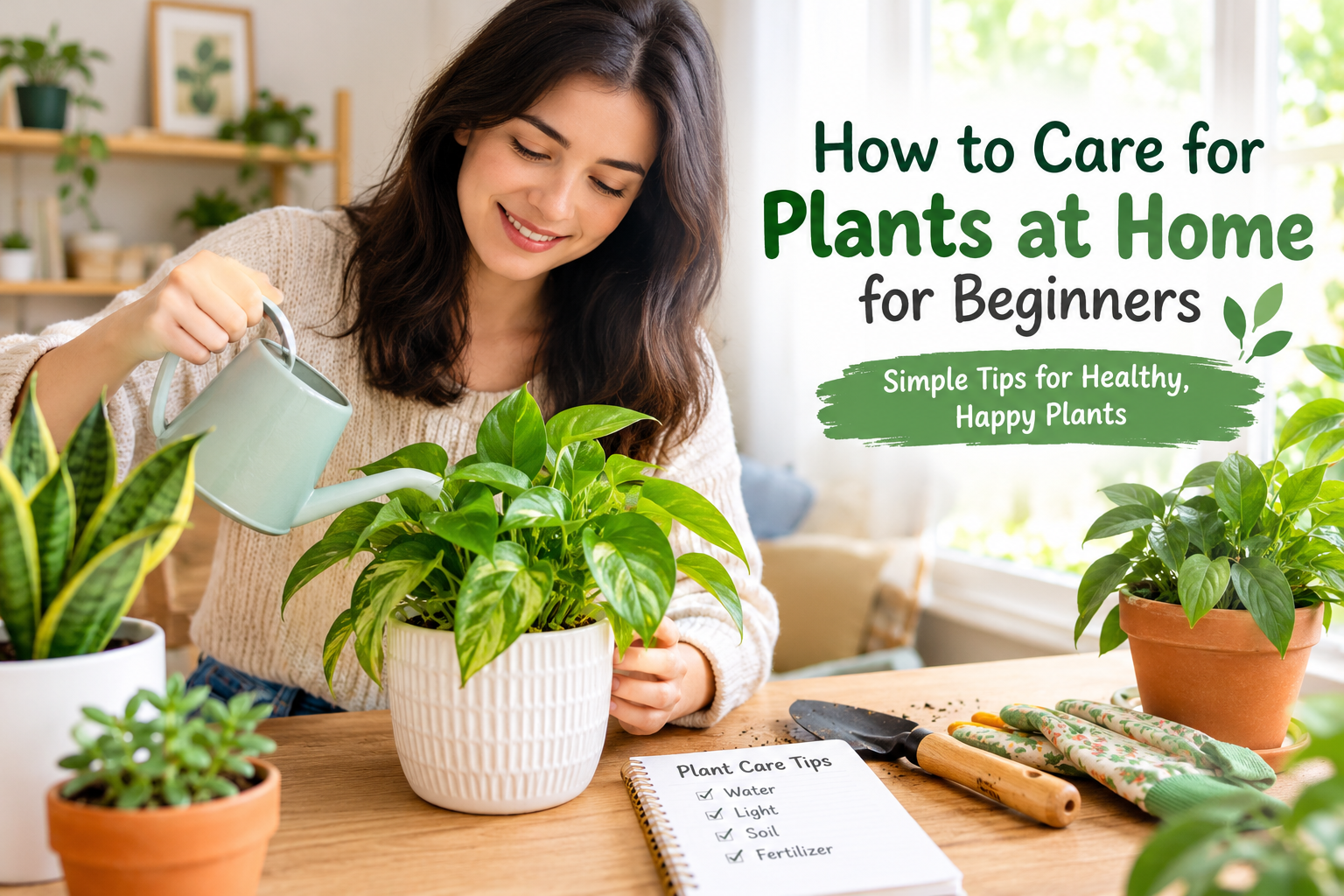
Taking care of plants at home can be one of the simplest and most enjoyable hobbies to start. When I first became interested in keeping plants, I thought plant care would require a lot of experience, special tools, and complicated routines. Over time, I learned that healthy plants mainly need the right amount of water, suitable light, good soil, enough space, and regular attention.
If you are a beginner, you do not need to become an expert before bringing plants into your home. The best way to learn how to care for plants at home is to start with a few easy plants and pay attention to how they respond to their environment.
In this guide, I will share the simple plant care tips that I believe every beginner should know. These methods can help you keep indoor plants healthy, attractive, and growing well.
Choose the Right Plants for Your Home
I believe choosing the right plant is the first important step in successful plant care. Many beginners make the mistake of choosing a plant because it looks beautiful without considering whether their home provides the conditions it needs.
Before buying a plant, I recommend checking how much sunlight it needs, how often it should be watered, how large it can become, and what type of temperature it prefers.
If you are new to gardening, start with plants that are generally easy to care for. Snake plants, pothos, spider plants, and some varieties of succulents can be suitable choices for beginners.
It is also important to consider the location where you want to keep the plant. A bright window, bedroom shelf, kitchen counter, or shaded corner can provide very different growing conditions.
Give Plants the Right Amount of Light
Light is one of the most important parts of plant care at home. Plants use light to produce energy and support healthy growth. However, different plants have different light requirements.
Some indoor plants prefer bright indirect sunlight, while others can tolerate lower light conditions. A plant placed in a dark corner may grow slowly or develop weak leaves.
When I bring a new plant home, I observe how it reacts to its location. If the leaves become pale, growth becomes weak, or the plant starts leaning strongly toward a window, it may need more light.
On the other hand, strong direct sunlight through a hot window can sometimes burn sensitive leaves. If you notice brown or scorched patches, consider moving the plant slightly away from direct sunlight.
Learn How to Water Plants Correctly
Watering is probably the area where beginners make the most mistakes. Many people assume that watering a plant every day will keep it healthy. In reality, too much water can be just as harmful as too little water.
I prefer checking the soil before watering instead of following a strict daily schedule. Put your finger gently into the top layer of soil. If the soil feels dry, the plant may need water. If it still feels damp, waiting a little longer may be better.
When watering, I make sure the soil becomes properly moist rather than adding only a few drops. If the pot has drainage holes, excess water should be able to leave the container.
The correct watering frequency depends on the plant, pot size, soil, temperature, humidity, and amount of sunlight. This is why observing your plants is more useful than following the same watering schedule for every plant.
Use Good Quality Soil
Healthy soil gives plant roots the support and nutrients they need. Different plants can require different types of soil, so it is worth learning about your plant before choosing a potting mix.
For many common indoor plants, a quality indoor potting mix can provide a good starting point. Plants that prefer drier conditions may need soil that drains water quickly.
I try to avoid using heavy garden soil for indoor containers because it can become compacted and may not provide the drainage that container plants need.
Good soil should allow roots to receive both moisture and air. If water remains around the roots for too long, the roots can become damaged.
Choose a Pot With Drainage
A beautiful pot may look attractive, but drainage is more important than appearance when it comes to healthy plants.
I always recommend beginners look for containers with drainage holes. These holes allow extra water to escape from the bottom of the pot.
Without proper drainage, water can collect around the roots. This can create conditions that lead to root problems and other plant health issues.
You can still use decorative containers, but make sure the actual plant pot has suitable drainage. A simple container with good drainage can often be better for a plant than an expensive decorative pot without drainage.
Keep Leaves Clean
Plant leaves collect dust over time, especially when plants are kept indoors. A layer of dust can make leaves look dull and may interfere with the plant receiving light.
I like to gently clean larger leaves with a soft, slightly damp cloth. For smaller plants, a gentle shower with suitable water can sometimes help remove dust.
Avoid using household cleaning products on plant leaves. Plants do not need ordinary cleaning chemicals to look healthy.
Regularly checking the leaves also gives you an opportunity to notice changes, insects, spots, or unusual growth early.
Maintain Suitable Temperature
Most common houseplants prefer comfortable indoor temperatures rather than extreme heat or cold. Sudden temperature changes can stress some plants.
I try to keep plants away from very hot heating sources, strong air conditioning, and cold drafts. Plants placed directly beside heaters may dry out quickly, while plants near very cold windows can suffer during cold weather.
A stable indoor environment is generally helpful for many houseplants. However, always check the specific needs of your plant because some species naturally prefer warmer or cooler conditions.
Give Plants Enough Space
As plants grow, their roots and leaves need more room. Keeping several plants too close together can reduce airflow and make it harder to care for each plant properly.
I like to leave enough space between plants so that I can easily inspect the leaves and soil. Good spacing also helps create a cleaner and more organized indoor garden.
If a plant has become too large for its current container, it may eventually need to be moved into a larger pot. Repotting should be done carefully because disturbing the roots too much can stress the plant.
Use Fertilizer Carefully
Plants need nutrients for healthy growth, but adding too much fertilizer can cause problems. Beginners sometimes believe that more fertilizer means faster growth. That is not always true.
I recommend following the instructions provided with the fertilizer and choosing a product appropriate for the type of plant you have.
Plants may have different nutritional needs depending on their species and growing conditions. Some plants also need less fertilizer during periods when their growth naturally slows.
If you are unsure, it is better to learn about your specific plant before creating a regular fertilizing routine.
Check Your Plants Regularly
One of the best plant care tips for beginners is simply to pay attention. You do not need to spend hours every day caring for your plants.
I find that a quick inspection can tell me a lot. I look at the leaves, check the soil, observe new growth, and look for insects or unusual marks.
Healthy plants often show new leaves, steady growth, and a generally strong appearance. Problems such as yellow leaves, wilting, brown edges, or sudden leaf loss can indicate that something needs attention.
The important thing is not to panic when you notice a problem. Try to identify the possible cause and make one sensible change at a time.
Avoid Common Beginner Mistakes
There are several common plant care mistakes that beginners can avoid with a little patience.
Overwatering is one of the most common problems. Another mistake is placing a plant in a location that does not provide suitable light. Using poor soil, ignoring drainage, and moving plants around constantly can also create unnecessary stress.
I believe consistency is more important than trying complicated plant care methods. Give your plants suitable conditions and then observe how they respond.
Do not change everything at once if a plant looks unhealthy. Check the soil first, consider its light conditions, and think about recent changes in temperature or watering.
Create a Simple Plant Care Routine
A simple routine makes caring for plants much easier. You do not need a complicated gardening calendar.
Once or twice a week, check the soil and inspect the leaves. Water plants only when they need it. Remove damaged leaves when appropriate and occasionally clean dusty foliage.
Once you understand the needs of your plants, their care becomes much easier. You will start recognizing when a plant needs water, when it needs more light, and when it may need a larger container.
I also recommend keeping notes when you are starting out. Writing down when you watered a plant can help you understand its watering pattern. This can be especially useful when you have several different plants.
Be Patient With Plant Growth
One thing I have learned from caring for plants is that growth takes time. Beginners sometimes expect a new plant to produce several leaves within a few days.
Plants naturally grow at different speeds. Light, temperature, water, nutrients, season, and plant variety can all affect growth.
Instead of trying to force fast growth, focus on creating healthy conditions. A plant that grows slowly but steadily can be perfectly healthy.
Final Thoughts
Learning how to care for plants at home for beginners does not have to be difficult. In my experience, the most important things are choosing suitable plants, providing the right light, watering carefully, using good soil, ensuring proper drainage, and checking your plants regularly.
You do not need expensive equipment or advanced gardening knowledge to create a healthy indoor garden. Start with a few easy plants, learn what they need, and give yourself time to understand their behavior.
The more attention you give your plants, the easier plant care becomes. With a little patience and consistency, you can enjoy healthy green plants throughout your home and develop a rewarding gardening habit along the way.
Leave a Reply