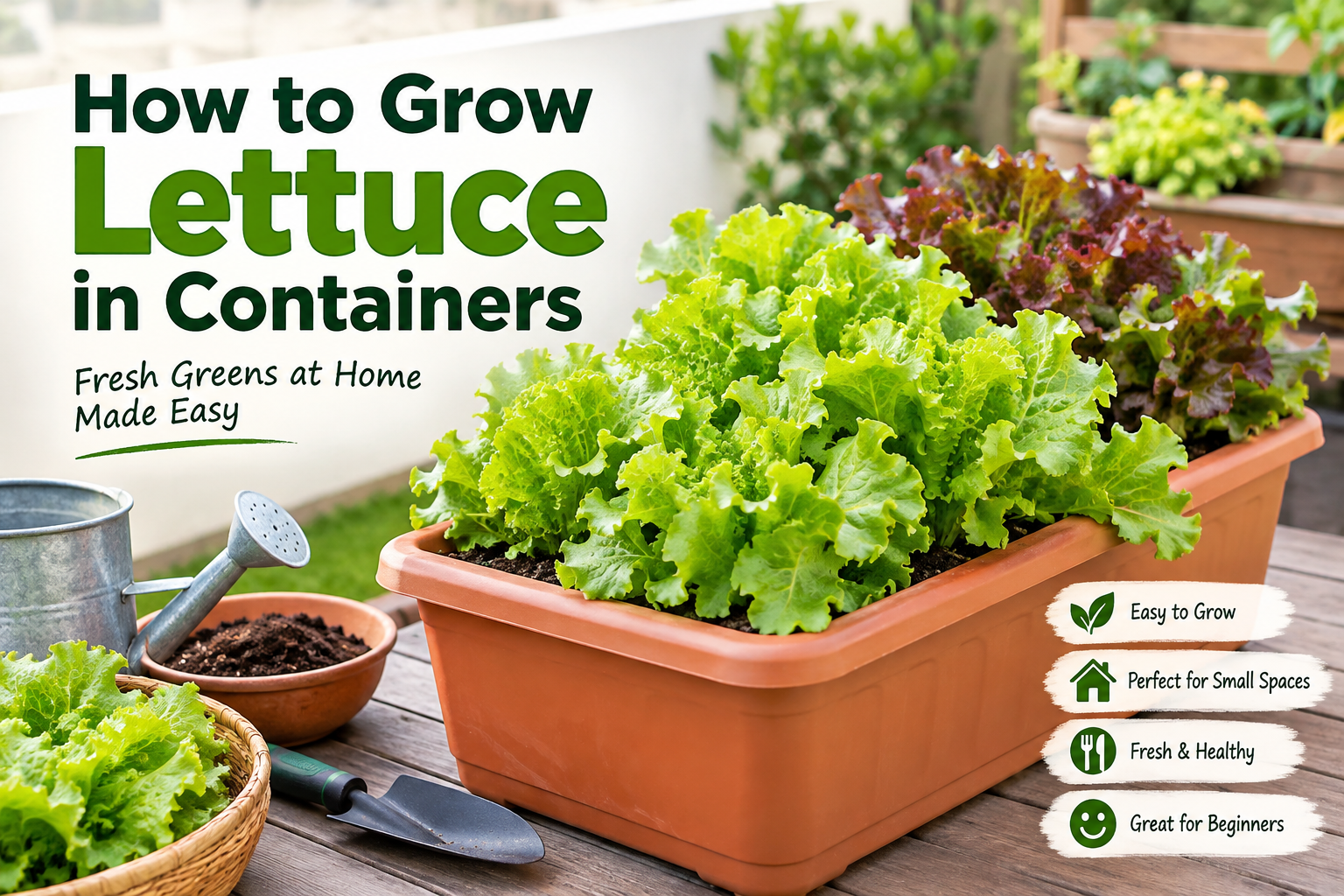
Growing lettuce in containers is one of the easiest ways to enjoy fresh vegetables at home. I personally like container gardening because it does not require a large backyard or a traditional garden bed. With a suitable pot, good soil, enough sunlight, and regular watering, you can grow fresh lettuce on a balcony, patio, rooftop, or even near a sunny window.
Lettuce grows relatively quickly and does not need a very deep root system, which makes it especially suitable for containers. It is also a good vegetable for beginners because you can start with a few seeds and learn the basics of gardening without making a large investment.
In this guide, I will explain how to grow lettuce in containers, including choosing the right container, preparing the soil, planting seeds, watering, sunlight requirements, feeding, harvesting, and common problems.
Why Grow Lettuce in Containers?
There are several reasons why growing lettuce in containers can be a great choice. First, lettuce does not need a lot of space. A medium sized container can produce a useful amount of fresh leaves for your kitchen.
Another benefit is control. When you grow lettuce in a container, you can control the soil, water, sunlight, and growing environment more easily. This can be especially helpful if your garden soil is poor or you live in an apartment.
Containers can also be moved when weather conditions change. If the afternoon becomes too hot, you can move the container to a location with partial shade. I find this flexibility particularly useful when growing lettuce during warmer seasons.
Choose the Right Container
Choosing the right container is an important first step when learning how to grow lettuce in containers. Lettuce does not need an extremely deep pot, but it does need enough space for its roots to develop comfortably.
A container around 6 to 8 inches deep can work well for most lettuce varieties. A wider container is even better if you want to grow several plants together.
Make sure the container has drainage holes at the bottom. Good drainage prevents excess water from remaining around the roots. Without proper drainage, lettuce roots can become damaged and the plant may struggle to grow.
You can use plastic pots, clay pots, wooden planters, or rectangular window boxes. I prefer containers that are easy to move because lettuce can benefit from some protection during very hot weather.
Select a Good Lettuce Variety
There are many types of lettuce, and some are better suited to container gardening than others. Leaf lettuce is one of my favorite choices for beginners because it grows quickly and you can harvest individual leaves instead of waiting for the entire plant to mature.
Loose leaf varieties are also useful when space is limited. Butterhead lettuce can be another good choice because it produces soft and tender leaves.
If you are new to gardening, I recommend starting with a variety that has a relatively short growing period. This allows you to see results sooner and makes the gardening experience more enjoyable.
Use Quality Potting Soil
The soil you use can have a major effect on the success of your container garden. I would avoid using heavy garden soil by itself because it can become compacted inside a container and may not provide the drainage lettuce needs.
Instead, use a good quality potting mix designed for vegetables or containers. The soil should be loose, lightweight, and capable of holding moisture while allowing excess water to drain.
You can mix compost into the potting soil to provide additional organic matter. Compost can help improve soil structure and provide nutrients for healthy plant growth.
Before planting, fill the container while leaving a little space at the top. This makes watering easier and reduces the chance of soil washing over the sides.
Plant Lettuce Seeds
Lettuce is easy to grow from seeds. Start by making shallow holes or small rows in the surface of the potting mix. Lettuce seeds are tiny, so they do not need to be planted deeply.
Place the seeds lightly on the soil and cover them with a thin layer of potting mix. Water gently after planting so the seeds do not get washed away.
Keep the soil consistently moist while the seeds are germinating. Depending on the variety and growing conditions, seedlings can appear fairly quickly.
Once the seedlings develop several leaves, you can thin them if they are growing too close together. Giving plants enough space improves airflow and gives each plant access to nutrients and sunlight.
Provide Enough Sunlight
Lettuce generally grows well with several hours of sunlight each day, but the exact amount can depend on your climate and the season.
In cooler weather, lettuce can handle more direct sunlight. During hot weather, intense afternoon sunlight may cause the plants to become stressed.
If you live in a warm climate, morning sunlight with afternoon shade can be helpful. I would especially recommend protecting container lettuce from extreme afternoon heat because containers can warm up quickly.
If the leaves become limp or the plant starts growing poorly during very hot conditions, consider moving the container to a cooler location with bright indirect light or partial shade.
Water Lettuce Regularly
Watering is one of the most important parts of growing lettuce in containers. Lettuce has shallow roots, so the soil can dry out faster than you might expect.
Check the soil regularly by touching the surface with your finger. If the top layer feels dry, it is usually time to water.
Water slowly and evenly until you see a little water coming from the drainage holes. This helps moisten the entire root area.
At the same time, avoid keeping the soil constantly soaked. Too much water can create problems with the roots.
During hot or windy weather, container lettuce may need more frequent watering. During cooler or cloudy weather, it may need less. Instead of following a fixed schedule, I prefer checking the soil and adjusting watering according to the conditions.
Feed Your Lettuce
Lettuce does not require complicated fertilizing. If you start with good potting soil containing organic matter, the plants can often grow well with limited feeding.
As the plants develop, you can use a balanced vegetable fertilizer according to the product instructions. Avoid applying excessive fertilizer because more fertilizer does not automatically mean faster or healthier growth.
A gentle feeding routine can support leafy growth, especially when plants are growing in containers where nutrients are limited.
Give Plants Enough Space
Proper spacing is important when growing lettuce in pots. If plants are crowded together, they may compete for sunlight, water, nutrients, and air circulation.
When seedlings are young, it can be tempting to keep every plant. However, thinning crowded seedlings can produce healthier plants.
The exact spacing depends on the lettuce variety and whether you want small baby leaves or full sized heads. For baby leaf harvesting, you can grow plants closer together and harvest young leaves regularly.
Protect Lettuce From Excessive Heat
One of the biggest challenges of growing lettuce is excessive heat. Lettuce prefers cooler growing conditions, and high temperatures can cause plants to become bitter or bolt.
Bolting happens when the plant starts producing a tall flower stalk. Once this happens, the leaves may become less tender and develop a stronger taste.
If temperatures become very high, provide afternoon shade and keep the soil evenly moist. Moving containers to a cooler position can make a noticeable difference.
Growing lettuce during the cooler parts of the year can also make the process easier in warm climates.
Common Lettuce Problems
Even though lettuce is beginner friendly, you may still experience a few problems.
Yellow leaves can sometimes indicate overwatering, poor drainage, nutrient problems, or other growing issues. Check the soil before adding more water.
Small holes in leaves may indicate insect activity. Regularly inspect your plants and remove damaged leaves when necessary.
Wilting can occur when the soil becomes too dry or temperatures become too high. Check the moisture level and move the container away from intense heat if needed.
Slow growth can result from insufficient sunlight, poor soil, crowded plants, or unsuitable temperatures. Looking at the complete growing environment can help you identify the cause.
Harvest Lettuce Correctly
One of the best things about growing lettuce in containers is that you do not always have to wait for the entire plant to mature before harvesting.
For loose leaf lettuce, you can harvest the outer leaves while allowing the center of the plant to continue growing. This method can provide several harvests from the same plant.
Use clean scissors or a sharp knife to remove leaves. Harvesting in the morning can be a good option because the leaves are often fresh and well hydrated.
If you prefer a full head of lettuce, you can harvest the entire plant when it reaches the desired size.
Try Succession Planting
If you want a continuous supply of lettuce, succession planting is worth trying. Instead of planting all your seeds at once, plant a small number every couple of weeks.
This creates plants at different stages of growth. When one group is ready for harvesting, another group is still developing.
I think this is one of the simplest ways to keep fresh lettuce available without needing a large garden.
Final Thoughts
Learning how to grow lettuce in containers is a simple and rewarding gardening project. You do not need a large garden, expensive equipment, or advanced gardening skills to get started.
Choose a container with good drainage, use quality potting soil, plant your lettuce seeds shallowly, and keep the soil consistently moist. Provide suitable sunlight while protecting the plants from excessive heat. With regular observation and basic care, you can grow fresh lettuce right at home.
For beginners, I recommend starting with one or two containers rather than trying to grow too many plants at once. Once you understand how your lettuce responds to sunlight, watering, temperature, and feeding, you can expand your container garden.
The biggest lesson I have learned with container gardening is that regular attention is more important than complicated techniques. Check your plants often, respond to changes in weather, and do not be afraid to learn from small mistakes. With patience and simple care, growing lettuce in containers can become an easy part of your home gardening routine.
Leave a Reply