When I started paying more attention to vegetable gardening, one thing I quickly realized was how important sunlight is for healthy plant growth. We often focus on soil, watering, fertilizer, and seeds, but sunlight is just as important. Without enough sunlight, even well watered and carefully planted vegetables can struggle to grow properly.
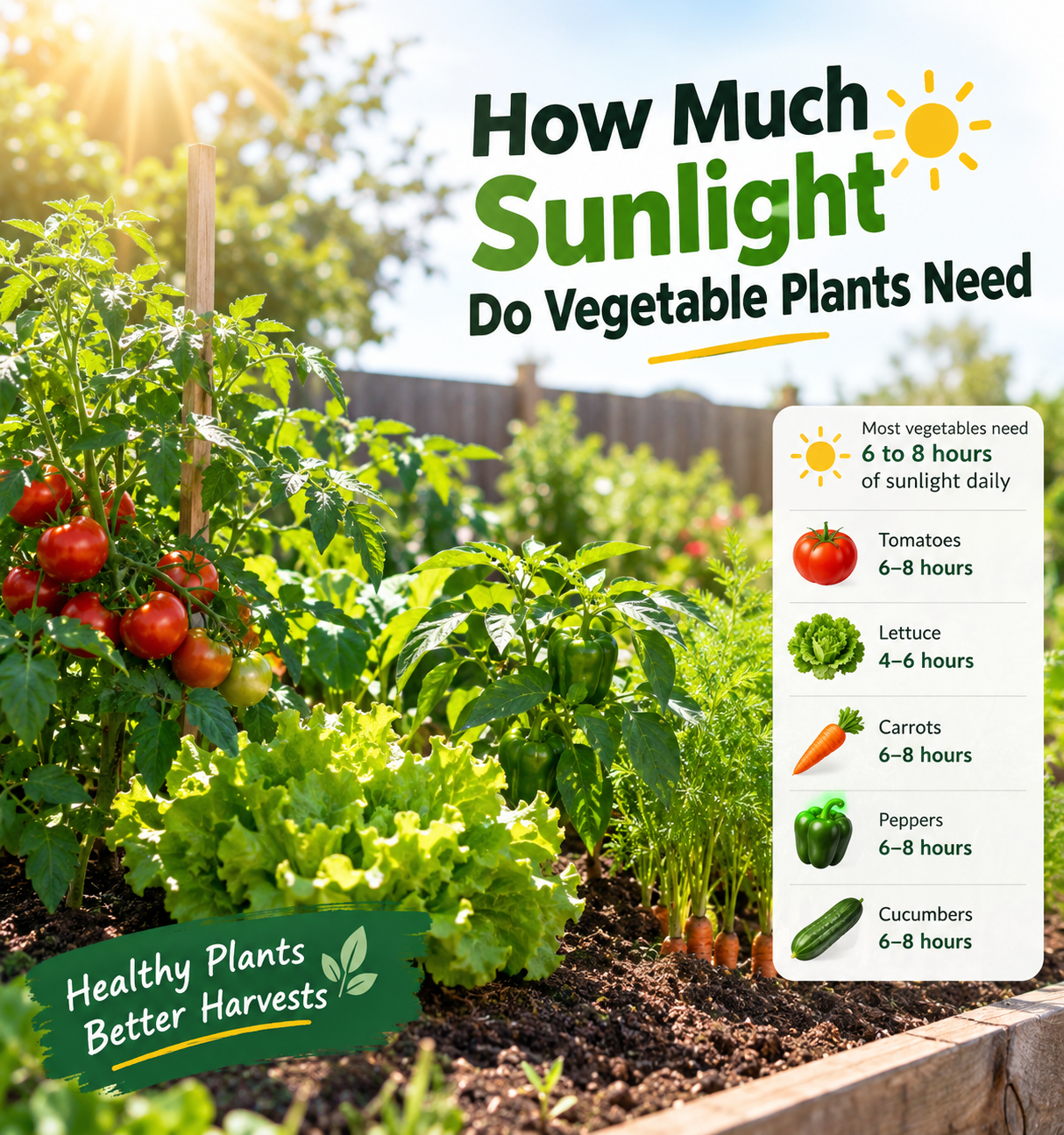
If you are wondering how much sunlight vegetable plants need, the simple answer is that most vegetables grow best with around six to eight hours of direct sunlight each day. However, the exact amount depends on the type of vegetable you are growing. Some vegetables enjoy full sun, while others can grow well with fewer hours of sunlight.
In my experience, understanding the sunlight needs of each vegetable makes gardening much easier. It helps me choose the right location, avoid weak plant growth, and get better harvests throughout the growing season.
Why Sunlight Is Important for Vegetable Plants
Sunlight gives plants the energy they need to make food through a natural process called photosynthesis. During photosynthesis, plants use sunlight, water, and carbon dioxide to produce the energy needed for growth.
When vegetable plants receive enough sunlight, they usually develop stronger stems, healthier leaves, and better roots. Many fruiting vegetables also need plenty of sunlight to produce flowers and vegetables.
I have noticed that plants growing in a bright location often look much healthier than plants growing in deep shade. Their leaves tend to have better color, and their growth is usually stronger.
Sunlight also affects how quickly vegetables mature. Plants that do not receive enough light may grow slowly and produce smaller harvests.
How Many Hours of Sunlight Do Vegetables Need?
Most vegetables need between six and eight hours of direct sunlight every day. This is generally considered full sun and is ideal for many popular garden vegetables.
Vegetables such as tomatoes, peppers, cucumbers, squash, beans, and eggplants usually perform best when they receive plenty of direct sunlight.
Some leafy vegetables are more tolerant of partial shade. Lettuce, spinach, kale, and other cool season greens can often grow with around four to six hours of sunlight.
The important thing is to understand that every vegetable has slightly different needs. Instead of treating every plant the same, I prefer to check the sunlight requirements before deciding where to plant it.
Vegetables That Need Full Sun
Many vegetables need six to eight hours or more of direct sunlight for the best results.
Tomatoes are a good example. They need plenty of sunlight to grow strongly and produce healthy fruit. When tomato plants do not receive enough light, they can become tall and weak, with fewer flowers and fruits.
Peppers also enjoy sunny locations. Both sweet peppers and hot peppers generally grow well when they receive several hours of direct sunlight every day.
Cucumbers, squash, and beans are also good choices for sunny garden areas. These plants can grow quickly when they have enough light, suitable soil, and consistent moisture.
Carrots and other root vegetables also benefit from good sunlight. While their roots grow underground, the leaves still need light to produce energy that supports root development.
Vegetables That Can Grow With Less Sunlight
Not every vegetable needs a full day of strong sunlight. Some vegetables can tolerate partial shade, especially leafy greens.
Lettuce is one of the easiest vegetables to grow in an area that does not receive full sun. It can often perform well with four to six hours of sunlight.
Spinach, kale, and other leafy greens can also tolerate less sunlight than fruiting vegetables. In warm weather, a little afternoon shade can even help prevent some leafy vegetables from becoming stressed.
Radishes may also grow successfully with moderate sunlight. However, growth can be slower when the plants receive significantly less light.
From my experience, leafy vegetables are usually a better choice for partially shaded spaces than tomatoes or peppers.
Morning Sun or Afternoon Sun?
The timing of sunlight can also make a difference. Morning sunlight is generally gentler, while afternoon sunlight can be much stronger and hotter.
If I have a garden location that receives morning and early afternoon sunlight, I consider it a useful growing area for many vegetables. In very hot climates, some plants may benefit from protection from intense afternoon heat.
For example, leafy vegetables may appreciate morning sunlight followed by light afternoon shade during very hot weather. On the other hand, tomatoes and peppers generally appreciate a long period of direct sunlight.
This is why I do not only count the hours of sunlight. I also pay attention to when the sunlight reaches the garden and how strong it becomes during the day.
How to Check Sunlight in Your Garden
If you are unsure how much sunlight your garden receives, one simple method is to observe the area throughout the day.
I recommend checking the garden in the morning, around midday, and later in the afternoon. Notice when direct sunlight reaches the soil and when shadows appear.
Trees, walls, fences, buildings, and nearby plants can change the amount of sunlight that reaches a garden.
A location that looks sunny in the morning may become shaded later in the day. Similarly, an area that looks shaded early in the morning may receive several hours of strong afternoon sunlight.
Keeping a simple note of sunlight patterns for one or two days can help you understand your garden much better.
What Happens When Vegetable Plants Do Not Get Enough Sunlight?
Insufficient sunlight can cause several problems. One common sign is weak or stretched growth. Plants may become tall and thin as they try to reach available light.
Leaves can also become smaller or less vibrant. Some plants may produce fewer flowers, which eventually means fewer vegetables.
Tomato and pepper plants are especially dependent on good sunlight for productive growth. If they are planted in heavy shade, they may remain alive but produce disappointing harvests.
Another problem is slow growth. A vegetable plant may look healthy but take much longer to reach maturity.
If you notice these signs, I would first look at the amount of sunlight the plant receives before immediately adding more fertilizer or water.
Can Too Much Sunlight Hurt Vegetable Plants?
Although sunlight is essential, too much intense heat can also create problems. This is particularly important during very hot weather.
Strong sunlight combined with high temperatures can cause leaves to wilt, dry out, or develop sun damage. Plants growing in containers may be especially vulnerable because their soil can become hot and dry quickly.
During extremely hot periods, some vegetables may benefit from temporary shade during the hottest part of the afternoon.
However, I would not automatically shade every plant. The goal is to provide the amount of light the vegetable needs while protecting it from extreme heat when necessary.
Sunlight Needs for Common Vegetables
Here is a simple guide I use when planning a vegetable garden.
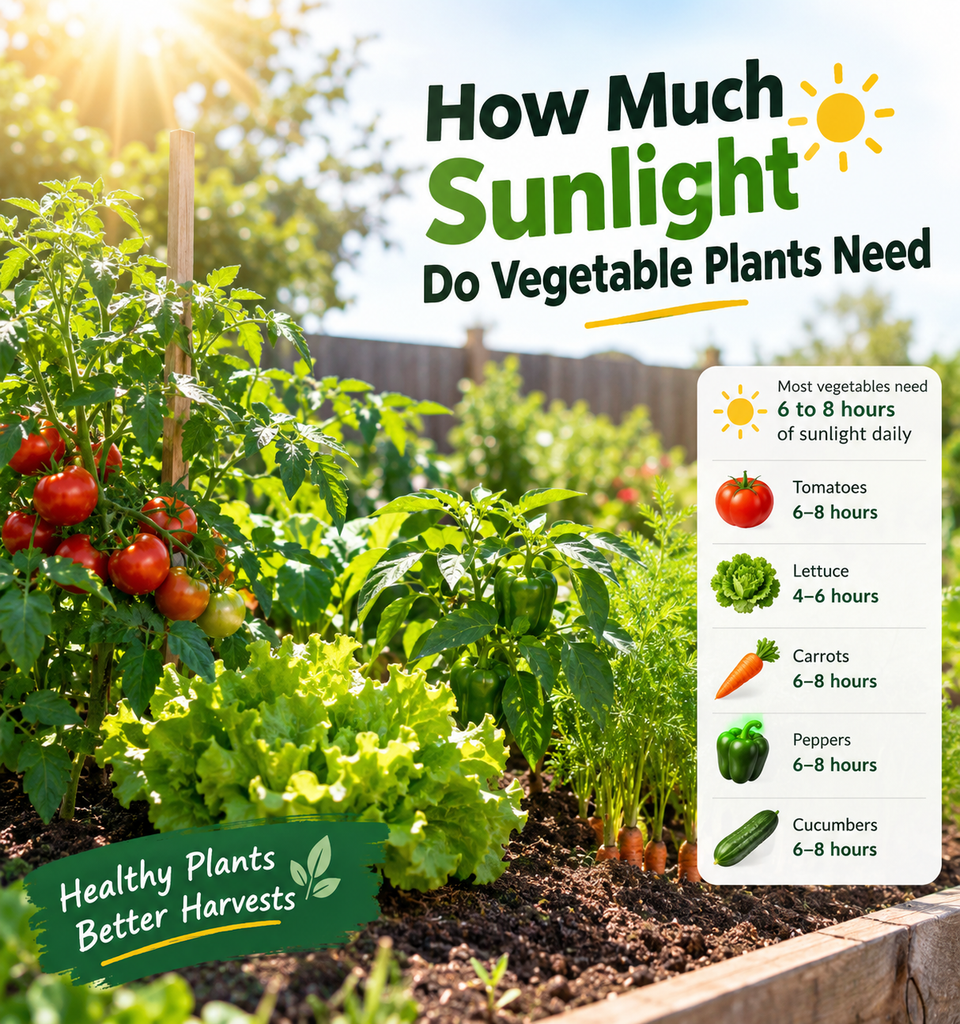
Tomatoes generally prefer six to eight hours of direct sunlight.
Peppers generally perform best with six to eight hours of sunlight.
Cucumbers usually prefer six to eight hours of direct sunlight.
Beans generally grow well with six to eight hours of sunlight.
Carrots can benefit from six or more hours of sunlight.
Radishes can grow with around four to six hours, although more light can support stronger growth.
Lettuce can often grow with four to six hours of sunlight.
Spinach can tolerate partial shade and may perform well with around four to six hours.
Kale can tolerate partial shade but usually grows better with several hours of sunlight.
Squash generally prefers six to eight hours of direct sunlight.
These are general guidelines rather than strict rules. Weather, temperature, soil quality, plant variety, and growing conditions can all affect plant performance.
How to Arrange Vegetables for Better Sunlight
Good garden planning can make a major difference. I try to place taller plants where they will not block sunlight from shorter vegetables.
For example, tomatoes can grow quite tall, so placing them in front of small lettuce plants may create unwanted shade.
If possible, I arrange taller crops toward the side of the garden where they will have the least impact on shorter plants. This allows more sunlight to reach the entire garden.
Container gardening also gives you an advantage because containers can be moved when necessary. If a plant is receiving too much shade, moving it to a brighter location may solve the problem.
Sunlight and Watering Go Together
One thing I always keep in mind is that sunlight affects how quickly soil loses moisture. A vegetable garden receiving many hours of direct sunlight may dry out faster than a shaded garden.
This does not mean that sunny plants should automatically receive more water every day. Instead, I check the soil before watering.
If the top layer of soil feels dry, the plant may need water. If the soil is still moist, adding more water may create unnecessary problems.
The best approach is to consider sunlight, temperature, soil, and plant needs together.
My Simple Approach to Vegetable Garden Sunlight
When choosing a location for vegetables, I start by looking for the brightest practical area. Then I consider which vegetables I want to grow.
I put sun loving vegetables such as tomatoes, peppers, cucumbers, and squash in the brightest areas. I reserve partially shaded spaces for vegetables such as lettuce, spinach, and kale.
I also watch the garden as the seasons change. The position of the sun changes throughout the year, so a location that receives plenty of sunlight during one season may receive less during another.
This simple observation has helped me avoid many common gardening mistakes.
Final Thoughts
Understanding how much sunlight vegetable plants need is one of the easiest ways to improve a home vegetable garden. Most vegetables prefer around six to eight hours of direct sunlight, while some leafy vegetables can grow successfully with four to six hours.
In my opinion, the key is not simply giving every plant as much sunlight as possible. It is about matching each vegetable with the location that suits its natural growing needs.
Before planting, take some time to observe your garden. Look at where the sun appears in the morning, where it stays during midday, and where shadows develop later in the day.
Once you understand your garden’s sunlight patterns, choosing the right vegetables becomes much easier. With enough sunlight, suitable soil, proper watering, and regular care, your vegetable plants have a much better chance of growing strongly and producing a healthy harvest.
A little observation at the beginning can save a lot of frustration later, and I believe that is one of the simplest lessons every beginner gardener can learn.
Leave a Reply