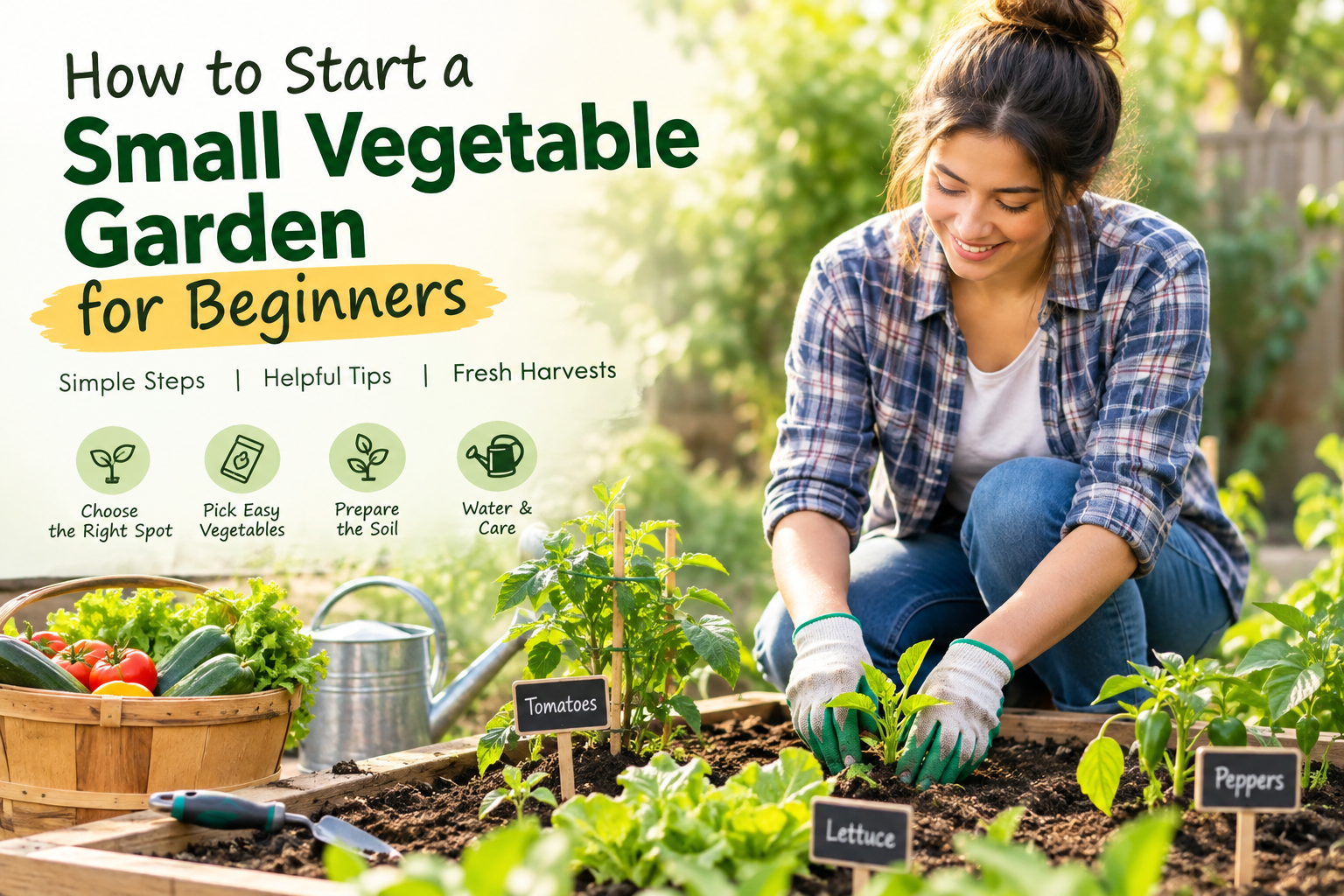
Starting a small vegetable garden can be one of the most enjoyable and rewarding things to do at home. You do not need a large backyard or years of gardening experience to grow fresh vegetables. Even a small sunny corner, raised bed, balcony, or a few containers can become a productive vegetable garden.
When I first think about starting a vegetable garden, I believe the most important thing is to keep it simple. Beginners often make the mistake of planting too many vegetables at once. A small garden is easier to manage, and it gives you enough time to learn how plants grow and what they need.
In this guide, I will explain how to start a small vegetable garden for beginners, from choosing the right location to preparing the soil, selecting vegetables, watering plants, and taking care of your garden.
Choose the Right Location
The first step in starting a small vegetable garden is choosing a good location. Most vegetables need plenty of sunlight to grow well. Ideally, choose an area that receives around six to eight hours of sunlight during the day.
Walk around your garden and observe where the sunlight stays for the longest time. Avoid areas that remain shaded for most of the day.
If you do not have a backyard, do not worry. You can grow vegetables in containers on a balcony, patio, rooftop, or other suitable outdoor space. The important thing is to give your plants enough sunlight and access to water.
I recommend starting with a small area rather than trying to use every available space. A small garden is easier to maintain and can still provide a surprisingly good harvest.
Decide How Much Space You Need
You do not need a huge garden to grow vegetables. For beginners, a small garden measuring a few feet across can be enough.
Raised beds are a popular choice because they make it easier to control the soil and organize plants. Containers are another excellent option, especially if you have limited outdoor space.
Before planting, think about how much time you can spend caring for the garden. If you are busy, start with fewer plants. You can always expand your vegetable garden later when you become more comfortable.
Keeping enough space between plants is also important. Crowded plants may compete for sunlight, water, nutrients, and air circulation.
Prepare the Soil
Healthy soil is one of the most important parts of a successful vegetable garden. Before planting, remove weeds, grass, stones, and other unwanted materials from the area.
Loosen the soil with a garden fork or hand tool. This helps roots grow more easily and allows water to move through the soil.
Adding organic matter such as compost can improve soil structure and provide nutrients for plants. If you are using containers, choose a good quality potting mix instead of ordinary garden soil.
Good soil should hold enough moisture for plants while still allowing excess water to drain away. Waterlogged soil can cause problems with plant roots.
You do not need to make the soil complicated when you are starting. Focus on clean, healthy, well drained soil and learn more as you gain gardening experience.
Choose Easy Vegetables for Beginners
Choosing the right vegetables can make your first gardening experience much easier. I suggest starting with vegetables that are relatively simple to grow and suitable for your local growing conditions.
Some beginner friendly vegetables include:
Lettuce
Radishes
Spinach
Green beans
Carrots
Cucumbers
Tomatoes
Peppers
Zucchini
Green onions
You do not need to grow all of them. Choose three to five vegetables that your family enjoys eating.
Leafy vegetables such as lettuce and spinach can be useful choices for smaller gardens because they do not always require a large amount of space. Radishes can also be a good option for beginners because they generally grow quickly.
Tomatoes and peppers can be excellent choices too, but they usually need more sunlight and proper support as they grow.
Check Your Local Growing Season
One important lesson I have learned about gardening is that timing matters. Different vegetables prefer different temperatures and growing seasons.
Before buying seeds, check which vegetables are suitable for your local climate and the current season. A vegetable that grows well in cool weather may struggle during very hot weather.
Seed packets often provide useful information about planting depth, spacing, sunlight, and growing time.
Following this information can prevent many beginner gardening mistakes.
If you are unsure about when to plant something, start with vegetables that are known to grow well during the current season in your area.
Start With Seeds or Seedlings
You can start a vegetable garden using seeds or young plants called seedlings.
Seeds are usually inexpensive and give you the opportunity to watch the entire growing process. However, some vegetables may take longer to establish.
Seedlings can be easier for beginners because the plants have already started growing. You simply transplant them into your garden while taking care not to damage the roots.
If this is your first vegetable garden, using a combination of seeds and seedlings can be a practical approach.
For example, you could buy tomato seedlings while planting lettuce or radish seeds directly into the soil.
Plant Vegetables Correctly
When planting, follow the recommended depth and spacing for each vegetable. Planting seeds too deeply can make it difficult for young plants to reach the surface.
Read the instructions on the seed packet carefully. Different vegetables have different requirements.
After planting seeds, gently water the soil. Avoid using a strong stream of water because it can move seeds around or expose them.
For seedlings, make a hole slightly larger than the root area. Place the plant into the hole and gently firm the soil around its base.
Do not press the soil too hard because roots need air as well as moisture.
Water Your Vegetable Garden Properly
Watering is one of the most important parts of vegetable garden care. Newly planted seeds and seedlings usually need consistent moisture while they become established.
However, more water does not always mean healthier plants. Overwatering can create problems, especially when the soil does not drain properly.
Check the soil with your finger before watering. If the top layer feels dry, the plants may need water.
Morning is often a convenient time to water because plants have time to use the moisture during the day.
Water the soil around the plants instead of constantly wetting the leaves. This can help reduce some common plant problems.
The exact amount of water your garden needs depends on the vegetable, weather, soil, and container size.
Give Plants Enough Sunlight
Most vegetables need plenty of sunlight to produce healthy growth. If plants receive too little light, they may become weak or grow slowly.
When planning your small vegetable garden, place taller plants where they will not unnecessarily shade shorter vegetables.
For container gardening, you can move pots to a sunnier location when necessary.
Keep observing your plants. Gardening is not only about following instructions. Your plants can also show you when something is wrong.
Control Weeds Early
Weeds compete with vegetables for water, sunlight, nutrients, and growing space. The easiest way to control weeds is to remove them while they are still small.
Check your garden regularly and gently pull unwanted plants from the soil.
Adding a layer of suitable organic mulch around established plants can also help reduce weed growth and keep the soil moist.
Be careful not to place mulch directly against the stem of a plant. Leave a little space around the base.
Watch for Pests and Plant Problems
Even a small vegetable garden can attract insects and other pests. Do not panic when you see a few insects. Some insects are harmless or may even be helpful.
Instead, inspect your plants regularly. Look at the leaves, stems, and soil for unusual spots, holes, discoloration, or insects.
Early detection makes many gardening problems easier to manage.
Try to understand the cause before using any treatment. Sometimes yellow leaves can be related to watering, sunlight, nutrients, or other growing conditions rather than insects.
Keeping plants healthy with suitable sunlight, water, spacing, and soil is one of the best ways to support a productive garden.
Use Support for Climbing Plants
Some vegetables need support as they grow. Tomatoes, cucumbers, beans, and other climbing plants may benefit from stakes, trellises, or cages.
Providing support early can make the plants easier to manage later.
It can also help keep vegetables off the ground and make harvesting easier.
When using supports, make sure they are strong enough for mature plants. Place them carefully so you do not damage the roots.
Keep Your Garden Organized
A small vegetable garden can become much easier to manage when everything has a place.
You can use simple labels to identify different vegetables. Keep basic tools such as a hand trowel, gloves, watering can, and pruning scissors nearby.
I also recommend keeping a simple gardening notebook. Write down when you planted seeds, what vegetables you planted, and anything you noticed about their growth.
These notes can be very helpful next season because you will have your own gardening experience to learn from.
Harvest Vegetables at the Right Time
Harvesting is one of the most exciting parts of growing a vegetable garden.
Different vegetables have different signs of readiness. Lettuce can often be harvested when the leaves are large enough to use. Radishes are generally harvested once their roots have developed. Tomatoes should be harvested according to the variety and desired ripeness.
Try not to leave mature vegetables on the plant for too long if regular harvesting encourages the plant to continue producing.
Use clean tools when necessary and handle fresh vegetables gently.
Common Beginner Gardening Mistakes
There are several mistakes that beginners commonly make.
The first is planting too much. Starting small is usually better.
The second is overwatering. Plants need water, but their roots also need oxygen.
Another mistake is ignoring sunlight. Even good soil cannot completely compensate for a location that does not provide enough light for the vegetable you are growing.
Poor spacing is another common problem. Give plants enough room to develop.
Finally, do not become discouraged when something goes wrong. Gardening is a learning process. Some plants may fail, but each season teaches you something useful.
Final Thoughts
Starting a small vegetable garden for beginners does not have to be complicated. Choose a sunny location, prepare healthy soil, select a few easy vegetables, and learn how to provide the right amount of water and care.
My biggest advice is to start small and pay attention to your plants. You will gradually learn what works best in your garden, climate, soil, and daily routine.
Growing your own vegetables can provide fresh food while also giving you a relaxing outdoor activity. Even a few containers of lettuce, tomatoes, peppers, or herbs can make you feel more connected to the food you eat.
You do not need to become an expert before planting your first vegetable garden. Start with a few easy vegetables, learn from your results, and expand your garden when you feel ready.
A small vegetable garden can be the beginning of a rewarding gardening journey.
Leave a Reply