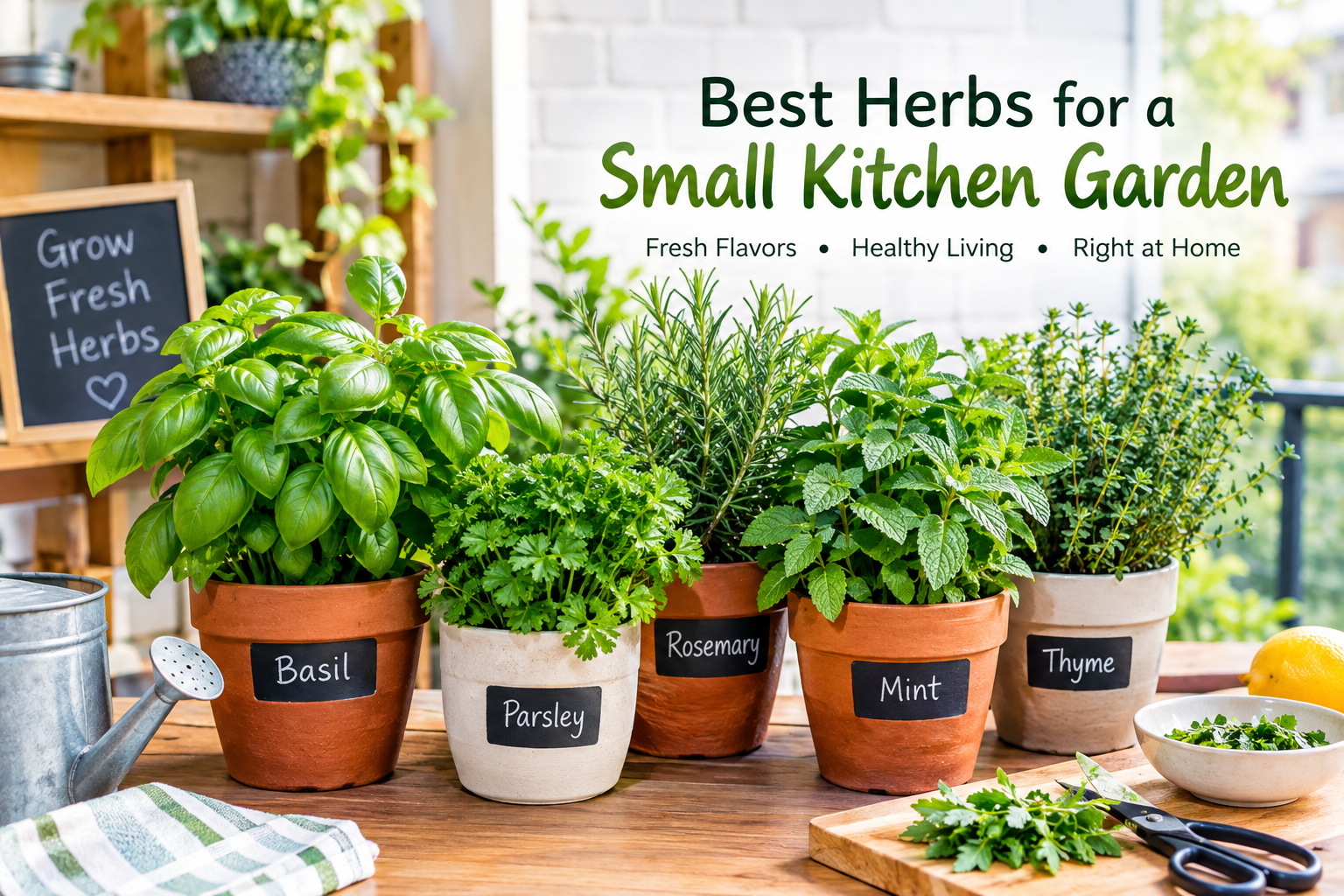
Growing fresh herbs at home is one of the easiest ways to make a small garden useful. You do not need a large backyard or a lot of gardening experience to enjoy fresh herbs. Even a small kitchen garden, balcony, windowsill, or a few pots near a sunny window can provide enough herbs for everyday cooking.
In my experience, herbs are also a great starting point for beginners because most of them are easy to care for when they receive enough sunlight, suitable soil, and regular watering. Another thing I like about growing herbs is that you can pick only what you need. Instead of buying a large bunch from the store and watching the unused portion lose its freshness, you can simply cut a few leaves or stems from your own plants.
If you are planning a small kitchen garden, choosing the right herbs is important. Some herbs grow quickly, while others are more forgiving when you occasionally forget to water them. Here are some of the best herbs for a small kitchen garden and some simple tips that can help you grow them successfully.
1. Basil
Basil is one of my favorite herbs for a small kitchen garden because it grows quickly and provides fresh leaves throughout the growing season. Its bright green leaves have a sweet and slightly peppery flavor that works well in many dishes.
Basil grows best in a warm and sunny location. It usually needs several hours of sunlight each day, so a sunny windowsill or balcony can be a good place for it. Use a container with drainage holes and well draining potting soil.
One useful tip is to harvest basil regularly. Cutting the growing tips encourages the plant to produce more branches and leaves. If flowers begin to appear, removing them can also help the plant focus its energy on leaf production.
Fresh basil is excellent for pasta, salads, sandwiches, sauces, soups, and homemade pizza. If you cook regularly, having a small basil plant nearby can be extremely convenient.
2. Mint
Mint is another excellent choice for a small kitchen garden. It has a refreshing aroma and can be used in drinks, desserts, salads, chutneys, and many other recipes.
Mint is quite easy to grow, but there is one important thing to remember. It can spread quickly when planted directly in the ground. For a small garden, I recommend growing mint in its own container.
Mint can grow in full sun or partial shade, although it generally produces healthy growth when it receives plenty of light. Keep the soil slightly moist, especially during hot weather.
One of the best things about mint is that you can harvest leaves whenever you need them. Fresh mint can make a simple glass of water or homemade lemonade feel much more refreshing.
3. Parsley
Parsley is a practical herb for almost any kitchen garden. It has a mild fresh flavor and can be used in soups, sauces, salads, rice dishes, vegetables, and meat recipes.
There are different types of parsley, including flat leaf parsley and curly parsley. Flat leaf parsley is often preferred for cooking because of its stronger flavor, while curly parsley can also be useful as a garnish.
Parsley prefers a location with good sunlight and well draining soil. It may take some time to become established, especially when grown from seeds, so patience is helpful.
Once the plant becomes established, you can harvest the outer stems when needed. Regular harvesting can encourage new growth and provide a steady supply of fresh leaves.
4. Coriander
Coriander is especially useful if you enjoy fresh flavors in everyday meals. Both the leaves and seeds of the coriander plant can be useful, although the leaves are commonly harvested for cooking.
Coriander grows well in containers, making it suitable for a small kitchen garden. It prefers sunlight but can benefit from some protection during extremely hot weather.
One thing I have learned about coriander is that it can grow quickly and eventually produce flowers and seeds. For a continuous supply of fresh leaves, planting small amounts at different times can be more useful than planting everything at once.
Fresh coriander works wonderfully in curries, rice dishes, salads, chutneys, soups, and homemade sauces.
5. Rosemary
Rosemary is a great herb for people who sometimes forget to water their plants. Once established, rosemary generally prefers slightly drier conditions than many soft herbs.
It has needle like leaves and a strong aroma that makes it easy to recognize. Rosemary grows well in containers as long as the pot has good drainage.
Place rosemary somewhere that receives plenty of sunlight. Avoid keeping the soil constantly wet because excessive moisture can cause problems with the roots.
I like rosemary because a small amount can add plenty of flavor. It works especially well with roasted potatoes, vegetables, chicken, bread, and other savory dishes.
6. Thyme
Thyme is another compact herb that can work beautifully in a small kitchen garden. It does not usually require a large container and can remain relatively small with regular harvesting.
Thyme prefers sunlight and well draining soil. Allowing the soil to become slightly dry between watering can help prevent problems caused by excessive moisture.
The small leaves have a pleasant earthy flavor. Thyme can be used in soups, roasted vegetables, chicken dishes, sauces, and many other recipes.
Because the plant stays relatively compact, thyme is a good option when space is limited.
7. Oregano
Oregano is a useful herb for anyone who enjoys Italian or Mediterranean style cooking. It has a strong flavor, so you usually do not need a large amount when preparing food.
Oregano can grow successfully in a container with good drainage. It enjoys sunlight and generally prefers soil that is not constantly wet.
Regular harvesting can encourage the plant to produce fresh growth. You can use the leaves fresh or dry them for later use.
I particularly like oregano with homemade pizza, pasta sauces, roasted vegetables, and simple tomato based dishes.
8. Chives
Chives are one of the easiest herbs to grow in a small container. They have thin green leaves and produce a mild onion like flavor.
They can grow in a sunny location and do not require a huge amount of space. Water the plant when the soil begins to dry, but avoid keeping the container saturated.
Chives can be cut with scissors whenever you need them. They are especially good on eggs, baked potatoes, salads, soups, and sandwiches.
Their simple growing requirements make them a good choice for beginners.
Choosing the Right Containers
Choosing suitable containers is just as important as choosing the herbs. Small herbs can grow in relatively small pots, but the container should still provide enough room for the roots.
Always choose pots with drainage holes. Excess water needs somewhere to escape. Without proper drainage, the soil can remain too wet and create unhealthy conditions for the roots.
You can use clay pots, plastic containers, ceramic pots, or other suitable gardening containers. The most important factors are drainage, appropriate size, and enough space for the plant to grow.
If you have limited space, placing several small containers together can create a simple and attractive kitchen garden.
Finding the Best Location
Most herbs need plenty of natural light. A sunny windowsill can work well if you are growing herbs indoors. A balcony, patio, or small outdoor area can also be suitable.
Before choosing a location, observe how much sunlight the area receives during the day. Some herbs prefer more sunlight, while others can tolerate partial shade.
Good air circulation is also helpful. Avoid placing plants in a crowded area where air cannot move around the leaves.
Watering Your Kitchen Herbs
Watering is one of the most important parts of herb gardening. However, more water does not always mean healthier plants.
Check the soil before watering. If the surface feels dry, the plant may need water. If the soil is still noticeably wet, you may be able to wait.
Different herbs have different watering needs. Mint usually appreciates more moisture, while rosemary and thyme generally prefer conditions that are less wet.
The weather also affects watering. Plants may need more water during hot and dry periods and less during cooler weather.
Feeding and Maintaining Herbs
Herbs generally do not require complicated maintenance. Good quality potting soil can provide many of the nutrients young plants need.
As plants grow, occasional feeding with a suitable fertilizer can support healthy growth. Follow the instructions on the fertilizer label and avoid using more than recommended.
Regular harvesting is also useful. Removing mature leaves and stems can encourage some herbs to produce fresh growth.
Keep an eye out for yellow leaves, damaged foliage, insects, or signs of excessive moisture. Finding problems early makes them easier to manage.
Best Herbs for Beginners
If you are completely new to gardening, I would start with basil, mint, parsley, chives, and thyme. These herbs are useful in everyday cooking and can be grown successfully in containers.
You do not need to start with ten different plants. In my opinion, beginning with three or four herbs is a much better approach. Once you understand how much sunlight and water your plants need, you can gradually expand your garden.
Final Thoughts
A small kitchen garden can provide a surprising amount of value. You do not need a large outdoor space or expensive gardening equipment to grow fresh herbs at home. With a few containers, good soil, sunlight, water, and a little regular attention, you can create a useful herb garden almost anywhere.
Basil, mint, parsley, coriander, rosemary, thyme, oregano, and chives are some of the best herbs for a small kitchen garden. Each has its own flavor, growing requirements, and uses in the kitchen.
For me, the biggest advantage of growing herbs at home is convenience. When I need fresh basil for pasta, coriander for a meal, mint for a drink, or rosemary for roasted vegetables, I can simply walk over to the garden and harvest what I need.
If you are thinking about starting your own small kitchen garden, do not worry about making it perfect. Start with a few herbs that you actually enjoy eating. Give them enough light, use containers with good drainage, water them according to their needs, and pay attention to how they respond. With a little patience, even a small space can become a productive source of fresh herbs for your kitchen.
Leave a Reply