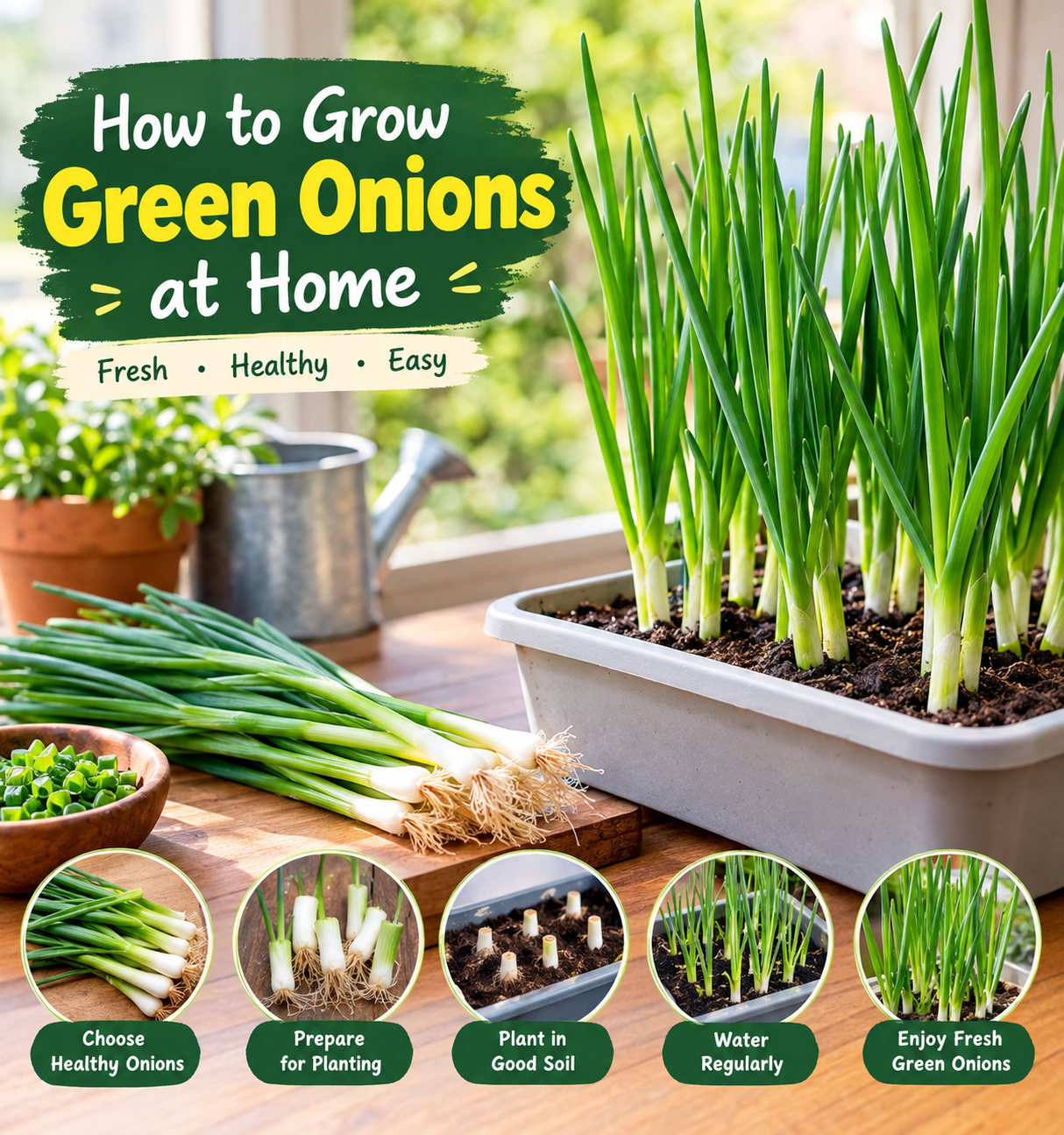
Growing green onions at home is one of the easiest gardening projects I have found for beginners. You do not need a large garden, expensive equipment, or years of gardening experience. A small pot, some good soil, sunlight, water, and healthy green onions are enough to get started.
I especially like growing green onions because they grow quickly and can be used in many everyday meals. I can cut fresh green leaves whenever I need them for salads, soups, noodles, rice, eggs, sandwiches, and other dishes. Growing them at home also gives me a simple way to enjoy fresh produce without depending completely on the grocery store.
If you are wondering how to grow green onions at home, this guide will explain everything from choosing onions and preparing the container to watering, sunlight, harvesting, and keeping the plants healthy.
Why Grow Green Onions at Home?
There are several reasons why I recommend green onions to beginner gardeners. First, they do not require much space. You can grow them in a small container on a balcony, windowsill, patio, or kitchen garden.
Another advantage is that green onions grow relatively quickly. When conditions are good, you can notice new green growth within a short time. This makes them satisfying for people who want to see results without waiting for an entire season.
Green onions are also useful in the kitchen. Instead of buying a bunch and allowing some of it to go unused, I can grow a small supply at home and harvest only what I need.
Choose Healthy Green Onions
The first step in growing green onions at home is choosing healthy onions. You can start with green onions purchased from a grocery store or use young onion plants from a garden center.
When selecting onions, I look for firm white bulbs with healthy roots. The roots should not look completely dried out or damaged. The green leaves should look fresh and strong.
If you are using store bought green onions, keep the white portion with the roots attached after cutting the leaves for cooking. This rooted section can be planted directly into soil.
You can also start green onions from seeds, but using rooted onion pieces is usually easier for beginners.
Select the Right Container
Green onions do not need a deep container because their roots are relatively small. However, the container should have drainage holes at the bottom.
Good drainage is important because excess water can remain around the roots and cause problems. I prefer using a container that is wide enough to grow several onions together while still giving each plant enough space.
A simple plastic pot, clay pot, wooden planter, or recycled container can work as long as it is clean and has proper drainage.
If you are growing green onions indoors, place a small tray underneath the container to collect excess water.
Use Good Soil
Good soil makes a big difference when growing green onions at home. I recommend using loose and well draining potting soil instead of heavy garden soil.
The soil should allow air and water to reach the roots. If the soil becomes hard and compacted, the roots may struggle to grow properly.
Before planting, fill your container with soil and leave a little space at the top. There is no need to pack the soil tightly. Keeping it loose helps the roots establish themselves more easily.
A quality container gardening mix is usually a convenient option for beginners.
How to Plant Green Onions
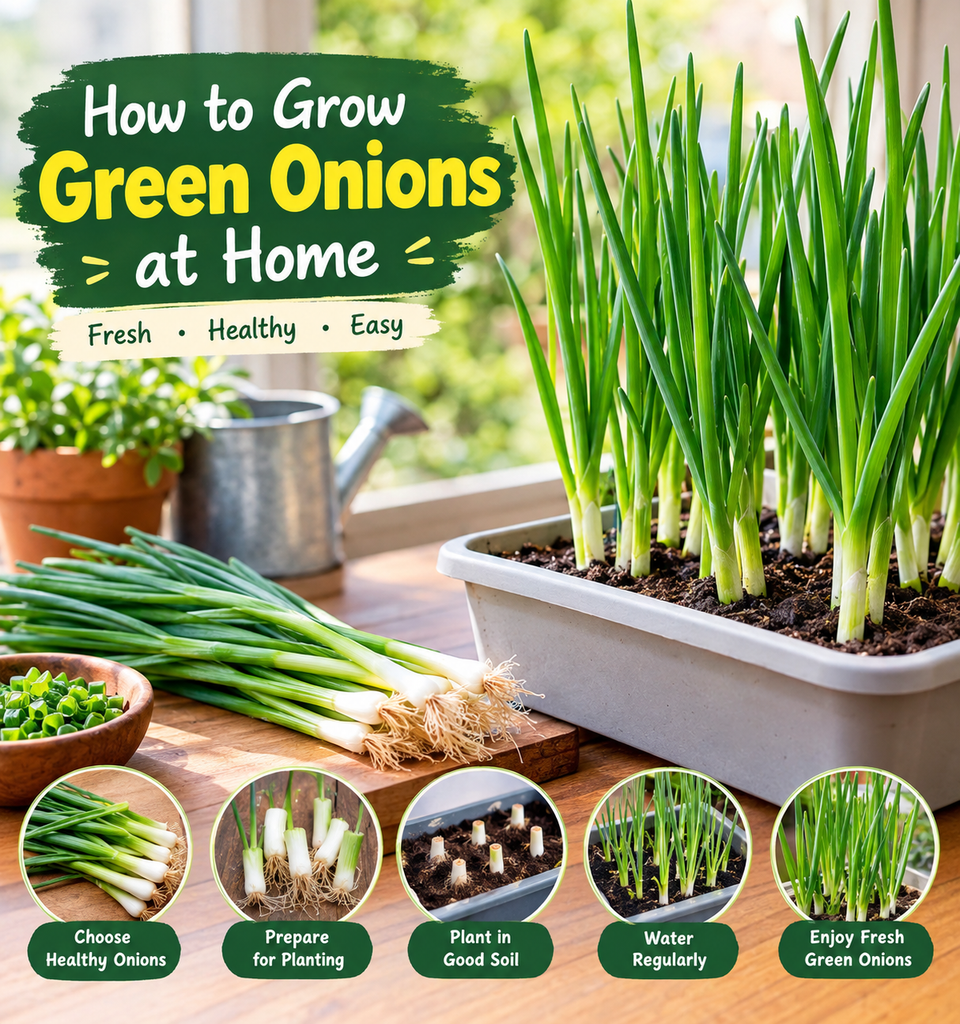
Planting green onions is simple. Make a small hole in the soil with your finger and place the rooted white portion into the hole.
The roots should be facing downward while the white stem stays above the soil surface. Cover the roots gently with soil and press the soil lightly around the plant.
Do not bury the entire onion too deeply. The growing point should remain above the soil so new leaves can continue developing.
If you are planting several onions in one container, leave a little space between them. This gives each plant room for its roots and allows air to move around the leaves.
After planting, water the soil gently.
Give Green Onions Enough Sunlight
Green onions grow best when they receive plenty of light. I try to place my container where the plants can receive several hours of sunlight each day.
A sunny balcony, patio, window area, or outdoor garden can be a good location.
If you are growing green onions indoors, place them near a bright window. If the leaves become thin, weak, or pale, the plants may not be receiving enough light.
The exact amount of sunlight can depend on your local weather and growing conditions. During very hot weather, afternoon heat can sometimes be intense. In that situation, providing some protection during the hottest part of the day can help prevent stress.
How Often Should You Water Green Onions?
Watering is one of the most important parts of green onion care. I do not follow a strict watering schedule because soil can dry at different speeds depending on temperature, sunlight, container size, and weather.
Instead, I check the soil with my finger. If the top layer feels dry, I water the plant. If the soil is still comfortably moist, I wait before watering again.
When watering, I make sure the soil becomes evenly moist. I avoid leaving the container sitting in a pool of water.
Too little water can cause the leaves to become weak and dry. Too much water can create an unhealthy environment around the roots. Finding a balance is important.
Fertilizing Green Onions
Green onions generally do not require complicated fertilizing routines. If you use good quality potting soil, the plants can grow well without frequent feeding.
However, if the plants appear weak or growth becomes slow, a mild balanced fertilizer can provide additional nutrients.
I prefer using fertilizer carefully rather than applying too much. Always follow the instructions on the fertilizer package.
Overfertilizing does not automatically make plants grow faster. In some cases, excessive fertilizer can damage the roots.
Common Problems When Growing Green Onions
Growing green onions is easy, but beginners can still experience a few common problems.
One problem is yellow leaves. Yellowing can happen for several reasons, including too much water, poor drainage, old leaves, or insufficient nutrients.
Another problem is slow growth. If the plants are not growing well, check their sunlight, watering, soil, and container conditions.
Weak and thin leaves can sometimes indicate that the plant is not receiving enough light.
Root problems can develop when the soil remains constantly wet. This is why drainage holes are so important.
I also recommend checking the plants regularly for insects. If you notice small pests, remove them early and keep the plants clean and healthy.
How to Harvest Green Onions
One of the best parts of growing green onions at home is harvesting them. You do not always need to remove the entire plant.
For a continuous supply, I usually cut the green leaves while leaving the white rooted portion in the soil. Use clean scissors or a sharp kitchen knife and cut the leaves above the base.
Avoid cutting too close to the roots if you want the plant to continue producing new growth.
Harvesting gradually can provide fresh green onions for cooking while allowing the plant to keep growing.
You can also harvest the entire plant when you need the white bulb and roots removed.
Can Green Onions Grow Again After Harvesting?
Yes, green onions can produce new leaves after harvesting when the roots and growing portion remain healthy.
This is one reason I enjoy growing them. Instead of treating the plant as a single harvest, I can often cut the leaves and allow new growth to develop.
However, regrowth is not unlimited. Eventually, the plant may become weaker or produce smaller leaves. At that point, starting new plants can give you stronger growth.
You can keep a few containers growing at different stages so that you always have fresh green onions available.
Growing Green Onions in Water
Another popular method is growing green onions in water. If you have rooted green onions, place the roots in a small glass or container with a little water.
Keep the roots covered while avoiding completely submerging the entire onion. Place the container in a bright location.
Change the water regularly to keep it fresh and reduce the chance of unpleasant odors or unhealthy conditions.
This method is convenient for short term regrowth, but I prefer soil when I want to grow green onions for a longer period. Soil provides a more natural environment for the roots and supplies nutrients that plain water does not provide.
Green Onion Care Tips for Beginners
In my experience, the easiest way to successfully grow green onions is to keep the routine simple.
Give them healthy soil, enough sunlight, moderate water, and good drainage. Check the plants regularly instead of waiting until a problem becomes serious.
Do not worry if your first plants are not perfect. Gardening is a learning process. You can adjust the location, watering, container, or soil as you learn how your plants respond.
I also recommend starting with a small number of plants. Once you understand how green onions grow in your home, you can increase the number of containers.
Final Thoughts
Learning how to grow green onions at home is a simple and rewarding gardening project. You can grow them in containers even if you do not have a traditional garden. With healthy rooted onions, suitable soil, sunlight, water, and a container with drainage, you can create your own small green onion garden.
What I like most about growing green onions is how practical they are. They do not take much space, they are easy to care for, and they can be harvested for everyday cooking.
If you are new to gardening, green onions are a great place to start. Begin with a few healthy rooted onions, give them the basic care they need, and watch the fresh green leaves develop. With a little patience and regular attention, you can enjoy fresh green onions grown right at home.
Leave a Reply